Crypto Broker vs Exchange: Which Model Is Right for Your Business?

As of 2025, CoinMarketCap tracks millions of digital assets across hundreds of trading venues. Platforms are easier to launch than ever—but harder to get right. Architecture, execution logic, custody, and compliance all hinge on one decision: crypto broker vs exchange.
The two models solve different problems. One gives you speed and simplicity, the other gives you depth and control. Understanding which one fits your clients, operations, and revenue strategy is what this guide is built for.
Key Takeaways
- Exchanges offer full-market execution and asset custody, but require heavy infrastructure and licensing.
- Brokers aggregate upstream pricing, quote internally, and launch faster with less tech overhead.
- Your model should reflect who you serve, how you charge, and how much infrastructure you’re ready to own.
What is a Crypto Exchange?
A cryptocurrency exchange is a platform where buyers and sellers trade digital currencies directly, using a shared order book. The exchange doesn’t quote prices or take positions—it simply matches trades based on current market activity. Users can deposit, buy, sell cryptocurrencies, and withdraw them, often with full custody support.
Behind the user-friendly interface, exchanges run real infrastructure. You need execution logic, custody systems, pricing integrations, and round-the-clock uptime.
An exchange model is best suited for firms targeting institutional or experienced traders—clients that demand direct crypto market access, transparent pricing, additional services like peer-to-peer trading and staking, and infrastructure-level control.
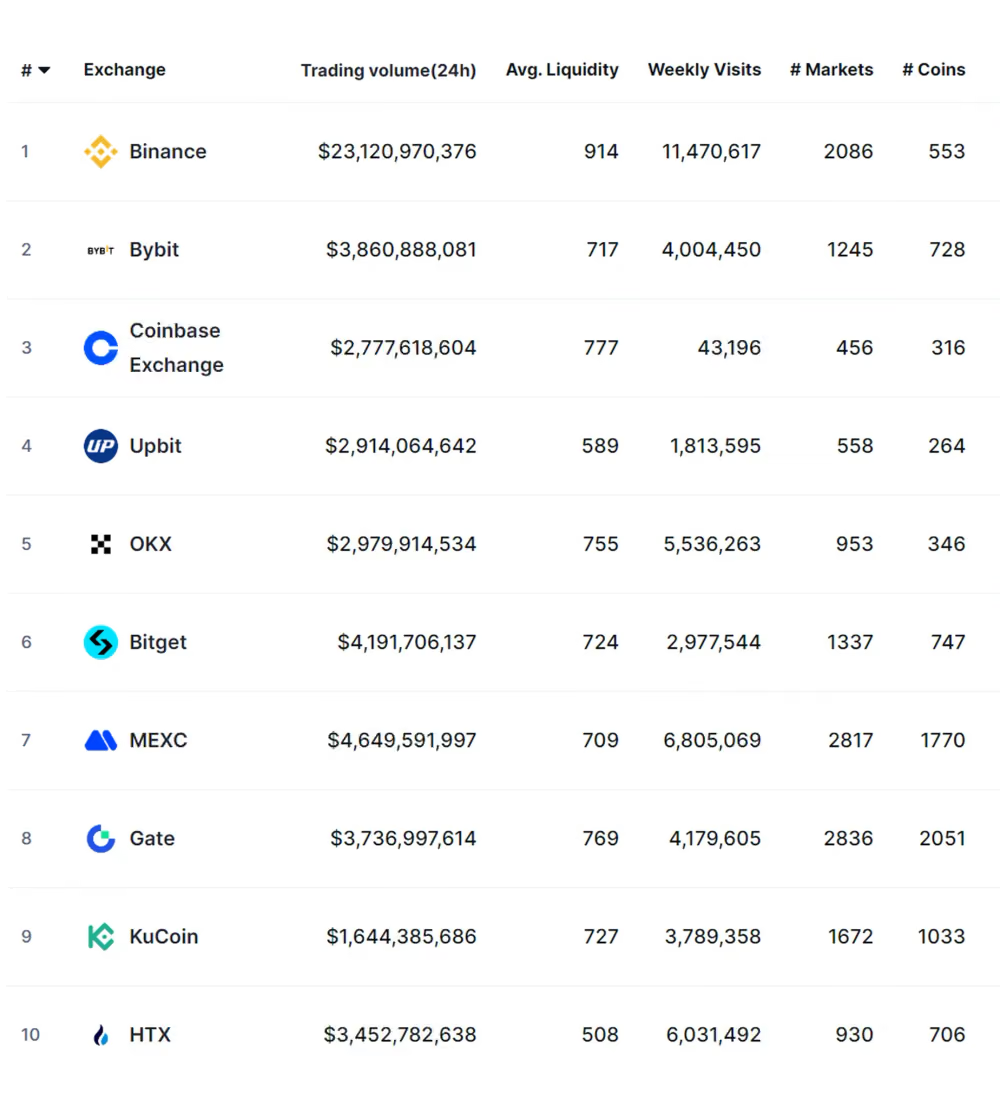
Benefits of a Crypto Exchange
With an exchange model, you control the mechanics: what assets to list, how fees are structured, and which liquidity sources power the book. That flexibility makes it easier to fine-tune execution and scale as volumes grow.
You also manage custody and withdrawals, which strengthens your offer for clients who demand real asset ownership. Combined with market-level APIs and full execution visibility, exchanges work best for platforms that want to own the direct trading layer—especially when building for advanced use cases or integrating institutional trading strategies.
What is a Crypto Broker?
A cryptocurrency broker provides access to digital assets without exposing users to the order book. Instead of matching external orders, the broker quotes prices directly and executes trades via upstream liquidity. The platform controls pricing, spreads, and risk parameters internally.
Brokers connect to multiple exchanges or Prime-of-Prime providers and package execution through a single interface. There’s no custody requirement, and the tech stack is leaner—ideal for fast rollout and multi-asset integration alongside Forex or CFDs.
A broker model works well for fintechs, trading platforms, and financial firms that want to offer crypto with lower infrastructure risk and faster time-to-market for both beginner traders and professionals.
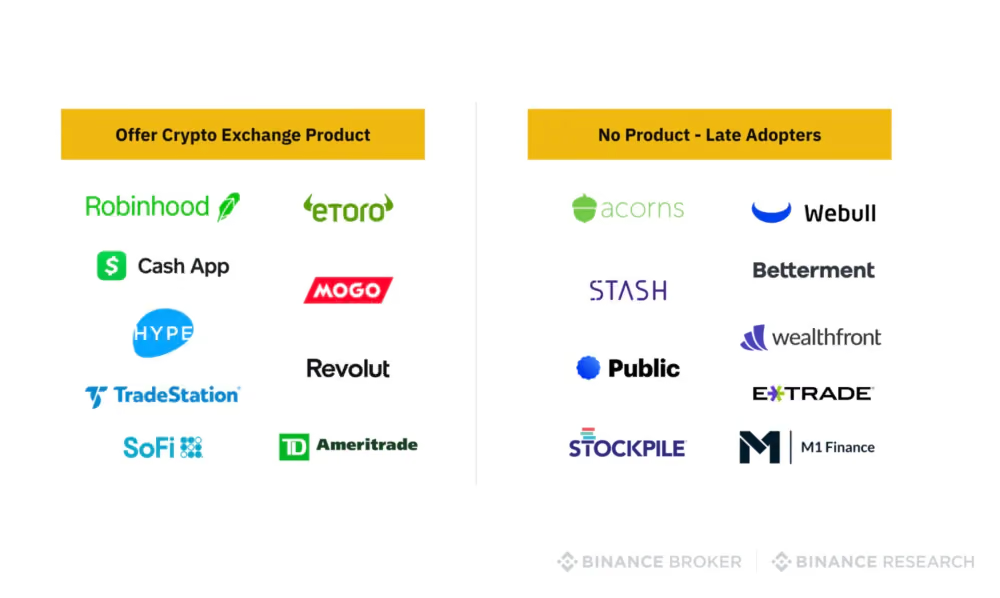
Benefits of a Crypto Broker
The broker model removes the need for an internal order book or custody system. You connect to upstream liquidity, quote executable prices, and manage spreads and risk on your terms—all with faster time-to-market and less technical overhead.
It also lets you integrate crypto into existing platforms alongside FX or CFDs. With one tech stack and margin account, you can offer Bitcoin and Ethereum as part of a unified trading experience—ideal for fintechs and multi-asset brokers.
Key Differences Between a Crypto Broker and an Exchange
While both models provide access to crypto trading, their operational and business realities are fundamentally different.
Trading Method
Exchanges operate neutral order books. They match buyers and sellers through market-driven pricing, with the platform acting as a facilitator. Brokers quote prices directly and fill trades using aggregated liquidity, acting as the execution venue.
This difference affects more than just trade flow. Brokers control pricing logic, spreads, and execution conditions. Exchanges offer transparency and real-time cryptocurrency market discovery. Your model determines how much control you retain—and how much complexity you take on.
User Experience and Accessibility
Exchanges are designed for active traders. Interfaces prioritise performance: live charts, multi-leg orders, routing logic, and latency metrics. Brokers offer a more guided flow—single-click execution, simplified order types, and cleaner onboarding.
For platforms, this defines how clients are onboarded, which CRM features matter, and how flexible the product can be across different user segments. If your goal is fast adoption and cross-channel access, the broker model removes friction.
Pricing and Fees
Exchanges charge per trade—usually a fixed percentage based on trading volume. Brokers monetise through spreads, controlling the markup between buy and sell quotes. While spreads may be wider, brokers have more flexibility in how fees are embedded and personalised.
This impacts margin structure. Exchanges scale on volume. Brokers scale on control. If you prioritise customizable pricing or want to embed fees into a broader product suite, the broker model opens more levers.
Brokers can balance higher fees with more tailored client pricing, especially in markets where transparency and flexibility matter more than absolute lower fees.
Asset Ownership
Exchanges enable clients to hold the underlying crypto assets, with full withdrawal rights to external wallets. This supports custody solutions, staking, and long-term storage as well as participation in blockchain-based ecosystems or regulated transfer mechanisms.
Brokers, especially those using CFD models, offer price exposure without asset transfer. Trades are settled internally, and the client never holds the asset itself. That changes how custody is handled, which regulatory permissions apply, and how investor protections are structured.
Licensing and Regulation
Brokers typically fall under traditional financial frameworks. Depending on the structure, this may include Money Services Business (MSB) registration, investment firm licensing, or derivative permissions.
Exchanges are subject to crypto-specific regulation, often focused on custody infrastructure, transaction monitoring, and order book fairness. In Europe, MiCA now applies to both models, but imposes stricter obligations on exchanges due to their role in asset safekeeping.
Revenue Model
Exchanges typically earn through volume-based trading fees, listing charges, and institutional data or API access. These models reward scale and liquidity depth but depend on active market flow and stable market prices.
Brokers control revenue via spread markups, swaps, and packaged services like copy trading or white-labeled portfolio management tools. This allows for more customizable monetisation but puts more pressure on execution quality and client retention. However, they must actively manage fluctuations in execution costs.
Target Users
Exchanges typically serve high-frequency traders, crypto-native funds, and professional desks that demand full control over execution, latency, and custody. These users expect API access, deep market data, and direct interaction with the order book.
Brokers attract broader segments—including retail users, fintech apps, or traditional brokers integrating crypto into multi-asset portfolios. Their priorities are fast onboarding, clean UI, and consolidated account structures.
Technology and Infrastructure Complexity
Launching an exchange means managing the full trade lifecycle in-house: matching orders, handling custody, and operating execution systems under strict uptime and compliance requirements. This setup demands more engineering, security oversight, and dedicated ops.
A brokerage, by contrast, outsources execution to liquidity providers and avoids custody altogether. With fewer moving parts and white-label options, brokers launch faster and run leaner—making them easier to operate and scale with limited in-house tech resources.
Starting a Crypto Exchange
There’s intense competition—major venues like Coinbase have set a high bar for uptime, liquidity, and compliance.
Thus, launching a crypto exchange is a complex technical and regulatory project. Each step affects operational risk, time-to-market, and long-term scalability. Here's what it involves:
1. Define Your Business Model
Clarify your client focus (retail, institutional, or hybrid), revenue model (volume fees, listings, premium access), and asset coverage. This defines your tech architecture, regulatory exposure, and liquidity requirements from day one.
2. Choose Jurisdiction and Licensing
Exchange operators must secure licensing in line with their client geography and product offering. MiCA in the EU, MSB in the US, and VASP licensing across Asia and the Middle East all come with different capital, custody, and reporting obligations. Jurisdiction defines what’s possible—and what’s not.
3. Select or Build Your Platform
You can build in-house, but this typically takes 9–18 months and requires a full internal product and DevOps team. White-label solutions like B2BROKER’s one reduce time-to-market and allow you to focus on branding, client acquisition, and integrations rather than infrastructure.
4. Connect Liquidity, Payments, and Custody
An exchange without liquidity is unusable. You’ll need aggregation from multiple LPs, fiat currency payments, and secure custody integration—whether on-chain or via third-party solutions. All three systems must work together under live load.
5. Implement Security Measures and Compliance
KYC/AML tools, transaction monitoring, trade surveillance, and penetration-tested infrastructure are non-negotiable. Regulators expect full traceability; clients expect uninterrupted uptime and defence from hacks. Both require serious systems from day one.
Starting a Crypto Brokerage
Launching a brokerage is faster and more modular than launching an exchange—but it still requires clear planning across infrastructure, regulation, and client delivery. Here’s how it works:
1. Define Your Service Model
Decide whether you’re targeting retail users, institutional clients, or both. This impacts everything from platform selection to licensing and margin setup. Also, define whether you’ll offer spot only, or multi-asset (e.g., crypto + FX + CFDs).
2. Register and Obtain Licensing
Brokerages may require financial licenses depending on the jurisdiction and product scope (spot vs derivatives). Common routes include MSB (US), EMI (EU), or brokerage licenses under MiFID II. Local obligations will define what you can offer.
3. Connect to Liquidity Providers
Brokers don’t run an order book—they quote from external liquidity. You can connect to exchanges, OTC desks, or use a Prime-of-Prime provider like B2BROKER for a unified, multi-asset stream through one margin account.
4. Set Up Advanced Trading Infrastructure
Decide how you’ll deliver execution—via platforms like MT*4/MT*5 or a turnkey web platform with built-in liquidity and CRM. White-label solutions reduce setup friction and allow faster rollout with fewer integration points.
5. Implement Risk and Margin Controls
You’ll need real-time margin logic, liquidation thresholds, and exposure monitoring that ties directly into your liquidity setup. Risk needs to be automated, transparent, and fully auditable from day one.
6. Build Client Support and Marketing Ops
Design onboarding with compliance and scale in mind. Set up CRM workflows, funding systems, and support tools that align with your client base—whether it’s retail, institutional, or both.
Choosing the Right Approach for Your Business
The right model depends on who you serve, how you generate revenue, and how much infrastructure you want to own.
- Fintech startups often launch as brokers. They benefit from faster rollout, simple integration, and the ability to offer crypto alongside FX, CFDs, or payments.
- Established FX brokers may layer exchange functionality on top of existing operations to enable direct asset ownership and market-making revenue.
- Institutional desks tend to favour exchange setups, where low-latency execution, transparent routing, and custody control are non-negotiable.
So, crypto broker vs exchange: which is better for your business? There’s no universal answer. But once you know who you serve and how you’ll grow, the right model becomes obvious.
Crypto Regulatory Landscape
In 2025, most major regions already implement licensing frameworks for crypto platforms. In the EU, MiCA now requires clear rules for custody, asset listing, and capital requirements. In the US, the SEC has convened roundtables on tokenisation and is working toward clearer frameworks for on-chain securities.
Globally, the FATF has pushed for stricter AML enforcement, cross-border reporting, and more control over stablecoins and wallet providers
For brokers, this means licensing, ongoing AML/KYC compliance, and transaction reporting. For exchanges, it means asset custody obligations, trade monitoring, and higher disclosure standards. Launching without a license or without the ability to get one limits access to fiat rails, payment partners, and most institutional clients.
Moving Forward with a Reliable Partner
Choosing a model is just one part. Building a platform that’s stable, scalable, and compliant requires real infrastructure—and the right partner behind it.
B2BROKER supports both exchange and brokerage setups. We offer businesses turnkey platforms, deep multi-asset liquidity, and tools for regulated environments.
Explore our turnkey solutions to see how we can power your launch.
Recommended articles


Subscribe to our newsletter