MAM Platform Explained: The Business Case Behind Multi-Account Management

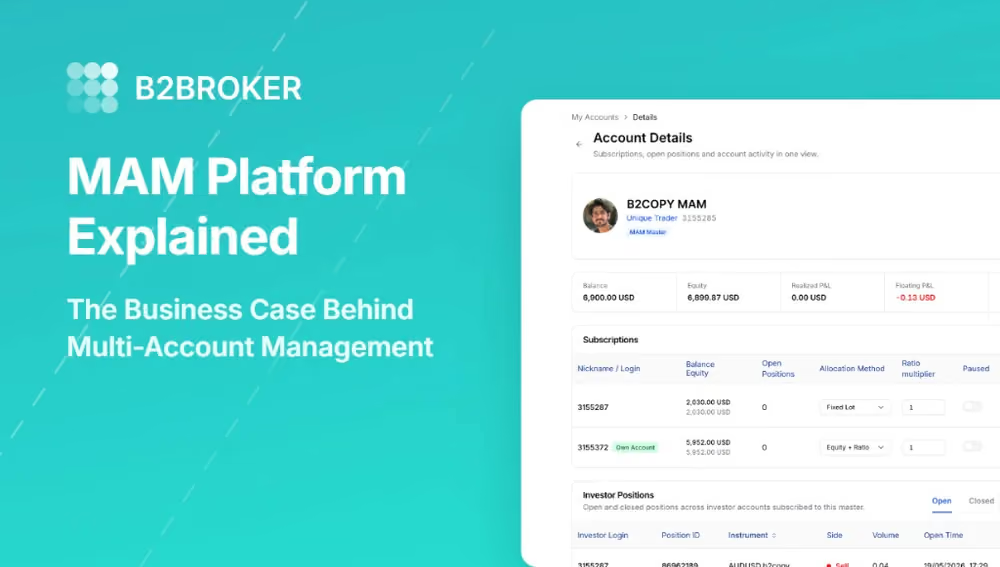
Copy trading gets the traffic. PAMM gets the compliance questions. MAM quietly brings in the capital, for many brokers, it becomes the highest-revenue account type of the three. Here is what a MAM platform actually does, what MAM software has to handle under the hood, and how to judge whether the model belongs in your product line.
Ask a broker which investment module drives the most volume, and the answer is usually copy trading, the module with the leaderboard, the marketing pages and the thousands of small accounts. Measure revenue per account instead, and the ranking inverts. A MAM book of eight strategies and forty investors can out-earn a copy-trading book of several thousand followers, because MAM is where professional managers bring serious capital. Across B2BROKER's client base, dozens of brokers are still working with the same managers years after launch, while retail followers churn in weeks.
A MAM (Multi-Account Manager) platform lets one money manager run a single strategy across many client accounts at once, with every client keeping their own trading account, their own balance and their own withdrawal rights. Nothing is pooled and no client transfers funds to anyone. In B2COPY, MAM is one of three account types available in the same investment platform , alongside copy trading and PAMM , which makes adding it a configuration decision rather than a second vendor.
This article breaks down multi-account management from the operator's side. It covers mechanics your dealing desk needs to understand, the control model your compliance team will ask about, and the commercial logic that decides whether MAM earns its place next to copy trading and PAMM.
Key Takeaways
- What it is. One manager, one strategy, many separate client accounts. Orders execute individually per account, nothing is pooled, and client funds never move.
- How it differs from copy trading. The direction of control is reversed. In MAM, the manager sets each investor's allocation method, ratio and copy state; in copy trading, the investor sets their own.
- How it differs from PAMM. PAMM pools capital virtually into the master and distributes results by share at rollover. MAM keeps every account separate and processes deposits and withdrawals instantly.
- Who it serves. HNW clients, family offices, private mandates and prop firms, with large ticket sizes in the tens to hundreds of thousands.
- Why volume steps up. Each signed MAM master brings their own investor relationships, stepping turnover up in blocks rather than one retail deposit at a time. The master keeps distributing after launch through promo codes and IB partners.
- Where it runs. MAM software sits on top of the trading servers you already operate: MetaTrader 4*, MetaTrader 5*, cTrader and B2Trader, in any combination, including cross-platform copying from a single master.
- Who holds the perimeter. You do. Broker-assigned risk limits cannot be raised or removed by the manager, and the manager never holds withdrawal rights over investor funds.
What Is a MAM Platform, and How Is It Different From Copy Trading and PAMM?
MAM stands for Multi-Account Manager. One money manager runs a single strategy across many client accounts at once: they choose the formula that sizes each investor's positions, pause individual subscriptions when needed, and act on investor positions directly from their own interface. Every client keeps their own account, and no one transfers funds to anyone. It is the closest thing a brokerage can offer to private money management.
MAM vs PAMM, in one line. MAM executes an individual order on each investor's own account; PAMM pools capital virtually into the master and splits the result by share. Same manager, same strategy, completely different account structure.
Supported platforms. A B2COPY MAM solution runs on MetaTrader 4*, MetaTrader 5*, cTrader and B2TRADER, on one server or several, with cross-platform copying between them. Feature-level detail: B2COPY MAM .
Every order the manager places on the master account is replicated to each subscribed investment account as an order of its own. Nothing is pooled and nothing is netted. Each client keeps their own account, balance, statement and withdrawal rights. The manager holds trading authority and nothing else.
The Direction of Control
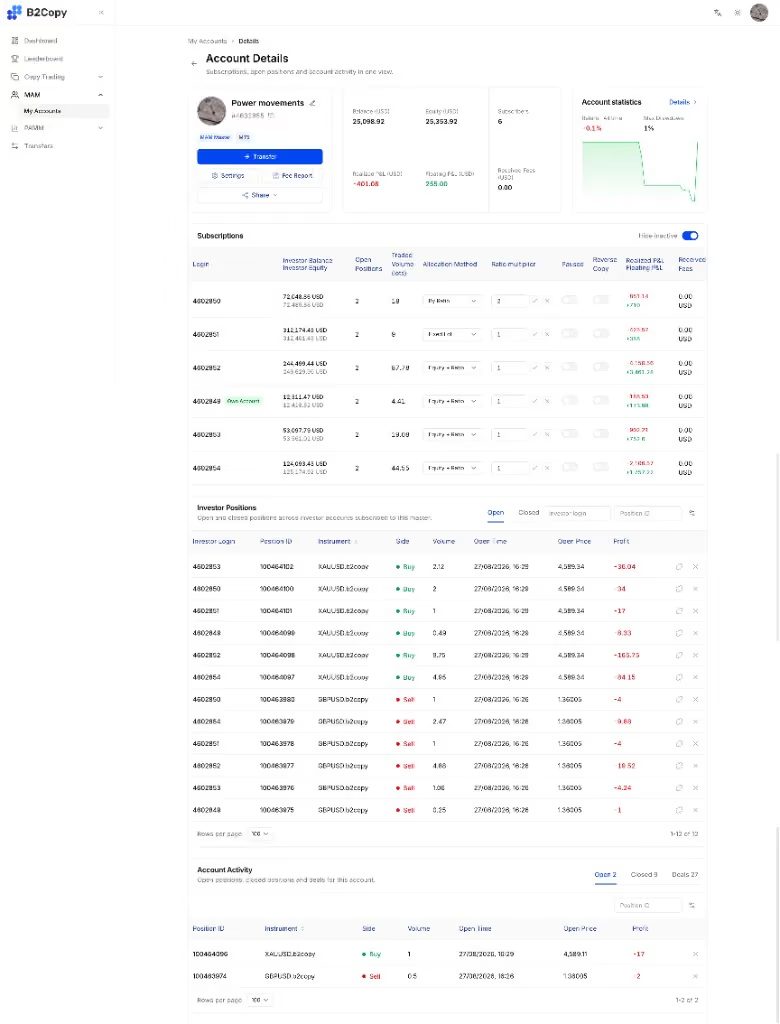
What separates MAM from ordinary copy trading is not the execution engine but the direction of control. In MAM, the manager sets each investor's allocation method and ratio, switches reverse copying on, pauses and resumes any subscription, and can close or detach an individual investor's position without touching the master trade, all from the master interface. In copy trading, every one of those levers belongs to the investor — the signal provider cannot see or change any of them. Only two things stay in a MAM investor's hands: a personal loss limit and the exit. Custody of the funds never moves in either model.
That single reversal decides who the product is built for. Self-service settings are a feature for a retail follower and a dealbreaker for someone placing $500,000 with a manager chosen precisely so they don't have to make those decisions. PAMM answers the same brief differently. Capital is pooled virtually into the master, one position is opened at master level, and results are distributed by share. Investors see balance operations rather than trades, and deposits and withdrawals are processed at rollover instead of instantly. The same manager running the same strategy becomes a different vehicle and a different conversation with your compliance team.
Copy Trading vs MAM vs PAMM
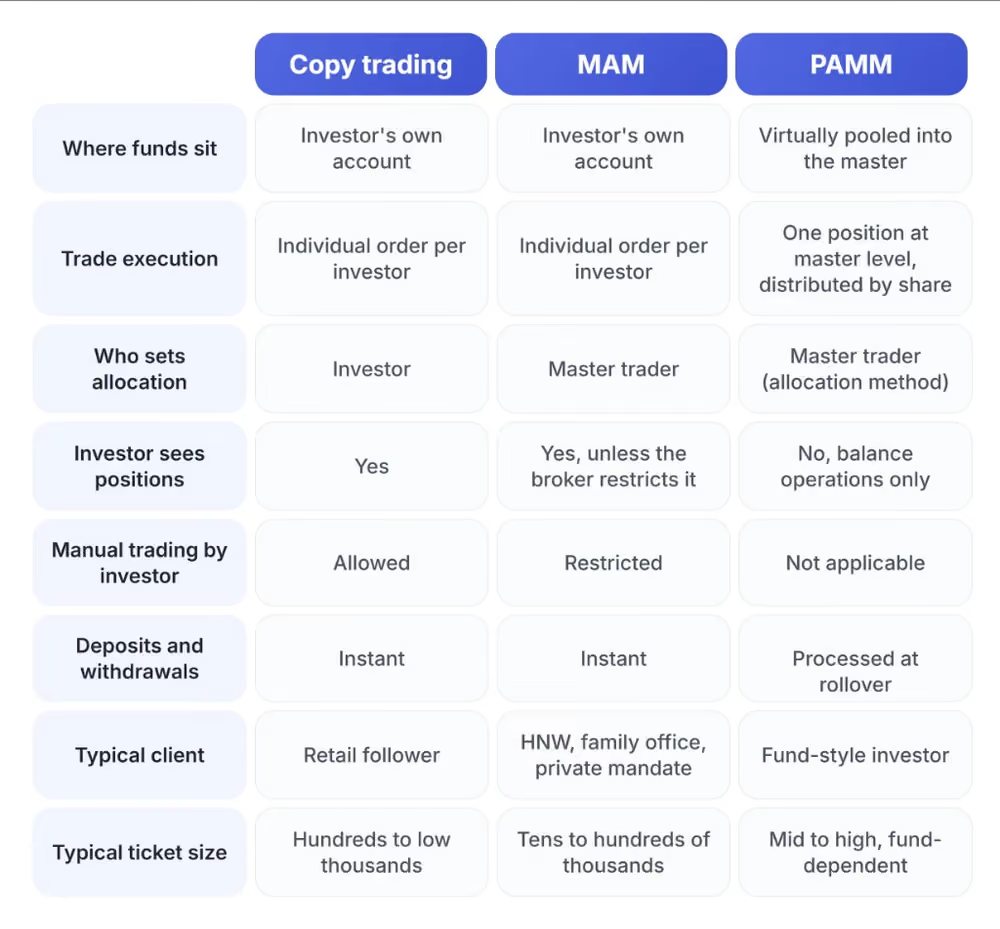
Read that as a segmentation map rather than a feature comparison: copy trading converts traffic, PAMM packages a strategy as something close to a fund, and MAM serves the relationship a manager already has. Full side-by-side breakdown: Copy Trading vs PAMM vs MAM .
Terminology check. Some vendors use "MAM" loosely to describe any bulk-allocation tool, including pooled ones. In B2COPY the distinction is strict. MAM means individual accounts, individual order execution and master-side control.

How Does MAM Execution Work, Order by Order?
One order from the manager becomes one distinct order per investor, sized by that account's allocation settings and sent to the trading server independently.
The manager opens a position. The platform reads each subscribed account's allocation settings, calculates the correct size for that account, and sends a separate order to the trading server. Closures, partial closures and pending order cancellations propagate the same way.
Sizing is set per investor through one of six allocation methods. An order can be copied in proportion to the investor's balance or equity, scaled by a manager-set ratio on top of either, held at a fixed lot, or taken as a straight multiple of the master's lot size. The default is proportional to equity × ratio. A manager mixes them across one book: a large mandate at full ratio, a cautious client on the same strategy at half, a trial account on a fixed 0.10 lot. One strategy covers three risk profiles with nothing to reconcile by hand.
One Order In, Four Orders Out
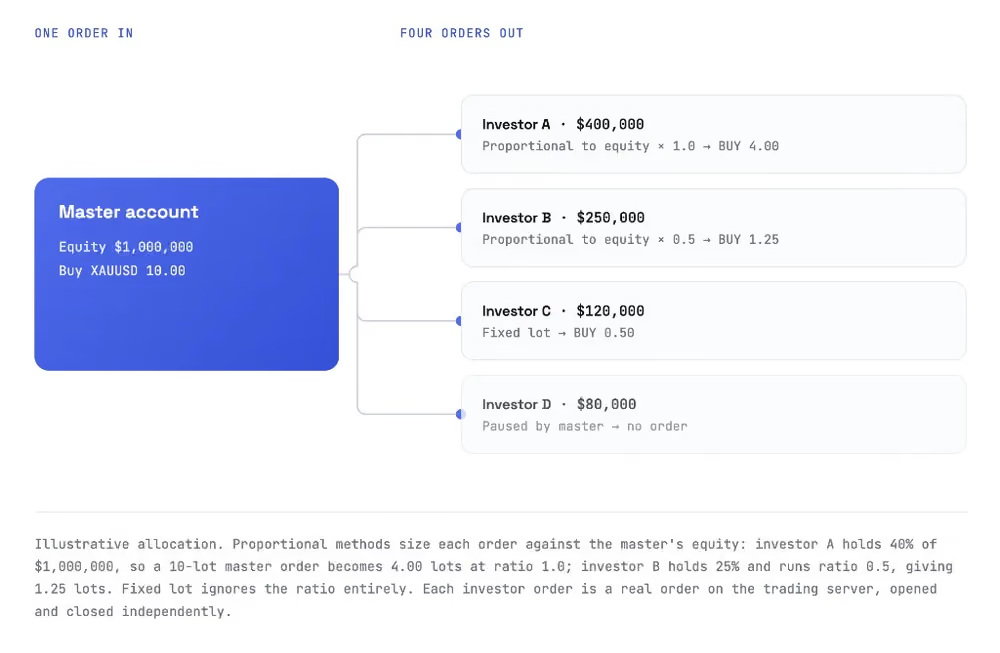
Each of those is a real order on the trading server, opened and closed independently. Instrument limits still apply, so a size outside the symbol's minimum or maximum is copied at the nearest valid volume rather than rejected silently. The formula behind every method, with worked examples: position sizing in B2COPY .
Master and investors also do not have to sit on the same server or even the same platform. A manager on MT5* can serve investors on MT4*, cTrader and B2TRADER simultaneously, with symbol mapping and lot conversion handled by the platform. When you launch a new server, your existing strategies are immediately available to its whole client base ( multi-server copying ).
What Do Investors See, and How Do They Subscribe?
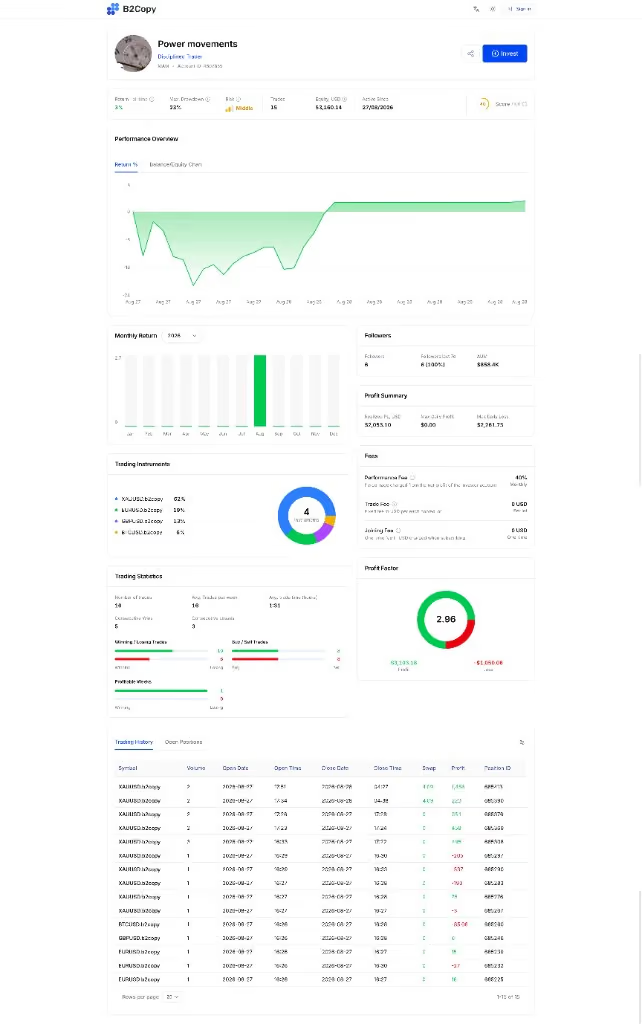
Every account, master and investor alike, gets a statistics page the platform computes itself, with no figures taken on the manager's word.
Each page carries twelve blocks and 25+ metrics, including:
- Return — over the life of the account and over selectable periods
- Drawdown and maximum drawdown — depth and duration of losing stretches
- Profit factor — gross profit against gross loss
- Win rate and average trade — whether returns come from consistency or from outliers
- Equity curve — the shape of performance over time, beyond any single headline number
- Full trading report — every deal on the account, exportable
The master's page is the sales asset. Before committing a dollar, an investor can see how deep drawdowns went, how long recovery took and how much of the gross return the fee structure takes. The same statistics feed the embeddable leaderboard and account widgets on your website, putting the evidence to work for acquisition as well as retention. The statistics module and the embeddable widgets are covered here: integration and widgets .
Access Without a Leaderboard
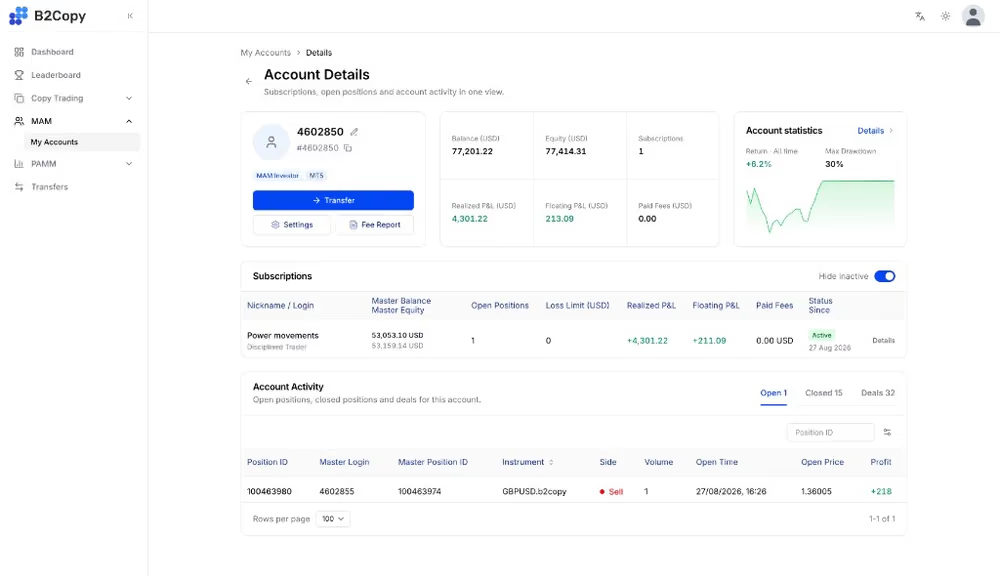
The leaderboard is a platform-level switch, one a MAM deployment usually leaves off. A master who arrives with their own investor relationships has nothing to win on a ranking built for anonymous traffic. Their channel is the direct subscription link they generate for a strategy, which can carry commercial terms. The investor sees a custom fee plan applied on the form before confirming, while named partner accounts with their percentages are written into the investment account's partnership settings automatically on subscription. Add a subscription code, and only link holders can subscribe at all.
Who Controls What in a MAM Setup?
The manager controls execution and per-investor settings, while the investor controls the money and the exit. The broker controls the limits neither of them can cross.
The control model is the part your compliance and dealing teams will interrogate, so it is worth stating plainly. Three parties hold three different sets of levers.
- Master trader — execution and per-investor setup. Sets each investor's allocation method and ratio, pauses or resumes copying per account, enables reverse copy, views investor positions, closes or detaches an investor position independently of the master trade, sets minimum deposits and fee plans, and generates direct subscription links.
- Investor — custody and the exit. Keeps funds on their own account, deposits and withdraws at will, sets a personal loss limit on the subscription, and unsubscribes at any time, at which point copying stops immediately.
- Broker — the outer boundary. Enforces risk limits masters cannot override, decides whether the platform runs with a leaderboard at all, restricts or permits manual trading on investment accounts, creates accounts and subscriptions from the back office, and configures every fee type.
That last set of levers is what makes MAM sellable to a manager who has been burned by a self-service platform. The manager gets genuine operational control, and you still hold the perimeter.
Why Choose MAM Over PAMM?
Because nothing is pooled. An investor can join or leave instantly without touching the master's account or anyone else's positions, they see every trade in their own terminal, and the manager can pause a single investor without affecting the rest of the book.
Cash Flow
In PAMM, a deposit or withdrawal is processed at rollover, with open positions reallocated across all participants. One investor's money movement changes the arithmetic for everyone in the pool. In MAM, each subscription is its own account: an unsubscribe closes or detaches only that investor's positions, leaving the master's equity, margin and open trades untouched. Deposits and withdrawals are instant, with no rollover schedule for your support team to explain. Fund-style administration falls away as well, since there is no NAV cycle to run, no redemption window to schedule and no client money to hold in custody.
Visibility
In MAM, the investor's own terminal on MT4*, MT5*, cTrader or B2TRADER shows every real position with its symbol, volume, entry price and floating P&L instead of a share of a pooled balance. PAMM investors see balance operations only. For much of the professional client base, that is the deciding factor. They will delegate the decisions but not accept a black box. If you would rather they didn't watch every tick, position visibility is a broker-level setting.
Per-Investor Control
Separate accounts let the manager pause any single investor without affecting anyone else, and in practice they do it for two reasons: an investor has hit the return they wanted for the month and would rather bank it, or an investor does not want exposure to a particular class of instrument (crypto during a volatile stretch is the usual example) while the rest of the book keeps trading it. During a pause, new master orders are not copied to that account; positions already open stay as they are until the master closes or detaches them. One strategy, per-client rules, no second master account for every variation.
That combination is what wins private mandates, family offices, prop firms monetising internal traders and academies whose students invest their own capital. In every case the relationship and the capital already exist somewhere in your market; MAM is what lets them settle on your books instead of a competitor's. Model-by-model breakdown: Copy Trading vs PAMM vs MAM .
Where Does MAM Revenue Come From?
From the volume that arrives with the manager. A MAM master is a partner, not a follower. They bring their own investor relationships, so turnover steps up in blocks instead of one retail deposit at a time.
That is the shape of the growth curve. Retail copy trading adds volume account by account, each with its own acquisition cost and churn risk. Sign one money manager, and you inherit the five to ten investor relationships they already own, at ticket sizes in the tens to hundreds of thousands, traded on a professional's schedule rather than a retail client's. That activity does not evaporate after a bad week. Recruiting managers moves the number in a way client marketing cannot. That is why the same page that sells MAM to a manager also arms your partnership team .
Promo Codes Keep the Funnel Open
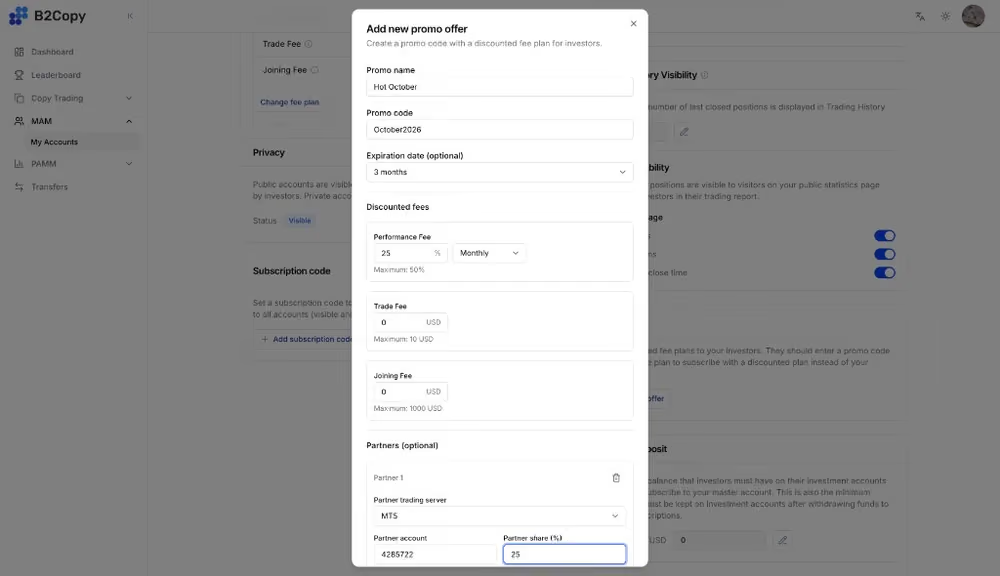
The manager keeps distributing after onboarding, because the platform hands them the tools to do it. A master creates a promo code tied to a discounted fee plan, then shares it in a webinar, a Telegram channel or a closed education group. A code's own discount by fee type, duration, usage cap and expiration date lets a campaign stop at the first fifty investors or expire on Friday. The discount costs the manager nothing until someone actually subscribes. That is why codes get used freely, and why they beat platform-wide promotions that cut into your spread for everybody.
Partners as Distribution
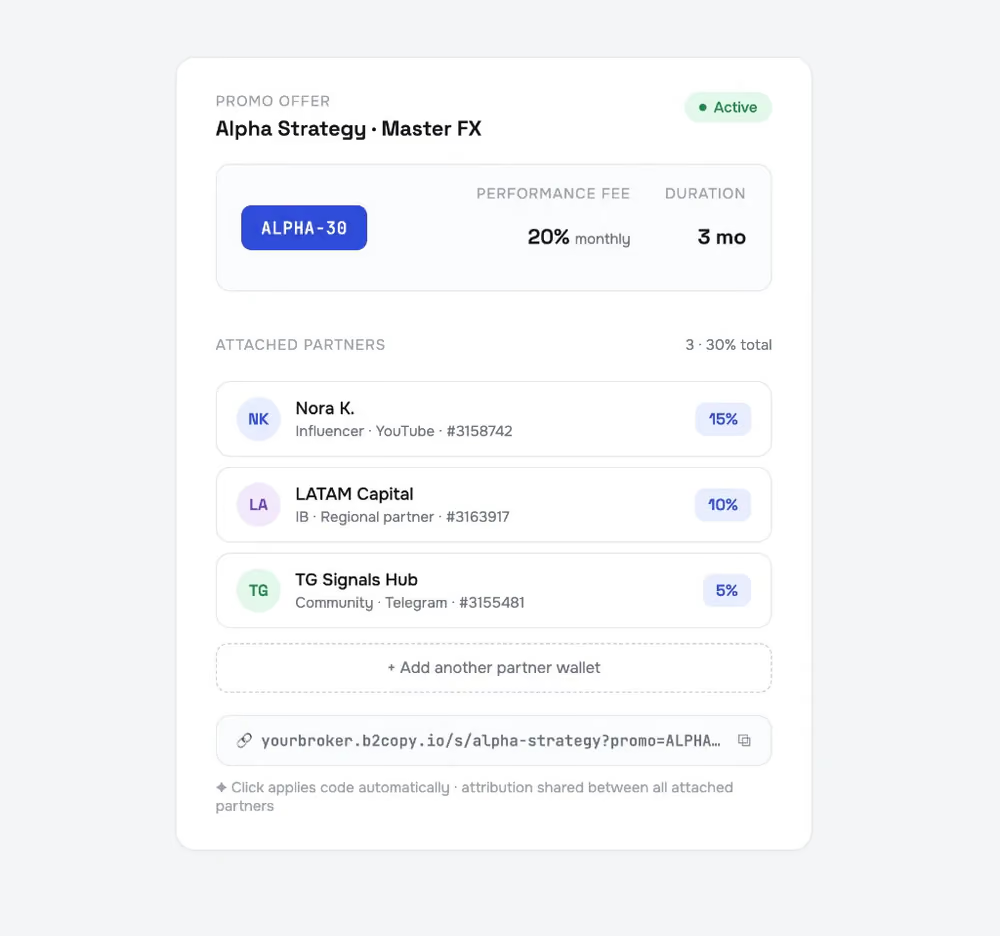
The same code turns partners into distribution. One or several partner wallets can be attached to a promo code or a shareable link, each with its own percentage, and every attached partner then earns a share of every fee that investor pays. The share runs for as long as the subscription lasts, unlike a one-off rebate paid on the first deposit. Structures run up to three referral levels deep, with splits are calculated and paid every billing cycle from the back office. Per-link analytics show which YouTube video, channel or partner deck delivered which subscriber ( promo codes and partner links ).
Where a $100 Performance Fee Goes on a Three-Level Partner Link
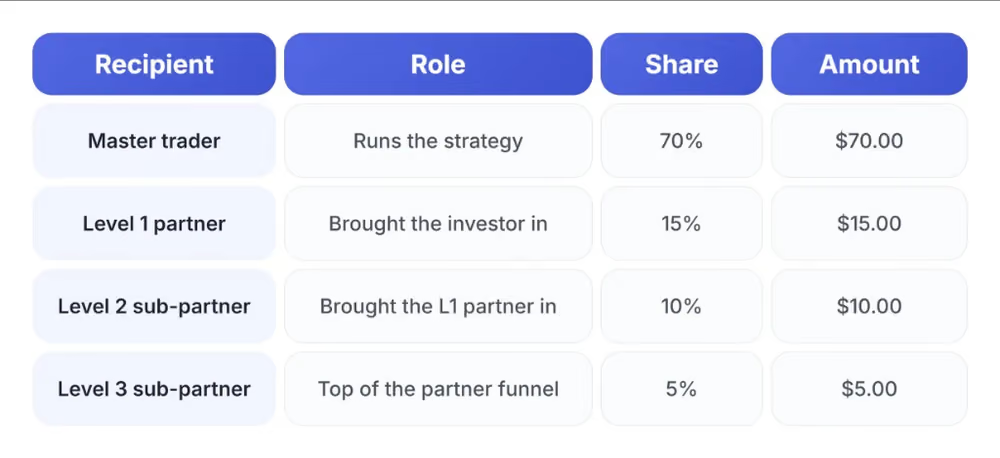
That is the network effect worth building for. The manager markets their own strategy, partners market the manager, and every investor either of them brings is your client, on your server, trading your spread. It is also what makes the relationship stick. The verified track record a master builds on your platform is the asset they show to prop firms, funds and prospective partners. Moving to another broker means starting that curve from zero. Payout structures and IB levels: partner program ; the manager's own view of the same economics: B2COPY for money managers .

What Does MAM Software Cost, and Where Does Break-Even Sit?
Against a $2,500 monthly platform cost, break-even lands between $12,000 and $37,000 in client deposits, depending on the turnover ratio your book actually achieves.
Two lines feed the model. The first is your own commission on the volume those managed accounts generate. The second is the manager's fee flow, which the platform calculates and charges automatically as balance operations: performance (with high-water mark protection), management, trade volume, subscription, joining and profit fees — six fee types in total. You are not the counterparty there; the manager charges the investor. But because you configure the terms, host the accounting and decide what share is routed to partners, the fee flow is what makes the relationship worth defending even when volume is flat.
The market backdrop is not in dispute. The BIS Triennial Survey put global FX turnover at $9.6 trillion a day in April 2025 , and Finance Magnates Intelligence tracks retail CFD daily turnover rising from 2.7% of that volume in Q4 2020 to 14.1% by Q4 2025 . Managed capital is a growing slice of a growing market.
The broker-side arithmetic is simpler. For an ECN/STP broker charging $5–10 per lot, a million dollars of turnover produces roughly $25–91 in commission depending on the instrument. EUR/USD sits around $45–91 per million, while gold comes closer to $25–50 because its contract size is larger.
The turnover ratio is the one number worth challenging. On B2BROKER's internal benchmark of $1–3 million in trading turnover per $1,000 of client deposit, each $1,000 deposited is worth roughly $25–273 in broker commission at ECN/STP pricing. That range comes from B2BROKER's own book of broker clients rather than a published industry study. The spread is wide because client behaviour, leverage policy and instrument mix all move it. Treat it as a starting assumption to replace, not a benchmark to inherit.
Unit Economics at a Glance
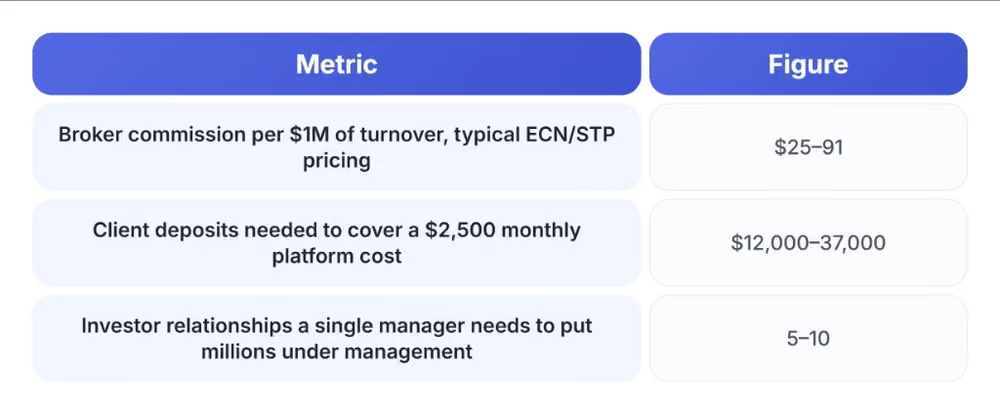
B-book flow reaches break-even sooner, since the margin per unit of volume is higher. And MAM reaches it through concentration rather than headcount: a handful of relationships that arrive with capital already committed cuts the accounts you support and the tickets you answer, while average revenue per account climbs.
Sanity check. These are illustrative sector averages and internal benchmarks. Substitute your own commission per lot, your own turnover-to-deposit ratio and your actual plan cost before taking anything to your board. Plans, volume tiers and the bundle that offsets the subscription against A-book commissions: B2COPY pricing .
How Is Risk Controlled When One Manager Trades Many Accounts?
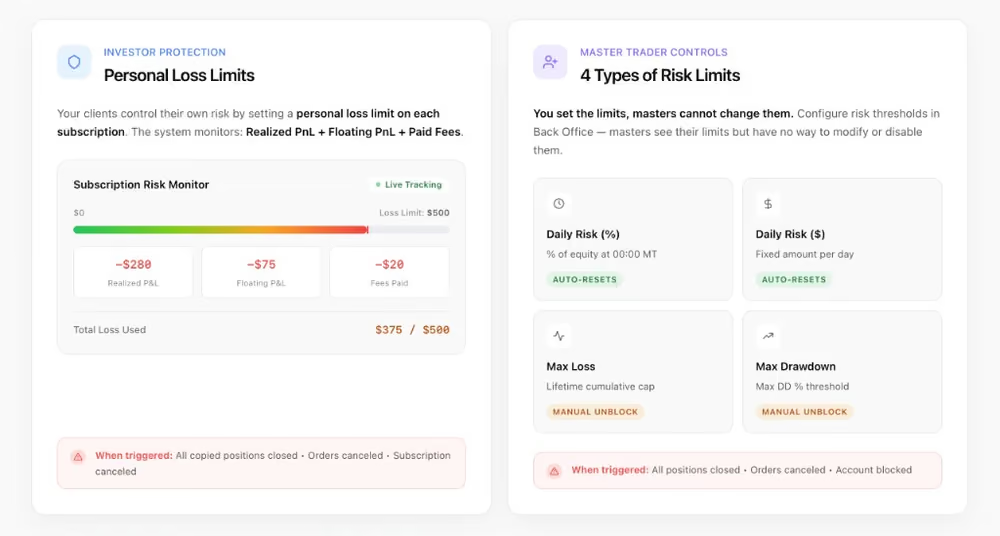
By the broker, not the manager. You assign daily, maximum-loss and drawdown limits to the master account, and the manager cannot raise, edit or remove them.
A single manager trading across dozens of client accounts concentrates risk that the manager themselves cannot be trusted to police. Honesty is not the issue; the incentive is. The manager earns on the upside while the client carries the drawdown. So, the controls sit above the manager, out of reach of their panel, as the boundary of the account itself.
- Daily risk limit, in percent or in dollars — measured against the master's equity at the start of the trading day. On breach, open positions are force-closed, pending orders cancelled and the master blocked until the counter resets at midnight platform time.
- Maximum loss limit — an absolute floor on cumulative loss for the strategy.
- Maximum drawdown limit — a ceiling on peak-to-trough decline.
- Investor loss limit — set per subscription by the investor. When it triggers, that investor's copied positions close and the subscription ends automatically, with no effect on anyone else in the book.
This is a stronger sales argument than it first looks. Onboarding an external money manager is normally an act of faith, because you are handing an outsider the ability to lose your clients' money in your name. Enforced limits convert that into a bounded, quantified exposure: you can state in advance the worst day a strategy is able to produce and know the platform will act on it without a human on the desk at 3am. Compliance teams sign off on numbers. A manager's discipline is not something they can audit.
Two structural facts finish the conversation. The manager never holds withdrawal rights over investor funds, and capital never leaves the investor's own account. That leaves no pooled vehicle to account for. Whether that changes your licensing position is a question for your regulator and your counsel — but it is materially different from operating a fund. The full set of controls on both sides: risk limits in B2COPY .
So is MAM right for your brokerage?
Yes, for effectively every broker, provided you treat MAM as a page on your website rather than a product launch.
The mistake is to scope it like a new product, with a roadmap slot, a marketing budget, a recruitment drive for managers you do not yet have. None of that is required. What is required is that the capability is visible.
Money managers do their own vendor research. When one decides where to place a $2M book, they look for a broker whose site says in plain terms that multi-account management is available: individual segregated accounts, per-investor allocation, automated performance and management fees, broker-enforced risk limits. If your site is silent, they assume the answer is no and stop reading. So publish a MAM page in your trading platforms and partners sections, then let it sit there.
When a request arrives, you switch it on. If you are already a B2COPY client, MAM lives inside the platform you are running and shares its accounts, statistics, fee engine and admin panel on MT4*, MT5*, cTrader and B2TRADER. The widget embeds in your client area via SSO in about five days; a full REST and gRPC API integration takes two to three weeks if you want the MAM software native inside your own interface. No new contract, no procurement cycle, no integration project. You are advertising a capability you already own.
The same page is worth putting in front of your partners. IBs, prop firms and academies who already manage or influence other people's capital gain a product to sell rather than a rebate table to quote, bringing the client relationship with them. A landing page costs a day of your marketing team's time; one inbound manager with a $5M book is a revenue line that outlives most acquisition campaigns you will run this year.
Frequently Asked Questions
What is a MAM account?
A MAM (Multi-Account Manager) setup consists of a master account, traded by a money manager, and any number of investment accounts subscribed to it. Every order on the master is replicated to each investment account as an individual order, sized by that account's allocation settings. Funds stay on the investor's own account throughout.
Which trading platforms does a MAM platform support?
B2COPY MAM works with MetaTrader 4*, MetaTrader 5*, cTrader and B2TRADER. Master and investors do not have to share a server or a platform: cross-server and cross-platform copying is supported in any combination, with symbol mapping and lot conversion handled by the platform.
Can a MAM manager withdraw client funds?
No. The manager has trading authority on the master account only. Investment account funds stay under the investor's control, and withdrawal rights remain exclusively with the investor.
Can a manager remove the risk limits you set?
No. Master-side limits (daily risk, maximum loss, maximum drawdown) are assigned by the broker and cannot be raised, edited or deleted by the manager. Breaching one force-closes positions and blocks the master account automatically.
Can investors trade manually on a MAM investment account?
Not by default. Investors cannot open, close or modify copied positions. Personal manual trades on the same account are restricted unless you permit them at broker level, and even then require free margin beyond the subscribed amount. Most MAM setups keep the restriction in place, since manual positions interfere with the manager's allocation logic.
What can an investor see about a manager before subscribing?
The manager's full statistics page: return, drawdown and maximum drawdown, profit factor, win rate, equity curve, trading report and the fee terms that apply. After subscribing, they get the same page for their own account, with every fee itemised.
How is MAM different from PAMM in practice?
PAMM pools capital virtually into the master and distributes results by share, with deposits and withdrawals processed at rollover and no positions visible to investors. MAM keeps every account separate, executes an individual order per investor, and handles deposits and withdrawals instantly.
Is there a per-order charge for copied trades?
No. Platform pricing is volume-based, calculated on turnover rather than on the number of orders used to reach it. Ten lots executed as one order or as a hundred small orders cost the same.
How do promo codes work for a MAM master?
The master creates a promo code tied to a discounted fee plan, with its own duration, usage cap and expiry, and shares it or a link containing it with their audience. The investor sees the discounted terms applied at subscription. One or more partner wallets can be attached to the code, each earning a configurable share of every fee that investor pays, distributed automatically for up to three referral levels.
Can we run MAM without a leaderboard?
Yes, and most brokers do. With the leaderboard off, masters onboard their own investors through direct subscription links, which can carry a dedicated fee plan and partner fee splits. Subscription codes restrict access to link holders only.
Can we run MAM alongside copy trading and PAMM?
Yes. All three run on the same platform with shared accounts, statistics, fee engine and partner logic. The leaderboard can be enabled or disabled to suit each. Most brokers position copy trading for retail acquisition, MAM for managed capital delivered through partner managers, and PAMM for fund-style products.
Recommended articles
Subscribe to our newsletter