Understanding Solidity: Building Smart Contracts for Everyone

The blockchain world has evolved tremendously in a short span of 14 years since its modest beginnings. In 2009, the only value stemming from blockchain technology was Bitcoin and its virtual currency. Although crypto offerings are still wildly popular in the blockchain family, this novel technology has interesting future implications.
Introducing smart contract functionality is one of the most promising aspects of blockchain, letting developers base applications on the decentralised methodology.
This article will discuss Solidity , a brand-new programming language that promises to simplify smart contract development.
Key Takeaways
- Solidity is a new object-oriented language introduced by Ethereum creators.
- Solidity’s functionality allows developers to craft smart contracts swiftly, efficiently, and without technical complications.
- Although Solidity is a brand-new language, it closely resembles Python and Java with its interface and syntax.
- Solidity can be the next step in growing the blockchain industry, as it adds inherent value to decentralised networks.
First things First: What Is EVM and Smart Contract?
As mentioned above, Solidity is a brand-new programming language developed by Ethereum creators. However, to truly understand the nature and implications of Solidity, it is vital to first familiarise ourselves with EVM and smart contracts . EVM stands for Ethereum Virtual Machine, a supercomputer behind the entire Ethereum network and its operations.
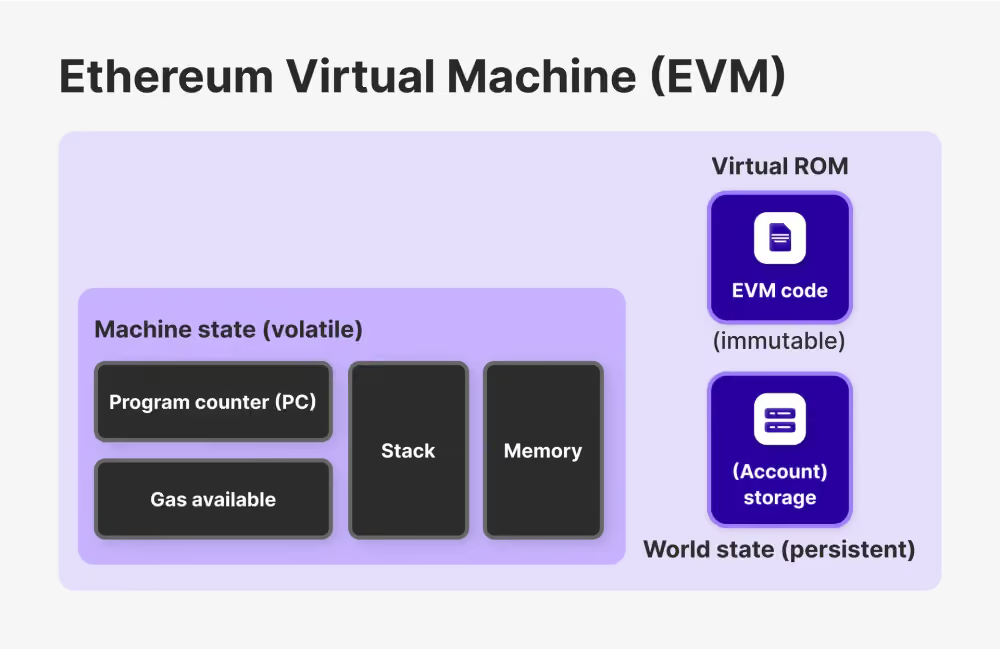
It is widely known that Ethereum is the most advanced and feature-rich network among the flagship crypto offerings, boasting more functionality than even Bitcoin itself. EVM is responsible for Ethereum’s unrivalled functionality, as it facilitates every activity on the network. However, validating and processing transactions is old news for blockchain networks. Where EVM gets interesting is its ability to produce smart contracts within the system.
Smart contracts (SCs) are the bread and butter of Ethereum, responsible for creating NFTs , decentralised applications, Web 3.0 tools, Metaverse video games and more. Without SCs, it would be impossible to task the decentralised networks to carry out any complex procedures.
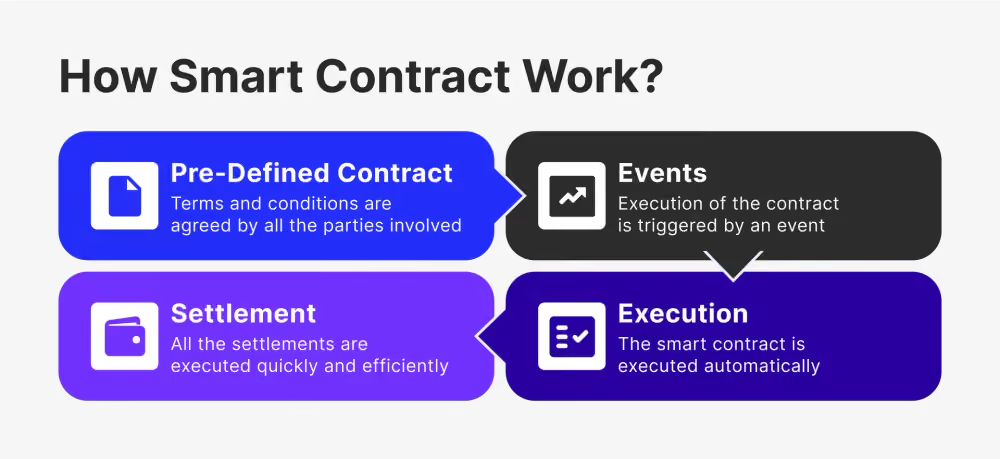
In simple terms, SCs are the communication language that connects blockchain with any desired software. Thus, SCs allow developers and creators to power their digital creations with decentralised powers, resulting in numerous innovations in the blockchain field.
The combination of EVM and smart contracts has catapulted Ethereum to the forefront of blockchain innovations. After all, these functionalities were why Ethereum reached astronomical heights of success in the last decade. In 2023, Ethereum remains the biggest supporter of SC functionality and technological innovations related to blockchain methodology. With Solidity , Ethereum has again introduced an excellent mechanism to simplify creating smart contracts and building a decentralised digital future.
Understanding the Solidity Programming Language
As mentioned, Solidity is a programming language exclusively developed to write smart contracts. Previously, SC functionality and development was accessible through various languages, including C++, Java and Python. However, none of these programming languages were designed specifically for this purpose, thus unable to accommodate a smart contract code that is convenient, easily scalable, and effective.
In simple terms, the existing programming languages were simply not created for developing smart contracts. Thus, Ethereum creators decided to remedy this issue and construct a new language.
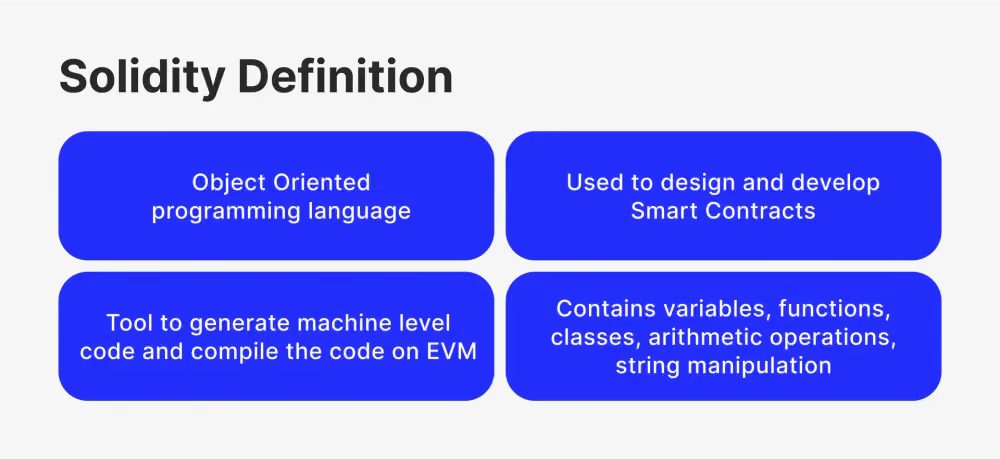
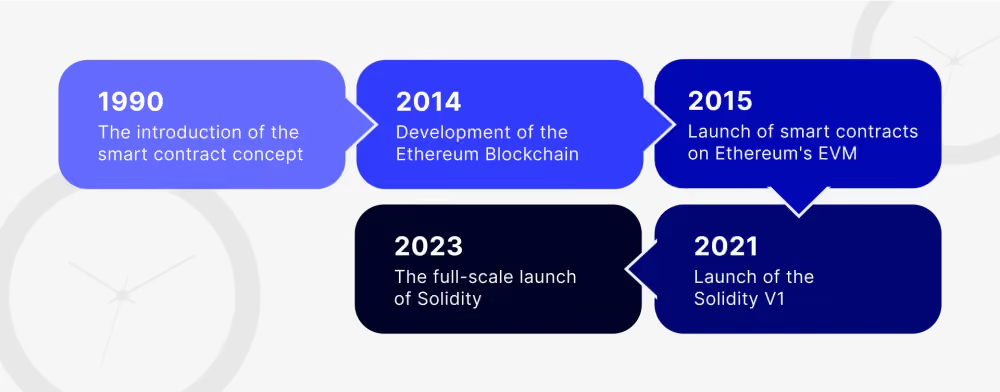
In 2021, the world witnessed the first significant glimpse at this project. Many developers across the globe became excited about Solidity and its built-in smart contract function, accommodating the dApp construction with unprecedented ease and simplicity. However, the most significant point of interest was Solidity’s advantage of compiling and translating the written code to the EVM.
Previously, this process was quite cumbersome and problematic, as the popular programming languages were not designed to “speak” with the Ethereum virtual machine. Therefore, the smart contract development process was difficult and riddled with technical errors. With Solidity, the SC development process has become much more straightforward, as this novel language was specifically designed to be compatible with EVM.
While Solidity was a brand-new tool in the digital tool shed for programmers, Ethereum creators have taken best practices from the existing languages. Thus, despite its novelty, Solidity feels like a familiar programming language through and through.
Its object-oriented nature was similar to C++, Java and other established names in the programming industry. The data types and inheritance functions were also added, making constructing complex functions and features for decentralised applications simple. Solidity became one of the first native languages to Ethereum without sacrificing the established norms in the programming landscape.
Why Solidity And Smart Contracts Are Essential For Web 3.0?
So, Solidity is quite a big deal in decentralised programming, as it allows developers to craft smart contracts and complex digital tools easily. But why is Solidity, and SC development in general, so important for the future of Web 3.0? The answer is quite simple – smart contracts are the gateway to unlocking the next chapter in the blockchain roadmap.
Thus far, the entire blockchain industry has relied on the success of Bitcoin, Ethereum and other high-value crypto coins. Coin offerings mostly populate the entire industry. While some of these coins have inherent value to them, most of the market is still speculative, leading to high uncertainty and volatility. The blockchain industry is unstable due to the lack of real-world utility and value.
Smart contracts are the leading candidates to overcome this hurdle and arm blockchain technology with an undeniable value. Even in the current landscape, numerous corporations have become interested in the smart contract functionality and its implications. With SCs, it will be possible to automate multiple procedures online, including supply chain management, data controls, cybersecurity, product offerings, etc.
Many companies have already implemented SCs into their digital infrastructure. For example, online retailers already use SCs to provide automatic rebates and discounts on their products, eliminating the need for bureaucracy and red tape. Thus, with proper execution and enough resources, SC functionality could be the next stepping stone for the blockchain industry.
However, this prospect is still far away, as there are many roadblocks to utilising smart contracts conveniently and integrating them into existing digital ecosystems. Solidity is an excellent step in the right direction, in this case, offering a simplified way to build smart contracts.
Benefits of the Solidity Language
It is no secret that Solidity is one of the most critical projects in the crypto landscape. The current climate in the blockchain industry further emphasises its significance. As of 2023, the blockchain world has rebounded after the catastrophic winter of 2022. However, this sector is in desperate need of innovation to drive growth. Solidity is here to be an answer to the above-mentioned dilemma . But is it a good programming language in its own right?
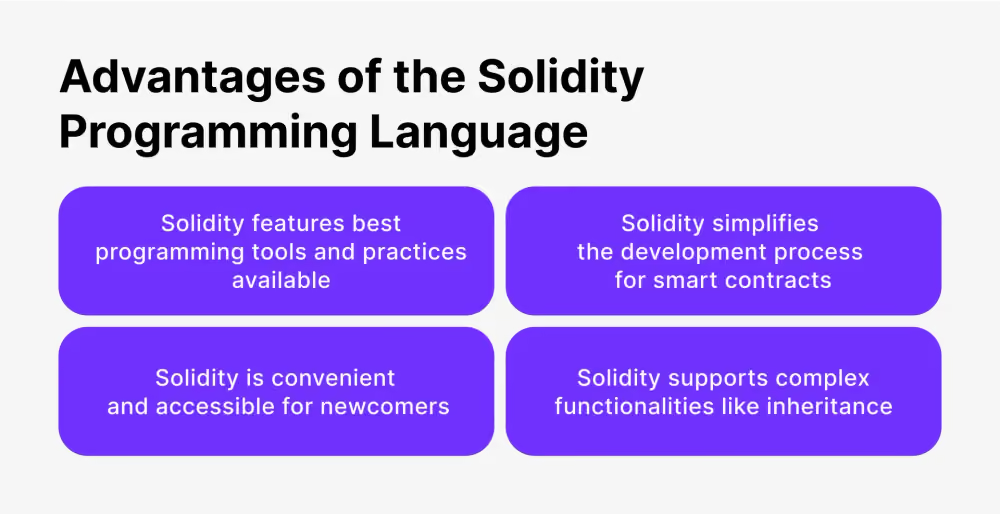
While this question is subjective, Ethereum developers have equipped Solidity with the best programming practices available in the modern market. Solidity is object-oriented, which is one of the most accessible methodologies in the programming field. Solidity also closely resembles Python, considered one of the most popular programming languages in the world, thanks to its simplicity and easy adoption for newcomers.
Thus, Solidity was not created exclusively for experienced professionals, as it tries to open the gates for casual individuals interested in the decentralised programming field. One of the biggest challenges in the blockchain industry is finding the bright minds to develop and experiment with decentralised applications.
Previously, this was a tall order even for professional developers. However, creating Ethereum smart contracts written on Solidity is more accessible than any other method. Thus, Solidity has dramatically raised user adoption on the creators’ side, which is excellent news for the blockchain industry.
Finally, Solidity supports inheritance functionality for SCs, an essential feature for complex applications. Inheritance allows apps to have continuity and transfer functionality from one version to another. With this feature, developers can swiftly carry over the functionality and tools from one application to the next, allowing decentralised apps to become more competitive and useful for the public.
Practical Implications of Solidity and Smart Contracts
While the benefits of Solidity are plentiful and extremely promising for the future of Web 3.0, it still might be difficult to visualise the examples of smart contract utilisation in global industries. Although the value of smart contracts might not be apparent, almost every digitally powered industry worldwide could find numerous benefits with this technology. Let’s explore a few of the many applications of SCs.

Supply Chain Management
The supply chains are some of the most excruciating and time-consuming tasks for any business. It takes several managers, daily correspondence, frequent inspections and rigorous monitoring to fulfil the necessary daily orders. While digital tools help out in this struggle, supply chain management is still far from an ideal solution.
With smart contracts, supply chain management can sometimes be simplified or even trivialised. The automated contracts will allow business owners to account for any conceivable development in the supply chain and program appropriate responses. Delivery is late? SCs can automatically notify the suppliers. Is the payment due? SCs can automatically send the cash to suppliers as per the receipts. The entire system can flow like water with the integration of smart contracts.
Healthcare
It is no secret that healthcare is one of the most sensitive industries regarding private and personal data. While digital inventions simplify patient recording efforts, they are not secure or confidential. With SCs and the general decentralised functionality, patient information can become completely anonymous across the digital hospital servers. With this technology, patients can become confident that their data is observed and analysed only by the relevant figures and nobody else.
Additionally, SCs can assist hospitals and clinics in sharing data across the world in seconds, which will help doctors retrieve the latest updates on clinical trials and possibly even prevent global pandemics. Promptly retrieving data is paramount in the medical industry, and SCs can permanently solve this issue.
Is Solidity Hard To Learn and Master
After the nature, benefits and practical applications of the Solidity language and SCs, only one question remains – how hard is it to learn for newcomer enthusiasts? The answer is quite complicated, as programming is a complex endeavour, not fit for every individual. However, Solidity should not pose any major challenges for people already interested in programming. Solidity was designed to accommodate programmers familiar with Python and Java.
However, it is essential to note that Solidity is far closer to Python than Java with its simplicity and accessibility. Just like any other object-oriented language, it is important to understand data types, control structures and syntaxes to maximise the potential of Solidity. Smart contract building itself resembles constructing statements in Python or Java. In simple terms, it is vital to understand the logic behind creating conditional statements. After that, everything is simply a technical hurdle that can be overcome with enough time and practice.
The average time to learn Solidity can be between one and six months, depending on the experience with the general programming field. However, with enough time and preparation, mastering Solidity will not be a problem even for industry newcomers. As a matter of fact, the creators of Solidity are counting on it.
Final Remarks
Solidity is an excellent new development in the decentralised landscape. It marks a new chapter for raising the industry’s bar of functionality and value. With its close ties to Python and Java, Solidity is quite easy to adopt and master, allowing developers and even newcomers to develop smart contracts in a couple of months. Therefore, Solidity is a welcome addition to the blockchain ecosystem, with a huge potential to broaden the industry and present brand-new applications for decentralised technology.
FAQ
What is Solidity used for?
Solidity is a new object-oriented language that allows developers to create smart contracts in a simplified fashion. Solidity is similar to Python and Java with its interface, syntax and other functionalities.
What are smart contract use cases?
Smart contracts can be helpful in many industries, including healthcare, business management, logistics, retail and much more. SCs allow managers to automate numerous tasks and functions, eliminating red tape and redundancies from the overall process.
How Difficult is it to learn Solidity?
Learning and even mastering Solidity depends on prior experience with the programming world. However, even rookie developers will not have much trouble mastering Solidity, which takes about 4–6 months to learn from scratch.
뉴스레터 구독하기