How Much Does a Broker-Dealer License Cost in 2026?

A broker dealer license cost is the money a firm pays regulators, spends on people and technology, and keeps locked as net capital to become a registered broker-dealer and stay one. Before reviewing a new member application, the Financial Industry Regulatory Authority (FINRA) asks the applicant to show funding for twelve months of fixed expenses plus 120% of its minimum net capital .
The filing fees inside that budget are public and small. Affordability comes down to how long the firm can carry payroll and systems before the first trade, and whether it builds those systems itself or takes them as a package.
This guide puts a number on each line, from filing fees to the obligations that begin at approval, and compares registering from scratch, buying an existing broker-dealer, and running on turnkey infrastructure.
Key Takeaways
- Regulatory fees are the smallest and most predictable part of the bill, with staff, capital and technology pushing the total into six figures.
- State registration fees look small per filing and multiply by every state and every registered agent, then come due again each December.
- Net capital, annual assessments, audits and reporting begin at approval and continue for as long as the license exists.
- FINRA has 180 calendar days to decide. Every month of that wait is a month of payroll before the first trade.
- An integrated technology stack removes the vendor-by-vendor build from the budget and can be live before the membership agreement is signed.
Breaking Down the True Cost of a Broker-Dealer License
The true cost of a broker-dealer license is a stack whose thinnest layer is the regulator's fees. Above them sit the salaried principals the firm must hire before revenue, the technology it must run on day one, and the capital it must keep idle.
Consultants who have run the process put a small firm with fewer than ten registered persons at $125,000 to $175,000 of initial capital before professional fees. The fee schedules below cover only the first few thousand dollars of it.
FINRA, SEC, and State Registration Fees
Registration fees come from FINRA, the Securities and Exchange Commission, and the states, each billing by a different unit: FINRA by headcount, the states by firm and by agent, the SEC not at all.
FINRA's new member application fee is tiered by the number of registered persons, from $7,500 for a firm with up to ten to $55,000 for more than 5,000, with a $5,000 surcharge for a firm that will clear or carry customer accounts. Registering each person then costs $125 through Form U4, the Uniform Application for Securities Industry Registration or Transfer. The SEC registers the firm through the same Form BD, filed in the Central Registration Depository, and charges no fee.
States charge the firm and then every broker-dealer agent registered there. Maryland bills $250 for the firm and $65 per agent , and rates differ from state to state. Register twenty agents across a dozen states, and the state column already exceeds the FINRA application fee.
Series Exam and Agent Licensing Costs
Individual licensing costs scale with the people you register and the states you register them in. Salaries during the application period outweigh every exam fee on the list.
Rule 1210 of the FINRA rulebook sets the staffing floor before any salesperson is hired. A new member needs at least two registered principals, usually with the Series 24, plus a financial and operations principal holding the Series 27 or the Series 28 at an introducing firm. Those are salaried roles that start before revenue does.
Each remaining exam maps to a function the business plan already contains:
- Series 7: general securities representative, behind most sales to retail and institutional clients.
- Series 63 or Series 66: the Uniform Securities Agent State Law Examination and its combined version, which most states want before they will register an agent.
- Series 65: investment adviser representative, for firms that add advisory accounts or take on dual registration.
- Series 79: investment banking representative, held by placement agents and the people who advise on mergers.
U4 filings and state agent fees multiply by headcount, leaving the hiring plan to set this line as much as the exam schedule does.
The Hidden Ongoing Costs Most Estimates Ignore
The expensive part of a broker-dealer license starts at approval, when the obligations that were paperwork in the application turn into fixed annual bills.
Some scale with revenue, such as the SIPC assessment of 0.15% of net operating revenues . Others arrive flat, such as the annual audit that produces the audited financial statements a firm files whether it traded or not.
Reporting obligations also keep growing. The Consolidated Audit Trail was designed on a budget of $36 million to $56 million a year. Its 2026 budget stood near $147 million , funded mostly by broker-dealers. That figure comes from SIFMA's campaign to move the CAT onto the SEC's budget, the industry's own account of the cost.
Net Capital and CRD Renewal Obligations
Net capital is a liquidity floor the firm must hold at all times. CRD renewals are the annual price of keeping every registration active in every state.
SEC Rule 15c3-1 sets that floor based on what the firm does, from $5,000 for a firm that never touches customer money to $250,000 for one that carries customer accounts.
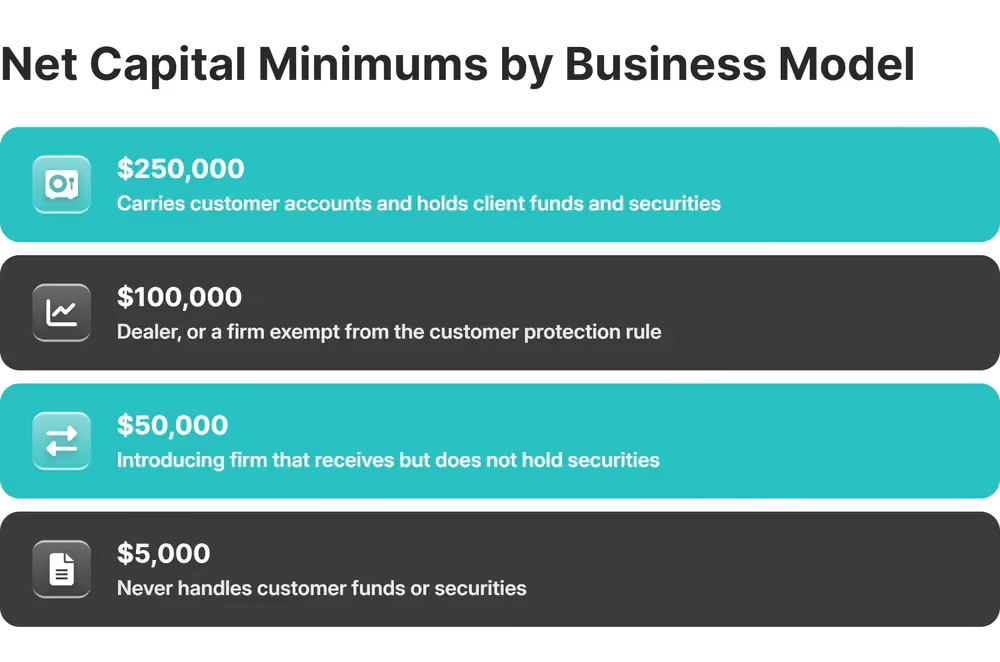
Above that floor sits a ratio test on the firm's liabilities, with the higher of the two numbers being the one it has to hold. Net capital under 120% of the minimum triggers a notice to regulators within 24 hours .
No separate account holds the net capital. The figure is computed, and it constrains spending exactly as a locked balance would. Capital planning for license types that hold client money starts from the balance the firm has to keep intact, a floor no spending may take it below. The FOCUS report that goes in every month or quarter runs off that same computation.
Renewals re-bill the state column. State broker-dealer and agent registrations expire on December 31 and renew through Web CRD. The renewal brings back each state's firm fee and its agent fees, plus a FINRA processing fee of $70 to $125 per person, scaled to the number of SROs and states that person is registered with.
The 180-Day Review Window as an Opportunity Cost
Fixed expenses run from the day the application is filed. Revenue cannot start until the membership agreement is signed. The months in between are paid for out of capital.
FINRA Rule 1014 gives the Membership Application Program 180 calendar days to decide, counted from the day it judges the application substantially complete. The applicant's own response time runs inside that window. Answering the first information request can take 60 days and later ones 30. The span from filing to approval usually runs four to nine months .
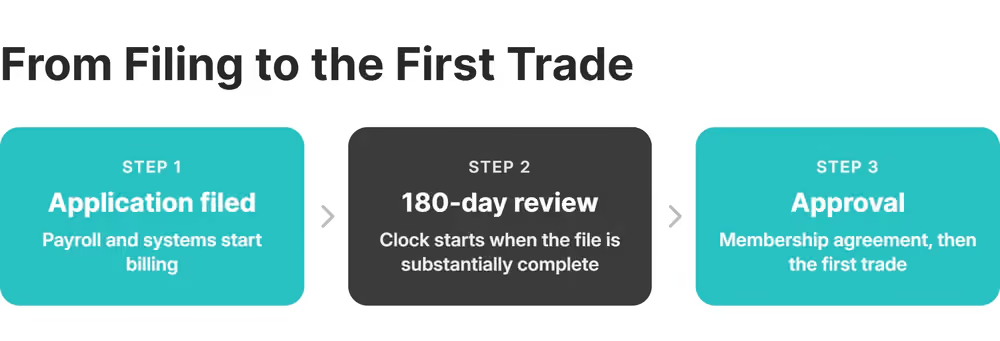
Put the delay in the budget as a separate line, computed as months under review multiplied by monthly fixed costs, plus the gross margin the plan expected in those months. A firm burning $40,000 a month that waits six months has spent $240,000 before its first trade.
Technology is the largest workstream that can finish inside the window. If the platform and back office are live when the membership agreement arrives, the work left after approval is regulatory rather than technical.
Self-Registration vs. Acquisition vs. Turnkey Infrastructure: Broker-Dealer TCO Comparison
No path is cheapest for every firm. Self-registration keeps the fees down and spends the calendar instead. Buying an existing FINRA member can shorten the wait, though the seller's regulatory history comes with it. Under either route, turnkey infrastructure takes the technology build off the critical path.
The comparison below runs the three routes across the lines that together make up the broker dealer license cost.
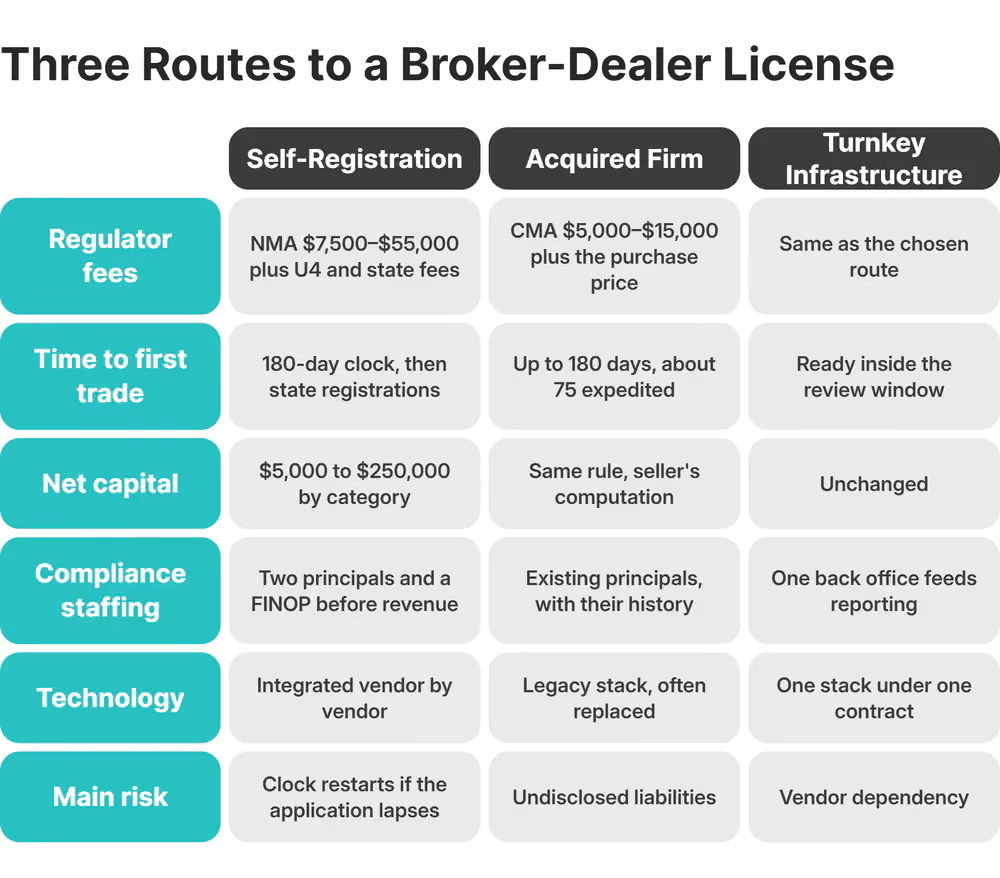
An acquisition still goes through FINRA. A transaction that leaves one owner holding 25% or more of the firm needs a continuing membership application, filed at least 30 days before closing. The buyer also inherits the seller's membership agreement. A material new line of business then means another application after the purchase.
The decision runs along the same lines in FX, where the budget for launching a forex brokerage on turnkey infrastructure prices the technology line in advance.
How B2BROKER's Ecosystem Reduces Cost and Accelerates Time-to-Market
B2BROKER takes the technology build out of the cost stack by delivering the trading platform, CRM and back office, liquidity and API connectivity as one package. Each part lands on a cost center from the sections above:
- Trading platform. B2TRADER , a multi-asset, multi-market trading platform, replaces the build-or-license decision on the platform line.
- Back office and CRM. B2CORE holds client onboarding, KYC, the client portal and reporting in one system, the source that audit and regulatory reports draw on. A custom brokerage CRM alone runs $90,000 to $300,000 to build .
- Liquidity. Multi-asset liquidity arrives as one feed under one agreement. Adding an instrument class no longer means a new counterparty project.
- Payments. B2BROKER's partner B2BINPAY, integrated with B2CORE, covers crypto payments and settlement.
With one contract in place of a vendor list, the integration work that usually fills the review window becomes configuration. The platform runs before the decision arrives.
The savings land in engineering months and in revenue that starts as soon as the license does. Regulatory fees and net capital stay exactly where they were. Forex brokers, crypto exchanges and prime brokers all run on the same package.
Make Your Licensing Decision With Full Financial Clarity
Make the licensing decision only after every layer above sits in one budget that runs through the first year of operation. A path only works if it keeps the firm funded from the day the application is filed to the day recurring revenue covers the recurring bills. That total is the full broker dealer license cost. FINRA's own test — twelve months of fixed expenses plus 120% of minimum net capital — covers only the core of it.
Pricing the technology line is easier with a partner who has done it before. B2BROKER has operated since 2014, holds 10+ regulatory licenses across its own group and has helped launch 500+ brokers.
The time to test that number is before the application goes in, while the business plan can still change and the capital is still uncommitted. Once the file is in review, every correction costs calendar time the firm is already paying for.
Frequently Asked Questions about Broker-Dealer License Cost
How much does a broker-dealer license cost in 2026?
FINRA's membership fee starts at $7,500, and every state adds its own firm and agent fees on top, such as Maryland's $250 and $65. Consultants put a small firm at $125,000 to $175,000 of initial capital before professional fees.
How long does it take to get a broker-dealer license?
FINRA has 180 calendar days to decide once it judges the application substantially complete. In practice, the span from filing to approval runs four to nine months. State registrations and principal exams add to the calendar unless they run in parallel.
What ongoing costs affect broker-dealer license cost after approval?
Net capital sits at the top of the list, followed by FINRA's annual assessments, SIPC's 0.15% of net operating revenues, the PCAOB audit, state renewals every December, and reporting systems such as the CAT. Most of them scale with headcount and revenue.
How does a broker-dealer make money after licensing?
Revenue comes from commissions and markups on client trades, spreads and principal trading where the license permits it, margin interest, and placement fees for firms with investment banking registration. That revenue has to cover capital, compliance and technology from month one.
How can B2BROKER reduce broker-dealer infrastructure costs?
B2BROKER supplies the trading platform, back office and liquidity as one integrated stack, sparing the firm the vendor-by-vendor integration that usually runs alongside the application. Regulatory fees and net capital stay the same. The savings show up as engineering time not spent and a launch that can land on the day FINRA signs.
Recommended articles
Subscribe to our newsletter