Liquidity Bridge Vs. Aggregator: What's the Difference?

A liquidity bridge gets your orders out to external venues. A liquidity aggregator compares what those venues quote and takes the best price available on every order. Because both sit in the same order path, brokers regularly answer the liquidity bridge vs aggregator question by buying the layer that was not failing.
CoinGecko tracks more than 160 active crypto exchanges . Every one you connect is both an integration to maintain and one more price to compare. The bridge handles the first job, the aggregator the second.
Venue here means any place you trade against, whether an exchange, an OTC desk, or a liquidity provider. Both tools work on the orders that leave your platform for those venues.
Cross-chain bridge aggregators, which move tokens between blockchains, are a different product category entirely.
Key Takeaways
- Connectivity belongs to the bridge, which translates each venue's protocol, holds the sessions open, and delivers orders to the counterparties you choose.
- A liquidity aggregator builds one order book out of many providers' quotes and depth, then allocates each order to the best available price to improve spreads and fill consistency.
- Crypto liquidity is fragmented across CEX spot, perpetual futures, and OTC desks, so most multi-venue brokers eventually need both layers.
- If integrations keep failing, the bridge is the problem; if connections hold but fills stay weak, aggregation is.
- A managed layer that combines both, such as B2CONNECT running alongside B2TRADER, takes custom API maintenance off your engineering roadmap.
Why the Distinction Matters for Crypto Brokers
Brokers that guess wrong pay for software that cannot reach the problem they have. The guess is easy to get wrong because both failures look identical from the trading desk, where the complaint is simply bad prices and orders that do not fill.
Take a desk that complains about slippage. Read that as missing market access and you approve another round of venue integrations. Engineering delivers them on schedule, yet the slippage report looks the same next quarter. Reaching more venues does not change which price the platform takes when it has a choice.
A broker whose feeds keep dropping makes the same mistake in reverse, buying a liquidity aggregation engine that can only compare the quotes actually reaching it. A feed that lags or dies leaves that engine nothing to work with. Teams running spot, perpetuals, and OTC flow at once hit this most often, since those three fail in different ways.
Work out which layer is failing before you shortlist vendors or reopen the build-vs-buy debate.
What Is a Liquidity Bridge?
A liquidity bridge is middleware that connects your trading platform to external venues. Its job is protocol translation, session management, and delivering each order to exactly the venue you chose. Price discovery happens a layer above.
The work is constant because every venue exposes its own interface: REST here, WebSocket there, a FIX API for the institutional desks. Each venue also brings its own symbol conventions and authentication flow. The bridge absorbs those differences so your platform core does not have to.
This layer sits closest to your counterparties, which makes its failures expensive. When a bridge fails, order flow to the affected venue stops entirely and the hedges that ran through that path stop with it. Until the session is back, you carry counterparty risk you can do nothing about.
Protocol Translation and Platform Connectivity
On the wire, the bridge translates between your platform's internal messages and each venue's native API. A single order from B2TRADER leaves as a venue-specific, authenticated message shaped for its destination. The responses come back normalized into events your platform already understands.
Connecting more venues widens your reach, though the prices stay exactly what each venue quotes, because nothing in the bridge compares one book against another.
Order Routing to Specific Counterparties
A bridge routes by rule. You decide that a given flow goes to a given venue or desk, and the bridge delivers it there. That is what you need when a hedge has to land at one specific counterparty, or when you have a direct deal with a desk and want its flow kept separate.
That rulebook answers where an order is allowed to go. Deciding where it would execute best, quote by quote, belongs to the aggregation layer.
A-Book and B-Book Routing Support
The bridge is where your risk management model touches the market. A-book flow goes out to an external liquidity provider, who carries the market risk; B-book flow stays on your own book, where you take the other side and your own markups apply. Routing rules at this layer enforce that split through straight-through processing (STP), at the moment the position actually leaves your book.
Clean rules keep internalization ratios measurable and audit trails complete. Loose ones turn every risk reconciliation and regulatory review into a manual reconstruction of who routed what where.
What Is a Liquidity Aggregator?
A liquidity aggregator consolidates quotes and depth from multiple venues into one composite view, then places each order at the best executable price across that view. Liquidity aggregation works one layer above connectivity. The engine only sees the price streams that bridges or adapters deliver, so a shaky feed limits it no matter how good its logic is.
Unified Order Book Construction
The aggregator normalizes every venue's data into a single book, which gives your desk one depth ladder across every market you connect instead of a dozen disconnected screens.
Keeping that ladder accurate is the hard part, which is why an aggregation engine rebuilds the composite book from normalized feeds continuously. Four jobs decide whether the book is tradable:
- Symbol mapping: the same asset trades under different tickers that the book has to merge into one instrument.
- Fee and lot-size alignment: a quote is only comparable after fees and contract sizes are factored in.
- Contract specifications: perpetual and dated futures need their own normalization pass.
- Stale-quote filtering: a feed that lags by seconds fills the book with prices nobody can trade on.
Liquidity Aggregation Logic
A merged book is only half of liquidity aggregation. The other half is the decision engine on top of it. For each order, the engine weighs live prices, fees, and the probability of a full fill, then puts the whole order into one venue or splits it across several in real time.
The right weightings depend on the flow. An institutional block cares most about price impact, so the engine should break it into smaller pieces across venues. A retail market order just needs the highest certainty of filling. A good aggregator lets you tune those priorities per order type.
Spread Compression and Fill Quality Outcomes
Done well, liquidity aggregation shows up in the tightest spreads you can quote and in how reliably your orders fill. When no single venue dominates depth in an instrument, composite pricing lets the aggregation engine source from the best available book at each moment. B2BROKER reports fill rates of 97–99% alongside spread reductions of 5–20% in measured deployments.
Verify the effect in your own post-trade data:
- Effective spread: what you actually paid against the mid-price at order time.
- Fill rate: executed volume against submitted volume, per venue and overall.
- Reject rate: how often venues turn your orders away.
- Slippage in basis points: fill price drift against the quoted price.
Bridge Vs. Aggregator: A Side-by-Side Comparison
Set side by side, the liquidity bridge vs aggregator split comes down to seven practical differences.
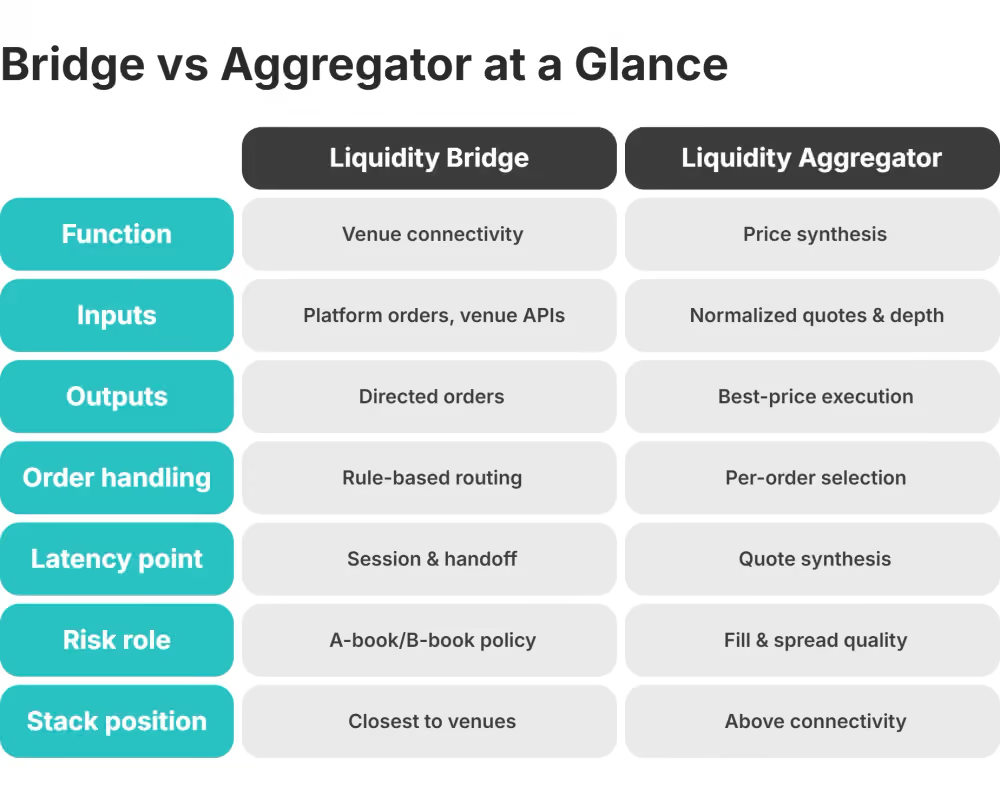
Vendors sell the two layers combined in one package, because most production stacks end up running both. Inside the package they stay distinct. When something breaks, the on-call engineer asks first whether the session held, then whether the aggregation layer picked badly.
How Liquidity Fragmentation Makes Both Tools Necessary
Fragmentation splits the work in two. Your team has to reach many venues reliably, then choose the best venue for each order as conditions shift. Because those two fail differently, a tool built for one rarely covers the other.
Cryptocurrencies have no single primary exchange. Liquidity spreads across CEXs, perpetual venues, OTC desks, liquidity pools, and internal books. Even the concentrated share is split over several platforms — Kaiko found the top eight platforms holding roughly 92% of global market depth , with hundreds of smaller venues sharing the rest.
Fragmentation Across CEX Spot, Perpetual Futures, and OTC Desks
Each market type fragments along its own lines. Spot CEXs differ mainly in APIs and fee schedules, while perpetual venues add funding mechanics and contract specifications on top. Perpetual futures are too large to treat as a side case. Volume on centralized exchanges rose 47.4% to $86.2 trillion in 2025 . Decentralized exchanges add on-chain settlement and gas fees on top of that.
OTC desks and prime brokers fragment the picture further, because they quote bilaterally and settle on their own terms. The channel is also growing faster than exchange trading itself: institutional spot OTC volume grew 109% year over year in 2025 , while spot volume on the top 20 exchanges grew about 9%.
Relying on one venue puts both your quotes and your hedges on a single connection. When that venue goes down during a volatility spike, your pricing widens immediately. The hedge you would normally place through it stays unreachable until the session comes back.
Tell a Bridge Fault From an Aggregation Fault
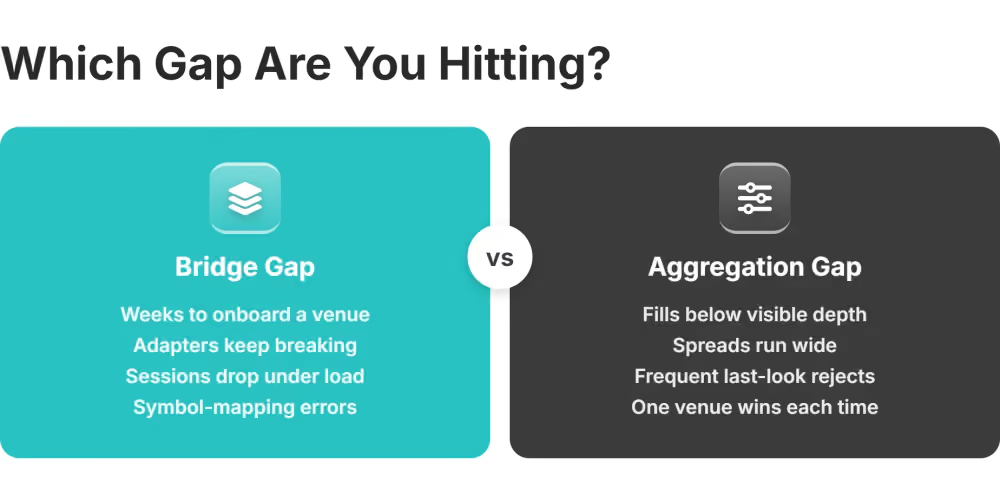
Your tickets and post-trade reports already hold the diagnosis. The two lists below are concrete enough for an RFP or an internal architecture review.
Symptoms of a Connectivity Problem
These signals point at the bridge:
- Onboarding a new exchange takes weeks of custom integration work.
- Venue API updates keep breaking adapters that worked last month.
- Sessions drop under load. Failover logic cannot bring them back without a manual restart.
- A venue's symbol mapping drifts and orders land in the wrong instrument.
- Order acknowledgments arrive late, malformed, or never.
Traders will report all of this as bad liquidity.
Symptoms of an Aggregation Problem
Sessions hold and integrations behave, yet trade execution still disappoints:
- Fill rates sit lower than the depth of market suggests.
- Effective spreads run wide against the composite mid.
- Rejects come back often enough to need their own dashboard.
- One venue quietly handles most of your flow, whether or not it is pricing best.
The venues are reachable, so another integration changes nothing. These numbers move only when liquidity aggregation gets better at weighing venues and splitting orders across them.
When You Need Both Layers
You need the aggregation layer once no single venue reliably shows the best price and depth for what you trade. Keeping those feeds alive underneath it is the bridge's job. Most brokers cross both lines at once, when several venues are connected, spot and futures both run in production, and hybrid execution models put external hedging alongside internalized flow.
Running both as one system keeps connectors, routing logic, and monitoring on one release schedule rather than on separate vendor timelines.
Build Vs. Buy: The Hidden Cost of Custom Connectivity
Custom connectivity looks cheapest on the day the first integration ships. You pay for it later, as maintenance grows faster than the roadmap planned for.
A venue revises its WebSocket schema. The adapter breaks at 3 a.m. during a volatility event, and the engineer who wrote it gets paged. Multiply that by every connected venue, add a QA pass for each API version, and the temporary integration team becomes a permanent budget line. An itemized breakdown of what brokers spend maintaining custom connectivity shows where that budget actually goes.
That maintenance burden is what B2CONNECT is built to remove. The vendor maintains the hub's venue integrations for you. When an exchange changes its API, the fix ships in the vendor's next release and reaches you without paging your on-call rotation. Your engineers go back to product work.
Choose the Right Architecture Before Your Next Integration
Treat the liquidity bridge vs aggregator decision as a diagnosis first and an architecture choice second. Keep connectivity and execution logic separate, and put both under one vendor that maintains them. When execution degrades, the first incident review tells you whether the fault sits in a session or in the aggregation layer.
B2BROKER has been operating this part of the stack since 2014, helping launch 500+ brokers and now serving 1,000+ corporate clients. If the next integration is already on your roadmap, scope the architecture with a team that has assembled it many times over.
Frequently Asked Questions about Liquidity Bridges and Aggregators
What is a liquidity bridge?
Middleware that sits between a trading platform and the venues it trades on, translating each counterparty's protocol and managing sessions and order delivery. It solves market access and routing control without optimizing prices across venues.
What is a liquidity aggregator?
A system that merges quotes and depth from multiple providers into one executable order book, then executes each order at the best price that book offers. The goal is tighter spreads and more consistent fills on fragmented markets.
Can a liquidity bridge also function as an aggregator?
Some products do combine both layers. The pairing is natural, since aggregation needs stable connectivity underneath it. Inside a combined product, the bridge still handles integration while the aggregator handles venue selection and order splitting.
How does liquidity aggregation affect execution quality?
Liquidity aggregation evaluates live quotes, depth, fees, and latency for each order, then picks the venue with the best expected outcome. On fragmented markets, that reduces slippage and raises fill probability.
When do brokers need both a liquidity bridge and an aggregator?
Usually once they connect several exchanges, OTC desks, or futures venues and still need consistent best execution across them. B2CONNECT targets that combined case, cutting custom API work across B2TRADER, [B2CORE](https://b2broker.com/products/b2core-traders-room/), and external venues.
Recommended articles
Subscribe to our newsletter