What to Know About Forex Broker Licensing Costs in 2026

Licensing is the hardest line to pin down in a 2026 brokerage launch budget. Even at the cheap end, a Seychelles securities dealer license now locks $100,000 of paid-up capital before a single fee is paid. Tier-1 regimes work in multiples of that.
Capital is only the floor. The application fee is the smallest piece of the bill, while legal work, audits, and resident staff draw cash before the first client deposits. Most of them keep billing every year after approval.
This guide treats forex broker licensing costs as a capital-planning decision. It breaks the bill into buckets, compares jurisdictions on more than their fee schedules, and shows where infrastructure absorbs part of the recurring load.
Key Takeaways
- Licensing spends runway before the business earns anything, and many of its costs come back annually.
- Minimum capital and recurring obligations set the real budget; the application fee rarely does.
- Jurisdiction choice decides bank relationships and counterparty confidence as much as it decides fees.
- Permission scope moves the capital floor more than geography does.
- One back-office platform cannot cut regulator fees, but it shrinks the compliance overhead around them.
How Licensing Costs Decide Your Pre-Launch Runway
Licensing dominates the startup costs of a new FX brokerage, and it takes runway in two ways. One part of the money is spent outright on the application and the professional work behind it. The other part is never spent at all.
That second part is regulatory capital. The company has to keep it as a balance on its own books for as long as the license lives, so it can never cover salaries or rent. Count it as working capital in the plan and the business is short by that amount from its first month.
The pre-launch sequence draws cash at every step:
- incorporation and corporate structuring
- the regulator application and supporting legal work
- funding the minimum capital requirement
- resident directors and local office
- platform setup and liquidity onboarding
- reporting readiness for day one
These steps overlap, so the spending peaks months before the license arrives. A budget built on the application fee alone runs out at exactly that point. Stopping then wastes everything already spent, and finishing needs money the round never included.
The Core Components of Forex Broker Licensing Costs
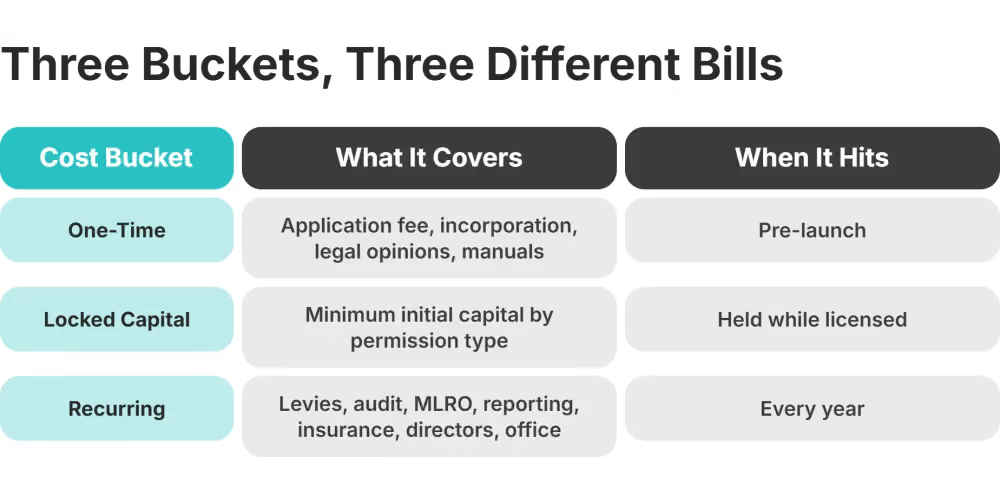
Licensing money comes in three kinds, and a single total hides the difference between them. The one-time part you pay and never see again. The capital part stays yours, but you are not allowed to spend it. Then there is the recurring part, which comes back as a bill every year for as long as you hold the license.
The forex broker license cost breakdown below lists what belongs in each of the three buckets. Headline quotes cover the first one and ignore the third, where the hidden costs of forex broker licensing sit.
One-Time Application and Legal Fees
The fee the regulator charges is the smallest item here. Most of the money goes to the lawyers and consultants who put the file together. Their bill runs to several times that fee.
How much more depends on what you ask to be licensed for. An application for a CFD brokerage, or one that includes crypto, brings more rounds of written questions from the regulator about client-money handling and risk disclosure. The lawyers bill each round by the hour, on top of their original quote.
Minimum Capital Requirements by Permission Type
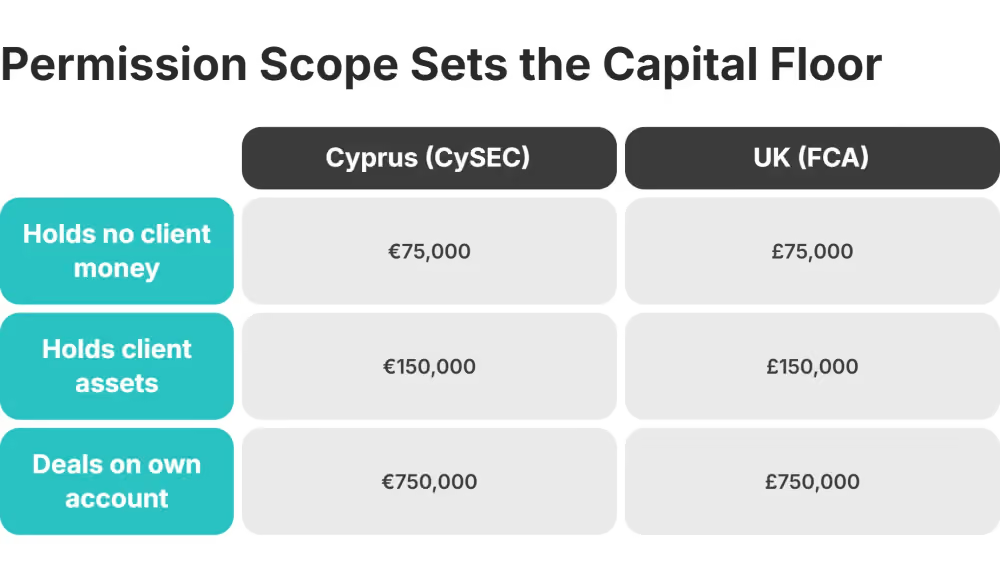
Minimum capital follows permission type: the more risk a license lets you take on, the more capital you have to hold. CySEC sets three levels for a Cyprus investment firm holding a MiFID II authorization. One that holds no client money needs €75,000, while one licensed for dealing on own account or underwriting needs €750,000.
The FCA runs the same three levels in sterling for its permanent minimum capital . Decide what you want to be licensed to do before anything else, because that decision fixes your capital requirement. Every other cost is added on top of it.
Recurring Annual Levies and Compliance Obligations
This bucket breaks more budgets than the other two, because nothing in it ever stops. Most of the annual total is payroll rather than renewal fees. You pay a compliance officer and an MLRO every month, whether or not the brokerage has clients yet.
A brokerage can clear authorization and still close in its second year. The levies, the audit, and the salaries arrive again on schedule. By then the launch money is spent and the client base is still small.
Comparing Licensing Costs Across Jurisdictions
Ranking jurisdictions by price alone will mislead you. A fee schedule says nothing about how much real local presence the regulator expects, or about how counterparties will read the license. The cheapest regime to enter can also be the slowest place to open a corporate bank account.
Compare shortlisted regimes on the same six points:
- forex license cost by country
- authorization timeline
- minimum capital
- local substance requirements
- the amount of regulatory reporting
- standing with banks and liquidity providers
Before narrowing the shortlist, check how the application process and capital requirements differ by regulator .
Offshore and Mid-Tier Jurisdictions
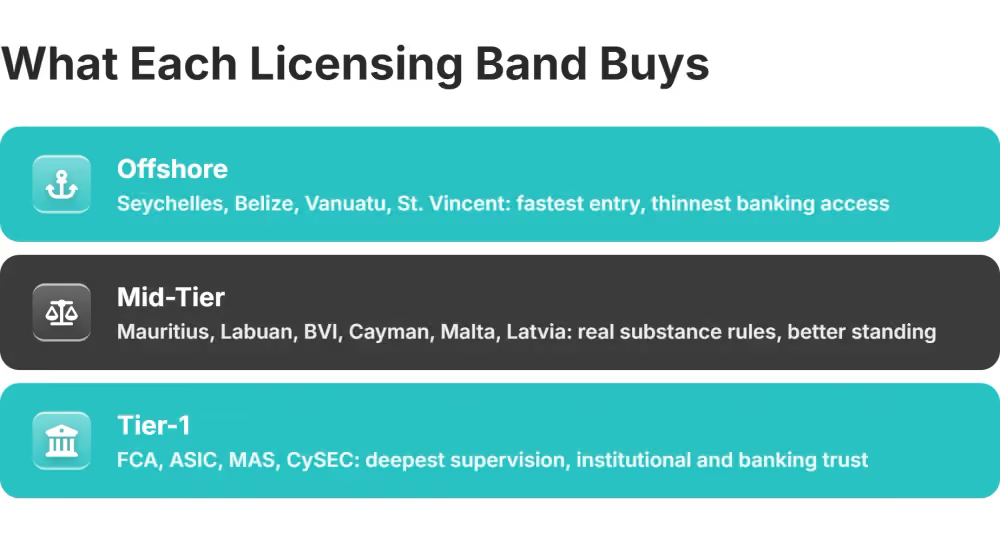
Brokers buy an offshore forex license for speed. Low corporate tax is the second selling point in offshore jurisdictions such as Seychelles, Belize, and Vanuatu, while St. Vincent issues no forex license at all and sells only incorporation.
A well-prepared Seychelles file clears FSA review in three to six months. The license still requires resident directors and a local office, so you are paying for local presence from the first day.
Mid-tier regimes charge higher fees and demand a fuller application, and in exchange the license carries more weight with banks. Mauritius licenses an investment dealer through its Financial Services Commission (FSC), while Labuan runs a comparable regime out of Malaysia.
The British Virgin Islands (BVI) and the Cayman Islands are known for funds rather than retail brokerage, and that reputation carries over. Malta under the MFSA and Latvia sit inside the EU regime, on the same three levels as Cyprus and under the same reporting rules. New Zealand's FSP entry is a registration rather than a license, so it is cheap to obtain and banks know the difference.
Those prices move. The Seychelles capital floor doubled to its current $100,000 under the 2024 amendments to the Securities Act. Mauritius raised its licensing fees effective July 1, 2026 . The annual fee for an Authorised Company, the company type many broker groups register, went from $350 to $1,400.
A regime can revise its fee schedule the year after your capital is locked inside that jurisdiction.
Onshore Tier-1 Jurisdictions
Tier-1 regulators charge for supervision, and they charge in layers. The FCA, ASIC, and MAS review applicants far more closely than any offshore regime. So do the CFTC and NFA in the United States.
Under the 2026/27 UK rates , an authorized firm pays an annual FCA fee. On top of that come separate levies for the Financial Ombudsman Service, the Money and Pensions Advice Service, and the Financial Services Compensation Scheme.
Banks, liquidity providers, and institutional clients treat a tier-1 license as a signal that the firm will still be there next year. You pay for it with the capital requirement and the compliance headcount.
How Your Business Model Changes the Capital and Compliance Burden
Two applicants in the same country can face very different forex broker licensing costs once their permission sets differ. Settle the model before you compare jurisdictions.
Every regime ranks the models the same way:
- Market makers take the other side of client flow and carry the highest capital floor and the strictest risk controls.
- Matched-principal and STP models pass client orders to liquidity providers and need less capital, though the conduct rules still apply in full.
- An introducing broker never touches client money and carries the lightest burden.
- White-label and regulatory-hosting arrangements let a firm operate under a licensed principal's permissions while it works toward its own license.
The Cyprus levels put a number on that gap. A firm that holds no client money starts at €75,000; the same firm licensed to deal on its own account needs ten times as much.
Choose the narrowest set of permissions that still covers what you intend to sell and where your clients are. Anything beyond that can push you into a higher capital tier. It also adds reporting and audit work every year, whether you use the permission or not.
Regulatory Durability Risk: Why the Cheapest License Can Become the Most Expensive
A cheap license carries a risk that never appears on the invoice. The regulatory environment can be downgraded long after you have committed, and the bill arrives whether the change comes from the regulator or from the banks.
Vanuatu shows the first route. A FATF grey-listing pushed it to tighten, and a second round of rules in 2021 added mandatory local offices and directors. Of the more than 600 dealers licensed at the peak, around 60 are left .
Mauritius shows the second. Its 2020 grey-listing carried the island onto the EU's high-risk list, after which correspondent banks applied enhanced due diligence to anything touching it. Cross-border payments slowed. The merchant account behind them started drawing questions it had never drawn before. Mauritius cleared the list in October 2021, but the friction lasted as long as the listing did.
Getting licensed again is the expensive part. A credible regulator applies its own capital requirement from day one, which is where the saving on the cheap license disappears. The client book has to move while it is still trading.
None of this makes offshore licensing wrong. It does mean the fallback belongs in the plan from the start. Decide now which regime you would move to, and price that exit before you need it.
Reducing Licensing-Adjacent Costs Through Back-Office Infrastructure
Approval starts a second cost layer, because staying compliant is itself a daily operation. Every regulated workflow, from onboarding and KYC to reporting and IB payouts, carries a running cost. Each extra vendor is one more integration for your team to build, and one more set of numbers to reconcile.
Running them on one platform removes most of that duplication. B2CORE holds the client portal, CRM, payments, IB management, and reporting together. Its 150-plus integrations connect natively to the KYC providers and payment rails you already use, so onboarding a client and paying an IB no longer touch a second vendor.
Regulator charges stay exactly the same. The saving shows up in engineering and reconciliation hours, month after month. Licensing is also only one line in what a full brokerage launch costs . The platform you pick reappears in the trading and payments lines of that budget.
Build Your Licensing Budget Around Total Cost of Ownership
Forex broker licensing costs are a multi-year commitment. A budget only works if it keeps cash alive through authorization and the first years of operation. Start from the permission set and price the annual obligations at full cost, because the jurisdiction comparison only means something after that.
That budget is easier to build with someone who has assembled one before. B2BROKER has operated since 2014, holds 10+ regulatory licenses across its own group, and has helped launch 500+ brokers. The trade-offs above come from launches that actually reached the market.
Talk to an expert before committing capital to a jurisdiction, and turn a licensing estimate into a launch-ready budget.
Frequently Asked Questions about Forex Broker Licensing Costs
How much does a forex broker license cost in 2026?
There is no single figure, because minimum capital dominates the total. A Seychelles license starts at $100,000 in paid-up capital; a UK firm dealing on own account starts at £750,000. Neither figure includes legal work, staffing, or technology.
Which jurisdiction has the lowest forex broker licensing costs?
A Seychelles forex license and comparable offshore regimes carry the lowest direct setup costs, though Seychelles now requires $100,000. The saving is real, but it buys thinner banking access and weaker counterparty trust.
What costs should brokers budget beyond the application fee?
Budget for legal structuring, minimum capital, compliance staffing, resident directors, audits, reporting, and technology setup. The recurring items matter most, because they land again at every renewal.
How does the broker model affect licensing costs?
Market-making permissions demand the largest capital buffers because the firm takes on market exposure. STP, matched-principal, and introducing-broker models sit lighter. Settle the model first and every jurisdiction quote becomes comparable.
How can brokers reduce forex broker licensing costs without weakening compliance?
Keep the permission set lean and run regulated workflows on a single integrated stack. Systems like B2CORE centralize onboarding, KYC, payments, and reporting, cutting engineering overhead without touching the obligations.
Recommended articles
Subscribe to our newsletter