What Brokers Get Wrong When Choosing a Spot Trading Platform

Roughly 84% of retail CFD volume still moves through MT4 or MT5 , and behind that figure sits an uncomfortable operational fact: most brokerages run their entire business on a platform they rent, from a vendor whose roadmap they cannot influence.
If you are launching or scaling an online brokerage, the search for the best spot trading platform for brokers usually starts with feature comparisons and pricing tiers. Those are the wrong first questions. The decisions that shape your next five years are about whose roadmap answers to you and how the stack fits together.
This guide works through the licensing dependency problem, the infrastructure standards worth demanding, and the due-diligence questions that separate an operator-grade platform from a rebranded commodity.
Key Takeaways
- Licensing MetaTrader ties your roadmap, customization depth, and infrastructure control to MetaQuotes' priorities, and the constraint tightens as you grow.
- A platform the vendor develops as its core product lets operator requirements shape commission structures, instrument configuration, and the development cycle.
- Native integration between the trading platform, CRM, and liquidity layer removes the API fragility that comes with a multi-vendor stack.
- Matching engine throughput and margin controls deserve the same scrutiny as client-facing features, because execution quality is what clients actually pay for.
- AI built into the trading workspace keeps analytics inside your infrastructure, which strengthens client retention on the platform.
Spot Trading Platform Decision for Brokers
The platform decision determines what your brokerage can build and how fast it can adapt. It also settles what kind of vendor dependency you take on, and every other technology choice in the stack sits downstream of that answer.
Brokers who treat the selection as a procurement exercise usually discover the real variables later. A cheaper license says nothing about how fast the platform adapts when a regulator changes reporting requirements mid-year.
The MetaTrader Dependency Problem
MetaTrader's dominance comes with a trade-off for the brokers who license it. When you run MT4 or MetaTrader 5, MetaQuotes decides when features ship and how the API evolves. Your requirements compete with those of thousands of other licensees, and the volume of your business gives you no seat at that table.
The white-label layer softens the look, without touching the mechanics. A branded MetaTrader deployment lets you change logos, color schemes, and server names. Deeper changes to commission logic, instrument configuration, and trader workflow still sit inside the limits of the licensed architecture.
For a forex broker, integration is where the dependency costs compound. MetaTrader grew up around FX workflows, so connecting it to a modern CRM, a risk system, or multi-asset liquidity often requires bridges and custom middleware. Each connection point is a fragility, and each MetaQuotes update carries reintegration risk for everything bolted on around it.
Two Kinds of Vendor Dependency
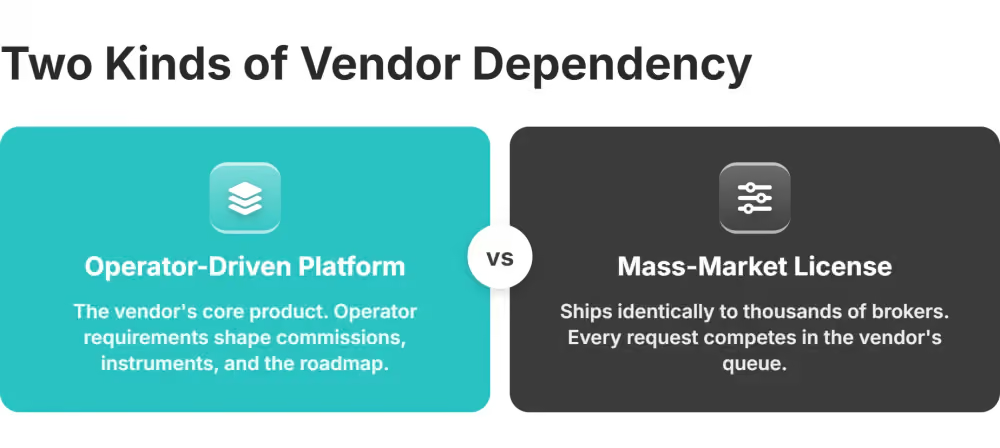
Almost no brokerage writes its own trading platform. Whether you deploy MetaTrader or a platform like B2TRADER, you run someone else's software. The variable you control is the kind of dependency you take on: a mass-market license that ships identically to thousands of brokers, or a vendor-built platform whose roadmap is driven by the operators who run it.
The second model changes the feedback loop. When the platform is the vendor's core product, operator requirements flow directly into the development cycle. When a capability is missing, you negotiate a timeline with a partner whose revenue depends on your success.
Every platform puts part of your roadmap in a vendor's hands. The difference is whether your request competes with thousands of licensees or lands with a team built to ship it.
B2TRADER is B2BROKER's proprietary multi-asset trading platform, developed and maintained entirely inside the B2BROKER ecosystem. Brokerages that run on it get continuous updates driven by operator requirements across that client base.
What Brokers Need from Spot Infrastructure
The requirements that decide whether a spot platform holds up under real volume are execution architecture, liquidity connectivity, and customization depth. Each of them can be tested before signing.
Matching Engine Performance and Throughput
The matching engine sets execution quality, so its performance numbers matter more than any client-facing feature. Throughput determines how many orders per second the engine clears before latency degrades. Order-type coverage decides whether algorithmic and short-term trading strategies built on limit orders can run at all.
Latency belongs on the same list. After Nasdaq-listed Gemini moved its trading API to an AWS Local Zone , its cloud round-trip latency fell from 8–12 ms to roughly 2 ms, a four- to fivefold improvement. Market-sensitive strategies feel that kind of gap at the API layer.
When a vendor quotes performance figures, ask for a technical demonstration in a loaded environment. A demo account with simulated traffic proves nothing about behavior under stress.
Liquidity Aggregation Across Asset Classes
Liquidity quality is what your clients experience as spreads, slippage, and fill rates. Across financial markets, the aggregation layer needs to pull from multiple sources and cover every asset class you offer. Slippage controls should be configurable per instrument and per client tier.
Spot settlement shapes the requirement. Because spot platforms settle the underlying asset while margin venues manage leveraged exposure, the liquidity architecture behind them differs structurally. An aggregator built for one model does not automatically serve the other, so confirming which model fits your product comes before any vendor conversation.
White-Label Customization Depth
Most platform licenses sell branding and call it customization. Changing a logo and a color scheme touches nothing an operator actually needs to control: commission schedules per client tier, the instrument set, and the back-office interface your operations team works in daily.
Depth is testable in a demo. Ask to configure a tiered commission schedule without a vendor ticket, add an instrument without a development sprint, and rearrange the operator dashboard to match your workflow. A platform that fails those tests will fail them again in production, when the change request is urgent.
Introducing B2TRADER: Built for Brokers
B2TRADER pairs that infrastructure control with the online trading features clients judge a brokerage by. The sections below cover the capabilities that separate it from licensed deployments.
TradingView Charting Integration
B2TRADER includes TradingView charting as standard, so active traders get advanced charting and technical analysis inside your platform. For the operator, the integration is done: no charting stack to build, no separate license to negotiate.
For an online broker, the client-side effect shows up in onboarding. An experienced trader who opens an account and finds familiar TradingView tools starts trading sooner, because the toolset they trust is waiting for them.
AI-Powered Trading Workspace
B2BROKER has embedded AI directly into B2TRADER's workspace , delivering forecasts, sentiment analysis, and suggested actions inside the trading environment itself.
For the operator this is a retention mechanism. A client who builds a routine around the platform's own insights has fewer reasons to look at a competitor, because that layer does not travel with them.
Dynamic Tier Commission Structures
Dynamic tier commissions in B2TRADER adjust client-specific trading fees automatically as volume crosses defined thresholds, with no manual intervention. An operator can build fee tiers that reward heavy traders and hold VIPs on differentiated pricing.
The revenue impact is direct. When a competitor undercuts your most valuable accounts, the counter-offer is a configuration change that goes live the same day.
B2BROKER Ecosystem Integration Architecture
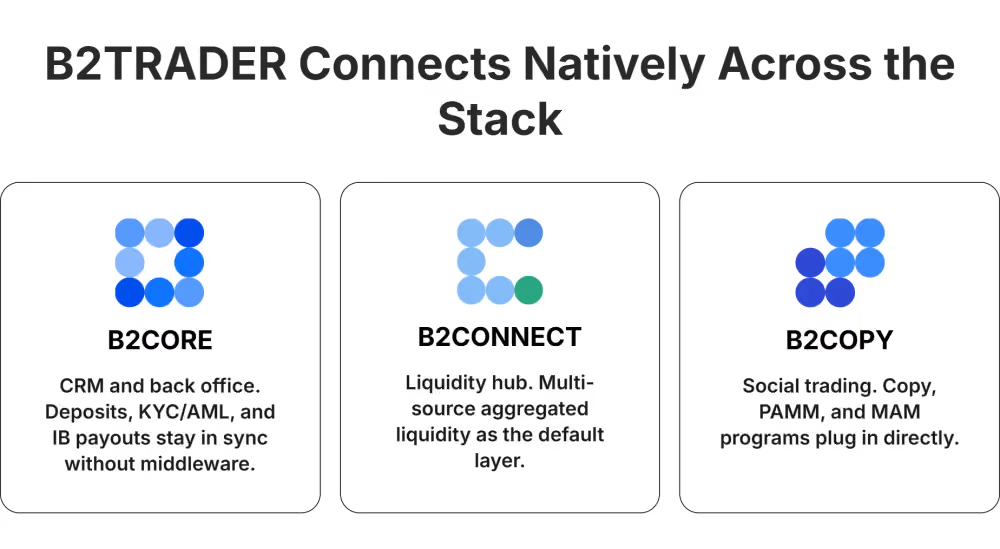
B2TRADER connects natively with B2CORE for CRM and back office, B2CONNECT for liquidity, and B2COPY for social trading. That single fact removes the largest hidden cost in brokerage technology — the integration risk of assembling a stack from separate vendors.
When one vendor changes an API contract, the integration breaks and the fix waits on two support teams. A single-vendor stack avoids that, because the components ship tested against each other.
B2CORE CRM Connectivity
B2CORE is B2BROKER's CRM and back-office system. KYC/AML checks, IB payout tracking, and operator controls stay synchronized with the trading environment without middleware.
Take a single deposit. On B2TRADER it lands in B2CORE, provisions the trading account, and updates the client's balance without anyone touching a second system. The same account state governs withdrawals, so the operations team does not reconcile another ledger before releasing funds.
Where the trading platform and the CRM come from different vendors, that same deposit has to be carried across a custom bridge that someone on your team built and now has to keep alive through every update on either side.
B2CONNECT Liquidity Layer
B2CONNECT is B2BROKER's crypto-native liquidity hub, and it serves as B2TRADER's default liquidity layer. A brokerage on B2TRADER accesses multi-source aggregated liquidity without building or buying a separate connectivity layer.
That pairing changes the sourcing equation operators face when comparing white-label trading platforms . The engine and the liquidity layer arrive designed to work together. This shortens deployment and removes the connectivity incidents that come with wiring a platform to an outside provider.
B2COPY Social Trading Integration
B2COPY , B2BROKER's copy trading, PAMM, and MAM platform, plugs into B2TRADER directly. A brokerage can offer strategy marketplaces and managed account programs without bringing another vendor into the stack.
Social trading earns its place as an acquisition and retention tool. It opens the platform to clients who want market exposure without building their own strategies. Followers who trust a strategy provider also stay through periods when they would otherwise churn.
How to Evaluate Spot Trading Platforms
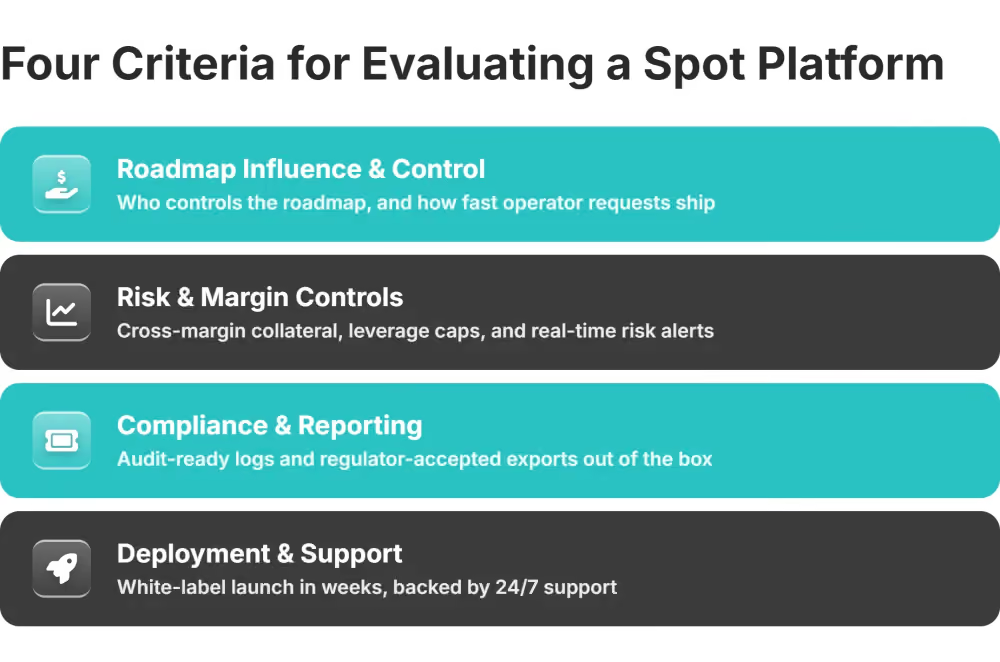
Four criteria separate the best spot trading platform for brokers from a commodity license. Applied as due-diligence questions, alongside the broader criteria for picking brokerage software , they turn vendor conversations into evidence.
The same review should check whether core functions remain available in a mobile app on iOS and Android.
Roadmap Influence and Vendor Responsiveness
The most consequential question is the one brokers ask least: who controls the roadmap? Three vendor questions surface the truth quickly:
- What was the last major feature shipped because a client requested it?
- How long did that take from request to deployment?
- What is the formal process for requesting new capabilities?
A vendor with concrete answers runs an operator-driven development cycle. Vague answers usually mean the roadmap is closed to you.
Risk Management and Margin Controls
Cross-margin collateral management is the risk capability brokerages most often underweight. The gap surfaces the first time a multi-asset client hits a margin shortfall.
The baseline tests are simple to run during an evaluation. The platform should enforce operator-defined leverage caps per instrument, client tier, and account type. Risk alerts should fire in real time, with automated position management behind them.
B2TRADER builds this in, so clients allocate collateral across positions and asset classes within a single account. A brokerage offering crypto spot alongside forex trading or CFD instruments can keep that risk logic in one place instead of bolting on a second system.
Compliance and Reporting Infrastructure
Compliance requirements keep expanding after licensing. In Canada, CSA Staff Notice 21-332 makes employee personal trading a supervisory obligation for crypto platforms, one example of regulators reaching past initial registration into day-to-day operations.
The exact reporting fields vary by regulator, so an FCA-authorized firm must map platform exports to its own obligations.
The platform either supports that reality from day one or forces a retrofit. Audit-ready trade logs, client-money reconciliation, and exportable reports that compliance can map to local rules should all ship ready to configure. Compliance built as an afterthought costs more and fails at the worst possible moments.
Deployment Timeline and Support Model
Time to market is a competitive variable. For a mature platform, white-label deployment should be measured in weeks. A vendor quoting quarters is telling you something about the state of its technology.
Customer support after go-live matters just as much, because a live trading operation cannot wait for a business-hours desk. B2BROKER backs B2TRADER with 24/7 brokerage-specific support and a continuous development model.
B2TRADER: The Logical Choice for Brokers
Licensed platforms and surface-level white labels leave operators with limited roadmap control and customization depth that stops at branding.
For a brokerage weighing the best spot trading platform for brokers against those alternatives, B2TRADER answers each criterion directly:
- A platform built and maintained by its vendor as a core product, with a roadmap driven by operator requirements
- TradingView charting and an AI workspace that keep traders inside the platform
- Dynamic tier commissions and cross-margin collateral management as configuration
- Direct connectivity across the B2BROKER ecosystem, with no middleware to maintain
The platform decision you make now sets the ceiling on what your brokerage can build later. Map B2TRADER against your roadmap, execution, and support requirements before the next license renewal.
Frequently Asked Questions about Spot Trading Platforms
What makes a spot trading platform the best choice for brokers launching a crypto or multi-asset business?
A vendor-built platform with roadmap influence, native CRM and liquidity integration, and customization that reaches commission structures and instrument configuration. Matching engine throughput and cross-margin controls belong on the checklist ahead of the front-end feature set.
How does a proprietary trading platform compare with MetaTrader for brokers?
Licensing MetaTrader means the brokerage follows MetaQuotes' roadmap and fee structure. A vendor-built platform such as B2TRADER gives the operator configuration-level control over pricing and instruments, and a roadmap shaped by operator requests. That difference widens as client expectations and regulation evolve.
What integrations should brokers look for in a spot trading platform?
Native connections between the trading platform, the CRM, and the liquidity layer, plus social trading infrastructure that does not require custom middleware. B2TRADER connects to B2CORE, B2CONNECT, and B2COPY within one maintained ecosystem.
Can one platform support spot crypto and other asset classes with shared margin logic?
Yes, when the architecture is built for it from the start. Cross-margin collateral management lets clients allocate collateral across positions and asset classes in one account, which B2TRADER supports natively.
What should a brokerage ask about onboarding, support, and time to launch before choosing a platform?
Ask for deployment timelines measured in weeks, dedicated support during and after go-live, and compliance features like audit trails and reporting controls that ship ready to use. B2BROKER backs B2TRADER with 24/7 support and continuous platform development.
Recommended articles


Subscribe to our newsletter