Last Look in Forex: How It Works and What Traders Should Know


The term "last look" is becoming increasingly popular in liquidity discussions, execution reports, and broker due diligence, but it is often misunderstood. Traders usually frame it as a hidden disadvantage, while brokers do not fully comprehend how to unpack its implications.
In reality, last look is neither a trick nor a guarantee of poor execution. It is an execution mechanism shaped by speed, risk, and market structure. Understanding how it works, why it exists, and when it matters allows traders and brokers to evaluate execution quality more accurately.
In this article, we will break down Last Look in Forex step by step and how it helps set realistic expectations in modern FX trading environments.
Key Takeaways
- Last look is an execution mechanism that allows liquidity providers a brief window to accept or reject a trade.
- The “Last Look” is not inherently good or bad; its impact depends on how it is implemented and disclosed.
- Understanding this term helps brokers evaluate execution quality and set realistic expectations with clients.
- Transparency, symmetry, and speed are critical when the Last Look in Forex is part of an execution model.
Have a Question About Your Brokerage Setup?
Our team is here to guide you — whether you're starting out or expanding.
What Is Last Look in Forex?
Last look refers to a short decision window during which a liquidity provider reviews an incoming order before confirming execution. After receiving an order, the provider can either accept the quoted price, reject the order entirely, or offer a requote if the market has moved.
This process takes place within milliseconds, and is more prominent in the over-the-counter FX market, where prices are streamed continuously rather than matched on a centralized exchange. Since Forex liquidity is decentralized, execution depends heavily on how quotes are delivered, consumed, and validated in real time.
This term is closely linked to price-streaming models. Liquidity providers constantly offer bid and ask prices, but those prices are not immutable guarantees. Therefore, the last look window exists to validate if the quoted price is still tradable when an order arrives.
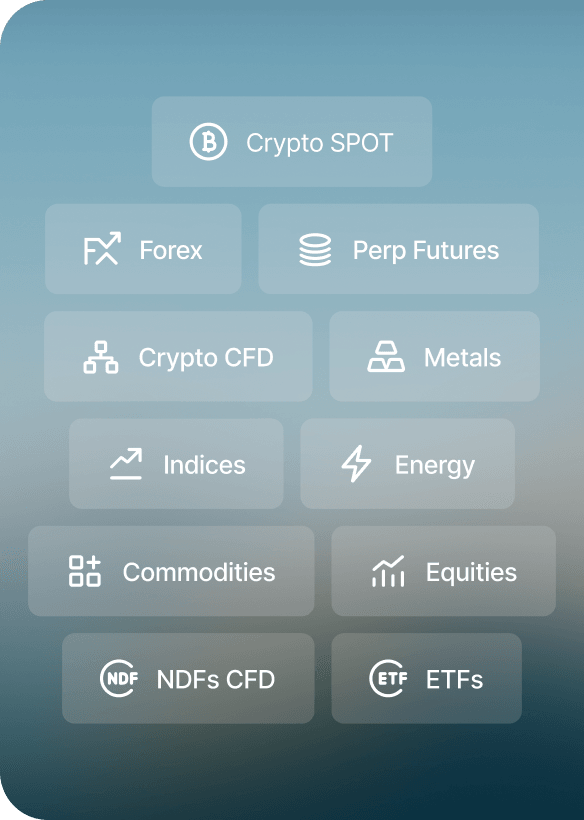
Deep, Reliable Liquidity Across 10 Major Asset Classes
FX, Crypto, Commodities, Indices & More from One Single Margin Account
Tight Spreads and Ultra-Low Latency Execution
Seamless API Integration with Your Trading Platform
Where Last Look Sits in the FX Execution Flow
The typical architecture of trade execution goes as follows:
- A liquidity provider streams prices to the market.
- A broker or client submits an order at the quoted price.
- The order enters the last look window.
- The liquidity provider accepts or rejects the trade.
This sequence happens extremely fast, even faster than manual input. Therefore, from the trader’s perspective, the flow seems instantaneous, and it only becomes visible when rejection rates are deeply analyzed.
Why Last Look Exists in FX Markets
Last look did not emerge to the disadvantage of traders. It appeared as electronic trading became more prominent among market participants and order processing became faster, more digitalized, and more sensitive to latency and information asymmetry.
Managing Latency and Price Risk
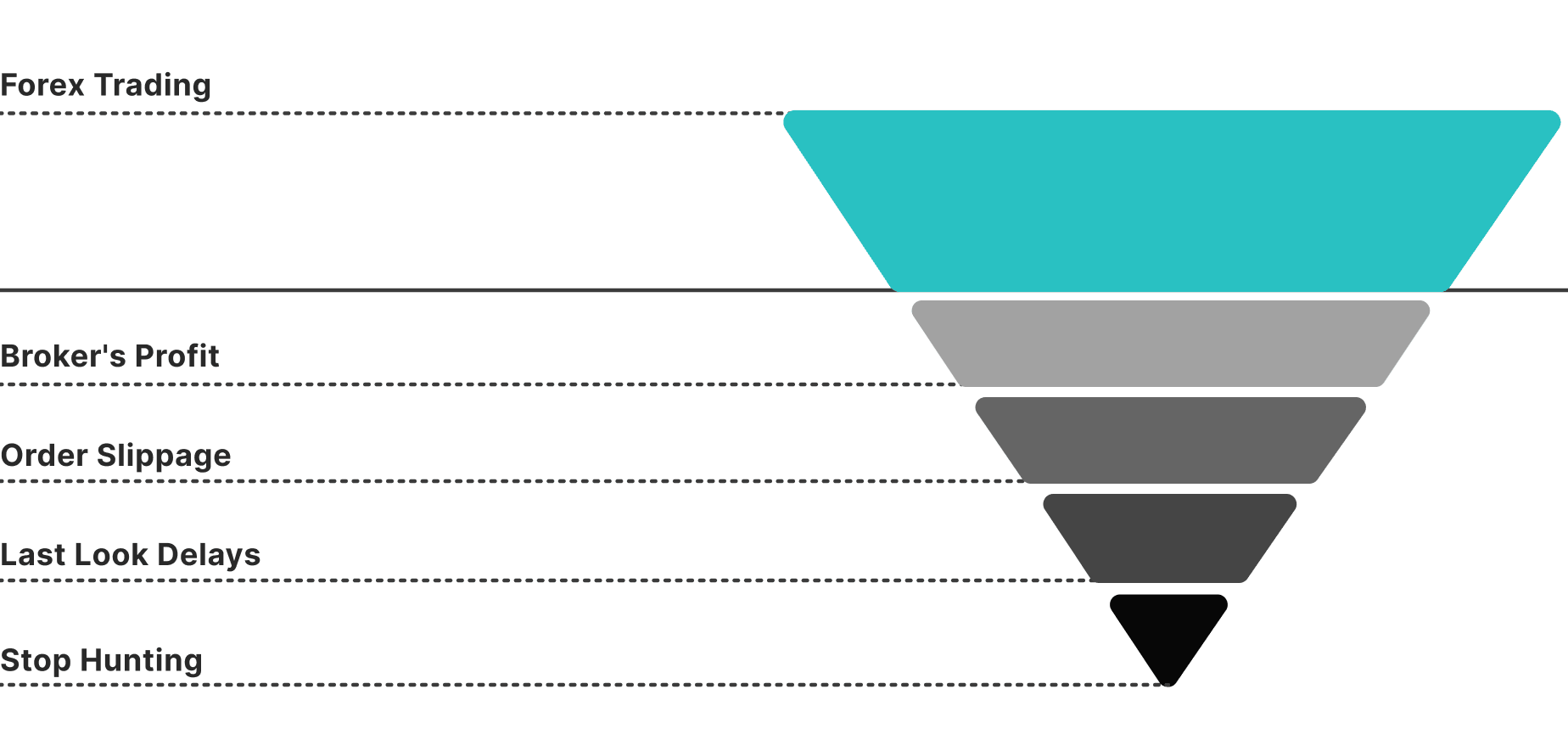
Even small delays between quote distribution and order arrival can expose liquidity providers to losses. In volatile conditions, prices can move in fractions of a second. Therefore, without some form of validation, LPs would regularly execute trades at prices that no longer reflect the market.
This mechanism acts as a safeguard against stale pricing, allowing trading venues and liquidity partners to confirm that the market has not moved materially since the last prices were published, or during transmission, routing, and processing. This layer has become especially important for fast-moving FX pairs, large order sizes, or institutional investors.
Handling Volatility and Market Gaps
Some market conditions amplify execution risk, such as economic news releases, session opening hours, swap rollovers, and low-liquidity periods. During these moments, prices can gap or jump without intermediate liquidity.
That’s where “Last Look” comes into play, helping liquidity providers avoid processing trades at outdated prices. While this may seem like a disadvantage for traders because it leads to more rejected trade requests, it supports more stable and realistic pricing during periods of market stress.
FX Liquidity Trusted by 500+ Brokers
Get institutional-grade liquidity solutions with superior execution and ultra-low delay engines
How Last Look Works in Practice
While the last look is often described in abstract terms, its real market impact shows up only when orders interact with live trading conditions. Let’s explain how its mechanics work.
Accept, Reject, or Requote
When a liquidity provider receives an order during the last look window, they evaluate whether the quoted price remains valid and reasonable given the updated market conditions. This evaluation typically includes checking price movements, risk limits, and latency thresholds.
Acceptance occurs when the market has not moved beyond predefined limits, and the trade can be confirmed at the requested price.
Rejection happens when the price has moved too far, or the order fails a risk check, and the trade is not executed.
Requotes occur when the order is not outright rejected, but the LP issues a new price request to reflect current market conditions.
Let’s take a look at the following example. Assume a trader submits a market order to buy EUR/USD during a news release. The price streamed at 1.0850, but within milliseconds, the market jumped to 1.0854. During the last look window, the liquidity provider detects that the original quote is no longer executable.
Then, it rejects the order or issues a requote. Otherwise, the LP would have to fill the order at 1.0850 and absorb the loss.
Timing and Duration of Last Look Windows
These validation windows are extremely short, usually measured in milliseconds, and even the smallest time difference can impact execution.
- Short last look window → less rejection possibility → higher LP risk.
- Long last look window → higher rejection chance → lower LP risk.
Nevertheless, these execution windows are not universal. Different liquidity providers apply different timing thresholds across asset classes, volatility ratios, and risk profiles.
Execution Infrastructure Matters
Get a liquidity solution that aggregates prices from multiple pools, offers transparent monitoring, and ensures 24/7 price updates
Common Misconceptions About Last Look
Some traders perceive last look as a mechanism to reject their orders and improve the liquidity provider’s financial outcome, which is not necessarily accurate. This, and besides other misconceptions, is explained as follows:
“Last Look Always Hurts Traders”
Last look does not automatically lead to worse execution. In some cases, it prevents traders from executing at prices that would immediately reverse or require aggressive hedging activity. Additionally, it can reject a stale price that could introduce downstream risks if executed at an unrealistic quote.
“No Last Look Means Better Execution”
Eliminating last look does not guarantee superior outcomes for the trader. No-last-look liquidity often comes with wider spreads, smaller trade sizes, and stricter execution rules, ultimately leading to worse trade outcomes for end users.
For example, a client’s trade request may not be rejected, but the pricing may be unfavorable, or slippage may occur. Order processing quality is always a tradeoff between price precision and execution certainty.
Last Look vs No Last Look Execution Models
The difference between no-last-look and last look is the broker’s priority and whether they prefer to undertake the risks associated with the order or not.
- Last-look execution prioritizes price accuracy, allowing liquidity providers a brief window to confirm the price before accepting or rejecting the order.
- No-last-look execution prioritizes certainty of execution: once a price is streamed, trades are filled without rejections, even if the market moves.
Brokers must choose between these models based on client expectations, asset classes traded, and internal risk tolerance. This analysis includes rejection rates, slippage (both positive and negative), and direct client feedback.
Crucially, last look should never be judged in isolation—it must be evaluated as part of overall execution performance, including consistency, fairness, and outcomes for end clients and the overall market.
Transparency and Best Execution Considerations
Last look becomes problematic only when it is poorly disclosed or applied asymmetrically without logic that supports the broker’s need to re-evaluate the submitted orders. Trading platforms must clearly communicate whether last look is used, how it operates, and what clients should expect, especially during volatile market conditions.
Transparency directly impacts trust and long-term client relationships, particularly in competitive brokerage environments. Predictability is another crucial component, as brokers must ensure symmetric execution, where favorable and unfavorable price movements are treated consistently.
For example, if trades are rejected only when prices move against the liquidity provider, execution quality deteriorates, and traders avoid the broker during high volatility periods.
When Last Look Matters Most
The impact of this window is most visible under specific market conditions. For example, during news releases, markets become highly volatile, and price changes occur rapidly, increasing the likelihood of rejections or requotes.
Moreover, thin market depth amplifies this effect, particularly for larger order sizes or high-frequency trading strategies. As order size and submission frequency rise, exposure to execution friction increases.
In contrast, in stable, liquid conditions, last look may be barely noticeable because the order books are deep enough to ease the impact of large trades, minimizing the broker’s need to reassess the submitted orders.
How Brokers Should Think About Last Look Today
Today, last look should be viewed as one variable within a broader execution strategy, not a binary good-or-bad feature. Brokers should assess liquidity providers based on transparency, rejection rates, latency, slippage distribution, and execution consistency, rather than focusing solely on whether last look exists.
Different client segments have different tolerances: retail traders may prioritize price stability, professional clients may accept some rejections for tighter spreads, and institutional flows demand predictability and fairness.
The key is aligning execution models with specific use cases, client profiles, and market conditions to deliver sustainable execution.
Strengthening Execution Quality With the Right Infrastructure
Execution quality is shaped by infrastructure as much as by individual mechanisms. Aggregated liquidity, smart routing logic, low-latency connectivity, and real-time monitoring all influence outcomes alongside “Last Look” validation.
B2BROKER helps brokers evaluate execution transparently across liquidity sources, routing logic, risk management, and performance metrics—rather than focusing narrowly on one execution layer.
Better Execution Starts With Better Infrastructure
Evaluate and optimize execution quality across liquidity sources, routing, risk management, and real-time performance monitoring—not just one execution layer.
Frequently Asked Questions About Last Look in Forex
- Is last look allowed in Forex trading?
Yes, last look is permitted in foreign exchange markets when it is clearly disclosed and applied consistently. Regulatory bodies and industry groups emphasize transparency and fair treatment rather than banning the practice outright. Problems typically arise only when the application of last look becomes opaque or asymmetrically applied.
- Does last look cause slippage?
Last look itself does not directly cause slippage, but it can lead to rejected trades or requotes during fast-moving markets. Slippage occurs when prices move between order submission and execution, regardless of whether last look is used. Execution quality depends on latency, liquidity depth, and how consistently the execution model is applied.
- Can brokers avoid last look entirely?
Yes, brokers can choose no-last-look liquidity models, but those typically involve tradeoffs. Liquidity providers often compensate for increased counterparty risk by widening spreads, limiting order size, or tightening execution conditions. Brokers must weigh price certainty against overall execution efficiency and cost.
- How can brokers monitor the impact of last look?
Brokers monitor metrics such as rejection rates, fill ratios, execution speed, and price improvement to understand how last look affects trading outcomes. Reviewing these metrics across different market conditions helps identify patterns tied to volatility or specific liquidity providers. Ongoing monitoring is essential to ensure execution remains fair and predictable for clients.