White Label CRM for Brokers: What You Need to Know

Running a brokerage without a purpose-built CRM is like running a trading desk without a risk system. Technically possible, but you're flying blind. White label CRM software for brokers consolidates client onboarding, KYC verification, payment tracking, and IB reporting in a single branded platform. Rather than assembling a patchwork of tools from different vendors, brokers streamline their entire back office under their own brand in weeks.
This article covers what a white label CRM system actually means in a brokerage context, why brokers choose it over custom development, which CRM features matter most for daily business needs, and how to execute a practical three-step rollout.
Key Takeaways
- A white label CRM for brokers is a fully developed CRM system built by a third-party provider that brokers rebrand as their own.
- White label CRMs reduce the total cost of ownership by eliminating the need for large in-house development teams and ongoing maintenance overhead.
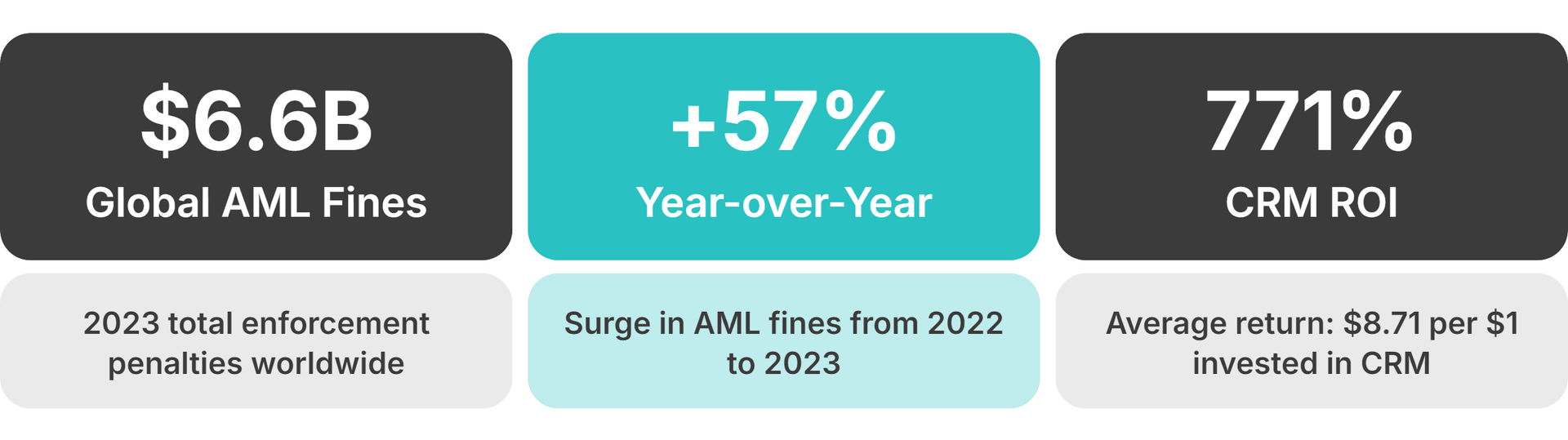
- Global AML fines totaled $6.6 billion in 2023 (a 57% surge year-over-year), and regulators now require demonstrable real-time controls.
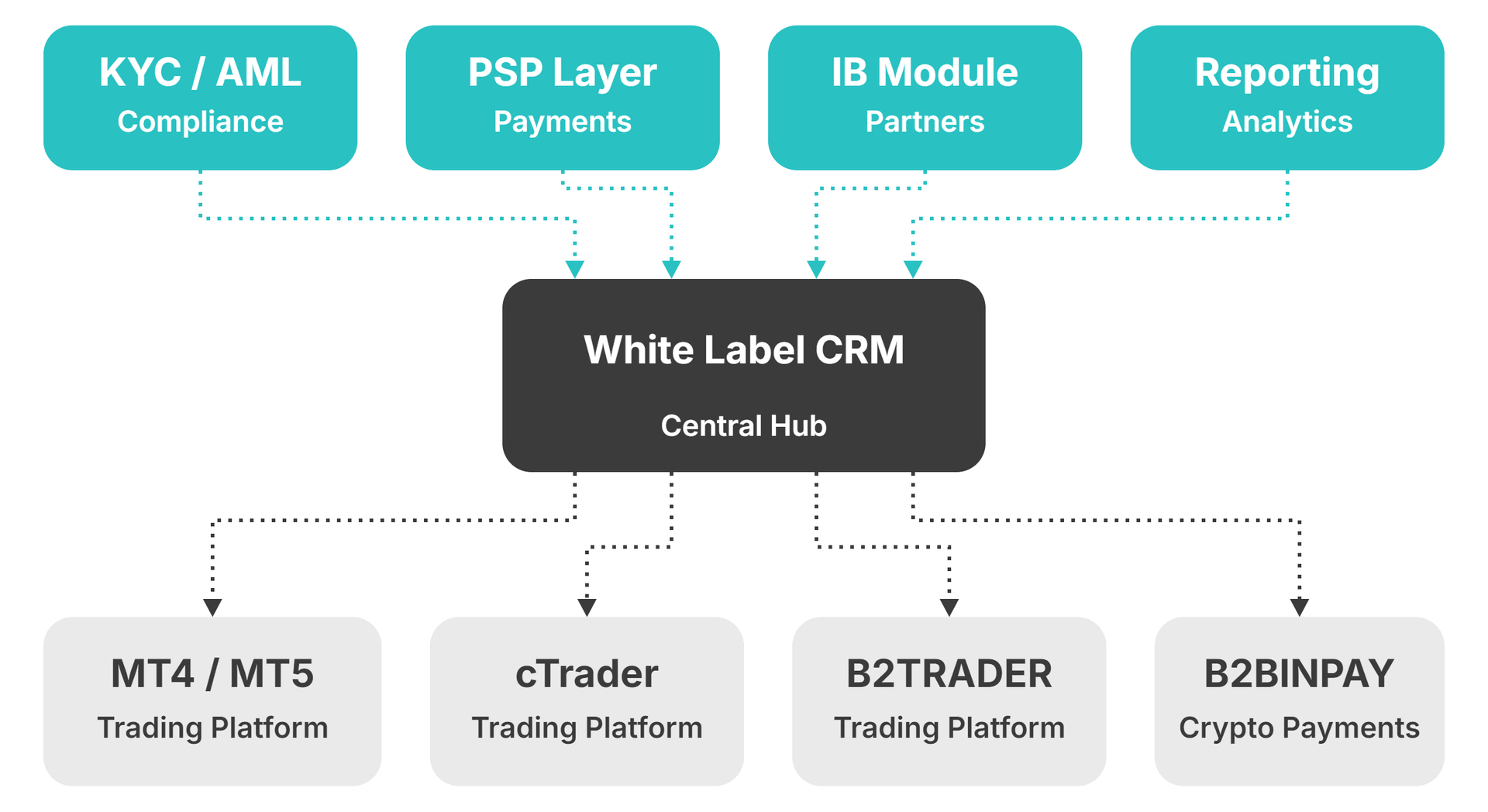
- The right provider integrates with MT4/MT5, cTrader, and multi-asset trading platforms, and also handles IB tracking, PSP connections, and real-time reporting.
- B2CORE by B2BROKER covers all of these requirements as part of a complete white label brokerage stack.
What Is a White Label CRM System?
A white label CRM system is a fully developed customer relationship management platform built by a third-party technology provider. Brokers license the white label CRM software, apply custom branding and a custom domain, and present it to new clients as proprietary technology.
A broker-grade CRM has little in common with a generic one. Platforms like Salesforce or HubSpot focus on sales pipelines and lead management. White label CRM software designed for financial brokers addresses a fundamentally different problem set: trading account management, KYC/AML workflows, PSP integrations, multi-asset ledgers, and regulatory audit trails.
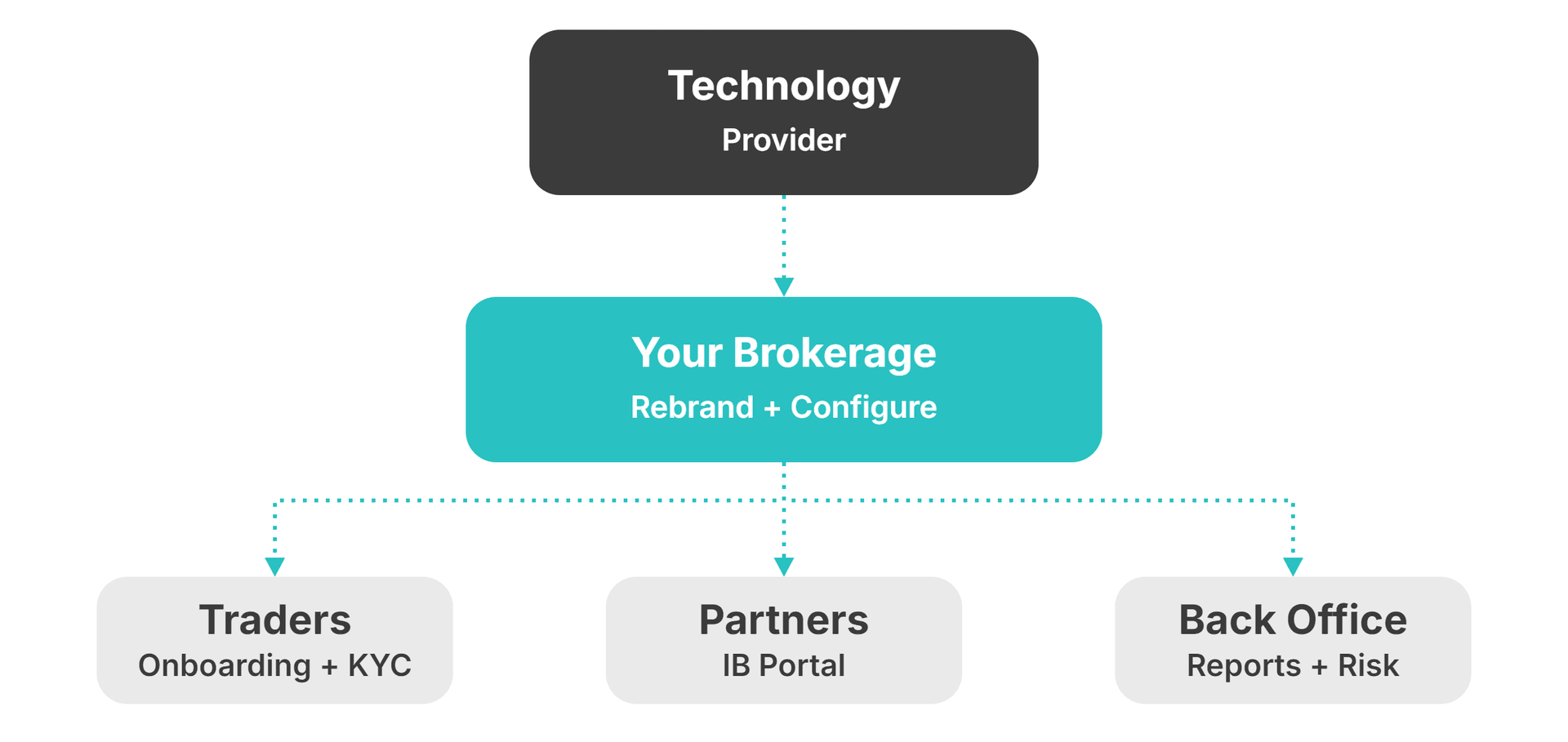
Brokers choosing a white label CRM acquire the operational infrastructure of an established brokerage, rebranded and configured for their own business. The payoff is speed: deployment in weeks, significantly lower costs, and a compliance foundation that would take years to build in-house.
Why Brokers Choose White Label CRM Solutions
When brokerage operators compare white label CRM solutions against building their own, four factors consistently tip the decision.
Brand Control and Consistency
A white label CRM gives brokers complete control over client-facing presentation. Every surface the client touches (the Trader's Room, client portal, onboarding flow) carries the broker's brand exclusively. From the client perspective, the experience feels like interacting with a proprietary platform.
Consistent branding drives trust: traders who see a seamless, professional interface convert better and stay longer, boosting retention. Strong client relationships start with that first impression. Regulatory bodies like the FCA and CySEC also examine client-facing systems during licensing reviews, so a polished platform signals operational maturity.
Faster Time to Market
Building a brokerage CRM from scratch takes 12–24 months and requires a development team that most startups struggle to staff. A white label solution compresses that timeline to weeks. For example, B2BROKER can deploy B2CORE as part of a complete turnkey brokerage ecosystem: trading platform, liquidity feed, PSP layer, and CRM, all managed by one vendor.
Speed to market is also a competitive consideration. In crowded jurisdictions, being first to serve a client segment often determines whether you capture that segment at all.
Lower Total Cost of Ownership
For every $1 invested in CRM software, businesses earn back $8.71 on average, translating to a 771% return on investment. But that calculation only holds if the CRM is deployed efficiently. Custom CRM development locks you into ongoing security patching, version upgrades, and the ever-present risk of institutional knowledge loss when team members leave.
A white label CRM shifts these costs to the provider. The broker pays a subscription with transparent pricing that includes automatic updates, eliminating the need for an in-house development function. That cost advantage compounds over time.
Built-In Compliance Frameworks
The compliance stakes for brokers are high and rising. Global AML fines totalled $6.6 billion in 2023 (a 57% surge year-over-year), and regulators have shifted from accepting "tick-box compliance" to demanding real-time, demonstrable controls.
A broker-grade white label CRM ships with compliance tooling as a core component: automated KYC workflows, sanctions screening, and persistent audit logs. The entire stack aligns with FATF's 40 Recommendations and jurisdiction-specific requirements from the FCA and CySEC.
See B2CORE in Action
B2CORE is B2BROKER's broker-grade CRM covering onboarding, compliance, IB management, and reporting in one white label package.
Critical Features of a Broker-Grade White Label CRM
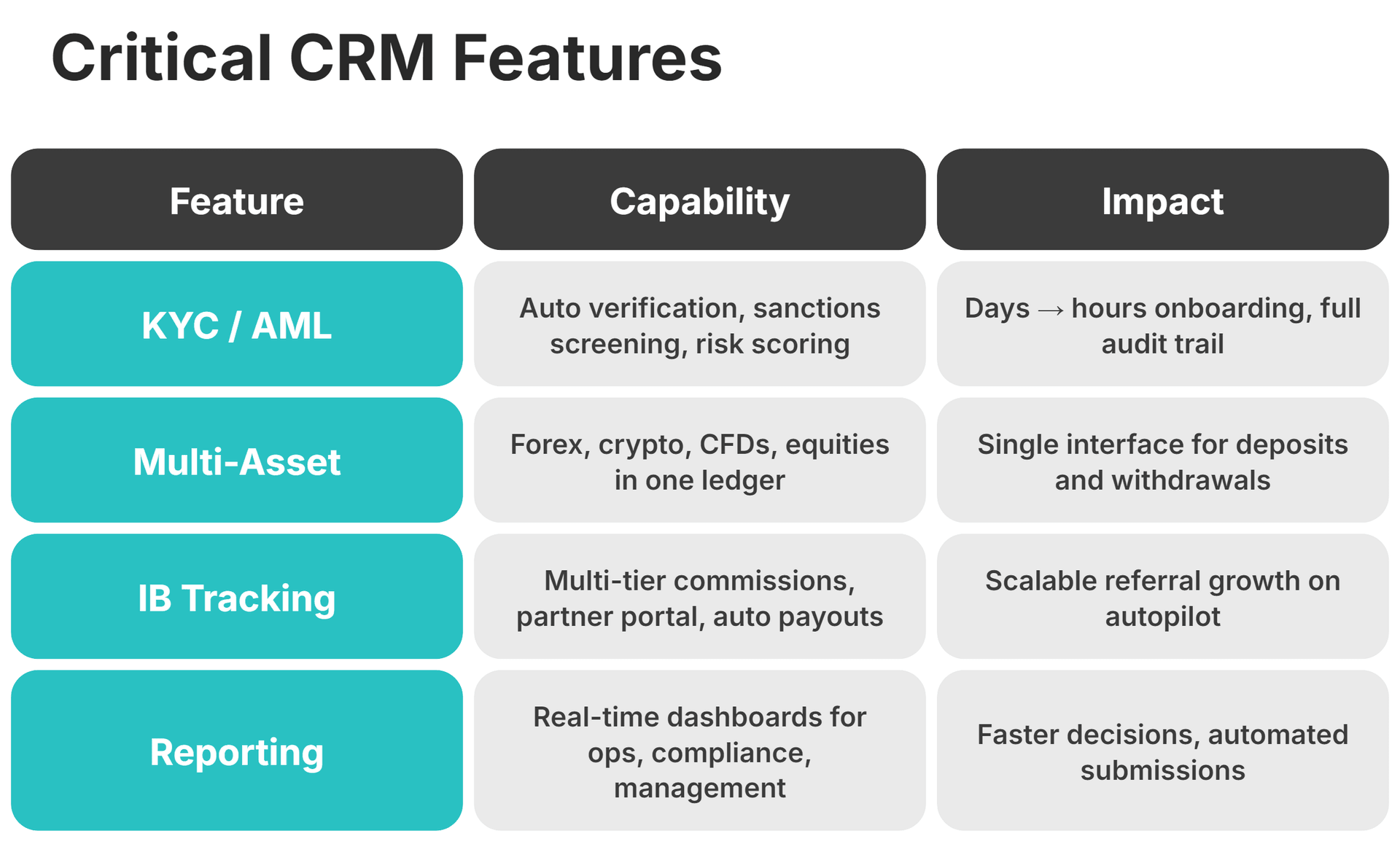
White label CRM platforms vary widely in capability. When evaluating the best white label CRM for your operation, these four CRM features separate functional systems from those that actually support a brokerage at scale.
KYC and AML Automation
Manual KYC slows onboarding and introduces compliance risk at every step. A broker CRM should automate document collection and identity verification at the point of registration, and score each applicant's risk profile in real time. A user-friendly onboarding flow powered by AI can compress the process from days to hours, helping new clients get started quickly while maintaining full auditability.
AML monitoring runs continuously in the background, flagging unusual transaction patterns and screening against sanctions lists. The system also produces the documentation that regulators expect during audits. API connections to third-party screening databases keep the sanctions data current.
IB and Affiliate Tracking
Introducing brokers, affiliates, and resellers drive primary growth for retail brokerages. A dedicated IB module tracks referral chains, calculates commissions at multiple tiers, and lets partners see their own reporting dashboards — all behind a permission wall that keeps the full back office hidden.
B2CORE's IB module supports multi-tier commission structures with automated payouts and a dedicated partner portal. Each reseller or IB gets a branded client portal with performance metrics. Professional partners who bring institutional volume can be onboarded quickly, and the monthly commission cycle runs on autopilot.
Multi-Asset Account Management
Modern brokers operate across multiple asset classes. Clients trade forex, crypto, CFDs, and equities from a single account. An all-in-one CRM manages ledger balances across all of them simultaneously, linking each account to the corresponding trading platform: MT4, MT5, or cTrader.
Deposits and withdrawals should flow through one interface regardless of whether the client is using fiat or crypto rails. The system connects to multiple PSPs and blockchain networks, so there's no need for a separate back office per payment channel.
Real-Time Risk Reporting and Dashboards
Every stakeholder needs a different view of the same data: the back-office team sees operational metrics, compliance officers see risk flags, and senior management sees P&L. A broker CRM should generate all of these views in real time, with no manual data exports.
Automated reporting cuts human error and accelerates regulatory submissions. Management gets the visibility to act on capital allocation before market conditions shift.
How to Launch a White Label CRM: 3-Step Roadmap
Deploying white label CRM software involves more than selecting a provider. Follow this three-step roadmap to avoid common launch errors.
1. Define Requirements and KPIs
Before talking to any vendor, document your requirements. Which trading platforms does the CRM need to connect to? How many asset classes will you support on day one, and which ones do you plan to add? What jurisdictions will you operate in, and which KYC/AML standards apply? What KPIs will you use to measure CRM performance: onboarding completion rate, time-to-first-deposit, IB conversion rate?
The requirements document becomes your vendor evaluation scorecard. Providers who fall short of your core requirements at launch are a poor fit, regardless of their pricing or positioning.
2. Choose a Provider and Licensing Model
White label CRM providers typically offer two licensing structures: a monthly subscription (SaaS) or a one-time license with ongoing maintenance fees. Subscription pricing is lower risk for early-stage brokers and small businesses, since costs scale with the business and platform upgrades are included.
Evaluate providers on four criteria. Does the feature set match your requirements document? Is there a proven compliance track record in your target jurisdictions? How deep are the integrations across trading platforms and PSPs? And what does support actually look like day-to-day? A provider with a 24/7 support desk and a dedicated account manager provides more operational value than a cheaper vendor who responds to tickets in 48 hours.
Also consider whether the provider offers complementary infrastructure. Sourcing your CRM, liquidity, and trading platforms from one place reduces integration overhead significantly and means you hold one company accountable for system performance.
3. Brand, Integrate, and Test
Once a provider is selected, start configuration. Apply brand assets, connect the trading platforms, set up the PSP layer, and build out the IB portal. Most providers deliver a standard configuration in 2–4 weeks; custom configurations take longer.
Testing before go-live is non-negotiable. Run end-to-end tests: client onboarding (KYC document flow, identity verification), deposit and withdrawal processing, IB commission calculation, and reporting output accuracy. Identify and resolve issues before your first real client touches the system.
Get a Complete White Label Brokerage Stack
B2BROKER's turnkey solution includes B2CORE CRM, trading platforms, and multi-asset liquidity, deployed and compliant from day one.
How to Evaluate White Label CRM Software Providers
The criteria that separate good providers from excellent ones — and help you find the best white label CRM for your specific jurisdiction:
Regulatory alignment: Does the provider's compliance tooling match your target jurisdiction's requirements? Verify that KYC/AML integrations are approved or recognized by your regulator, and confirm that audit trail functionality meets local reporting standards.
Platform integration depth: A CRM that connects to MT4/MT5 but lacks cTrader support limits your flexibility. Verify the complete list of supported platforms, PSPs, and data providers before signing any agreement.
Scalability: Can the CRM handle your current client volume and your projected volume 24 months out? Ask providers about concurrent user capacity, database architecture, and how the system performs under high trading volumes during market volatility.
Data security and access controls: Check for encryption standards and granular role-based access controls, and confirm that the system maintains immutable audit logs. These are regulatory requirements in most jurisdictions.
Support and uptime SLA: A CRM outage during peak trading hours is a critical business event. Verify the provider's uptime commitment, incident response time, and escalation process before committing to a contract.
Optimizing Client Engagement After Launch
Optimizing client engagement and retention is an ongoing process. The CRM requires attention after go-live. Brokers who consistently outperform peers actively use their CRM data to improve the client experience.
Segmentation-based outreach: Group clients by trading activity and deposit volume, then layer in asset-class preference and dormancy status. Use marketing automation to send targeted campaigns: re-activate dormant accounts, upsell premium conditions to high-volume traders, or introduce new asset classes to new clients with relevant trading profiles. Consistent engagement like this is the single biggest driver of retention.
Automated lifecycle triggers: Configure follow-ups at key milestones, starting at registration and continuing through first deposit, first trade, and a 30-day inactivity check. Build reusable templates for email and SMS outreach so automation keeps every client on the radar, regardless of support team bandwidth.
IB performance monitoring: Track conversion rates and average client lifetime value per IB, and watch for churn among underperforming partners. Use the data to improve IB onboarding materials and commission structure.
Regular reporting cadence: Generate weekly risk summaries, monthly P&L reports, and quarterly regulatory submissions directly from the CRM. Build reporting templates once and automate the output, routing each report to the appropriate stakeholder on schedule.
All-In-One CRM & Back Office for Brokers and Exchanges
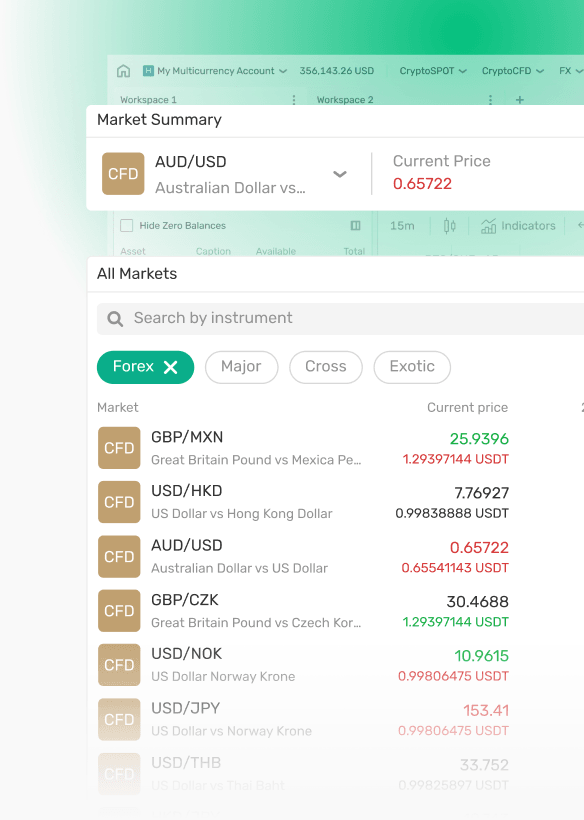
Fully Customisable Trader’s Room with Modular Features
Built-In IB Module, KYC, Payment Integrations, and Reporting Tools
Intuitive Interface that Boosts Client Engagement
Launch and Scale Your Brokerage With B2BROKER
B2CORE is B2BROKER's white label CRM software for brokers. It handles client management, KYC/AML, IB tracking, multi-asset account management, PSP integrations, and real-time reporting — an all-in-one solution under one roof.
B2CORE is available standalone or as part of B2BROKER's complete brokerage ecosystem, which includes Prime of Prime liquidity, MT4/MT5/cTrader/B2TRADER platform integrations via API, B2BINPAY for crypto payments, and compliance support across multiple jurisdictions.
Deploying B2CORE as part of the full stack removes the coordination overhead of managing multiple vendors. Every component is pre-tested and maintained by a team with 24/7 support.
Whether you're launching a new brokerage, running a small business entering the trading space, or scaling an existing operation, B2CORE delivers the infrastructure you need at a fraction of the cost and timeline of custom development.
Ready to Launch Your Brokerage?
B2BROKER offers a complete white label brokerage stack — CRM, platforms, liquidity, and compliance tools — ready to deploy under your brand.
Frequently Asked Questions about White Label CRMs for Brokers
- What is a white label CRM for brokers?
It's a ready-made platform that brokers license and rebrand as their own proprietary technology. Unlike generic sales tools, it natively handles brokerage-specific operations: trading account management, compliance workflows, and partner tracking.
- How long does it take to deploy a white label CRM?
Most providers deliver a standard configuration in two to four weeks, though complex custom integrations may extend this timeline. Turnkey solutions that bundle the CRM with liquidity and trading platforms deploy the fastest since the components are already pre-integrated.
- What is the difference between a white label CRM and a custom-built CRM?
A white label CRM is a ready-made, brandable platform that deploys quickly with essential compliance tools already built in. Building a custom CRM from scratch typically takes 12 to 24 months and demands expensive ongoing maintenance.
- What compliance features should a broker CRM include?
Automated KYC verification, real-time AML monitoring, and immutable audit logs are the baseline. Always confirm that these controls meet the regulatory standards of your specific operating jurisdictions before deployment.
- Can a white label CRM handle multiple asset classes?
Yes. Broker-grade platforms manage client accounts and financial ledgers across forex, crypto, CFDs, and equities simultaneously, connecting to multiple trading platforms and payment providers through one interface.