How to Achieve Ultra-Tight Spreads: A Guide for Modern Brokerages

Tight spreads are a decisive competitive lever for modern brokerages. They directly dictate your ability to secure market share and maintain high trading activity.
True pricing efficiency means offering consistently narrow bid–ask differences that traders can trust. Achieving this requires a robust technical foundation, distinguishing operational excellence from mere promotional pricing.
This guide breaks down the architecture behind ultra-tight spreads. It covers the necessary spread mechanics and scalable execution strategies to ensure stability as your business expands.
Key Takeaways
- Tight spreads come from liquidity quality, pricing logic, and risk controls working in sync.
- Executable pricing matters more than headline spreads. The best bid/offer must remain tradable under load and volatility.
- Dynamic pricing protects both competitiveness and margins. Static markups fail across sessions, events, and client segments.
- Without execution monitoring and transaction-cost analysis, spreads often “return” as slippage, rejects, or poor fill quality.
Have a Question About Your Brokerage Setup?
Our team is here to guide you — whether you're starting out or expanding.
What Are Tight Spreads and Why Do They Matter?
A spread is the difference between an instrument’s best bid price and best ask price (or, in other words, between the “price to sell” and the “price to buy”).
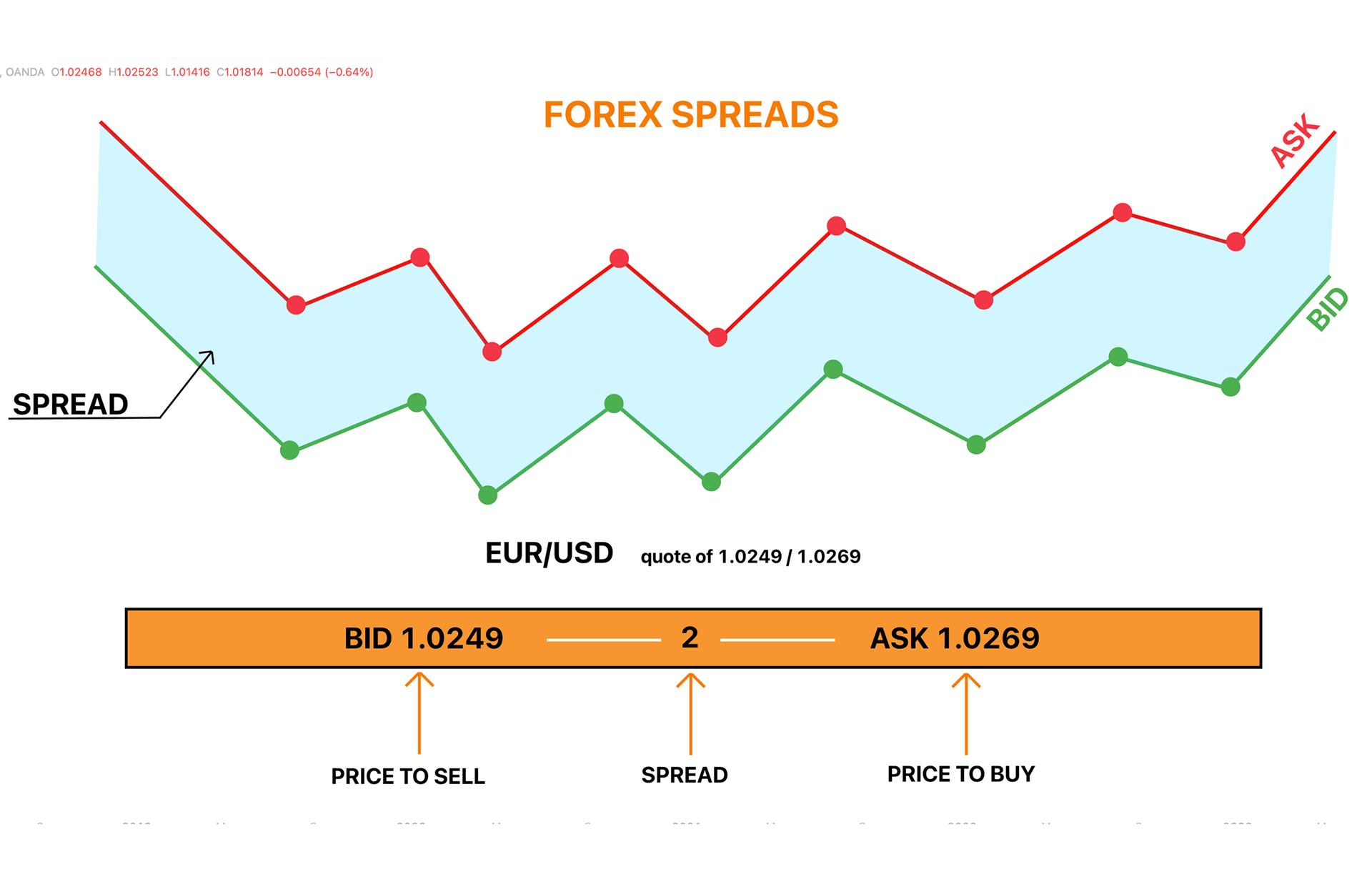
For brokers, this metric is foundational to client trust and perceived execution quality. Traders view consistently tight spreads as evidence of reliable, professional-grade infrastructure. Tight spreads directly reduce their cost of trading, encouraging more activity on your platform.
The business impact is measurable:
- Lower trading costs for clients drive higher platform engagement and volume.
- Consistent execution strengthens your brand's reputation with serious traders.
- It shifts competition away from unsustainable bonuses toward sustainable technology.
Achieving tight spreads requires a disciplined approach to market structure and systematic technology design.
Regulators and venues treat spread size as a direct forex trading cost. In the U.S., the SEC approved quoting many stocks in half-cent increments starting November 2025, with the explicit goal of narrowing bid-ask spreads and lowering investor costs.
Benefits of Tight Spreads for Brokerages
Moving beyond bonus-led acquisition requires a concrete value proposition. Tight spreads deliver this, directly improving a brokerage's key performance metrics across acquisition, client activity, and brand strength.
Lower Client Acquisition Costs and Stronger Conversion
Competitive spreads decrease the need for costly deposit bonuses. Savvy traders, especially high-volume clients, prioritize execution costs over temporary promotions. Your marketing efficiency improves as spreads become a primary conversion tool.
This benefit compounds in performance channels. Affiliates and IBs tend to route traffic toward venues that keep trading predictably, because fewer pricing complaints reduce refunds and support escalations. Lower friction gives you more room to scale acquisition profitably.
Higher Trading Volume and Client Lifetime Value
Trading cost shapes behavior. When the spread stays tight during normal sessions, clients can place more trades without feeling “taxed” on every entry. Over 5,000 standard lots a month, tightening EUR/USD by 0.5 pips translates into roughly $25,000 in reduced cost.
Industry analysis suggests that even a small reduction in effective spreads can stimulate a disproportionate increase in trading activity. This improved client satisfaction also extends account lifespan, boosting the total lifetime value and supporting stable deposit growth.
Stronger Market Positioning and Execution Credibility
Consistent spreads demonstrate robust technology and reliable liquidity access. They build immediate trust with professional traders who prioritize execution quality. A brokerage can then cultivate a brand reputation for professionalism and transparency. This foundation supports a sustainable market position that competitors without equivalent infrastructure cannot easily match, securing long-term client loyalty.
Key Factors That Influence Spread Consistency and Liquidity
Spreads move because the market moves. If you want predictable pricing, you need to understand what drives spread behavior across calm sessions, news shocks, and liquidity gaps, then build controls that keep your quotes aligned with what you can actually execute.
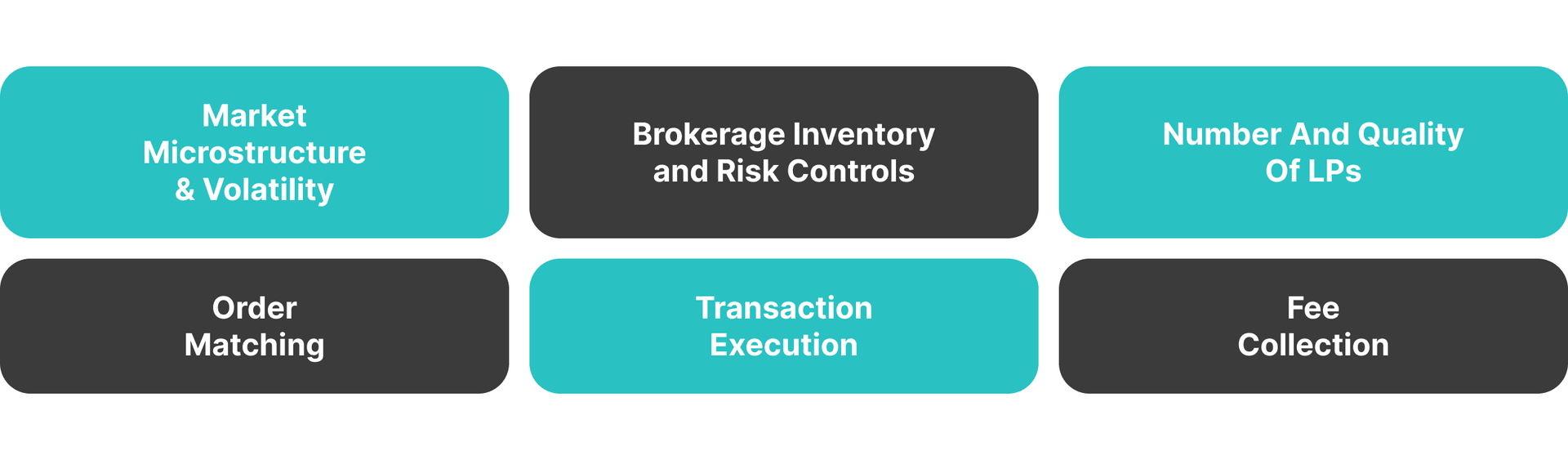
Market Microstructure and Volatility
Market microstructure defines the foundational liquidity of financial instruments. Assets with deep order books and high trade frequency, like EUR/USD, naturally support tighter spreads due to intense competition among market participants. The speed of price discovery in these liquid markets keeps bid-ask spreads compressed.
Market conditions and fundamentals often disrupt this equilibrium. During major economic announcements, like Non-Farm Payrolls, implied volatility can spike, causing spreads to widen materially. Liquidity providers then widen quotes to manage the increased risk of rapid price gaps. Your brokerage's infrastructure must process these volatile quotes efficiently to avoid requotes or slippage, which clients notice immediately.
Brokerage Inventory and Risk Controls
How a financial services provider manages its exposure directly impacts its pricing. Holding client positions on the book involves inventory risk but can reduce external hedging costs. This practice, known as internalization, can allow for tighter spreads if the flow is balanced.
Effective risk engines automate this balance. They monitor book exposure in real-time and trigger hedging orders in the interbank forex market only when specific risk limits are breached. Segmenting flow lets you internalize low-risk volume while hedging directional trades. This hybrid approach maintains aggressive pricing for your user base without exposing the firm to unmanaged market risk.
Number and Quality of Liquidity Providers
Access to multiple tier-1 liquidity providers is the technical foundation for a competitive spread. Aggregation technology creates a synthetic order book by compiling the best buy and sell prices from each source. This process naturally compresses the final quoted spread through competition.
However, the sheer number of LPs is less critical than their quality and reliability. A provider's response latency and its quote depth during news events are key differentiators. A robust setup requires primary and backup providers to maintain spread consistency if one source becomes unstable or widens its quotes excessively.
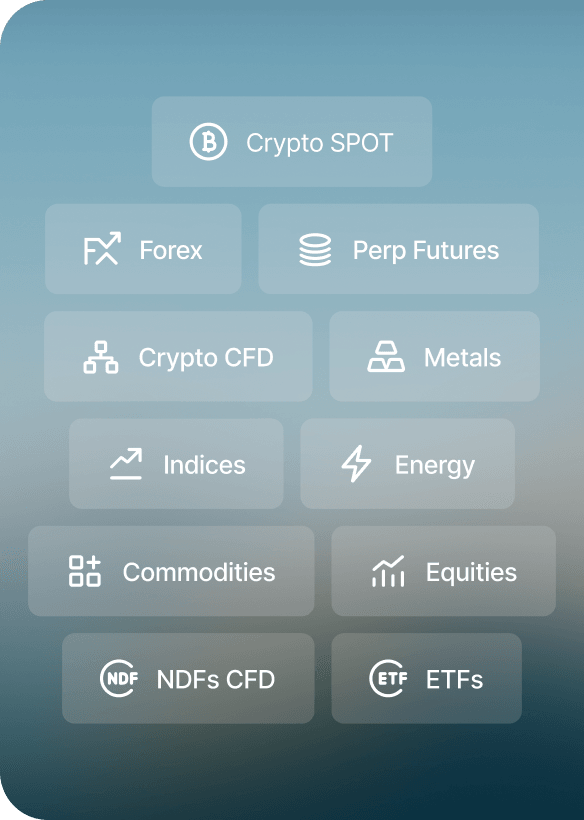
Deep, Reliable Liquidity Across 10 Major Asset Classes
FX, Crypto, Commodities, Indices & More from One Single Margin Account
Tight Spreads and Ultra-Low Latency Execution
Seamless API Integration with Your Trading Platform
Challenges in Offering Consistently Tight Spreads
Delivering tight spreads consistently tests a brokerage's entire operation. These hurdles are significant but manageable with the right strategy and partners.
Infrastructure and Technology Costs
The technology behind tight spreads is capital-intensive. It requires low-latency connections to liquidity venues and substantial processing power for pricing engines. Building this internally demands a major upfront investment.
Ongoing expenses for data centers and network infrastructure scale with your client volume. Partnering with an established technology provider converts this capital expenditure into a scalable operational cost, preserving liquidity access without the heavy upfront outlay.
Managing High-Frequency or Toxic Flow
“Toxic flow” describes activity that exploits minor pricing delays and forces your hedge to chase the market. It increases adverse selection, prompting liquidity providers to widen quotes or reduce available volume.
You can manage this without degrading the experience for traders like scapers. Focus on measurable signals:
- Repeated fills right before price moves
- Concentration around news timestamps
- Abnormal win rate at short holding times
Tools for client segmentation and dynamic pricing adjustments allow you to protect margins without degrading execution for clients.
Regulatory and Compliance Constraints
Best-execution rules make spread design auditable. Under MiFID II, firms publish execution-quality and routing disclosures and must show how they achieve best outcomes for clients in practice.
This pressure changes how you run pricing. You need transaction-cost analysis that ties quotes to fills, plus monitoring that flags asymmetric outcomes by symbol and session. When you can explain decisions with data, tighter spreads become sustainable.
How to Achieve Tight Spreads Across Multiple Asset Classes
Moving from theory to execution means accepting that tight spreads come from repeatable processes. Each asset class behaves differently, yet the operational logic behind pricing discipline stays consistent when infrastructure, risk controls, and monitoring work as one system.
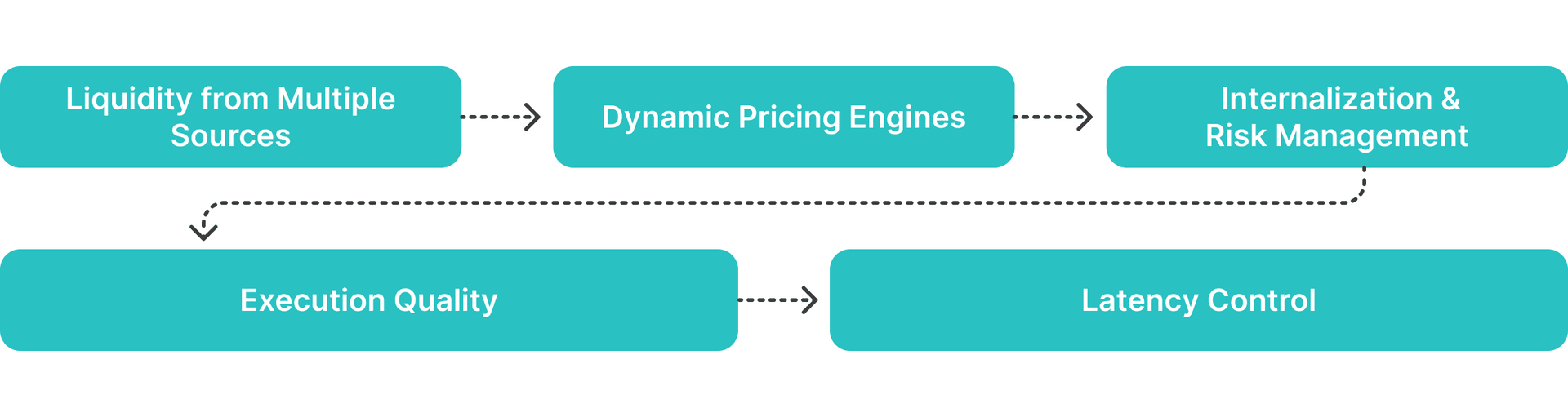
Aggregating Liquidity From Multiple Sources
Liquidity aggregation sits at the center of spread control. When your trading platform connects to several external price streams, competition between sources naturally compresses quotes.
The goal is to construct a synthetic order book with more depth than any single source provides. Effective aggregation requires careful source evaluation and logic to filter out stale or unrealistic prices. This process must be calibrated per asset class, as liquidity behaves differently in forex majors versus crypto currency pairs.
Implementing Dynamic Pricing Engines
Static spreads break quickly when financial markets shift. Volatility spikes force liquidity providers to reprice risk, and fixed markups leave your quotes exposed. Dynamic pricing engines respond by adjusting spreads in real time based on measurable market inputs.
In crypto, where intraday volatility regularly exceeds 5–10%, adaptive pricing protects execution quality. Controlled rollout matters here. Run dynamic logic alongside legacy pricing, compare outcomes, and keep human oversight for abnormal events.
Optimizing Internalization and Risk Management
Internalization becomes a powerful lever once volume grows. Matching client flow internally reduces reliance on external hedging, which lowers transaction costs and supports tighter quotes. This only works when risk stays visible at all times.
Real-time exposure tracking and automated hedging thresholds prevent inventory from drifting into unsafe territory. Regulators expect proof that internalization improves execution, so measurement remains part of daily operations.
Monitoring and Benchmarking Execution Quality
Quoted spreads only help when clients receive consistent fills. Monitoring should link each quote to the next event in the order lifecycle, then surface problems early, such as rising rejects on one venue or widening slippage on one symbol during a specific session.
Bring in external benchmarks so your team can validate pricing against the broader market. Use independent reference feeds or venue snapshots, compare results by asset and time window, then feed decisions back into routing and pricing. Every exception should have an assigned owner.
Latency Control Between Pricing, Risk, and Execution
In electronic trading strategies, latency directly translates into wider spreads. If your risk management system takes too long to approve a trade, your pricing engine must quote a more conservative spread to cover the potential market move during that delay.
Minimizing this requires architectural discipline. Core components like the pricing engine, risk gateway, and order management system should be co-located in the same data center to minimize network hops. Utilizing a single, high-speed market data feed for all systems ensures everyone is making decisions based on the same price at the same time.
Slash Latency With Institutional-Grade Infrastructure
Deploy a turnkey brokerage ecosystem where pricing and execution synchronize in milliseconds for zero-slippage performance.
Session-Based and Event-Aware Spread Controls
Build spread logic around real trading sessions with asset-specific settings. FX runs from Sunday 5:00 p.m. ET through Friday 5:00 p.m. ET, with clear liquidity peaks by region. Some experts estimate the London–New York overlap drives more than 30% of daily volume.
Use a market calendar to pre-set guardrails for auctions, rollovers, and scheduled announcements that can change depth quickly. Apply softer widening rules before risk windows, then unwind them when liquidity returns. Crypto desks should also codify weekend controls, since trading continues without a close.
Selecting Technology and Providers for Consistently Tighter Spreads
Selecting core technology partners defines your long-term market position. This decision directly impacts the aggregation quality and execution speed your infrastructure delivers to clients.
Narrower spreads come from what you can execute at scale, so judge providers on observable outcomes through live evidence. Ask for depth by symbol, quote stability, and incident reports that show how teams handle stress.
Run a live pilot with production-grade order flow. Track fill rate, reject rate, and price movements against benchmark pricing. Require transparent markups and a written policy for last look, throttling, and outage updates, so your team can explain results to clients.
Power your Brokerage with Next-Gen Multi-Asset & Multi-Market Trading
Advanced Engine Processing 3,000 Requests Per Second
Supports FX, Crypto Spot, CFDs, Perpetual Futures, and More in One Platform
Scalable Architecture Built for High-Volume Trading
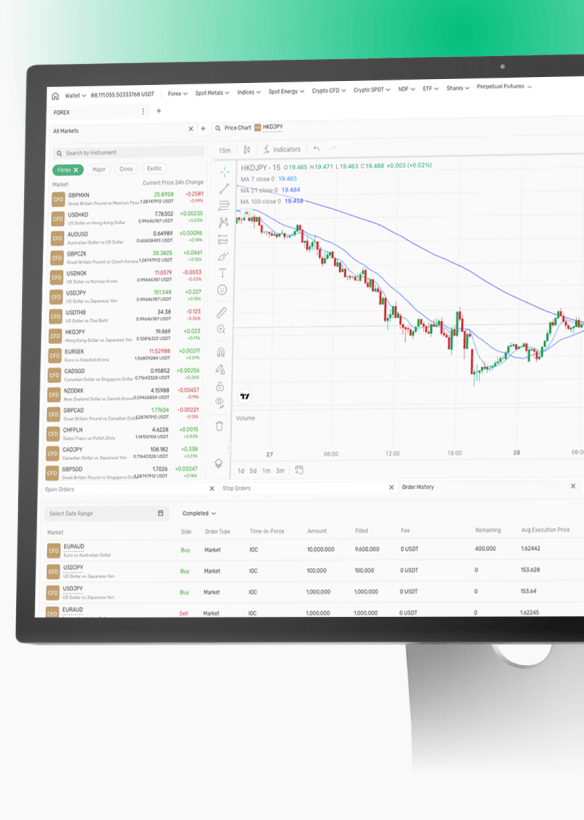
Empowering Your Brokerage With Reliable Prime-of-Prime Solutions
Ultra-tight spreads emerge from an ecosystem integrating deep liquidity with disciplined risk management. Prime-of-Prime providers bridge the gap for brokerages by delivering institutional-grade pricing without the high capital barriers of direct Tier-1 bank relationships. Accessing aggregated pools ensures consistent bid-ask prices compression even during volatile market sessions.
B2BROKER equips firms with the infrastructure to secure competitive spreads from launch. Our solutions combine low-latency execution technology with robust liquidity aggregation across 10 asset classes, including forex pairs, crypto, CFDs, equities, and more. We empower brokers to scale operations confidently while maintaining strict control over pricing logic and real-time inventory exposure.
Advanced pricing architecture requires a reliable technological foundation to function correctly at scale. B2BROKER delivers this stability through proven turnkey ecosystems serving hundreds of corporate clients.
Contact our team to engineer a liquidity solution that tightens your spreads and optimizes your execution performance.
Engineer Your Perfect Liquidity Solution Today
Schedule a consultation to build a liquidity strategy that scales efficiently with your brokerage's growth.
Frequently Asked Questions About Spreads
- Why are tight spreads important?
Tight spreads lower client trading costs, directly driving higher volume and retention. They also signal infrastructure reliability, building necessary trust with professional traders.
- What is the minimum capital requirement to access prime-of-prime liquidity?
Access typically starts in the tens of thousands, avoiding the multi-million dollar requirements of direct Tier-1 bank relationships.
- How do tight spreads differ across asset classes?
Liquid FX majors naturally maintain the narrowest spreads due to deep order books. Conversely, volatile assets like crypto require wider pricing to offset higher liquidity risks.
- Can tight spreads hold up during extreme volatility?
Reliable systems widen spreads proportionally to reflect risk rather than rejecting orders. This ensures execution continuity even during severe market stress.