Can Your Integrated Brokerage Ecosystem Scale Cleanly?

Can your brokerage ecosystem handle 10x the volume and a few new asset classes without breaking? For most stacks, the answer is no, because the components were bolted together after the fact, with no shared data model underneath.
This guide is for the CTOs, COOs, and heads of operations in financial services making that call. It covers how to test scalability at the component level and what real integration requires.
Key Takeaways
- A real integrated brokerage ecosystem is held together by a shared data model and coordinated controls that all run off the same view of risk. When even one of those is missing, the whole thing turns fragile under load.
- Fragmented stacks hide risk. Asset classes settle on their own separate cycles and margin sits in isolated silos, so compliance workflows start failing the moment volume climbs.
- The scalability test for any ecosystem rests on four components, each covered below: the matching engine, liquidity aggregation, the cross-asset margin model, and real-time back-office capability.
- The 2026 rule changes turn what used to be operational best practice into hard requirements. SEC daily reserve computation and Reg S-P incident response programs both translate straight into back-office specifications that fragmented systems cannot satisfy.
What an Integrated Brokerage Ecosystem Actually Means at Scale
"Integrated" gets thrown around loosely in brokerage technology sales. For most service providers, the word just means their platform exposes an API that other systems can call. Real integration goes further than that, and the difference becomes obvious the moment traffic scales up.
The Difference Between Connected Components and a Unified Architecture
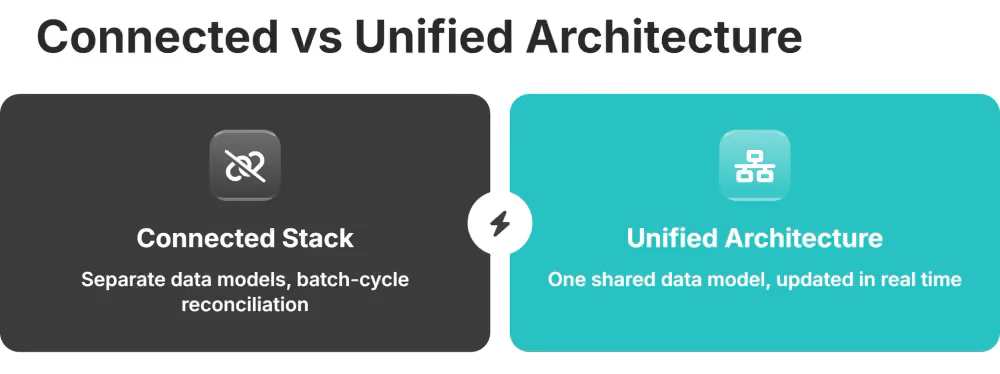
In a connected stack, components pass data to each other through APIs on a schedule. Each one keeps its own internal model of the world and only syncs up at set intervals. Settlement runs on a different clock from execution. Every component works out the risk on its own and reconciles with the others later.
A unified architecture works from one shared data model instead. Execution, margin, compliance, and settlement all read from the same source of truth, and they read it in real time. The moment a trader opens a position, the margin engine registers it immediately, and the routing and compliance layers see the same position in the same instant.
Financial institutions now build infrastructure partnerships on exactly this basis. They want real-time connectivity and controls that coordinate by themselves, so their own engineers are not left babysitting a web of point-to-point API links.
There is a simple test for any ecosystem. When order flow shifts, how long does it take for the change in risk exposure to show up everywhere it should, from execution through margin to reporting? If the honest answer is measured in minutes or in batch cycles, the architecture is connected rather than unified.
Why Fragmented Stacks Create Risk Blind Spots Across Asset Classes
Fragmentation does the most damage in multi-asset setups. A multi-platform brokerage strategy that runs forex, crypto, and CFDs on separate execution and margin systems can calculate exposure correctly inside each system while still getting the portfolio-level picture wrong.
Take a client who is long FX on one platform and short crypto on another. Each system can show zero net risk on its own, even though the two positions carry real correlated exposure when you add them together. The blind spot lives in the architecture itself. Adding more data feeds leaves it exactly where it was, because the fix is a single unified risk model that values every position against the others in one calculation.
The Core Components That Determine Whether Your Ecosystem Scales
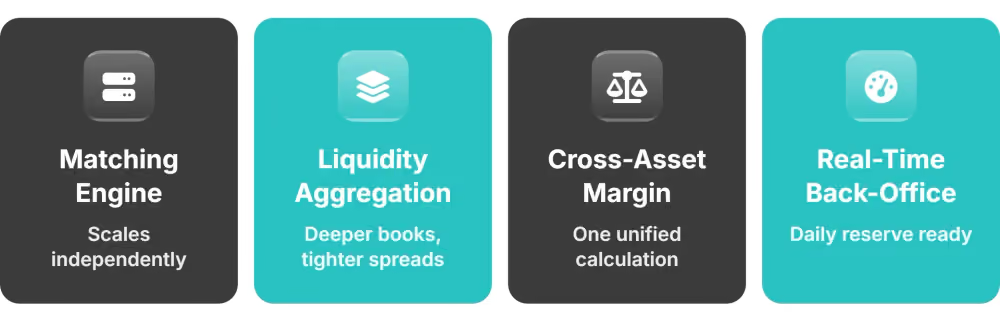
Scaling a brokerage has very little to do with adding raw compute capacity. What actually decides the outcome is whether the core components of the ecosystem can grow on their own and grow in coordination with each other. Four of them carry most of that weight.
Matching Engine Positioning and Independent Scalability
When the matching engine lives inside the trading platform, it becomes a single point of failure and sets a hard ceiling on how far you can scale. Order volume climbs, and the engine and the platform have to grow together, which means they also tend to choke together.
Position the matching engine as its own independent layer and the picture changes. You can scale execution without touching the trading interface or the risk controls, because the execution layer and the user-facing layer stay architecturally separate. That one design decision often determines whether you scale cleanly or end up rebuilding the whole thing under load. Scaling a forex brokerage at institutional volumes depends on that kind of foresight, applied well before traffic forces your hand.
B2TRADER builds its matching engine with exactly this separation. It supports margin and netting modes independently of the platform interface, so low-latency execution is a property of how the system is built, present from day one.
The Importance of Liquidity Aggregation
Liquidity aggregation pulls prices from several providers at once and surfaces the best available bid and ask. Liquidity aggregation for multi-asset brokers gives you deeper combined order books and tighter spreads than any single feed can offer on its own.
The value of aggregation shows up most under pressure. A single liquidity source can thin out fast when volume surges or volatility hits, and that is when spreads widen and slippage creeps in. Institutional liquidity aggregator infrastructure draws on both Tier-1 and non-bank liquidity sources, so the combined depth holds execution quality steady as volume grows.
Cross-Asset Margining Within a Unified Risk Model
Being able to margin positions across asset classes from one account is a capital-efficiency requirement for any multi-asset broker's clients. A cross-asset margin and unified risk model lets FX, crypto, and equity CFD positions net against each other inside a single margin calculation.
Strip that out and every client ends up running a separate margin balance for each asset class. Capital that could be optimized across positions gets trapped, and everyday operations grow more complex. On top of that, risk management splinters back across separate systems. A unified model only works when execution, liquidity, and the back-office all read from one shared exposure database in real time, giving every position one consistent valuation.
Regulatory Requirements That Now Demand Real-Time Infrastructure
The 2026 regulatory environment has quietly promoted a set of practices from "nice to have" to "required by law." Two changes in particular land directly on the infrastructure that broker-dealers and other intermediaries across capital markets run.
Daily Reserve Computation and What It Requires From Your Back-Office
The SEC has set June 30, 2026 , as the extended deadline for broker-dealers with average total credits of $500 million or more to meet daily reserve computation rules. In plain terms, the back-office now has to produce an accurate net cash reserve figure every single business day. A weekly or batch cycle no longer satisfies the rule.
A back-office still running on legacy batch settlement logic cannot hit that target without rebuilding the data pipeline that sits between execution and settlement. What the rule really demands underneath is real-time reconciliation across the execution and settlement layers.
Reg S-P Incident Response Programs as an Embedded Operational Requirement
Regulation S-P's 2026 requirements make incident response programs a mandatory piece of operational infrastructure. A financial institution now has to show that its systems can spot a data security incident and contain it within a defined window, then report it and produce documented evidence that each step happened.
Q1 2026 compliance reporting shows that Reg S-P has moved from guidance into an active examination priority. For infrastructure, that means the back-office and CRM have to log every relevant action and keep it auditable, then generate incident reports on demand. Fragmented systems with patchy audit trails cannot do that reliably, which is the whole point of the requirement.
ISO 20022 messaging standards, documented by the BIS Committee on Payments and Market Infrastructures, are working their way into settlement infrastructure at the same time. They give AML and screening teams cleaner traceability across payment rails.
A Phased Framework for Assembling an Institutional-Grade Ecosystem
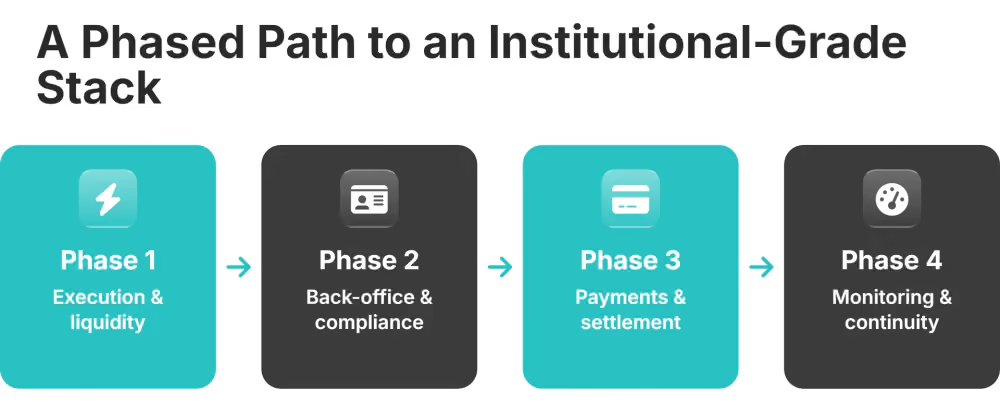
Building an institutional-grade ecosystem does not mean ripping out every component at once. A phased brokerage infrastructure scaling framework takes migration complexity as a given and orders the decision-making by dependency and risk, so each step rests on the one before it.
Phase One: Liquidity Aggregation and Execution Infrastructure
Execution and liquidity come first, because they form the foundation on which everything else sits. Deploy a matching engine that can scale independently, then connect institutional liquidity aggregation on top of it. These two choices shape everything downstream. What the execution layer captures, and the moment it captures it, sets the limits for the margin model and the settlement cycle that follow, and for every compliance report built on them.
Phase Two: Back-Office Integration and Compliance Enforcement
The back-office comes after execution, for a reason. Once clean execution data flows from a single matching engine, the back-office can reconcile in real time through workflow automation and calculate daily reserves on schedule. The same data feeds the audit trails that Reg S-P expects.
KYC and onboarding belong in this phase too, wired into the execution layer from the start. Bolt them on later as a retrofit and they recreate the exact fragmentation the phased model exists to prevent.
Phase Three: Payment Infrastructure and Settlement Connectivity
You connect payment and settlement rails once execution and compliance are stable underneath them. Crypto payment processing hooks into the back-office layer, bringing Travel Rule compliance and blockchain analytics for tainted-asset screening along with it. ISO 20022-compatible settlement messaging goes in at this stage as well.
With this in place, the ecosystem now covers client use cases such as funding in digital assets and pulling withdrawals back out to crypto wallets , without standing up a separate payments silo to handle them.
Phase Four: Monitoring, Reporting, and Operational Continuity
The last phase installs the layer that keeps the whole system observable and recoverable. It pulls together:
- Real-time dashboards across the full stack
- Automated regulatory reporting feeds
- Disaster recovery procedures
- Ongoing SLA monitoring
By this point, the ecosystem is coherent enough that these tools give stakeholders one unified operational picture, instead of a pile of disconnected reports from systems that never shared a data model.
Build Your Ecosystem on Infrastructure That Grows With You
The real test for a brokerage ecosystem has nothing to do with whether it works today. The test is what happens when you push 10x the trader volume through it and add three new asset classes on top, all while bringing on a new regulatory jurisdiction.
A genuinely integrated ecosystem comes through that test because of how it was built from day one. It runs on one shared data model and its controls coordinate with each other. Each component can also scale on its own. A merely connected one fails the same test slowly. Reconciliation gaps widen and blind spots keep spreading. Underneath, compliance debt piles up until it surfaces at the worst possible moment.
B2BROKER's end-to-end stack covers execution through B2TRADER , back-office and compliance through B2CORE , and crypto settlement through B2BINPAY . These pieces were designed to coordinate natively under one operating model, so connecting them never depends on custom middleware stitched together after the fact.
Frequently Asked Questions about Integrated Brokerage Ecosystems
What is an integrated brokerage ecosystem?
A stack where execution, liquidity, back-office, and payments all run off one shared data model with coordinated controls and a single view of risk. B2BROKER builds this way, so B2TRADER, B2CORE, and B2BINPAY coordinate natively from the day they go live.
How do you know if your brokerage ecosystem can scale?
Check four things: can the matching engine scale on its own, does liquidity aggregation pull from enough sources to keep spreads tight, do positions margin from one unified calculation, and can the back-office produce daily reserve figures? A weak answer on any of them flags a constraint that shows up under volume.
What back-office requirements does daily reserve computation create?
It calls for real-time reconciliation between the execution and settlement layers, since scheduled batch processing cannot keep up with a daily calculation. Legacy batch infrastructure has to rebuild its data pipeline first, which makes this an architecture decision rather than a last-minute compliance fix.
How does a phased approach work for building an integrated brokerage ecosystem?
It sequences decisions by dependency: execution and liquidity first, then back-office and compliance, then payment and settlement rails, and finally monitoring and continuity tooling. Building in that order treats migration complexity as real and produces a more stable result than replacing everything at once.
What is the difference between a connected brokerage stack and a unified architecture?
A connected stack links components that each keep their own data model and reconcile on a schedule. A unified architecture runs everything off one shared data model in real time, so reconciliation gaps and audit-trail inconsistencies stop showing up under volume.
Recommended articles
Subscribe to our newsletter