How to Implement Low Latency Execution in Your Trading Infrastructure


Low-latency execution drives execution quality in brokerage and venue operations. Each millisecond between a market update and an order confirmation can change the price a client receives and the exposure your risk stack holds during fast moves.
Real speed comes from synchronizing the path between market data and trade execution. Bottlenecks often hide in the handoffs between your internal servers and external matching engines. True optimization requires tracking the signal journey as one cohesive system.
This guide outlines the architecture needed for sub-millisecond performance. It provides actionable steps to refine infrastructure layout and routing protocols without requiring a complete platform rebuild.
Key Takeaways
- Low-latency performance relies on minimizing the "tick-to-trade" interval across the entire stack.
- Co-location with trading venues establishes the physical floor for transmission speed.
- Event-driven architecture and thread pinning prevent processing delays during volatility.
- Asynchronous data pipelines decouple execution speed from slower back-office tasks.
Have a Question About Your Brokerage Setup?
Our team is here to guide you — whether you're starting out or expanding.
What is Low Latency Execution?
Low-latency execution measures the precise interval between a market event and an outbound order. Many teams track this as tick-to-trade, measured from an order book update to the moment the system sends the order message.
Latency accumulates across the entire path. Physics sets the floor: fiber typically adds about 5 microseconds per kilometer. After that, performance depends on where time accumulates inside your stack.
- Network transmission governs the physical speed of data travel between data centers.
- Processing logic dictates the efficiency of internal decision engines.
- Infrastructure design aligns hardware capacity with massive throughput demands.
Execution quality improves when you design these parts as one workflow and measure each stage with consistent timestamps.
Latency tolerance depends on the trading model. For example, algorithmic trading needs stable response times so signals arrive and act consistently. High-frequency trading strategies run inside microseconds, which is why many firms pay for co-location near exchange servers.
Industry professionals describe low latency as under 10 milliseconds. Elite environments push this boundary below 1 millisecond.
The Importance of Ultra-Low Latency Trading Systems
Ultra-low latency ties directly to execution economics. When a large share of market volume comes from speed-sensitive flow, delays translate into worse prices and higher hedging costs. SEC estimates that high-frequency trading (HFT) accounts for about 55% of U.S. equity volume, so venues compete on responsiveness.
Latency also changes who earns the spread. Slow updates expose quotes to sniping, which raises adverse selection and pushes liquidity to reprice conservatively. BIS research on dark pools links stale trading to latency arbitrage and reviews market design tools such as speed bumps and batch auctions to curb it.
Small gains compound through volume. If your venue improves average execution by $0.001 per share, 10 million shares of client flow represent $10,000 of avoided cost in a single trading day. Stable microsecond-class behavior also keeps algorithmic strategies consistent enough for professional clients.
Stop Losing Margins to Latency Arbitrage
Access deep Tier-1 liquidity by B2BROKER and eliminate the slippage that silently eats into your profitability.
Key Components of a Low Latency Trading Infrastructure
Low-latency order execution comes from coordinated design across networking, compute, software, and market access. Each layer can add a delay that clients see as slippage. Predictable performance starts when teams manage the path as one latency budget.

Network Connectivity and Physical Proximity
Distance to trading venues sets a hard floor for speed. Many brokerages rent space in the same data center as a venue to cut distance and reduce network hops.
Operational discipline keeps latency steady. Maintain primary and backup routes, watch packet loss, and test failover on a schedule. A clean network design reduces jitter, which helps your system produce consistent fills when activity in financial markets rises.
Execution Hardware and Compute Optimization
Execution systems need predictable compute. Reserve CPU capacity for the order gateway and matching logic, keep other workloads away from those cores, and tune the operating system so background tasks do not interrupt critical processing.
Isolate critical trading logic on dedicated cores using "thread pinning." The operating system must never interrupt a trade process to handle background tasks. Advanced trading firms deploy Field Programmable Gate Arrays (FPGAs) to process data directly on the network card. This strategy bypasses the CPU completely.
Software Architecture and Event Processing
Software can add delay when it waits, locks, or reallocates memory under pressure. Event-driven design processes each market update as it arrives, which avoids wasted cycles. Concurrency control matters too, because thread contention can create unpredictable stalls.
Keep the execution path lean. Limit the number of internal handoffs between services, and make each step measurable with timestamps. When you can trace where time accumulates, your team can improve speed while protecting stability and auditability.
Market Access and Order Routing Layer
Direct market access (DMA) means your venue maintains ready connections to exchanges and liquidity venues, so orders leave your system without setup delays. Smart order routing then selects a destination using rules your team controls.
Routing needs fault tolerance. Many venues support primary and backup connectivity and publish procedures for validating failover behavior during testing. Your routing layer should re-establish sessions quickly after a gateway switch and keep sequence handling clean so that operators can recover service without manual triage.
Market Data Ingestion and Normalization
Market data is the stream of price and order book updates your platform uses to price and route orders. Large exchanges distribute these updates at very high message rates, so feed handling requires performance engineering with clear ownership and capacity planning.
Slow or inconsistent market data leads to:
- Incorrect pricing decisions
- Increased adverse selection
- A false sense of “fast execution”
Exchanges broadcast prices via "multicast" data feeds that send data to all subscribers simultaneously. Your system must capture and "normalize" these raw signals into a single internal format instantly.
Latency Monitoring, Measurement, and Jitter Control
Averages hide the failures your clients actually feel. You must track tail latency metrics like P95 and P99 to spot dangerous outliers. These specific spikes drive order rejections and missed prices. High jitter signals underlying instability, even when the mean speed looks acceptable.
Reliable measurement starts with strict clock synchronization. FINRA Rule 6820 mandates keeping business clocks within 50 milliseconds of NIST standards. Advanced networks deploy Precision Time Protocol (PTP) to align systems at a sub-microsecond level. This precision lets you attribute delays to a specific server or venue connection accurately.
Strategies to Reduce Latency in Trading Systems
Reducing system latency does not always require a complete infrastructure overhaul. Your brokerage can apply specific optimization levers incrementally to generate immediate performance gains.
1. Optimize Physical Distance and Network Routes
Distance sets hard limits, so choose facilities close to the venues you trade most. Transatlantic fiber has a theoretical round-trip floor near 55 ms, and commercial pings often sit around 70 ms, so geography can dominate results. Keep routes simple, then monitor drift over time.
2. Deploy Algorithmic Enhancements and Event-Driven Architectures
Legacy polling loops waste CPU cycles checking for updates that do not exist. Event-driven architectures trigger code execution only when market data actually arrives. This shift frees up processor capacity for order handling. Developers should also minimize dynamic memory allocation to prevent garbage collection pauses during peak volatility.
3. Utilize Direct Market Access and Aggregated Liquidity
Execution improves when your platform keeps persistent connections to multiple venues and routes orders using rules tied to liquidity conditions and risk limits. Send in parallel when size demands it, and maintain a tested fallback path for venue faults. Liquidity sweeps reshape available depth, so routing needs current venue signals.
4. Leverage Institutional-Grade Infrastructure Partners
Many brokers optimize parts of the stack internally, then hit coordination limits across connectivity, hosting, and day-to-day operations. Institutional-grade partners address this with established infrastructure and operating procedures built for peak sessions.
Providers like B2BROKER help brokers reduce latency by offering:
- Pre-connected access to tier-1 liquidity venues
- Optimized routing and connectivity stacks
- Proximity hosting and colocation in major financial data centers
- Infrastructure designed to minimize hops, jitter, and execution delays
During provider selection, require production evidence and a service model tied to outcomes.
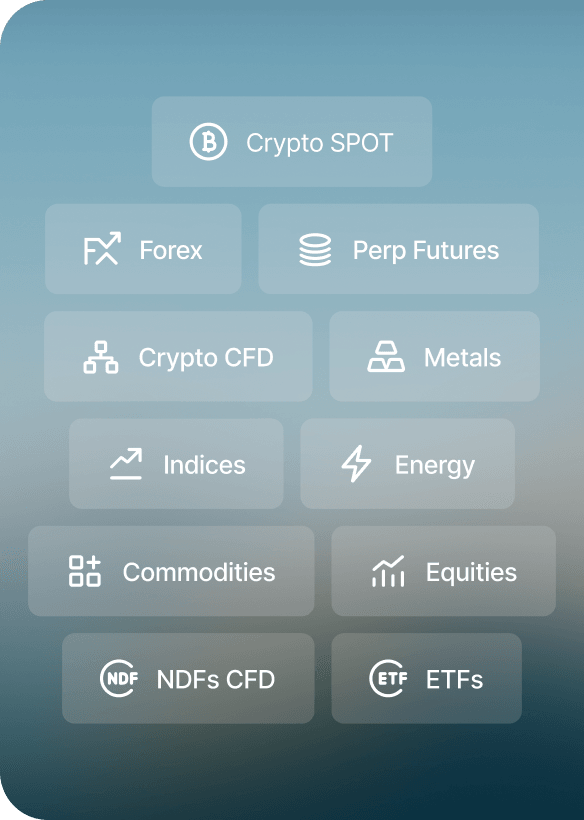
Deep, Reliable Liquidity Across 10 Major Asset Classes
FX, Crypto, Commodities, Indices & More from One Single Margin Account
Tight Spreads and Ultra-Low Latency Execution
Seamless API Integration with Your Trading Platform
Risk and Compliance in Ultra Low Latency Trading Platforms
High-speed trading amplifies financial exposure immediately. A technical malfunction can drain capital in seconds before a human operator reacts. That’s why effective platforms embed risk protocols directly into the execution path.
Regulatory Considerations
Regulators expect firms to control automated market access at the point of entry. In the U.S., SEC Rule 15c3-5 requires brokers with market access to maintain risk controls and supervisory procedures designed to limit financial exposure and support compliance.
"Kill switches" provide a hard stop during algorithmic malfunctions, instantly blocking outbound traffic when specific loss thresholds are triggered. Regulators also require granular audit trails stamped with PTP precision. These records prove exactly when a check occurred relative to the trade execution time.
Credit and AML Checks
Credit and AML controls need the same design discipline. FINRA Rule 3310 requires a written AML program aligned to the Bank Secrecy Act, and U.S. regulations also specify AML program requirements for broker-dealers in 31 CFR 1023.210. Cache limits, update exposure in real time, run screening in parallel, then use post-trade reconciliation for verification.
Integrating Low Latency Execution with Existing Back Office Systems
Linking microsecond execution to standard accounting software creates a bottleneck, as the back office cannot process trades at the same velocity as the matching engine. You must decouple these systems to preserve speed. Asynchronous messaging queues let the trading core broadcast data instantly, without waiting for a slow database to acknowledge it.
Event streaming pipelines carry trade details to the ledger independently. This setup keeps the execution path clear of administrative overhead. API gateways regulate traffic between these distinct layers while automated reconciliation tools catch discrepancies in real-time. Use controlled fallback procedures to protect legacy databases during sudden trading volume surges.
Accelerate Your Trading Infrastructure with B2BROKER
Low-latency execution transforms trading operations by enabling consistent quality at scale. While building this infrastructure internally is possible, partnering with an established provider significantly reduces time to market and execution risk.
B2BROKER is a liquidity and technology infrastructure partner for brokerages worldwide with 10+ years of experience. We offer aggregated liquidity, pre-integrated trading platforms like B2TRADER, and proven low-latency connectivity. Our ecosystem supports hundreds of corporate clients with a focus on operational readiness and scalability.
Contact us today to discuss how we can help you build a robust low-latency infrastructure.
Turn Technical Complexity Into Competitive Advantage
Schedule a technical deep dive with our team to customize an execution infrastructure that fits your specific volume.
Frequently Asked Questions About Low-Latency Execution
- How do colocation services help reduce latency in trading?
Colocation places servers within the exchange’s facility. This eliminates network hops and physical distance, cutting round-trip time to the absolute minimum.
- How does the location of data centers influence the speed and efficiency of low latency trading?
Geographic proximity determines the baseline speed of data transmission. Reducing physical distance creates faster round-trip times, preventing slippage and ensuring quote validity during volatility.
- What technologies are used to achieve low latency execution in trading?
Firms use direct fiber cross-connects, FPGA-accelerated hardware, and event-driven software. These tools synchronize to process data and execute orders in microseconds.
Recommended articles