High-Frequency Trading Infrastructure: A Complete Guide

High-frequency trading platforms can be highly demanding, but with the right architecture design and technical configuration, you can earn significantly from moving high-volume orders and gain from frequent trades within a few seconds.
However, to achieve consistent performance and low-latency execution at scale, you need an infrastructure that can handle the load without failure. In this guide, we will discuss the core components of a power HFT platform, covering latency-sensitive engines, risk management, compliance modules, and how to scale over time.
Key Takeaways
- HFT performance depends on end-to-end infrastructure design, not isolated optimizations.
- Low-latency execution is critical for HFT platforms, determined by network architecture and proximity to trading venues.
- Hardware, software, and risk controls must be engineered together to avoid bottlenecks and price discrepancies for high-volume orders.
- Partnering with institutional infrastructure providers can reduce complexity and integration risk.
Discover the Tools That Power 500+ Brokerages
Explore our complete ecosystem — from liquidity to CRM to trading infrastructure.
Understanding High-Frequency Trading Fundamentals
High-frequency trading is a form of algorithmic trading characterized by extremely high execution speeds, rapid order settlement, and very high order-to-trade ratios. High-frequency traders do not hold positions for minutes or hours; they operate within microseconds or milliseconds.
These narrow timeframes enable them to exploit short-lived arbitrage opportunities that disappear almost instantly, accumulating profits from frequent, quick gains that are executed extremely quickly and accurately.
From an operational point of view, HFT firms leverage automated trading engines that continuously stream market data, evaluate conditions, and place or cancel large orders without human intervention. This architecture is designed to react faster than manual investors and most algorithmic trading strategies.
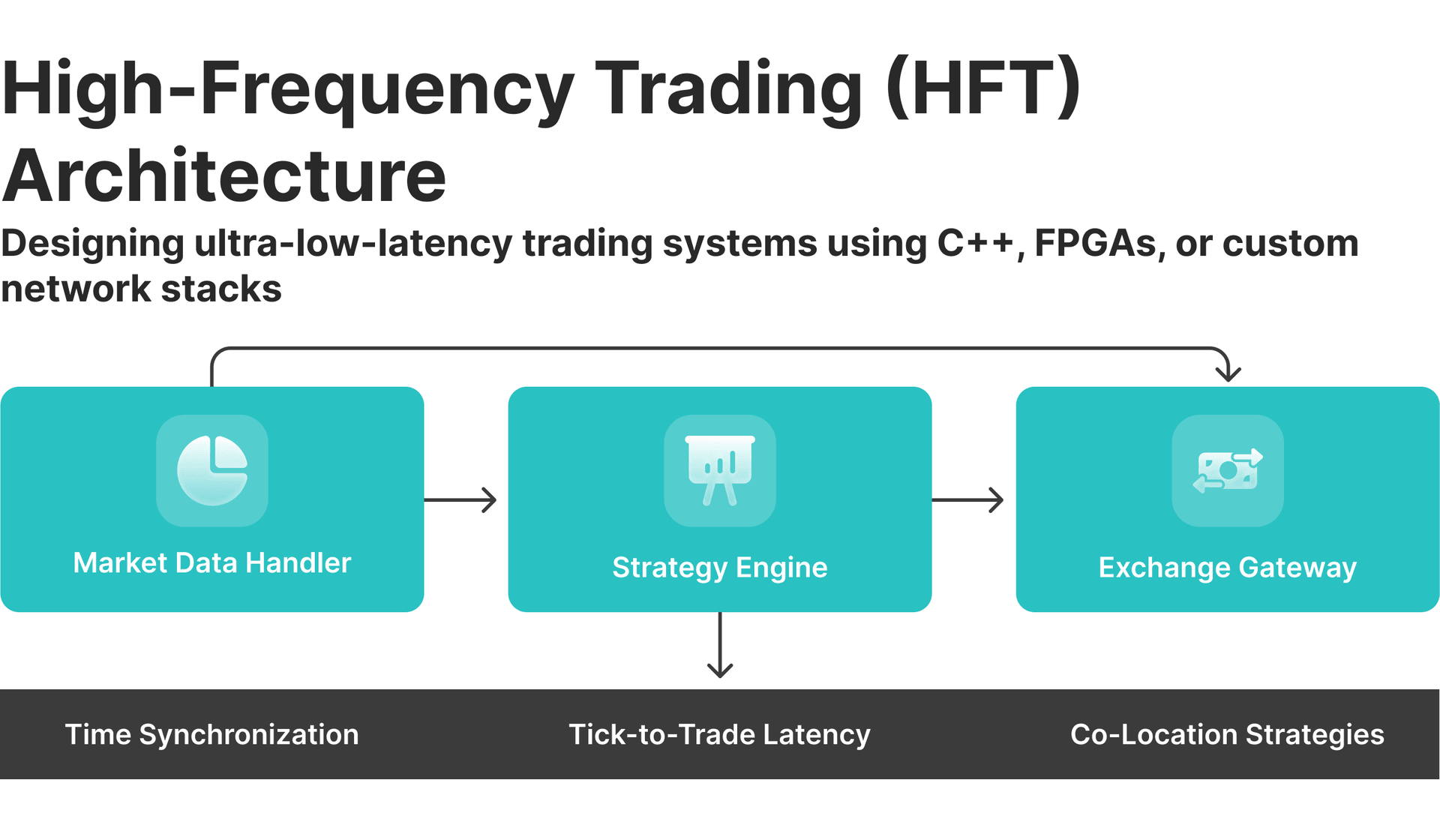
Before we dive deeper into the HFT system infrastructure, let’s define three core concepts: latency, co-location, and tick-to-trade.
- Latency: The delay between a market price update and the automated order submission. Minimum delay, even in microseconds or milliseconds, can affect fill rates and profitability.
- Co-location: Positioning the hosting trading server in the same data center as the exchange’s matching engine, minimizing physical distance and network delay.
- Tick-to-trade: The full lifecycle of an order, from receiving a market data tick to processing it internally, making a trading decision, and submitting the order to the venue.
These elements define the HFT system performance. They must work efficiently as a whole unit, not by optimizing each of them individually.
The Core Layers of HFT Infrastructure
A high-frequency trading infrastructure is a complex, multi-layer system. Any degraded performance in a single element can compromise the entire execution path. Let’s dive deeper into these components.
Compute and Server Architecture
HFT computing environments are engineered for deterministic, repeatable operations rather than general trading activities. Server selection must prioritize high single-thread CPU performance, predictable cache behavior, memory locality, and kernel bypass networking. Many latency-sensitive workloads intentionally avoid aggressive power-saving features to reduce execution variance and ensure predictable performance every time.
At the architectural level, the operating system, networking stacks, and APIs must interact under sustained load, with minimal context switching and no sudden latency spikes.
The tradeoff from this build is reduced flexibility, as the system is designed for less multitasking and more focus on a single, heavyweight task, leading to higher operational discipline and consistent execution timing.
Network and Connectivity Layer
Network design is another aspect of the HFT architecture that contributes to latency and jitter. Poorly designed connectivity flows lead to delays and inconsistent delivery timing, eroding competitive advantage.
Therefore, HFT networks emphasize simplicity, minimal hops, and deterministic routing over raw throughput capacity. In a few words, less intermediary and faster connectivity rather than larger bandwidth.
As such, networks must remain stable even during periods of extreme volatility and when the congestion risk increases. Therefore, Direct cross-connects to exchanges, private fiber routes, and carefully selected switches reduce delays and variance.
Hosting, Co-Location, and Proximity
Co-location is a latency-control mechanism. It places trading infrastructure physically close to exchanges’ and trading venues’ matching engines, minimizing signal propagation delay and reducing exposure to unpredictable network paths.
Infrastructure planning must also consider redundancy, power availability, cooling reliability, and exchange-imposed fairness rules—these security measures are key to avoiding malfunctions, breaches, or deteriorated performance over time.
Many venues enforce standardized co-location conditions to ensure equal access, shifting competition toward internal system design rather than physical advantage. Therefore, HFT brokerages must evaluate data center relative to liquidity venues.
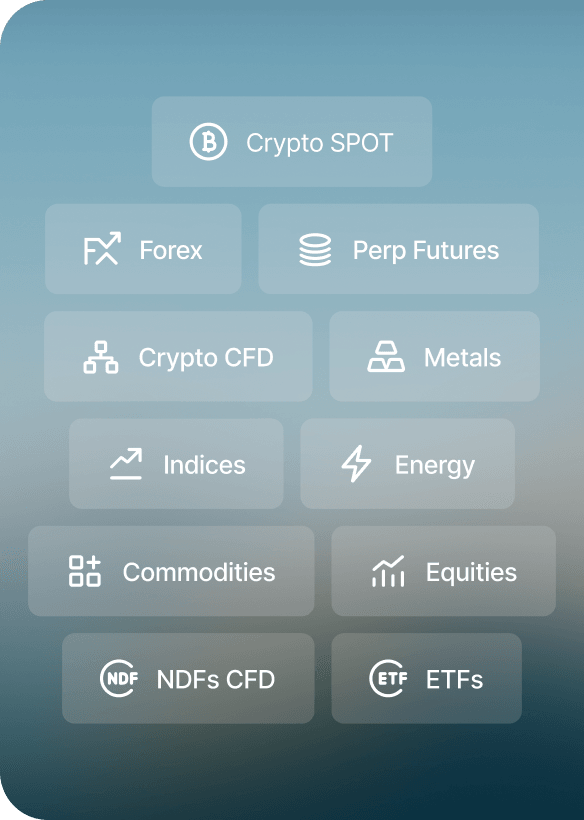
Deep, Reliable Liquidity Across 10 Major Asset Classes
FX, Crypto, Commodities, Indices & More from One Single Margin Account
Tight Spreads and Ultra-Low Latency Execution
Seamless API Integration with Your Trading Platform
Time Synchronization and Clock Discipline
Time synchronization across servers, network devices, and execution systems is critical for every operational requirement in HFT environments. Precise clocks enable firms to measure latency, detect anomalies, reconstruct trading behavior, and meet audit and compliance obligations.
Precision Time Protocol (PTP) and hardware-level timestamping are typical technologies used to align events across distributed systems with sub-microsecond accuracy. Without disciplined timekeeping, performance analysis becomes unreliable and post-incident investigation nearly impossible.
Many firms choose to work with institutional providers. B2BROKER leverages 10+ years of experience and global coverage, combined with Tier-1 execution, connectivity, and risk components that minimize rebuilding and accelerate brokerage launches.
Start Your HFT Brokerage
Integrate institutional-grade matching engines, deep aggregated liquidity pools, and ultra-fast execution for your platform
Designing a Low-Latency Execution Path
HFT platforms are all about high-speed processing with as little latency as possible. Therefore, the entire execution path must be optimized, from market data ingestion to order settlement. Here’s what the ideal execution path looks like.
Market Data Ingestion and Distribution
Execution quality depends on the consistency of market data to deliver fresh, new prices and quotes, and make decisions based on these feeds. Delayed updates, dropped frequency, or jittery connectivity undermine decision-making regardless of how fast orders are sent.
HFT systems use optimized feed handlers, efficient database logic, and multicast distribution to spread processing across multiple sources and reduce overhead. Additionally, internal paths must be designed carefully to avoid bottlenecks and ensure that trading engines receive updates in a time-ordered manner.
Order Processing and Routing
Order processing pipelines must be designed to minimize handling time while preserving control. Event-driven architectures allow systems to prioritize updates and react immediately to market changes without unnecessary blocking.
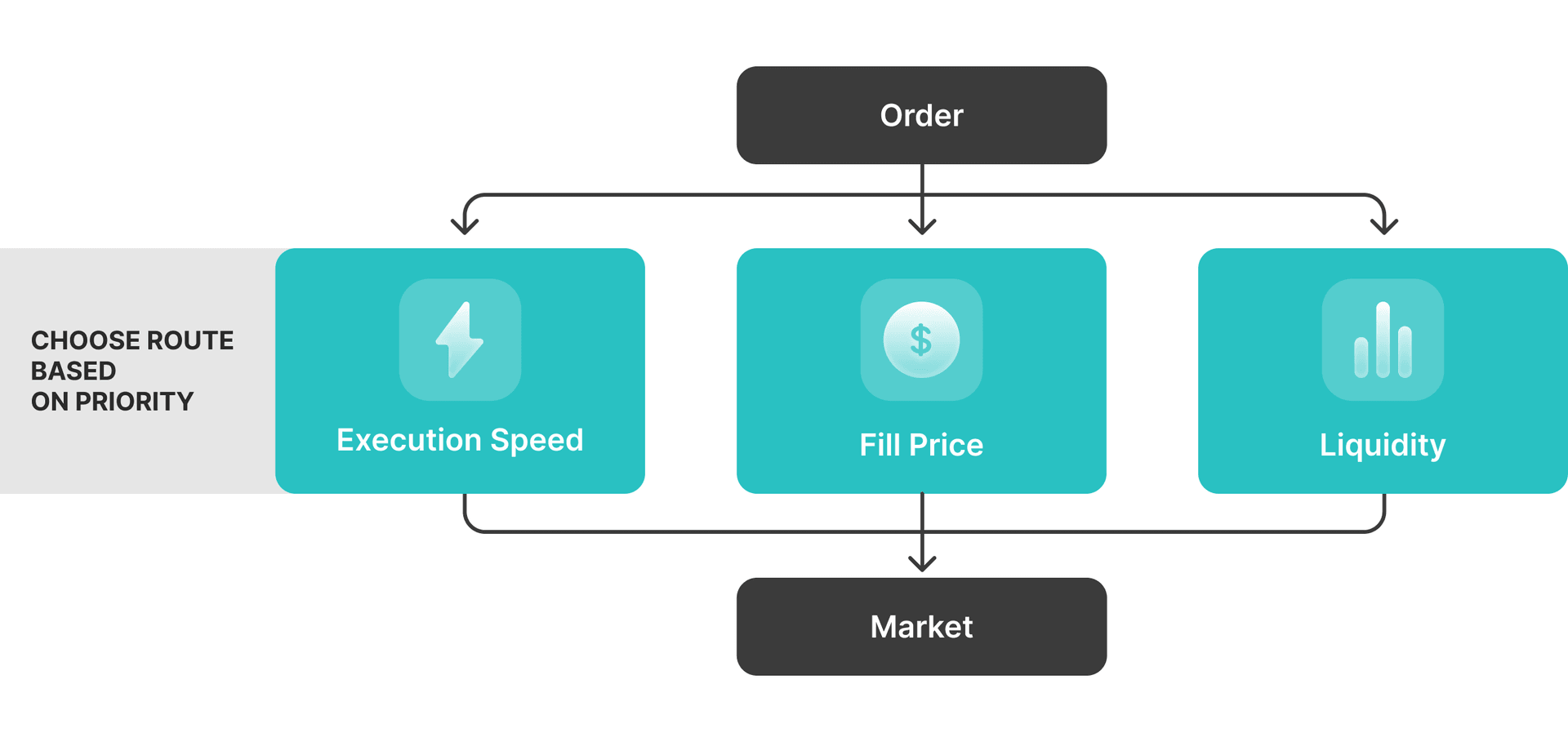
Parallel operation is not always preferable, as multiple tasks running in the pipeline can cause state inconsistencies and unwanted delays. Therefore, the routing logic must balance speed and execution quality, selecting venues based on latency, liquidity, fill rates, and current market conditions.
Measuring Latency and Jitter
Latency metrics used in traditional trading firms and OTC desks are insufficient in HFT environments. What matters is tail latency (the slowest executions) and jitter (the variability between responses).
Infrastructure must continuously measure end-to-end latency using precise timestamping at each stage of the execution path. You must also consider real-time monitoring and alerting to detect spikes, regressions, and abnormal behavior before they impact trading outcomes.
Latency measurement is not a diagnostic tool; it is a core production capability.
Hardware Optimization and Specialized Acceleration
In HFT, hardware optimization delivers real benefits. However, it introduces cost and complexity and offers little value if software efficiency, market access, or strategy logic are the true performance bottlenecks.
CPU and Memory Optimization
HFT environments focus on CPU isolation, cache locality, and predictable memory allocation. The goal here is not maximum utilization, but repeatable execution behavior that delivers consistently to every request.
Firms must evaluate systems based on performance stability across market conditions rather than peak benchmark metrics.
FPGAs and Hardware Offload
Field-programmable gate arrays (FPGAs) are specialized hardware chips that can be configured to perform specific tasks at the circuit level. In HFT, FPGAs process data feeds and orders directly in hardware, delivering extremely low and predictable latency compared to software running on standard CPUs.
These components are commonly used for ultra-low-latency market data processing and order handling, offering deterministic performance but introducing higher costs, reduced flexibility, and increased complexity.
FPGAs are not mandatory for all firms; they are advantageous.
Power, Cooling, and Physical Reliability
In HFT environments, physical infrastructure issues often appear first as small latency increases rather than sudden outages.
Therefore, Reliable power, effective cooling, continuous environmental monitoring, and early fault detection are core design requirements, as even minor degradation can impact systematic trading performance.
Considering Risk, Execution Control, and Operational Resilience
High-frequency trading infrastructure involves ultra-fast processing, direct market access, millisecond decision-making, and multiple connections to order processing facilities—all must perform without a single slip.
Therefore, systems must tightly track execution quality, risk parameters, and overall performance metrics. Separation between these instances increases the risk of a race condition, which happens when multiple system components act on the same data without a consistent ordering, causing mispriced orders, delayed risk checks, or unintended exposure.
Key characteristics of resilient HFT infrastructure include:
- Embedded pre-trade risk controls directly in the execution path, including exposure limits, order size thresholds, and price deviation checks.
- Deterministic kill switches that can stop trading instantly without depending on delayed or external control systems.
- Real-time monitoring that tracks latency behavior, execution quality, order flow anomalies, and system health during active trading.
- Failure containment mechanisms that isolate faults and prevent cascading errors during high exposure or volatile market conditions.
- Predictable system behavior that ensures low jitter and reduced degradation during peak speed.
To summarize, risk checks in HFT environments cannot be treated as external services or post-trade processes. They must be placed in the core of operations, valued similarly to execution quality and trading logic.
Additionally, operational readiness includes auditability, trade reconstruction, precise timestamping, full traceability, and synchronized logs to analyze behavior, respond to incidents, and comply with regulatory requirements.
Trade reconstruction is the process of assembling all data, communications, and evidence surrounding a financial transaction to create an accurate, time-sequenced timeline of the entire trade lifecycle for some jurisdictions, such as MiFID II and Dodd-Frank.
Accelerating Deployment With Institutional Infrastructure Partners
Building and maintaining competitive HFT infrastructure requires deep expertise across networking, system engineering, execution logic, and operational risk management. That’s why you need a strong technical team to ensure the proper working of your high-frequency trading platform.
For many firms, partnering with a reliable infrastructure provider is critical to reduce deployment time and complexity, and rely on industry-proven expertise.
B2BROKER provides institutional-grade infrastructure equipped with low-latency connectivity, ultra-fast matching engines, and integrated systems specially designed for high-frequency environments.
Reduce complexity and get a world-class trading platform geared toward high performance, bulk processing, and ultra-low delays with B2BROKER’s customized, fully integrated setups.
Start planning your HFT trading platform — Contact us now!
Have a Question About Your Brokerage Setup?
Our team is here to guide you — whether you're starting out or expanding.
Frequently Asked Questions about HFT Infrastructure
- What is the minimum latency required for competitive HFT operations?
Competitive HFT operations typically require sub-millisecond latency networks, with leading firms achieving round-trip times under 100 microseconds through co-location and optimized network paths.
- How much does it cost to build HFT infrastructure from scratch?
Building basic HFT infrastructure costs between $1-5 million, including servers, co-location, network connectivity, and software development, with ongoing monthly expenses of $50,000-200,000 for top-tier operations.
- Can cloud services support high-frequency trading requirements?
Traditional cloud services cannot meet HFT latency requirements due to virtualization overhead and network variability, making dedicated hardware and co-location essential for competitive operations.
- What programming languages are best for HFT system development?
C++ remains the standard for ultra-low latency HFT systems due to hardware-level control, with Rust emerging as an alternative and Python used for research and non-latency-critical components.
Recommended articles