Why a Premium CRM Saves Money for Scaling Brokers

Client growth changes a brokerage’s cost structure. More accounts mean more KYC reviews and more payment operations to reconcile. As volumes rise, small workflow gaps start repeating daily and show up as support load and overtime.
A premium broker CRM works as an operating infrastructure that ties trading, back-office, and compliance into one data layer. When those systems share the same account state, teams spend less time reconciling mismatched records and more time running stable, repeatable processes.
This guide explains why a premium Customer Relationship Management solution saves money for scaling brokers through a practical cost lens. We cover how automation reduces headcount and simplifies infrastructure management, and address specific ways to lower compliance risks and protect revenue.
Key Takeaways
- Native trading platform connectors eliminate middleware licensing and reduce integration maintenance overhead.
- Automated KYC/onboarding reduces manual processing hours and prevents headcount scaling linearly with client growth.
- Unified data and consolidated tooling reduce infrastructure duplication, vendor sprawl, and support-contract overhead.
- Self-service portals and workflow automation deflect support tickets and reduce operational error remediation costs.
- Embedded compliance and audit trails reduce audit-prep workload and help avoid penalty exposure as regulatory scrutiny increases.
Discover the Tools That Power 500+ Brokerages
Explore our complete ecosystem — from liquidity to CRM to trading infrastructure.
Why Cheap CRMs Break Down at Scale
Low license fees rarely predict total CRM software spend. The first cost driver is data integrity: when account status, permissions, and funding events differ across systems, teams spend time reconciling states before they can act. At scale, each mismatch turns into repeat work for operations and support, leading to missed opportunities and time-consuming manual fixes.
Cost leakage concentrates in two areas. One is integration work across trading, payments, and reporting. The other is manual processing in onboarding and finance operations, where volume turns routine steps into queue management.
Integration Gaps Create Hidden Costs
When a CRM lacks native MT4/MT5, liquidity, or payment connectors, in-house engineering steps in to fill the gaps with middleware and custom APIs. Each new layer adds licensing, patch cycles, and a longer incident path when data stops matching.
Broker stacks also often involve many external vendors that ship updates on their own schedules and in their own formats. Connector changes then trigger regression testing across deposits, client status, and order permissions. The workload grows with every new liquidity provider added to the stack.
Over time, platform and vendor updates break these custom connections. Maintenance becomes ongoing developer work, which raises the total cost of ownership. The result is an operating stack that is harder to keep stable during high-volume periods.
Manual Processes Scale Headcount, Not Margin
Processing withdrawals and partner payouts manually introduces significant operational bottlenecks. Repetitive data entry increases error probability, and remediation often means back-office investigation to reconcile balances and fix downstream records.
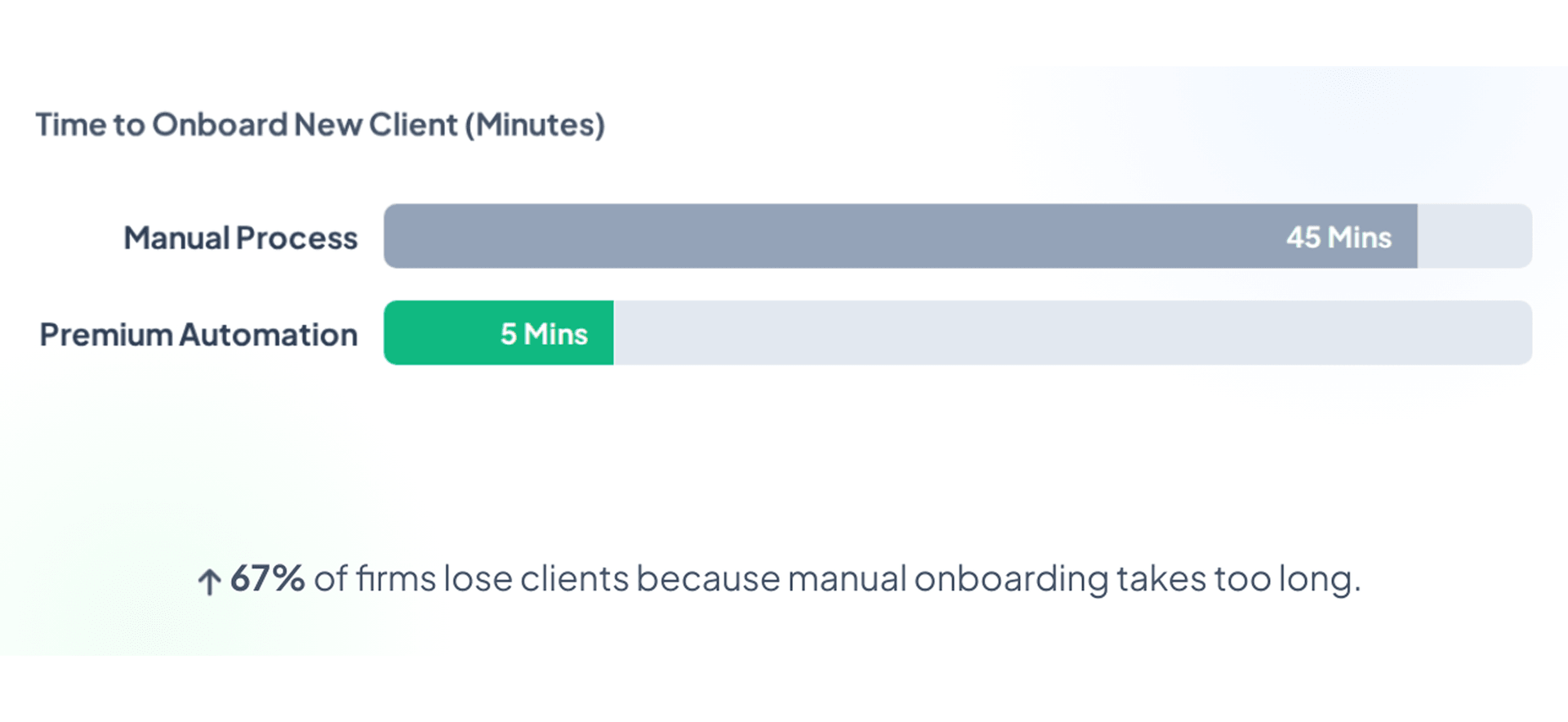
Queue time has a measurable business cost. Poor handoffs between CRM checks and platform access create review loops, then delay first deposits. In Fenergo’s research, 67% of firms reported losing clients because onboarding took too long.
Cheap CRMs often push operations into side tools: spreadsheets for approvals, email for escalations, and separate systems for payouts. That fragmentation increases error rates, then adds rework through reconciliations and disputes.
Premium broker CRMs use structured approvals, audit trails, and role-based controls as the default operating model. The savings come from fewer manual touches, plus fewer defects that require remediation after the fact.
What “Premium” Actually Means for Broker CRMs
Rather than a generic sales pipeline tool, a premium broker CRM is a broker-specific infrastructure that manages customer data, account state, and money movement in one place, then syncs those states to trading and back-office systems through maintained connectors.
In practice, such an all-in-one CRM system includes:
- One client record shared across onboarding, trading access, and finance ops
- Native platform, liquidity, and payment connectivity with versioned, supported integrations
- Built-in compliance workflows such as KYC routing, approvals, and audit logs
- IB lifecycle support for partner onboarding, tracking, and payouts
Native Trading and Liquidity Platform Connectivity
Connectivity matters because it defines what the CRM can prove and control. Strong connectors sync key account states like verification status, trading access, and balance changes with the trading platform in near real time, using consistent IDs.
A broker can evaluate connector maturity by looking at outcomes. Trading permissions should update without delays, deposit status should match what the platform shows, and support should be able to pull a single timeline when a client disputes access or pricing.
White-label platforms add operational pressure because updates arrive on a vendor schedule. A serious CRM vendor ships maintained connector versions, documents changes, and supports a predictable testing flow before releases hit production.
Discover the top 7 white label trading platforms for 2026—your guide to rapid market entry, multi-asset support, advanced risk tools, and institutional-grade liquidity.
07.10.24
Unified Trader, Back Office, and IB Workflows
“Premium” also means one workflow spine across team members. The client portal, back office, and Introducing Brokers (IB) control area should share the same roles and approvals, so that a compliance decision or finance hold is reflected immediately in the client experience.
This shows up in daily throughput. Fewer handoffs reduce rework, and supervisors can trace who approved what without having to chase email threads. That shortens time-to-fund for new accounts and reduces the cost of operational exceptions.
Partner operations need the same discipline to manage referrals effectively. Commission logic should tie to actual trading and funding events, then generate statements that finance can close with minimal adjustments, since payout disputes scale quickly with the IB network size.
How a Premium CRM Lowers Total Cost of Ownership
Evaluating a CRM based on license fees alone obscures the true financial impact. A multi-year Total Cost of Ownership (TCO) calculation provides a more accurate view for scaling operations. This perspective accounts for the underlying resources required to maintain and support the system over time.
Platform Consolidation Reduces Infrastructure and Support Spend
A premium CRM platform reduces TCO by serving as the operating layer for client identity, permissions, and cash movement. When that record stays in one place, teams spend fewer hours reconciling mismatches across the trading platform, payment stack, and reporting.
Vendor sprawl is a measurable driver of overhead. According to Okta, the average number of apps per company was 93 in 2024. Each added tool brings access control work, data mapping, and a support surface that shows up in tickets.
Consolidation creates savings that finance teams can track through hard categories:
- Reduced middleware and connector maintenance
- Fewer duplicate environments to host and monitor
- Lower support-contract overlap across vendors
- Less time lost to incident handoffs between teams
Operationally, a single-vendor model also simplifies ownership. Incidents get one escalation path, which shortens time-to-resolution and reduces the internal coordination cost that scales with account volume. Replacing disjointed CRM tools with unified software solutions helps brokers optimize their infrastructure.
Cloud Delivery Minimizes Downtime and Upgrade Costs
Cloud delivery shifts CRM upkeep into a managed release process. Security patching and capacity planning still need oversight, yet the workload becomes change review and acceptance testing instead of hands-on maintenance across multiple servers.
Downtime has a hard-dollar impact when it blocks onboarding or funding flows. Every minute of an outage costs IT businesses a median of $33,333, with the median cost of outages being $76 million annually.
A cloud-native CRM supports cost control through predictable release management. Maintenance windows shrink, upgrade cycles become more frequent, and security updates arrive with less internal IT effort than on-prem deployments tend to require.
Is Your Current Stack Leaking Capital?
Replace fragile middleware and manual updates with a unified cloud infrastructure that grows with your trading volume.
Operational Automation That Breaks the Cost Curve
Automation changes the unit economics of back-office work. As account volume grows, the same team faces more checks and more exceptions. A premium CRM turns routine operations into tracked workflows with clear ownership and measurable cycle time.
Automated KYC, Onboarding, and Approval Workflows
Cost pressure in compliance is becoming more and more visible across the industry. LexisNexis Risk Solutions reports that compliance costs increased for 99% of financial institutions in 2023, and 79% saw higher technology costs tied to compliance and KYC software in the prior 12 months.
At the same time, KYC automation becomes valuable when it governs exceptions. A broker needs routing rules that send higher-risk cases to the right reviewer, plus SLA tracking that shows how long each stage takes. That visibility supports staffing decisions without guessing.
Regulators also expect durable recordkeeping. Under the EU’s AML framework, customer due diligence records must be retained for 5 years after the business relationship ends, with limited extensions in some cases.
A robust CRM keeps more than document files. It stores decision history, reviewer identity, timestamps, and the reason code for approval or rejection. This automated lead tracking helps brokers save time and significantly reduce overhead.
Self-Service Client Portals Reduce Support Load
A self-service portal reduces operational noise when it reflects the same account state used by finance ops and compliance. Clients can see funding and document status in one place, lowering avoidable tickets and duplicate follow-ups.
High-impact portal functions tend to be practical and narrow:
- Deposit and withdrawal status with timestamps
- Document upload tied to a checklist
- Ticket creation linked to the account event
The portal also protects operational quality. Using a standardized template for requests, validation rules, and controlled approval steps reduces preventable errors that later turn into reconciliations or manual remediation.
Automated IB and Partner Payouts
Partner networks create cost through exceptions. Disputes usually come from unclear attribution, retroactive adjustments, or late payout cycles that require manual recalculation. Automation keeps the commission logic versioned and ties each payout to a traceable rule set.
Payout scheduling also benefits from controls that finance can trust. When the CRM computes commissions from platform events and locks them through approvals, brokers reduce spreadsheet dependency and shorten reconciliation cycles. That operational discipline matters as the IB base grows and payout frequency increases.
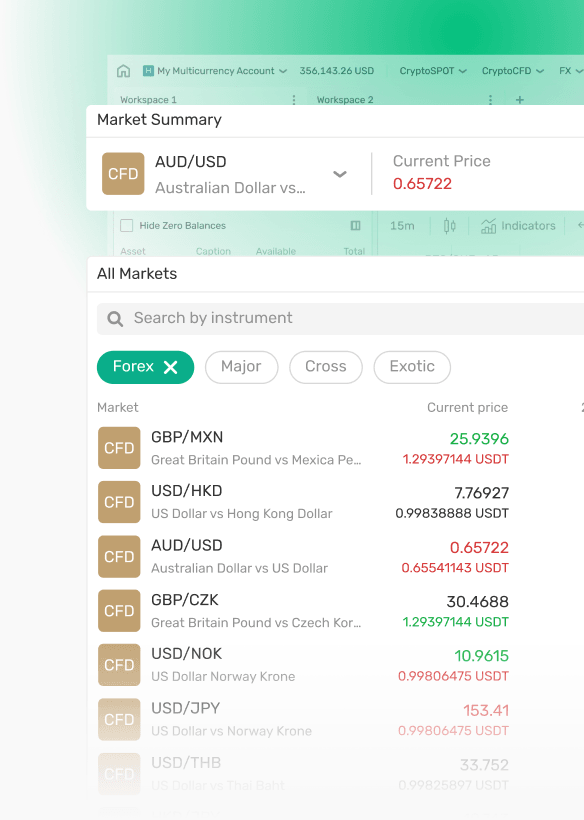
All-In-One CRM & Back Office for Brokers and Exchanges
Fully Customisable Trader’s Room with Modular Features
Built-In IB Module, KYC, Payment Integrations, and Reporting Tools
Intuitive Interface that Boosts Client Engagement
Revenue Protection as a Cost-Saving Mechanism
A CRM can cut spend without touching headcount. Revenue protection belongs in the same TCO model, since churn and dormant accounts raise acquisition pressure and create uneven cash flow that complicates forecasting.
A practical CRM lens focuses on two levers to maintain client relationships: keeping funded clients active and increasing wallet share through relevant offers.
Retention Improves Lifetime Value Economics
Finance apps industry numbers show how hard retention is at scale: the standard 30-day retention rate averages 8%, even with push notification opt-in rates as high as 50%.
Premium CRM solutions help brokers treat LTV (Lifetime Value) as an operating workflow. Teams can act on a verified trigger to improve sales performance and track metrics in reporting. Common retention triggers across the customer journey include:
- KYC approved but no first deposit
- Deposit drop after a margin event
- Inactivity after a platform outage
- Repeated withdrawal failures
Product engagement also matters when a desk wants accounts to stay active. Social trading and copy trading features can increase participation, especially for newer clients, and brokers often evaluate these tools as part of retention design (see our guide on social trading tools for brokers). Copy trading also comes with governance duties: ESMA’s supervisory briefing sets expectations for MiFID II compliance around marketing, costs, and suitability.
A retention engine works best when it feeds segmentation and lead scoring. The same event log used for inactivity alerts can power marketing automation and targeted marketing campaigns that protect revenue without extra spending.
Acquiring a new customer can cost four to five times more than expanding an existing relationship. Adding funded, low-risk accounts allows brokers to improve conversion rates through segment-specific targeting.
Segmentation Enables Efficient Cross-Sell
Segmentation becomes financially relevant when brokers stop sending broad campaigns. Instead, they use CRM data to refine the sales process and sales cycle.
According to industry benchmarks, more than half of consumers become repeat buyers after a personalized experience. For brokers, “personalized” usually means precise targeting based on operational data. Useful segmentation models often key on:
- Funding pattern and balance stability
- Instrument interest by traded symbols
- Risk profile from onboarding and activity
- Channel source tied to CAC (Customer Acquisition Cost)
Finally, segmentation supports compliance discipline. Jurisdiction and appropriateness flags can be included in the same rules that drive offers. That structure reduces the chance of sending the wrong product prompt to the wrong client group during high-growth periods.
Thus, advanced CRM features of a premium software allow for better decision-making regarding the sales funnel.
Compliance and Risk Cost Avoidance
Compliance costs surface during audits and incident reviews. When evidence is scattered across emails and platform logs, teams spend hours assembling timelines. To avoid upfront risks, the best CRM should produce evidence as a byproduct of daily work and not as a one-off project.
- Strict Access Protocols: KYC status changes should drive trading access through a defined rule set, with an identified approver and a timestamp.
- Jurisdiction Management: Automated flags govern which products and marketing messages a client receives based on their residence.
- Data Governance: A premium CRM should track access and data exports with named ownership. Under the EU’s General Data Protection Regulation, certain data infringements can trigger administrative fines up to €20 million or 4% of global annual turnover, whichever is higher.
The practical test for leadership is speed and completeness. Compliance teams should pull an audit pack in minutes, with consistent timestamps across CRM records and trading activity. That reduces external advisory spend and keeps operations stable when regulators request evidence.
Accelerating Growth While Reducing Spend With B2BROKER
Scaling brokers lose money when core workflows live across separate tools. Integration maintenance and manual reviews become recurring operational spend that is hard to forecast and harder to control.
B2BROKER addresses these pain points with B2CORE, a broker-specific back-office and CRM built for high-volume operations. It centralizes all back-office and trader’s cabinet operations into one platform, so teams manage one operational record instead of stitching data across systems.
Our team takes a consultative approach to implementation. We map your current technology stack against B2CORE’s capabilities to quantify specific cost-saving opportunities.
See the Difference a Unified Core Makes
Experience a live walkthrough of B2CORE and see how consolidation drives true profitability.
Frequently Asked Questions about Premium CRM or Brokers
- What migration risks should brokers plan for?
The main risks are data migration accuracy, staff retraining, and short-term workflow disruption. These are typically mitigated through phased rollouts, parallel system operation, and validation checkpoints that allow brokers to test critical processes before full cutover.
- How long does onboarding to a new CRM usually take?
Implementation timelines depend on integration complexity, data volume, and regulatory requirements. Purpose-built broker CRMs with native trading and payment connectors usually deploy faster than generic CRMs that require custom development and third-party middleware.
- Can a premium CRM integrate with existing BI dashboards?
Yes. Premium broker CRMs typically offer APIs and structured data exports that allow existing BI tools to consume CRM data without requiring dashboard redesign or replacement.
- How do premiums CRMs handle multi-asset class reporting?
Broker-specific CRMs aggregate trading activity across forex, crypto, CFDs, and other asset classes into unified client and operational views. This allows brokers to report consistently across products without maintaining separate reporting pipelines.