How Failover Systems Protect Trading Operations From Downtime

In modern trading, failover systems are not optional. They are foundational requirements for maintaining execution quality and for operating in a safe environment that guarantees the integrity of the client’s and the broker’s data.
Even the milliseconds matter in financial markets. Any brief interruption can lead to significant execution gaps, lost liquidity streams, decreased user engagement, and even regulatory penalties. Trading firms cannot afford to have temporary outages every now and then, as each second of downtime carries tangible financial and reputational risks.
In this article, we will explore how failover mechanisms work in trading environments, covering architectures, operational requirements, and design principles that must be in place across trading platforms, liquidity hubs, and risk management modules.
Key Takeaways
- Failover systems are a core trading requirement to protect against downtime impact and unexpected outages
- High-availability trading environments require redundancy across platforms, liquidity, risk controls, and data, not just servers.
- Active-active and active-passive are failover models that entail clear trade-offs among cost, complexity, and execution continuity.
- Effective failover depends on continuous testing, monitoring, and synchronization across all layers of the trading infrastructure.
Build Your Brokerage Tech Stack
Customize your platform with plug-and-go features, pre-integrated services, and advanced risk controls
What Failover Means In Trading Environments
In trading, failover is the ability of a system to automatically maintain service continuity when a component fails. Unlike disaster recovery, which focuses on long-term data restoration, failover ensures that real-time execution remains consistent, preserving open orders, active positions, and risk constraints.

Failover systems need ongoing platform health checks, automated switchovers, and state replication across primary and secondary systems.
Common failure triggers in trading platforms include:
- Hardware degradation: affecting matching engines, gateways, liquidity connectors, or execution servers.
- Network interruptions between trading venues or liquidity providers.
- Software crashes impacting Order Management Systems, Execution Management System, or risk modules.
- Power instability that risks data corruption and lost trading orders.
- Database or replication failures that threaten position integrity
Active-Active vs. Active-Passive Failover Models
Failover models have different data designs. Active-active architecture utilizes all nodes simultaneously for high performance, load balancing, and near-instantaneous failover, while active-passive features a primary node handling all traffic while a standby node waits to take over, offering simpler, cost-effective, yet less-utilized failover.
Let’s break them down in more detail:
Active-Active
- Both primary and secondary systems process orders simultaneously.
- Zero downtime, more consistent execution, and seamless client experience.
- More complex and costly due to real-time synchronization and operational overhead.
Active-Passive
- Only the primary system handles execution.
- The secondary system is on standby and is triggered when the primary fails.
- Cost-efficient and simpler to manage, but the switchover may introduce brief execution pauses
Choosing the right model depends on the impact of each feature. The following table guides decision-making based on real trading outcomes.

Core Components of Redundant Trading Infrastructure
A failover only succeeds when every critical layer of the trading infrastructure is fine-tuned. Partial redundancy creates hidden single points of failure that can compromise continuity.
Network Redundancy and Routing
Trading systems rely on multiple Internet service providers (ISPs), diverse physical routes, and automated routing protocols to avoid isolation.
Low-latency rerouting ensures session stability with liquidity providers and trading venues, preventing failed connections from impacting execution. As such, network failover must maintain the integrity of ongoing orders and avoid disconnecting trading sessions mid-flow. Otherwise, they risk the trader’s experience and engagement.
Power Continuity and Environmental Stability
Clean, uninterrupted power is essential for databases, matching engines, and execution servers. UPS systems provide immediate protection, while generators sustain operations during prolonged outages.
The transition between these power sources must be predictable and tested regularly to avoid system hiccups, software crashes, or data corruption that can wipe active orders or trading requests.
Power your Brokerage with Next-Gen Multi-Asset & Multi-Market Trading
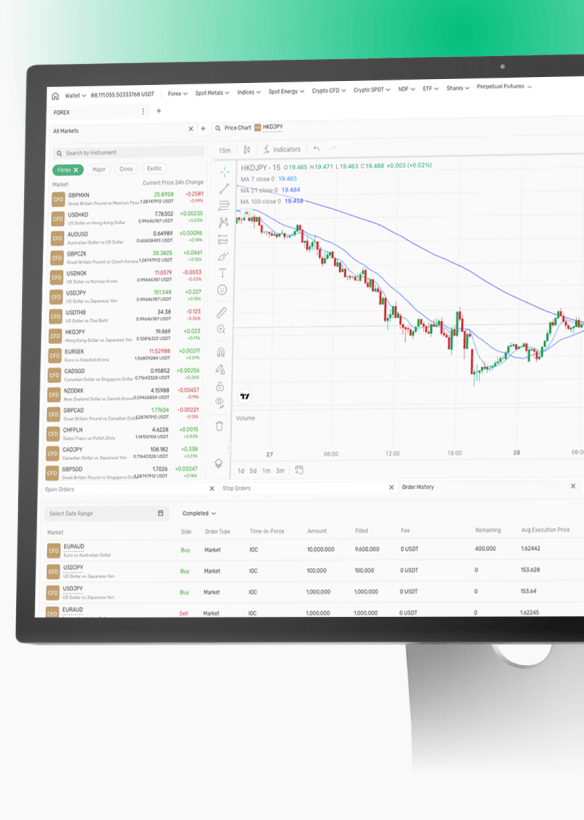
Advanced Engine Processing 3,000 Requests Per Second
Supports FX, Crypto Spot, CFDs, Perpetual Futures, and More in One Platform
Scalable Architecture Built for High-Volume Trading
Infrastructure and Application Monitoring
Monitoring triggers failover events and serves as an early warning system. Continuous tracking of resource saturation, latency spikes, replication lag, and application health enables proactive switchover before full failure occurs.
Therefore, brokers must effectively monitor redundancy resources, replication lag, and application health to ensure systems fail safely and automatically, without human intervention.
RTO and RPO Targets in Trading Systems
Recovery Time Objective and Recovery Point Objectives are disaster recovery metrics that define acceptable downtime and data loss for trading systems, defining business continuity and trading experience.
- RTO (Recovery Time Objective) is the maximum acceptable time a trading system can be offline after a disruption before operations must be restored.
- RPO (Recovery Point Objective) is the maximum acceptable amount of data loss measured in time, defining how far back systems can be restored without impacting trades or records.
Unlike conventional enterprise software, trading systems demand aggressive targets, such as near-zero data loss and sub-minute recovery.

These metrics can only be achieved through synchronous replication, hot standby systems, automated failover triggers, and continuous validation. Moreover, testing is essential to prove that RTO/RPO targets are realistic and achievable in real-world trading conditions.
Testing and Maintaining Failover Readiness
Failover systems can degrade silently when they are not constantly tested and evaluated. Therefore, brokers need to configure and adjust their security and recovery protocols more rigorously. Here’s what you can do.
Scheduled Failover Testing
Controlled drills simulate realistic failure scenarios, exposing configuration flaws and validating operational readiness when real emergencies occur. These tests can include cross-team coordination, post-incident reviews, and redundancy adjustment to ensure failover triggers respond accurately.
Version Consistency and Rollback Safety
Most failover systems malfunction due to software and configuration drift between primary and secondary servers. Any misalignment, delays, or inaccurate triggers can escalate to serious damage to market data and platforms.
Therefore, synchronized deployments, dependency tracking, and defined rollback paths are crucial to maintaining stability and preventing execution discrepancies during switchover.
Continuous Alerts and Health Validation
Real-time alerts detect weakening redundancy and notify admins before an outage occurs, so that systems can prepare for possible switchover. This requires continuous monitoring of replication lag, resource availability, and state mismatches to prevent disruptions to the user experience and the order execution process.
Explain how real-time alerts help teams detect weakening redundancy before an outage occurs. Emphasize monitoring replication lag, resource exhaustion, and state mismatches between systems as early indicators of risk.
In real trading environments, failover often “works” from an infrastructure point of view. Systems restart, connections come back, and monitoring shows everything as healthy. But when you look at trading state, open orders, partial fills, client exposure, risk limits, or liquidity sessions, something is slightly out of sync. That’s when the real risk starts.
What teams usually misunderstand is that failover in trading is not just about switching systems. It’s about carrying over the exact trading context at the moment of failure. If orders are reloaded incorrectly, risk engines reset, or liquidity sessions reconnect without full state awareness, execution resumes in an unsafe way, even though the platform appears live.
Failover in Liquidity Aggregation and Execution Systems
Failover systems are not limited to trading platforms; they extend to liquidity connections, pricing feeds, and order-routing logic. Any disruption at the venue or liquidity-provider level can fragment order state and degrade execution quality if not handled in real time.
That’s why modern liquidity aggregation engines are designed to automatically reroute order flow, rebalance available liquidity sources, and preserve execution logic when failures occur—ensuring the customer’s order does not slip, gets stuck during outages, or faces delays.
These systems are important for pricing consistency, orderly execution, and minimal client impact during outages. The ability to maintain stable execution across infrastructure failures is a defining characteristic of institutional-grade trading systems.
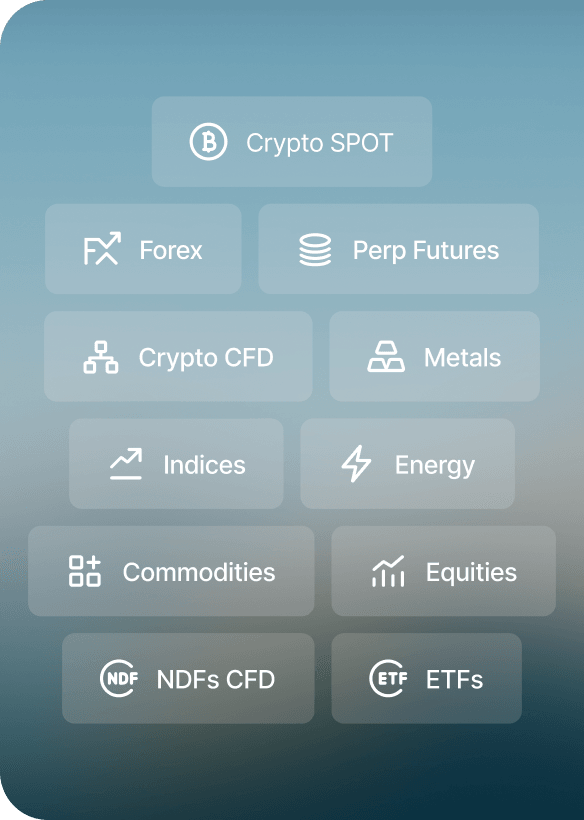
Deep, Reliable Liquidity Across 10 Major Asset Classes
FX, Crypto, Commodities, Indices & More from One Single Margin Account
Tight Spreads and Ultra-Low Latency Execution
Seamless API Integration with Your Trading Platform
Preserving Risk Management and Compliance During Failover
Failover in trading systems must preserve risk enforcement and compliance controls, not just uptime. As such, they must be in line with audit trails and regulatory requirements without leaving any operational cracks between them.
Regulators expect continuity of supervision, auditability, and exposure management throughout disruption events. Let’s take a look at the core requirements:
- Continuous audit trails across primary and secondary environments to preserve full traceability
- Real-time position synchronization to avoid exposure gaps during switchover
- Consistent pre-trade risk checks before and after failover to prevent uncontrolled execution
- Unified reporting across environments to support regulatory review and internal oversight
Building Continuous Trading Operations With Failover
Failover is business-critical to protect revenue, reputation, and regulatory status. It is part of the trader’s journey, ensuring they receive continuous trading experience, ultra-fast execution flow, and uninterrupted market access during stress conditions.
Building a high-availability infrastructure requires layered redundancy, disciplined testing, and integration across trading, liquidity, and risk systems.
B2BROKER designs failover into every layer of its ecosystem, embedding it directly with your brokerage solution and empowering you to compete without technical flaws. From distributed data centers to redundant liquidity, execution, and risk management, B2BROKER’s Turnkey Solutions integrate failover systems from the get-go, not as an afterthought.
Get a Failover-Ready Solution
Explore our brokerage & liquidity solutions and execute orders with near-zero interruptions
Frequently Asked Questions about Failover Systems
- How do failover systems differ from disaster recovery in trading environments?
Failover focuses on immediate, automated continuity of trading operations, often with little or no interruption to execution. Disaster recovery addresses longer-term restoration after major incidents and typically involves manual processes and longer downtime. In trading, failover protects live order flow, while disaster recovery restores broader business operations.
- What level of downtime is acceptable for regulated trading platforms?
For most regulated brokers, acceptable downtime is measured in seconds, not minutes. Regulators and clients expect continuous execution, accurate position tracking, and complete audit trails even during infrastructure failures. This is why many trading firms target sub-minute RTOs and near-zero RPOs.
- Can failover systems introduce execution risk during switchover?
Poorly designed or untested failover systems can create execution risk, such as duplicate orders, stale pricing, or lost session state. Automatic failover minimizes this risk by maintaining synchronized order books, positions, and risk limits across systems and by automating switchover without human intervention.
- How often should brokers test their failover infrastructure?
Most trading firms conduct controlled failover tests at least quarterly, with additional testing after major system upgrades or infrastructure changes. Regular testing ensures that replication remains intact, alerts trigger correctly, and execution behavior remains consistent during real incidents.
- Does failover apply only to trading platforms, or also to liquidity and risk systems?
Failover must extend beyond the trading platform itself. Liquidity aggregation, order routing, pricing feeds, risk controls, and reporting systems all need redundancy to avoid partial outages that can disrupt execution or create compliance gaps. Isolated failover leaves hidden points of failure in the trading stack.
- How do multi-asset brokers handle failover across different markets and trading hours?
Multi-asset brokers design failover with asset-specific considerations, such as different trading hours, liquidity profiles, and settlement rules. This often includes region-specific redundancy, session-aware routing logic, and consistent risk enforcement across all asset classes to maintain stable execution during failures.