What Does Custom Brokerage Software Really Cost?


A brokerage can budget accurately for code and still miss the real cost of a custom build. The first estimate may cover the matching engine or client portal, then leave compliance workflows, liquidity integrations, and post-launch maintenance outside the model.
Fortune Business Insights projects the e-brokerage market may reach $35.86 billion by 2034. That growth raises the cost of slow execution: every quarter spent rebuilding commodity infrastructure gives competitors more time to capture clients, partnerships, and regulatory learning.
This guide breaks down custom software development cost brokerage firms face at the infrastructure layer: execution and CRM first, followed by liquidity, compliance, payments, staffing, maintenance, and five-year TCO.
Key Takeaways
- Costs rise by layer: matching, liquidity, compliance, payments, and scalability each add separate build and maintenance work.
- Generic quotes miss key factors like latency, regulation, and post-trade reconciliation.
- Hidden costs come from scope creep, regulatory updates, cloud drift, and specialist hiring.
- Five-year TCO should compare upfront build, maintenance, staffing, delay risk, and licensing.
- Custom development works when it solves business needs that truly differentiate; core infrastructure is usually better bought.
Why Generic Cost Ranges Fail Brokerage Decision-Makers
Many generic software cost guides quote broad five- or six-figure ranges. For a brokerage stack, that range is so imprecise that it can drive a bad capital decision. Project scope, project size, and hourly rates matter, but brokerage cost is also driven by latency targets, compliance scope, and integration depth. Those factors scale differently from developer hours. A CRM that serves a consumer SaaS company at $120,000 may need $600,000 of work to meet the same operational baseline inside a regulated broker.
Clutch's own software development pricing data describes the median business application: $132,480.29 average project cost and about 13 months to deliver. Regulated trading stacks exceed that baseline on every dimension that matters. A software project in this category needs a brokerage-specific methodology because the project is an execution venue with regulatory reporting attached to it, not a workflow app.
If you have lived through an overrun before, the reason is usually identifiable: you bought a code estimate when what you needed was an architecture estimate. Code scales with team size and development time . The development team can add capacity, but architecture scales with every external system your platform has to stay compatible with for the next five years, including LPs, banks, regulators, venues, and custodians.
Location can change the estimate too. Eastern Europe and offshore teams may lower labour inputs, but time zone overlap and team composition still shape delivery risk.
The Real Cost Breakdown by Functional Layer
CTOs buy architectures first and averages second. A realistic cost model separates each functional layer because each one has its own talent requirements, vendor dependencies, and maintenance curve. Functionality is only the first input. The technology stack, integration frameworks, and support model become separate cost drivers once real order flow and audit requirements arrive.
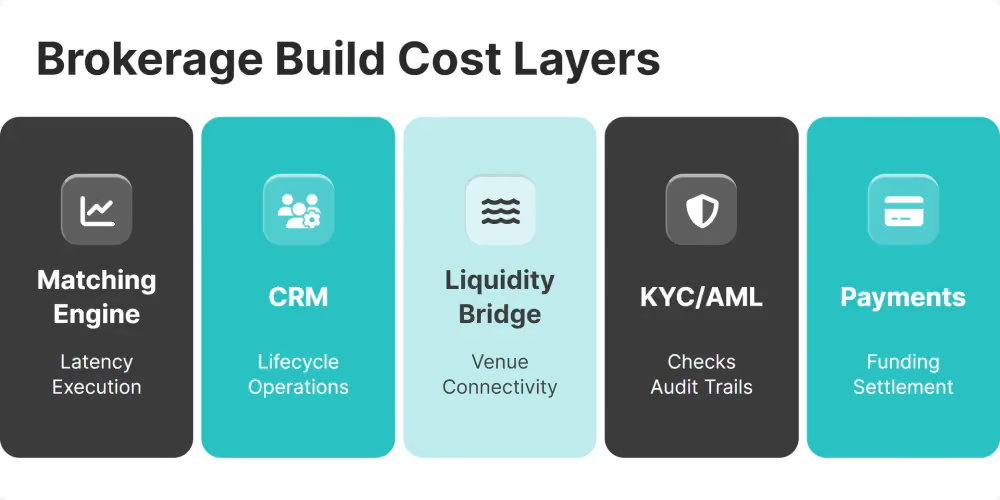
Five layers define the bulk of brokerage build cost:
- Matching engine and execution infrastructure.
- CRM, lifecycle management, and compliance operations.
- Liquidity bridge and venue connectivity.
- KYC/AML compliance layer.
- Payment processing and settlement.
Matching Engine and Execution Infrastructure
Execution infrastructure usually sets the upper bound for the rest of the build. Latency-sensitive trading workloads often target single-digit-millisecond latency or better near execution venues, and some institutional configurations push toward 1 ms or sub-2 ms access. On AWS or dedicated infrastructure, data processing patterns also affect how quickly the platform can validate, route, and reconcile orders.
Moving from one tier to the next requires more than optimization. It usually touches backend design, kernel tuning, bare-metal deployment, network placement, DevOps automation, and failover engineering. Application code is the smallest part of the bill.
Matching engine builds also carry a persistent engineering headcount: you need specialists who can debug tail-latency outliers under load. General application engineers usually have a different profile. The tech stack also affects observability, incident response, and testing depth. Budget separately for specialist low-latency engineering and ongoing support, because public benchmarks for matching-engine build cost vary widely and are rarely comparable across venues.
Back-Office CRM and Client Lifecycle Management
After execution, the next cost centre is the client lifecycle layer. Multi-asset brokerage CRM and back-office builds typically start at $80,000–$150,000 for a baseline and climb from there. At this layer, the software solution has to combine dashboards, workflow states, permissions, and audit controls.
The cost to build brokerage CRM depends on a wider surface area than operators expect:
- Onboarding and KYC orchestration.
- Account provisioning, funding, and IB workflows.
- Retention automation, reporting, and audit trails on one data model.
If any piece is outsourced, integration debt replaces build cost, which rarely nets out. The in-house vs. ready-made CRM software tradeoff usually lands on how much integration ownership your team can carry after launch.
Client portals bring a separate frontend budget. UX design, permissions, and reporting flows shape the user experience as much as the CRM data model.
Mobile access should be scoped deliberately. A mobile app for iOS and Android can be native or cross-platform, but each route adds testing and release management.
The strongest CRM builds streamline lifecycle work without hiding exceptions that operations, compliance, and support teams still need to resolve.
Liquidity Bridge and Venue Connectivity
Once accounts can be opened and funded, order flow has to reach venues cleanly. Liquidity bridge cost starts after the API connector.
Venue normalization and exposure controls define how orders move; hedging logic, post-trade reconciliation, and maker-taker fee accounting define how the book stays accurate. Legacy systems on the venue, bank, or LP side can also force custom normalization work.
When an exchange or LP changes its API, every custom bridge becomes a firefight. That ongoing maintenance burden is what turns a bridge from a project into a permanent engineering cost centre.
KYC/AML Compliance Layer
Compliance cuts across execution, CRM, liquidity, and payments, so it belongs in the build model from the start. KYC/AML workflows have to be engineered into the product.
Multi-jurisdiction scope increases complexity through duplicated screening logic, divergent reporting schemas, and jurisdiction-specific transaction monitoring rules. Even benchmarks from healthcare compliance software can understate brokerage complexity because trading supervision, funding controls, and audit trails move in real time. Treat that work as its own architecture and maintenance stream.
Payment Processing and Settlement
Funding is the last visible step for the client, but it creates a large operational burden behind the scenes. Payment gateway MVPs often take three to five months. Mid-level and full payment platforms commonly stretch to six to 12+ months once fraud detection, compliance, and settlement integrations enter the scope.
Gateway code is the visible part. Chargeback controls, reconciliation workflows, treasury routing, and multi-currency settlement absorb the majority of ongoing cost because funding friction translates directly into support overhead and regulatory exposure.
Quality assurance has to cover payment exceptions, not only happy-path funding. Bug fixes and processor-specific enhancements then continue after launch.
Payments is the layer where deferred work often becomes duplicate rebuild work.
The Hidden Costs That Blow Brokerage Builds Over Budget
The layer-by-layer build estimate still misses the costs that arrive after launch.
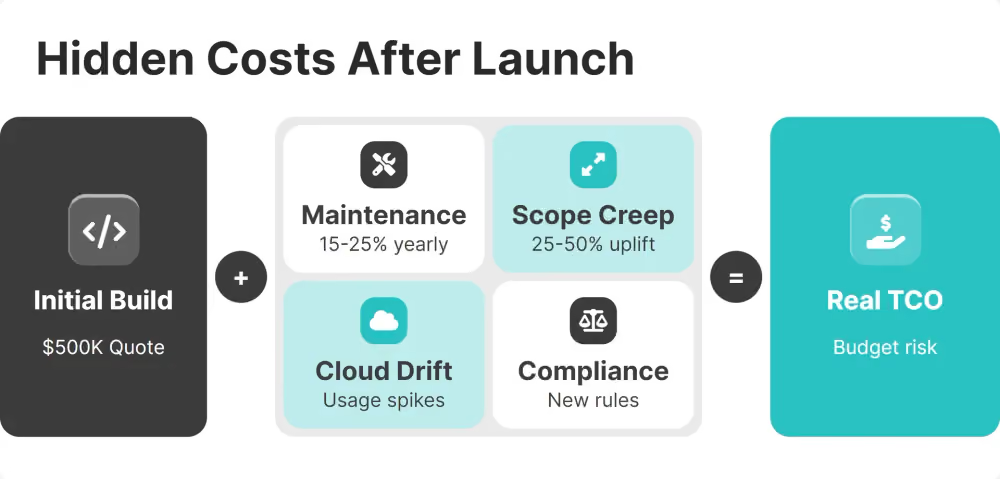
Annual software maintenance absorbs 15–25% of original build cost on average before any new features, security hardening, or regulatory updates. On a $500,000 build, baseline upkeep runs $75,000–$125,000 per year, and the number rises as the codebase ages. Those maintenance costs sit beside operational costs such as support coverage, incident response, and vendor coordination.
Scope creep is the other silent killer. Harvest cites reports indicating 28% of projects experience scope creep, and separate software cost benchmarks warn that unmanaged scope expansion can add 25–50% beyond the initial scope.
Inside a regulated broker, the creep rarely comes from feature requests. It usually comes from operational changes outside the original quote:
- An LP changes its FIX dialect.
- A regulator publishes a new reporting template.
- Cloud spend rises as usage, data volume, and AI workloads expand.
None of that appears in the original quote, and all of it lands on the CTO's desk.
Outsourcing can reduce delivery pressure, but it does not remove brokerage ownership of production incidents, vendor changes, or regulatory deadlines.
Five-Year TCO: Custom Build Versus Turnkey Infrastructure
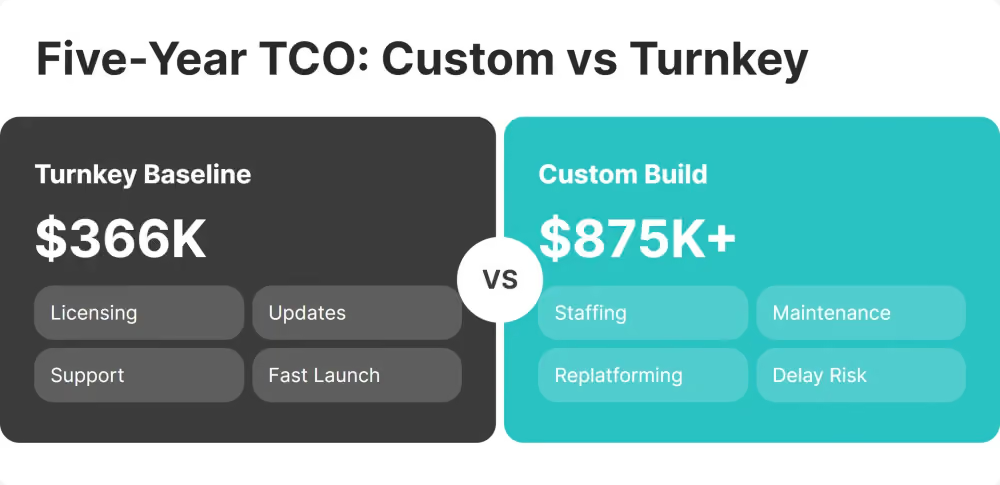
Those hidden costs are why the launch budget is the wrong comparison point. Run a five-year TCO before you commit upfront capital. Include licensing fees, maintenance, infrastructure, compliance updates, third-party integrations, staffing, and the revenue impact of your launch date.
A representative SaaS baseline totals approximately $366,000 over five years when it starts at $5,000/month with a 10% annual escalation. A custom build at a $500,000 initial outlay plus a conservative 15% annual maintenance assumption reaches roughly $875,000 over the same window before any scope creep or delay cost.
In that specific custom-build scenario, the build stays above the SaaS baseline for the full five-year window. A fixed-price proposal can look cost-effective on paper, but the gap can widen because the maintenance curve accelerates, key engineers leave, and the build may need partial replatforming by year three.
The spreadsheet is only useful if it shows which path absorbs the execution risk that remains with you. The white-label vs. custom development tradeoff turns on how much execution risk the broker wants to keep in-house.
Where Custom Development Creates Genuine Competitive Advantage
The custom path still has a place when it funds a real edge. Custom development is defensible for proprietary execution logic, unique margining models, differentiated prop trading workflows, or a workflow so specific that no vendor can replicate it. These are complex projects where prototypes and an agile roadmap can prove whether the edge is real before the broker funds a large delivery program.
Outside that bucket, custom build creates cost without differentiation. You pay premium engineering rates to rebuild commodity infrastructure that thousands of brokers already run.
A hybrid model is usually cleaner. Buy institutional core infrastructure for matching, liquidity, CRM, and payments. Build only where differentiation compounds, typically at the edges: alpha layers, proprietary risk engines, or client-experience surfaces unique to your segment. Keep that custom work iterative so each release proves business value before the next tranche of engineering spend.
That structure keeps engineering focused on the parts of the brokerage that actually create defensible value.

The Time-to-Market Cost That Never Appears in a Development Quote
Cost is only one side of the decision; timing changes the economics just as quickly. Pre-integrated deployments can often launch in weeks. Custom CRM builds routinely need 16–24 weeks before a minimum viable version and longer before production readiness, depending on scope and integration complexity. A startup broker has to protect the development process from turning into an open-ended research program.
That delta compounds into real money. Treating the launch as a software development project alone understates the commercial risk. Every month of delay is a month of CAC paid on future revenue, lost partnerships outside your launch window, and regulatory learning your competitors accumulate while you are still debugging.
The e-brokerage market is expanding at a 9.57% CAGR through 2034. In a growth market, a six-month launch delay does more than push revenue back. It compresses the share a new entrant can capture because incumbents capitalize on the window you were supposed to use. Time-to-market is a capital allocation decision first and a project management metric second.
Stop Rebuilding What Already Exists at Institutional Grade
The custom-versus-turnkey question is about where your capital buys differentiation and where it merely buys duplication. Off-the-shelf does not have to mean generic when the core modules are built for institutional brokerage use. Institutional-grade modules such as B2TRADER for matching, B2CORE for client lifecycle, and B2CONNECT for liquidity aggregation compress integration risk, reduce specialist headcount needs, and shrink the distance between a product decision and live revenue.
If your next build cycle depends on infrastructure decisions you are still stress-testing, the conversation to have is with a partner who has already solved the commodity layers.
Frequently Asked Questions About Custom Brokerage Software Cost
How much does custom brokerage software cost to build?
Mid-tier brokerage CRM and back-office builds typically start around $80,000–$150,000, while broader multi-asset systems move higher. Execution infrastructure, liquidity routing, payments, and multi-jurisdiction compliance can push enterprise programs to $300,000–$500,000 or past $1 million once maintenance is included.
What hidden costs blow a brokerage build over budget?
Maintenance alone typically consumes 15–25% of original build cost each year before new features, security hardening, or regulatory updates. Scope creep, LP API changes, compliance rewrites, and cloud cost drift are the common overrun drivers; Harvest cites reports indicating 28% of projects experience scope creep.
How much does compliance add to brokerage development cost?
Compliance is part of the operating architecture. KYC/AML workflows, sanctions screening, audit trails, reporting logic, and transaction monitoring need to be engineered into onboarding and operations. Multi-jurisdiction coverage adds duplicated checks, divergent reporting schemas, and jurisdiction-specific monitoring rules.
What is the total cost of ownership for a custom brokerage platform over five years?
Five-year TCO includes initial development, 15–25% annual maintenance, cloud infrastructure, compliance change requests, and brokerage-specialized staffing. Model revenue delay separately, because pre-integrated deployments can launch in weeks while custom CRM builds often need 16–24 weeks depending on scope and integration complexity.
When does turnkey infrastructure make more sense than a full custom build?
Turnkey infrastructure makes more sense when your edge is distribution, liquidity relationships, or product design. Rebuilding matching, CRM, connectivity, and payments usually duplicates infrastructure that thousands of brokers already run. Stacks like B2TRADER, B2CONNECT, and B2CORE compress integration risk and free engineering capital for differentiated layers.
Recommended articles
Subscribe to our newsletter