MetaTrader Liquidity Providers: How Brokers Choose the Right Setup

Brokers using MT4 and MT5 rely on external infrastructure to deliver executable pricing. MetaTrader liquidity providers connect these platforms to market depth, directly influencing spread tightness and fill rates. This infrastructure choice defines the trading conditions your clients experience daily.
This guide outlines the specific operational criteria for evaluating potential partners. We examine how Tier 1 and Prime-of-Prime access models impact scalability, helping brokers construct a stable execution environment for long-term growth.
Key Takeaways
- Prime-of-Prime liquidity aggregation allows brokers to access deep institutional liquidity without maintaining direct Tier 1 bank relationships.
- Liquidity bridges connect MetaTrader servers to external markets, managing order routing and execution logic in real-time.
- Execution quality depends on operational metrics like fill rates and slippage symmetry rather than just advertised spreads.
- Regulated liquidity partners provide the granular audit trails necessary to prove best execution and resolve client disputes.
What Liquidity Means in a MetaTrader Environment
MT4 and MT5 operate strictly as execution platforms licensed by MetaQuotes. They do not generate prices or provide market depth. Every quote, fill, or rejection reflects the quality of the external liquidity infrastructure a broker connects to the platform.
In practice, liquidity quality becomes visible through day-to-day trade execution behavior. Stable pricing during active sessions signals consistent depth. At the same time, repeated price gaps or erratic fills point to thin or poorly managed liquidity streams that struggle under load.
From a broker's perspective, execution outcomes surface in four operational indicators:
- Spread stability during peak market hours.
- Slippage patterns during volatility.
- Order rejection frequency.
- Platform reliability under sustained volume.
These indicators carry regulatory and commercial weight. Regulators assess best execution based on observable outcomes, while traders judge platform quality through execution consistency over time. Liquidity decisions, therefore, shape compliance posture and long-term client retention without ever appearing directly in the trading interface.
Eliminate Slippage With Institutional Liquidity Depth
Access deep Tier-1 liquidity pools designed to absorb market volatility and keep your spreads tight during high-impact news events.
How Liquidity Is Delivered to MT4 and MT5 Platforms
When a client submits an order on MT4 or MT5, the platform’s trade server acts as a routing point rather than a pricing engine. It validates the order, applies internal rules, and passes execution requests outside the MetaTrader environment for pricing and fills.
The liquidity bridge sits between the trading server and external counterparties. It translates platform instructions into executable requests, manages routing logic, and consolidates responses from connected liquidity providers. In production environments, this layer handles thousands of requests per second during active sessions.
Execution then occurs at the liquidity provider level, where available market depth determines pricing and fill outcomes. Once a fill or rejection is confirmed, the response travels back through the bridge to the MetaTrader server and into the client terminal. At scale, this round trip typically completes within milliseconds, with latency shaped by server location and provider infrastructure.
Established firms typically host their own servers and bridges to maintain full control over routing logic and latency. Startups often use White Label solutions, in which the technology provider manages the connectivity infrastructure as a turnkey service.
Types of MetaTrader Liquidity Providers
Liquidity providers fall into distinct categories based on their proximity to the underlying interbank market. This classification defines the access model and credit requirements rather than the execution quality itself.
Tier 1 Liquidity Providers
Tier 1 liquidity providers operate directly within the interbank market, facilitating pricing between major financial institutions like banks and hedge funds. Their activity depends on substantial capital reserves, established credit relationships, and continuous regulatory reporting. Public filings from global banks show liquidity operations backed by balance sheets measured in tens of billions of dollars.
Accessing this level requires a Prime Brokerage relationship involving substantial capital reserves. The technical infrastructure also demands robust FIX connectivity that differs from standard retail setups. These financial and technical barriers make direct Tier 1 access impractical for the vast majority of MetaTrader brokers.
Most MT4 and MT5 brokerages, therefore, connect to the interbank market through an additional distribution layer.
Tier 2 and Prime-of-Prime Providers
Tier 2 Prime-of-Prime (PoP) entities bridge the gap between large banks and retail platforms. They hold accounts with multiple Tier 1 institutions, aggregating these streams into a unified feed. This aggregation creates a "Best Bid/Ask" environment where the broker receives the tightest available spread from the pool.
PoP access is the dominant execution model for MT brokers across Forex and CFDs. These entities often provide direct market access and ECN-style execution environments that mimic institutional standards. Lower capital thresholds, faster onboarding cycles, and centralized operational support shape a delivery approach built for regulated firms seeking predictable execution.
2026 ranking of top liquidity providers across forex, crypto, and CFD markets with a focus on technology, asset coverage, and execution.
23.05.25
Why Most MetaTrader Brokers Rely on Tier 2 Providers
Establishing direct credit lines with major banks often drains resources required for marketing and compliance. Forex brokers select Tier 2 partners to align infrastructure with commercial realities.
Key operational reasons behind this reliance include:
- Faster onboarding cycles. Standardized legal documentation and predefined credit frameworks typically compress setup timelines from several months to a few weeks, supporting platform launches that follow regulatory approval and infrastructure readiness.
- More efficient margin usage. A Prime-of-Prime structure consolidates collateral into a single net position. Integrating diverse flows into one account frees up working capital for regulatory reserves.
- Continuous technical support. Retail operations require support teams familiar with MetaTrader bridge architecture. Tier 2 desks troubleshoot specific plugin conflicts, CRM integrations, or FIX API disconnects that general bank support teams lack the training to resolve.
- Flexible liquidity configuration. Brokers can modify routing logic to optimize both A-Book and B-Book risk models within existing agreements, maintaining execution continuity as volumes and product scope expand. Adding new symbols requires simple configuration changes rather than new legal agreements.
Over time, these operational characteristics define a strategic liquidity model that supports predictable execution outcomes and regulatory consistency as client activity scales.
How Brokers Evaluate MetaTrader Liquidity Providers
Selecting a liquidity partner requires analyzing risk exposure and infrastructure scalability rather than just comparing price lists. While low costs attract attention, operational stability determines long-term success. Brokers must audit potential partners against specific criteria that impact daily trading conditions.
Regulation and Legal Structure
Regulatory alignment at the provider level directly shapes a broker’s compliance workload. Frameworks such as MiFID II require brokers to maintain documented evidence of pricing behavior and order handling across market conditions. Supervisory reviews rely on execution records and reporting consistency.
Legal structure becomes relevant during disputes. When execution complaints escalate, brokers depend on provider-side audit trails and timestamped order records. Providers operating under recognized jurisdictions simplify information requests during regulatory inquiries and formal reviews.
Technology and Platform Compatibility
Headline low-latency figures often distract from the reality of connection consistency. Brokers must verify that the provider’s bridge plugin interacts smoothly with the MetaTrader server kernel without causing resource conflicts.
Brokers prioritize providers whose technology aligns with established bridge architectures and maintenance cycles. Predictable integration behavior reduces execution inconsistencies and limits operational interruptions during platform updates or liquidity adjustments.
Pricing Structure and Transparency
Evaluating pricing requires analyzing spread behavior beyond the Top of Book (TOB). A provider offering tight spreads for small sizes often widens quotes aggressively for standard lots. Sustainable execution models deliver pricing consistency based on Volume-Weighted Average Price (VWAP) logic.
Brokers must verify slippage symmetry during news events. True transparency involves checking if positive slippage is passed to the client or captured by the provider. Assessing these execution statistics prevents situations where market makers systematically profit from client order flow. Brokers must also ensure that spread markups remain reasonable to offer competitive pricing alongside top-tier execution.
Asset Coverage and Expansion Capability
Liquidity decisions influence a broker’s ability to expand product coverage over time. Providers capable of adding new financial instruments within existing infrastructure reduce the need for parallel integrations or fragmented execution management as the product mix evolves across various asset classes.
Crypto and digital asset access introduce additional operational considerations due to extended trading hours and distinct liquidity cycles. For a detailed breakdown of the market's top options, review our guide to the best crypto liquidity providers to see how established firms structure these connections.
Operational Support and Service Model
Live trading environments demand immediate response protocols during technical incidents. A responsive support desk minimizes downtime risk when platform updates or market anomalies occur. General IT support typically fails to diagnose complex trade routing errors.
MetaTrader updates frequently require server-side adjustments. Brokers need access to a specialized technical team capable of analyzing FIX logs in real-time. Fast resolution prevents minor bridge disconnects from escalating into major trading outages.
Hand Over Your Technical Headaches Today
Protect your brokerage with round-the-clock monitoring and instant technical support designed specifically for high-volume MetaTrader 5 architecture.
What a MetaTrader Liquidity Bridge Does
A MetaTrader liquidity bridge functions as an infrastructure layer that connects MetaTrader 4 or 5 servers to external liquidity sources. It sits outside the trading platform and manages how execution requests leave the MetaTrader environment and return with confirmed pricing outcomes.
At an operational level, the bridge controls order routing and liquidity aggregation. It determines which provider receives each request, consolidates available prices, and applies execution rules defined by the broker. In active environments, this layer processes a continuous stream of execution messages without direct trader visibility.
Bridges also play a role in execution governance. They support exposure control, routing logic adjustments, and orderly handling of provider responses during volatile conditions. Brokers frequently bundle this technology with solutions like MetaTrader 5 setup and maintenance to ensure professional oversight of the entire execution stack.
How Liquidity Bridges Improve Execution Quality
MT5 bridge aggregates pricing streams from multiple liquidity providers to synthesize a unified Best Bid/Offer. Smart routing logic ensures fast execution by directing client orders to the specific venue offering the optimal fill price at that exact millisecond. Algorithmic execution prioritization stabilizes fill rates, effectively reducing rejections even when market volatility spikes during economic data releases.
Using Liquidity Bridges for Multi-Asset Trading
Liquidity bridges support multi-asset trading by coordinating order execution across FX, CFDs, and cryptocurrency instruments within a single routing framework. Crypto markets operate 24/7, while FX follows session-based liquidity. Bridges manage multiple feeds and execution rules, maintaining consistent pricing behavior as brokers expand asset coverage.
Risk Management and Compliance Considerations
Liquidity bridges function as the primary defense mechanism against toxic flow. Automated filters reject orders exceeding specific size limits or price deviation thresholds immediately. Stopping these trades at the gate protects brokerage capital from flash crashes while the risk team monitors net exposure.
Compliance requires granular data retention to satisfy reporting mandates. The infrastructure captures precise timestamps for every quote and execution event. These detailed logs serve as the necessary evidence to prove fair pricing during regulatory audits or specific client dispute investigations.
Common Mistakes Brokers Make When Choosing Liquidity Providers
Strategic errors in liquidity selection typically manifest months after the platform goes live. Brokers often compromise long-term stability by focusing on short-term marketing metrics.
Common mistakes include:
- Chasing Advertised Spreads: Marketing quotes often disappear during volatility. Executing against a thin book causes slippage that damages the broker's reputation immediately.
- Single-Source Dependency: Relying on one connection creates a fragile system. A technical failure at the provider level halts crypto or forex trading entirely.
- Neglecting Support Protocols: Complex integrations require rapid troubleshooting. General help desks lack the engineering access needed to fix bridge errors during active sessions.
Scaling a MetaTrader Brokerage With the Right Liquidity Setup
Scalable liquidity infrastructure supports volume growth without requiring a platform overhaul. Selecting a provider with deep institutional capacity prevents the need to migrate connections as the brokerage expands.
Brokers that plan liquidity architecture upfront avoid disruptive provider migrations later. Post-launch changes often require weeks of parallel testing and client communication. A flexible setup supports gradual scaling while preserving execution continuity as trading volumes and product scope expand.
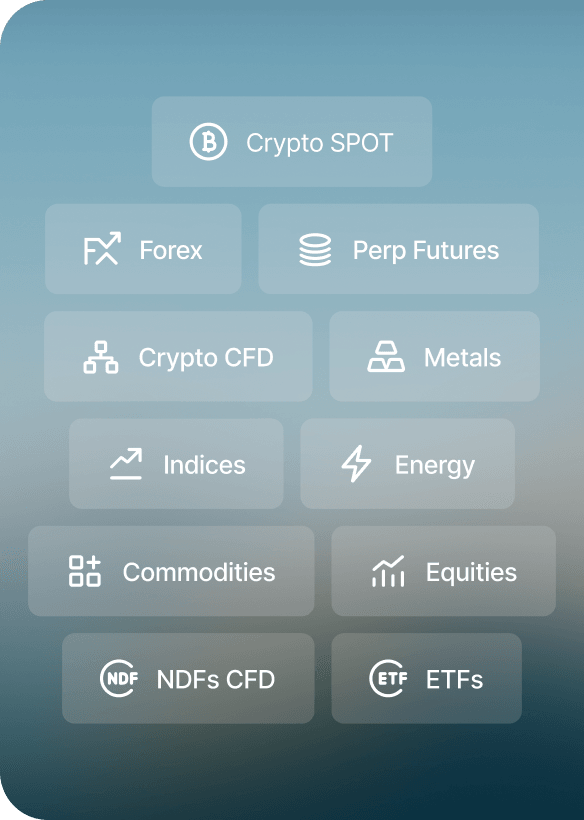
Deep, Reliable Liquidity Across 10 Major Asset Classes
FX, Crypto, Commodities, Indices & More from One Single Margin Account
Tight Spreads and Ultra-Low Latency Execution
Seamless API Integration with Your Trading Platform
MetaTrader Liquidity Solutions With B2BROKER
Building a reliable execution environment requires aligning liquidity streams with the underlying platform architecture. B2BROKER delivers a unified fintech ecosystem combining institutional Prime-of-Prime liquidity with enterprise-grade bridge technology. Our decade of experience in financial markets and ten regulatory licenses provide the operational stability needed for long-term business continuity.
Brokers accessing our MetaTrader 5 setup and maintenance services receive a fully managed technical stack. We handle server configuration and bridge connectivity 24/7. Delegating these critical backend functions frees your internal teams to focus entirely on client acquisition strategies.
Upgrade Your Brokerage Infrastructure Now
Integrate Prime-of-Prime liquidity and enterprise bridge technology to build a scalable, high-performance execution environment that grows with you.
Frequently Asked Questions about MetaTrader Liquidity Providers
- Can smaller brokers access prime-of-prime liquidity solutions?
Yes, Tier 2 providers specifically serve smaller brokers, offering aggregated institutional pricing without the barriers of direct Tier 1 relationships. Many providers also offer flexible account structures that scale with broker growth.
- Which execution metrics should brokers monitor when evaluating the best liquidity providers?
Brokers should track fill rates, average execution speed, slippage symmetry (positive vs. negative), and rejection rates during high-impact news events. These metrics directly correlate with trader satisfaction and retention.
- How can brokers minimize slippage during high-volatility news events?
Partner with providers offering pre-trade liquidity checks, implement dynamic spread widening during news, and use liquidity bridges with multiple source aggregation to maintain depth. Some providers offer specialized news trading feeds with enhanced liquidity during scheduled announcements.
- How long does it typically take to connect a MetaTrader platform to a liquidity provider?
The timeline depends on whether the broker is using an existing MT4/MT5 setup or launching via a white-label solution. In most cases, integration can take anywhere from a few days to several weeks, depending on technical readiness, compliance checks, and bridge configuration.
- Can brokers change liquidity providers without disrupting live trading?
Yes, brokers can migrate or add liquidity providers with minimal disruption if their bridge and platform architecture support multi-provider routing. Proper testing, phased rollouts, and parallel connections are critical to maintaining execution stability during transitions.
Recommended articles