In-House vs. Ready-Made CRM Software Comparison for Brokers

Choosing between in-house vs. ready-made customer relationship management (CRM) software ranks among the most consequential technology decisions a brokerage will make. The CRM you select touches everything from how quickly new clients get onboarded to how reliably your retention workflows perform at scale. Get it wrong, and you face months of rework that balloon costs and wear down your operations team.
The core question is straightforward: should your brokerage build a CRM from scratch, or deploy a cost-effective off-the-shelf CRM designed for immediate production use? The answer depends on how fast you plan to grow, how many jurisdictions you serve, and what trading infrastructure you already run. Clear evaluation criteria separate a sound decision from an expensive mistake.
This article covers cost and timeline factors, weighs the pros and cons of each path, and then walks through a decision framework that technology and operations leaders can apply with confidence.
Key Takeaways
- Total cost of ownership for in-house CRM development often exceeds initial estimates by 2-3x once ongoing maintenance and security updates are compounded by developer retention costs.
- Ready-made CRM platforms let brokers launch client management workflows in weeks, accelerating time to revenue for startup and growth-stage firms.
- Integration depth across your trading, liquidity, and KYC/AML stack should be a primary evaluation criterion when comparing custom vs. generic CRM solutions.
- A hybrid approach that extends a ready-made CRM with broker-specific modules often delivers speed and customization while preserving long-term flexibility.
- Technology and operations leaders should model five-year cost scenarios and map critical client journeys before committing to either path.
Why Brokers Debate Building vs. Buying a CRM
Brokerages have CRM requirements that look nothing like a typical SaaS company or e-commerce business. You need multi-tier client segmentation built on regulatory compliance workflows that vary by jurisdiction, all connected to trading infrastructure like MT4/MT5 with payment and KYC/AML layers. A generic Salesforce or HubSpot instance falls short of these needs out of the box.
That reality turns the build-vs-buy question into a strategic decision where speed to market and operational agility both shape long-term technology debt. Two blind spots trip up most teams: underestimating how complex an in-house build becomes once compliance and platform integrations enter the picture, and overlooking the customization ceilings of generic CRM systems that lack financial-services architecture.
This decision deserves structured analysis. Defaulting to what a competitor chose, or what your CTO built at a previous company, misses what actually fits your specific brokerage.
Defining Custom-Built, Bespoke, and Generic CRM Systems
Before comparing options, it helps to clarify what each term actually means in practice.
A custom-built CRM (in-house CRM) is software developed by your internal team or contracted developers, built from the ground up to your brokerage's exact specifications. You own every line of code and control the roadmap entirely.
A bespoke CRM system sits in the middle. It starts with an existing framework or platform but gets modified extensively to match a particular brokerage's workflows, compliance requirements, and integration needs.
A generic CRM (ready-made CRM) is off-the-shelf software built for broad market use. It offers standardized features with limited-to-moderate customization and typically deploys in days or weeks.
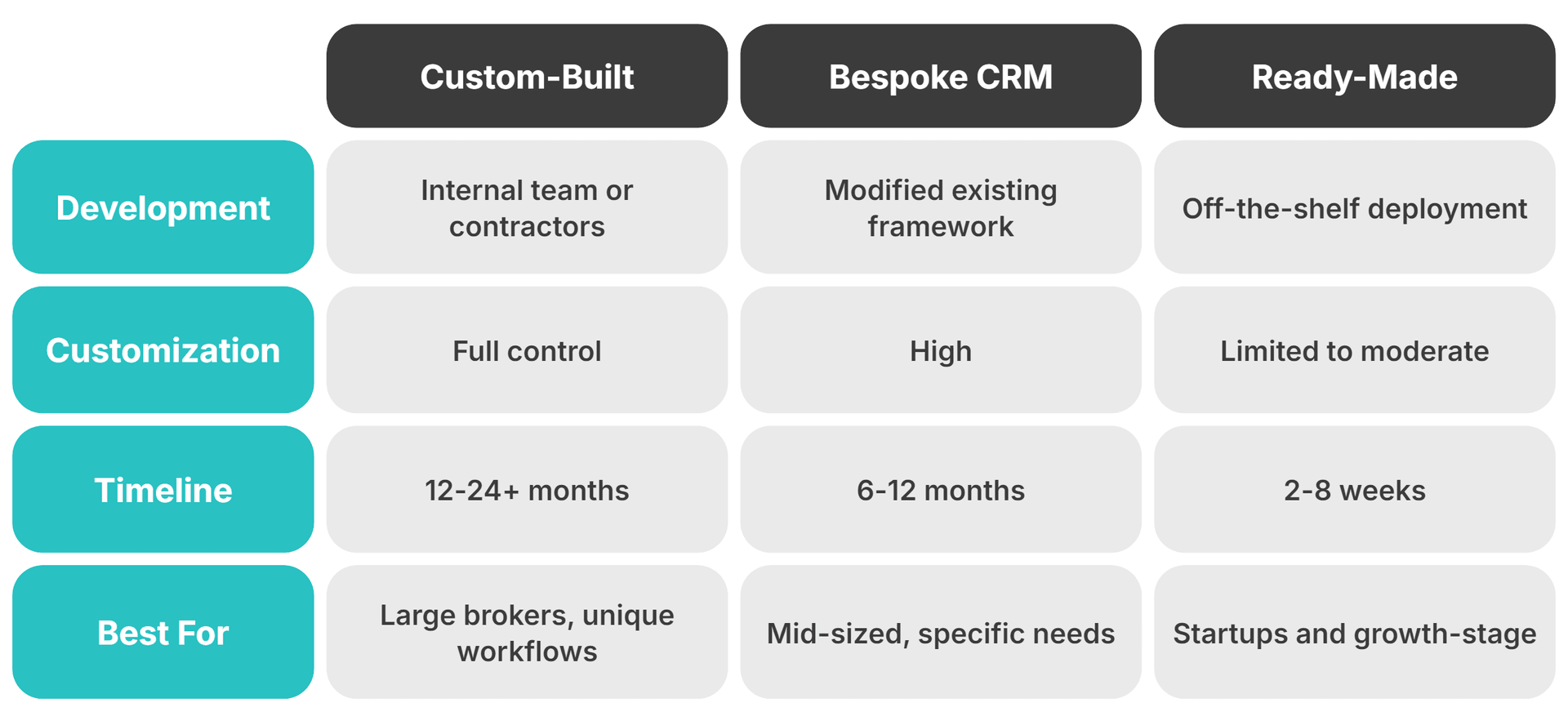
One important clarification: when someone says "custom CRM," they might mean a fully in-house build or a heavily modified bespoke solution. Pin down what "custom" means in each conversation so both sides share the same definition.
Pros and Cons of an In-House Custom CRM
In-house development appeals to brokerages that want end-to-end control over their technology stack and client experience. The advantages can be decisive for the right firm, but the risks tend to compound over time.
Pros of in-house custom CRM:
- Full ownership of codebase and data architecture, giving you complete control over how security and compliance are implemented.
- Workflows can match internal processes exactly, including edge cases and jurisdiction-specific compliance nuances that align precisely with your business needs. Off-the-shelf solutions typically lack this granularity.
- Full independence from a vendor's roadmap, pricing changes, or platform constraints.
- Opportunity to differentiate through proprietary features, from analytics dashboards to client-facing tools that give you capabilities competitors lack.
Cons of in-house custom CRM:
- High upfront development costs. A medium-complexity brokerage CRM typically runs $90,000-$300,000 for initial development, with total first-year ownership reaching $250,000-$400,000 once compliance and integration work enter the budget.
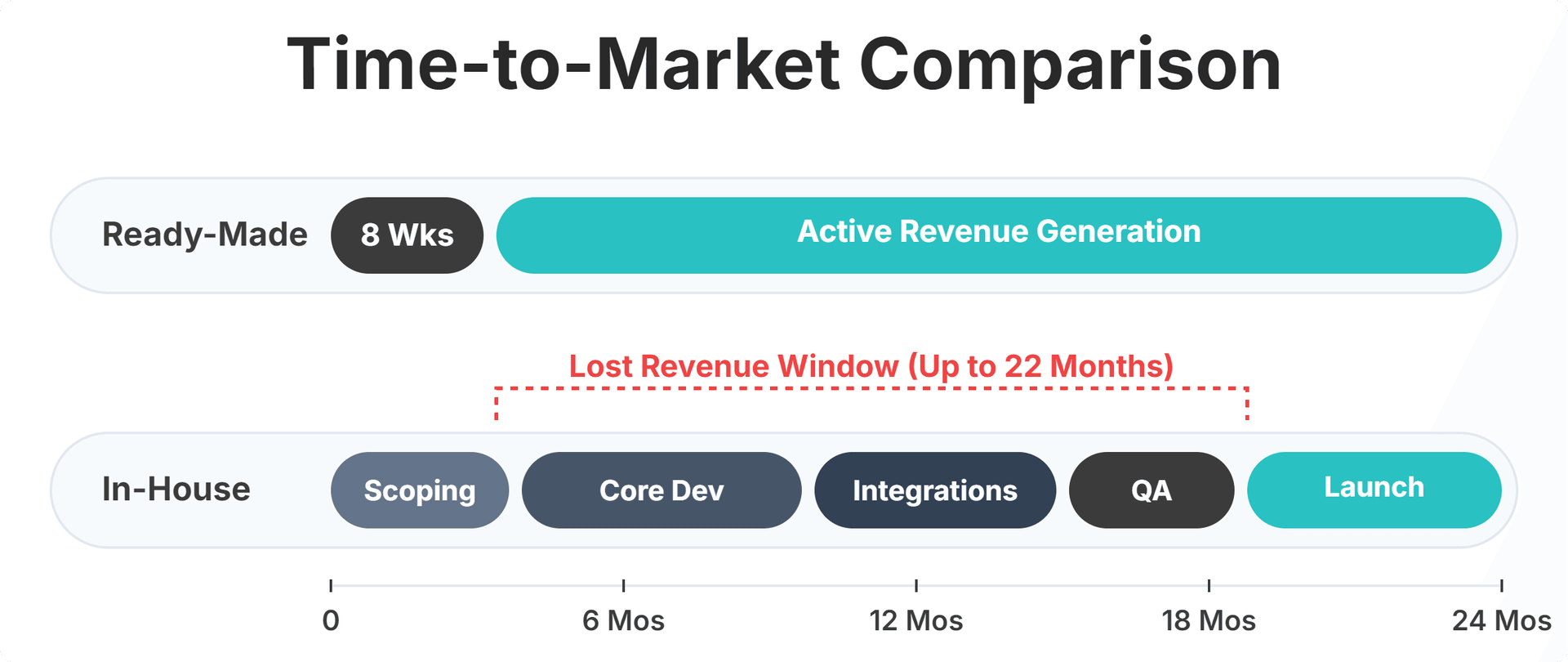
- Extended delivery timelines of 12-24 months before reaching production readiness, during which your team operates without the tool.
- Every sprint competes for engineering attention between security patches, regulatory updates, and the feature requests that never stop arriving.
- Key-person dependency risk. If the developers who built the system leave, institutional knowledge walks out the door with them.
- Opportunity cost from diverting technical resources away from revenue-driving initiatives like trading platform improvements or client acquisition tools.
A CRM is never "finished." Internal teams must continuously evolve it as regulations shift and trading infrastructure outgrows its original design.
See How B2CORE Streamlines Broker Operations
A ready-made CRM built specifically for brokerages, with native MT4/MT5, cTrader, KYC, and payment integrations.
Pros and Cons of a Ready-Made CRM Platform
Ready-made CRM platforms offer the fastest path to operational capability, though the trade-offs center on customization depth and vendor dependency.
Pros of ready-made CRM:
- Rapid deployment in 2-8 weeks, accelerating time to value and client onboarding from day one.
- Predictable subscription or licensing costs for core functionality, making budgeting straightforward.
- Vendor-managed security and compliance patches reduce your internal engineering burden, freeing capacity for revenue-driving work.
- Mature feature sets informed by broad market adoption. Broker-specific forex CRM software like B2CORE comes with pre-built connectors for MT4/MT5 and payment systems, plus KYC/AML provider integrations.
Cons of ready-made CRM:
- Limited customization. Your team may need to reshape internal workflows to fit the platform's model, which constrains how much you can tailor processes.
- Dependency on the vendor's roadmap and pricing decisions. If the vendor raises prices or sunsets a feature, you absorb the impact.
- Data portability and switching costs can become significant later if you decide to migrate.
- Generic CRMs designed for general sales teams will miss essential trading and compliance integrations, forcing workarounds that fragment your customer data.
Brokerage-specific ready-made platforms dramatically reduce friction and customization overhead compared to general-purpose CRMs originally built for sales teams.
Key Evaluation Factors for Brokerage CRM Decisions
Every brokerage CRM decision forces you to weigh cost against speed while meeting integration requirements. Optimizing for one typically increases constraints in the others.
Total Cost of Ownership
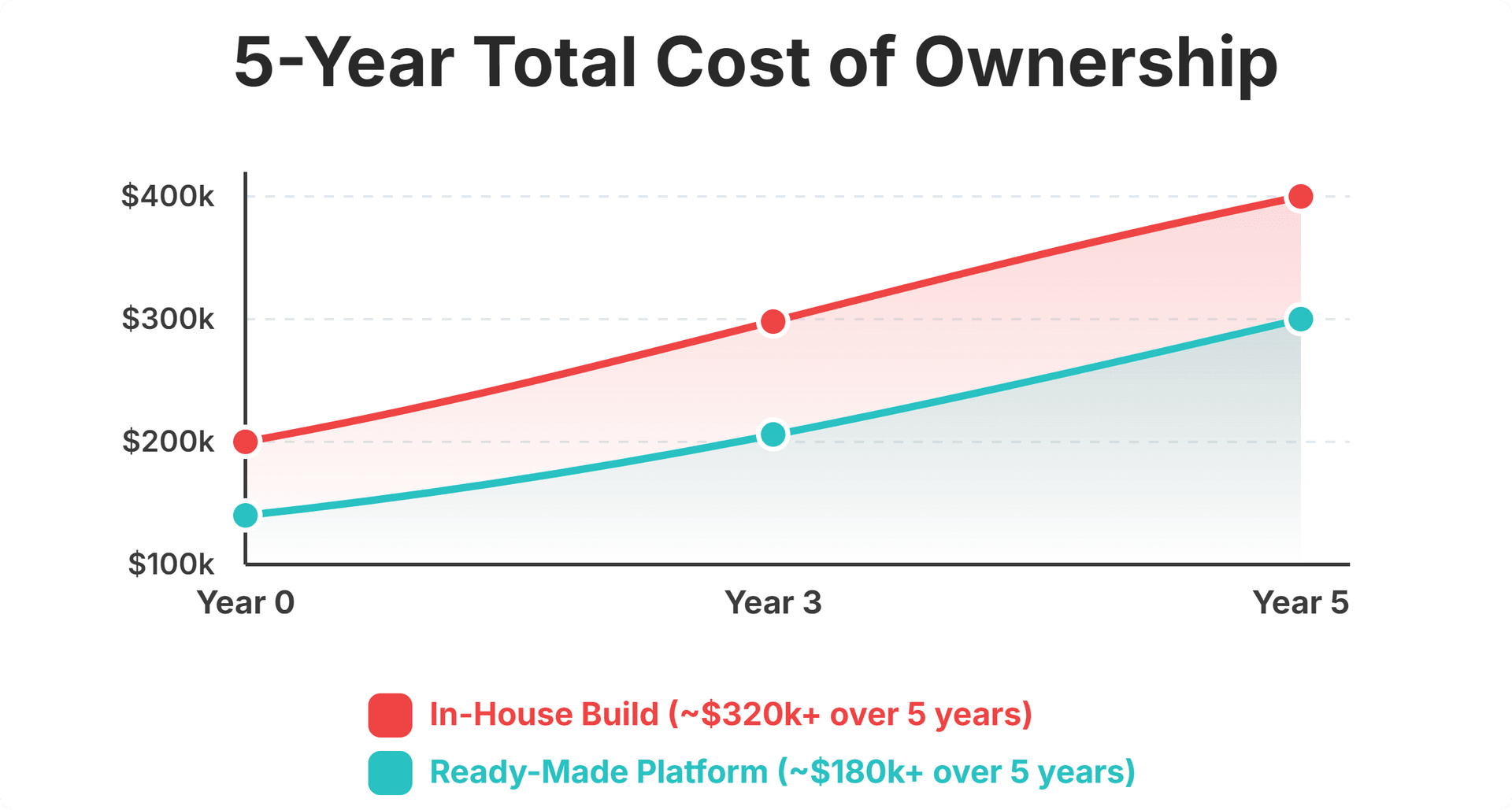
TCO goes far beyond the initial price tag. For in-house builds, factor in development and infrastructure costs up front, then layer on ongoing maintenance from security patches to feature updates, plus the salaries needed to sustain it all. Projects routinely exceed initial budgets by 2-3x when scope creep meets unforeseen technical debt and key engineers leave mid-build.
Ready-made CRM pricing looks more predictable on the surface. SaaS platforms range from $999/month for entry-level tiers to $25,000+/month for enterprise systems. Integration costs, customization fees, premium support, and add-on modules can materially inflate your actual spend.
Over five years, a custom forex CRM typically costs around $320,000 in total ownership versus $381,000+ for a comparable SaaS subscription, with the break-even point landing at approximately 30-36 months. Model your TCO across that full window to see where the real savings sit.
Time to Market and Resource Load
In-house CRM development commonly takes 12-24 months to reach production readiness, especially once compliance and trading-stack integration enter the scope. During that window, your operations team runs onboarding from spreadsheets while growth stalls behind the backlog.
Broker-ready platforms launch in 2-8 weeks, getting your client management workflows operational while your business is still building momentum.
In-house builds demand dedicated engineering and QA capacity, DevOps and security review cycles, plus a product manager to prevent feature drift. For fast-scaling brokerages, that operational drag quickly becomes a growth limiter.
Integration With Trading and Liquidity Stack
Broker CRMs must connect reliably to your trading stack (MT4/MT5 or proprietary platforms), your liquidity aggregation and payment infrastructure, and your compliance layer from KYC/AML through to reporting and support. That integration list is non-negotiable.
In-house builds give you full control over integration architecture, though that control comes with a maintenance obligation. Every time a third-party API changes or a platform releases a new version, your team takes on the work of updating it.
Brokerage-focused ready-made CRMs typically provide pre-built connectors to common infrastructure, reducing integration time and risk significantly. B2CORE, for example, ships with native connections to MT4/MT5, major payment processors, and compliance tools.
Validate integrations early. A CRM that fails to sync account data and transaction activity in real time will produce operational silos that compound as you scale. Industry-specific platforms built for brokerages unify contact management with sales automation, handling follow-ups and trading operations in a single layer.
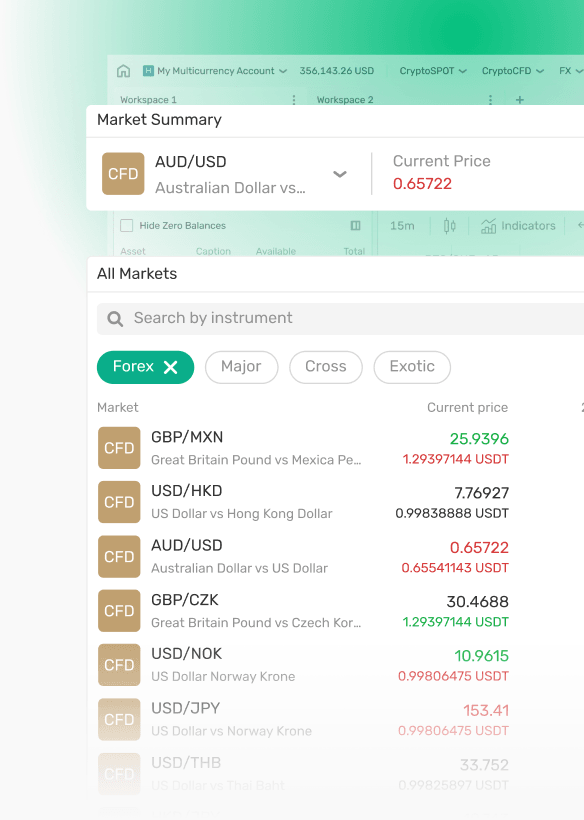
All-In-One CRM & Back Office for Brokers and Exchanges
Fully Customisable Trader’s Room with Modular Features
Built-In IB Module, KYC, Payment Integrations, and Reporting Tools
Intuitive Interface that Boosts Client Engagement
When to Choose Bespoke Over Generic CRM Solutions
Bespoke sits between building your own CRM and off-the-shelf deployment. It works best when your brokerage has outgrown generic platforms yet lacks the budget or justification to build from scratch.
Bespoke is a strong fit when:
- Your brokerage runs workflows that outgrow generic CRMs, whether that means multi-tier IB commission structures or jurisdiction-specific compliance flows that require dedicated logic.
- Regulatory requirements demand compliance controls or auditability features that off-the-shelf products lack.
- You have existing partial systems (a legacy back-office tool, a custom reporting engine) that must be unified into one CRM layer.
Bespoke projects still need tight scope control backed by clear acceptance criteria and vendor accountability. Without those guardrails, bespoke easily drifts into the same cost overruns and timeline creep that plague full in-house builds.
Hybrid Approach: Extending a Generic CRM With Broker-Specific Modules
The hybrid model deploys a ready-made CRM for core operations, then extends it with custom modules where your brokerage genuinely needs differentiation. For many growth-stage firms, this delivers the best of both worlds.
Several advantages converge in this model:
- Fast initial deployment for core lead-to-client workflows, so your team is operational in weeks.
- Targeted customization for broker-specific needs like IB commission management, with room to layer on compliance dashboards or risk views as you grow.
- Lower maintenance burden because the vendor handles core platform updates, leaving your team responsible for custom extensions alone.
The prerequisite is a platform with robust APIs and SDKs that support custom objects and role-based access control. Many ready-made CRMs offer limited extensibility, so evaluate this capability before you shortlist.
The hybrid path is increasingly common among growth-stage brokerages that need to move fast now while preserving the ability to customize later as requirements evolve.
Launch Your Brokerage With Proven Technology
Skip the 12-month build cycle. Get a complete brokerage technology stack deployed in weeks.
Decision Framework for Brokerage Technology and Operations Leaders
Use a structured evaluation process that reduces risk and aligns your CRM choice to your operating model and growth plans.
Map Critical Client Journeys
Document the end-to-end client journey from lead capture through onboarding and KYC to funded trading, then map the post-deposit lifecycle covering support, retention, and reactivation. Identify the touchpoints where CRM performance directly moves outcomes like conversion rates, onboarding speed, or deposit success.
Separate must-have capabilities from nice-to-have features to prevent scope inflation. Most brokerages discover that roughly 80% of their requirements can be met by a ready-made platform, with only a handful of workflows needing custom work.
Audit Current Tech Stack and Gaps
Inventory your current stack across trading platforms and back-office systems, payment and KYC/AML providers, and the reporting layer that ties them together. Then translate that inventory into integration requirements: what data entities move between systems, how often they sync, and how failures get surfaced.
Honestly assess your internal capacity to build and maintain integrations. If your engineering team is already stretched across trading platform development and regulatory projects, a full CRM build will strain resources further.
Model Five-Year Cost Scenarios
Build a five-year cost model for each option. Start with build costs or licensing fees, then add integration and customization spend (initial and ongoing). Factor in maintenance, the internal headcount needed to sustain the system, and the opportunity cost of delayed deployment.
Run sensitivity analysis on scenarios where development takes 50% longer, vendor pricing jumps 20%, or a new regulation forces a major system update. The cheapest upfront option often proves more expensive over five years once those variables compound one another.
Accelerate Brokerage Growth with the Right CRM Strategy
The in-house vs. ready-made CRM software decision hinges on total cost of ownership weighed against time to market, with integration capability and long-term flexibility as the deciding factors. The best choice depends on where your brokerage stands today, how mature your operations are, how fast you plan to grow, and what infrastructure you already run.
For most startup and growing businesses, a ready-made platform purpose-built for financial services delivers the strongest combination of speed and capability. For large brokerages with unique operational requirements and deep engineering teams, in-house or bespoke development can provide meaningful differentiation.
B2BROKER offers brokerage technology solutions that connect CRM to trading platforms, liquidity systems, and back-office infrastructure in a single stack. That ecosystem approach reduces the fragmentation and integration burden that drives up costs regardless of which CRM path you choose.
The right CRM foundation powers scalable client onboarding while automating compliance workflows and connecting every piece of your trading infrastructure into a single operational layer. Invest the time to evaluate properly, and the decision will pay dividends for years.
Build Your Brokerage on a Unified Technology Stack
CRM, liquidity, trading platforms, and back-office tools, all connected from day one.
Frequently Asked Questions about In-House vs. Ready-Made CRM Software
- What is the difference between custom and ready-made CRM?
A custom CRM is built from scratch to fit your exact brokerage workflows, offering total control. In contrast, a ready-made CRM is an off-the-shelf platform that deploys quickly with standardized features and predictable costs.
- What are the disadvantages of in-house software?
In-house software demands high upfront costs ($90,000–$300,000+) and can take 12 to 24 months to reach production readiness. It also diverts your engineering team from revenue-driving projects and creates significant risk if key developers leave.
- What are the four types of CRM?
The four common types are operational, analytical, collaborative, and strategic CRMs. Modern brokerage platforms typically combine elements of all four to manage everything from daily onboarding tasks to long-term client retention data.
- How long does it take to implement a ready-made CRM for a brokerage?
A ready-made, brokerage-specific CRM can typically be deployed in just 2 to 8 weeks. Highly complex setups involving multiple trading platforms or extensive data migration might extend this timeline to a few months.
- Can a brokerage switch from in-house CRM to a ready-made platform later?
Yes, but it requires a careful data migration strategy to avoid disrupting your live trading operations. Most brokerages run both systems simultaneously for a brief transition period to ensure a smooth, risk-free cutover.