How to Evaluate Compliance Solutions for Brokers

Even the most sophisticated trading platform cannot operate without a comprehensive legal framework. As more brokers operate globally and financial markets become more complex, compliance solutions have become increasingly vital for brokerage firms.
Some brokers perceive compliance as an additional cost. In fact, especially for multi-asset trading platforms, it is the backbone that drives growth, as regulators, investment banks, payment processors, liquidity providers, and other financial partners assess a firm’s compliance before offering institutional services and liquidity.
Compliance frameworks overlap, such as the SEC, FINRA, MiFID II, and VARA. Therefore, brokers are better off integrating platform solutions that simplify trade surveillance, KYC/AML screening, and reporting across multiple jurisdictions and asset classes. Let’s explain why brokers need compliance and the step-by-step evaluation process.
Key Takeaways
- Brokers must prioritize integrations with core trading and back-office systems. Weak connections create audit gaps and limit oversight.
- Strong platforms focus on efficiency by cutting audit prep time, reducing manual reporting, and freeing teams for higher-value work.
- Choose vendors that keep pace with regulatory change because ongoing updates and reliable support are critical as rules evolve.
- Avoid obscure automation and costs. Compliance programs must be explainable, and retention expenses should be predictable over time.
Why Broker-Dealer Compliance Is Mission-Critical
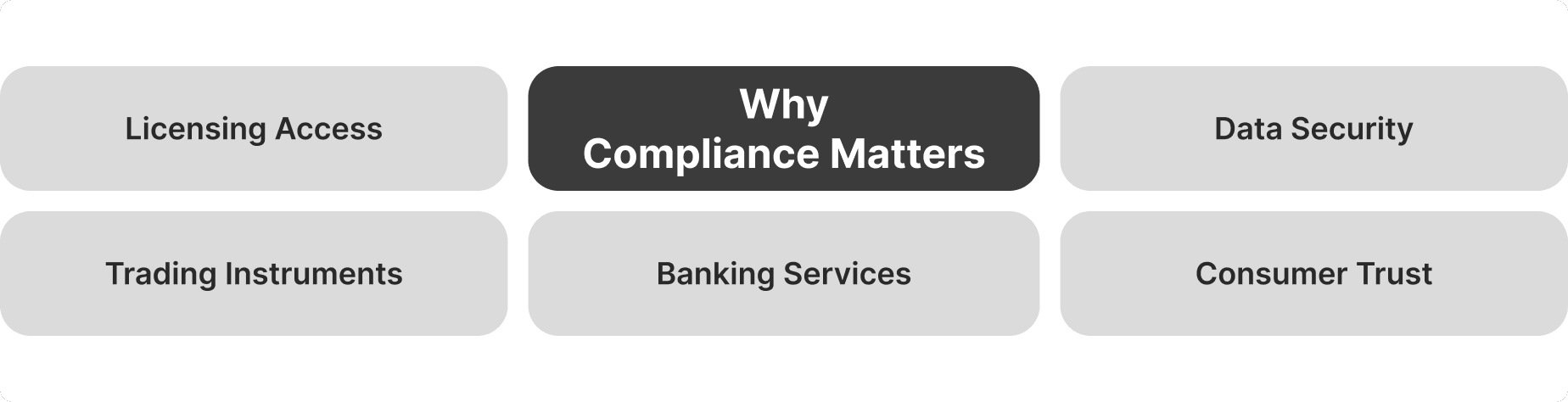
Compliance acts as the gatekeeper to institutional-grade market access. Before extending liquidity, credit, or banking services, counterparties consistently evaluate a broker’s ability to monitor trading activity, client friends, and regulatory obligations. Even the most profitable platforms can be denied access if their compliance infrastructure is insufficient.
Brokers must ensure solid integrations with compliance solutions, as weak systems introduce operational risks, including frozen accounts, rejected banking applications, limited liquidity access, and regulatory fines. This includes automation and manual workflows, which must be fine-tuned to meet changing rules and market conditions.
Ideally, brokers must prove robust compliance platforms that demonstrate audit-ready documentation, real-time trade surveillance, complete data traceability, and consistent reporting.
B2BROKER embeds compliance into brokerage solutions from the get-go, as a key enabler to grow confidently across markets and scale trading volume without regulatory hinders.
Get Compliance-Ready Solutions
Build and customize a fully compliant multi-asset brokerage platform in a few days.
The Regulatory Reality for Multi-Asset Brokers
Multi-asset brokers operate within overlapping regulatory frameworks shaped by license jurisdiction, client location, and traded instruments. A single brokerage may simultaneously face obligations under SEC or FINRA rules, MiFID II requirements, offshore regulatory standards, and evolving virtual-asset guidelines.
These regulations intersect and evolve, creating complexity that manual management styles cannot effectively navigate. Therefore, compliance solutions must unify these frameworks into a single operational layer, ensuring consistent oversight of FX, equity, commodity, and crypto trading across multiple regions.
Deep, Reliable Liquidity Across 10 Major Asset Classes
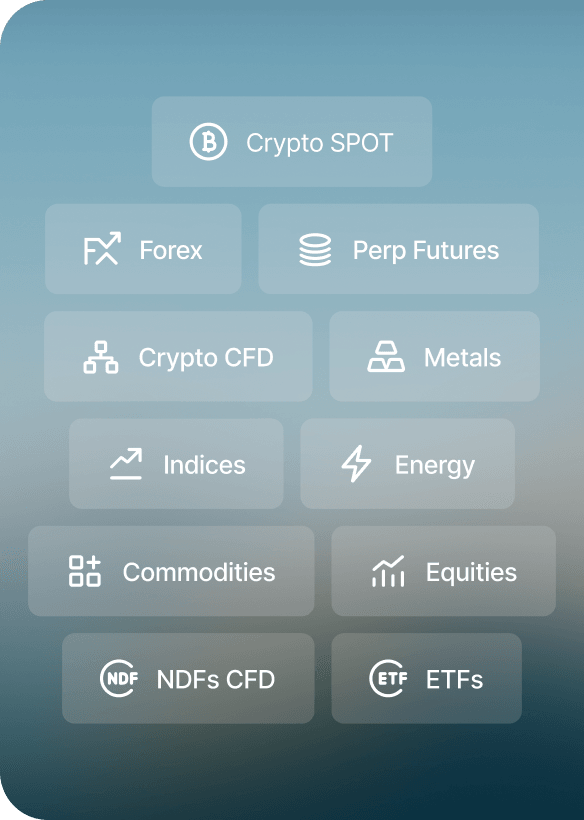
FX, Crypto, Commodities, Indices & More from One Single Margin Account
Tight Spreads and Ultra-Low Latency Execution
Seamless API Integration with Your Trading Platform
Core Regulatory Obligations Compliance Software Must Support
Before evaluating advanced features, brokers should confirm the core functions of a compliance solution provider to offer the following:
- Record creation, retention, and retrieval across mandated timeframes and instruments.
- Trade supervision and surveillance to detect abuse, manipulation, and execution issues.
- Transaction and regulatory reporting aligned with jurisdictional requirements and anti-money laundering protocols.
- Client due diligence and ongoing monitoring to avoid onboarding sanctioned personnel and detect suspicious behavior.
- Crypto-specific and virtual-asset controls to monitor wallet activities, suspicious blockchain transactions, and unauthorized access.
This checklist establishes the minimum viability requirements a broker must ensure in a compliance partner. Failure to align with these expectations can lead to operational and legal risks and penalties.
What Separates Institutional-Grade Compliance Platforms
Compliance solutions vary significantly in maturity, responding to different regulatory objectives and business needs.
For example, entry-level tools often focus on document storage or basic onboarding checks, while institutional-grade platforms are designed for scale, ongoing monitoring, and complex trading environments.
To build your multi-asset brokerage platform, you need a robust compliance support with high-volume data ingestion, real-time monitoring, configurable parameters, and automated reporting per asset/region. This infrastructure can withstand regulatory challenges and adapt to evolving regulations.
Get an Institutional-Grade Infrastructure
See how our brokerage solutions enable you to build & grow a trading platform more effectively
Trade Surveillance, Best Execution, and Risk Monitoring
Trade surveillance is the continuous monitoring of order flow, from submission to execution and settlement. Overseeing this process helps identify manipulation, abusive trading practices, and execution anomalies.
Best execution requirements mandate brokers to demonstrate that client orders receive fair pricing and appropriate routing decisions, which may include smart order routing, multi-source execution, and diverse liquidity pools.
Institutional trading platforms rely on real-time trading data, customizable monitoring rules, automated actions, and detailed execution reports to comply with financial authorities and ensure complete transparency. In contrast, manual surveillance or reactive systems increase exposure to regulatory findings, client disputes, and reputational damage, especially during volatile market conditions.
Record-Keeping, Archiving, and Communications Capture
Regulators expect brokers to maintain complete, immutable records and to retrieve specific data quickly and accurately during audits, compliance reviews, or investigations. These requirements may include simply trade trails and activity logs, or extend to client documentation, order lifecycle data, internal decision records, and communications across channels.
Brokers who do not have sufficient systems to produce these files within the required timeframes or formats may be subject to fines and regulatory penalties.
Therefore, platforms need an effective compliance solution that centralizes record-keeping across trading systems and client records, emails, chat messages, and voice communications in tamper-proof formats. This approach transforms compliance from a reactive process to a continuous state of audit readiness that reduces disruption and regulatory exposure.
Client Due Diligence and Ongoing Monitoring
Client verification is another operational requirement that is core to financial services and trading platforms. Regulators expect brokers to identify patterns in client behavior, risk profiles, ownership structure, or operational changes that require new compliance training or supervisory procedures.
As such, static checks conducted during registration are insufficient, and brokers must ensure ongoing attestation.
Modern platforms now support automated identity verification, risk scoring, PEP screening, and continuous transaction monitoring. Regulators also oversee the thresholds set by brokers, which trigger alerts on unusual behavior or breaches, allowing compliance teams to investigate and escalate matters within norms.
It gets even more complex when offering cryptocurrencies due to more advanced monitoring laws. Brokers must ensure ongoing screening for blockchain wallets, jurisdiction-specific virtual assets, custody over crypto coins, and cybersecurity measures.
Therefore, automation plays a critical role in reducing onboarding friction and streamlining regulatory frameworks across multiple jurisdictions.
Discover how institutions are embracing crypto in 2026. Learn key drivers, trends, and strategies shaping global institutional crypto adoption.
Reporting, Dashboards, and Compliance Visibility
Financial authorities often require platforms to centralize all compliance needs, including alert triggers, case investigations, filing deadlines, and supervisory actions within one layer to simplify traceability. Brokers can also embed automation to avoid missed submissions or delayed responses.
Advanced compliance solutions provide streamlined regulatory reporting within one dashboard that offers immediate data access, real-time tracking, and direct communication with authorities. Not only does this transparency adhere to regulatory frameworks, but it also boosts trust among banking institutions, hedge funds, liquidity partners, and other vendors.
Integration Is the Make-or-Break Factor
Compliance systems only make sense when they can integrate smoothly into the brokerage infrastructure. Connecting a solution means seamless operations with trading platforms, execution engines, CRMs, and the traders’ portal. Otherwise, brokers would add another layer of manual workflow and operational gaps.
Batch uploads, manual exports, or partial connectivity often work well for small-scale platforms, but they can escalate much faster during market stress events or increasing trading volume, amplifying these gaps.
Therefore, institutional-grade solutions are best suited for tested, real-time integrations that capture the full trade and client lifecycle, reliable order filling, and rapid aggregation of prices and instruments.
A Step-by-Step Framework to Evaluate Compliance Vendors
Brokers that rush into selecting a compliance vendor risk working with disconnected systems that expose them to regulatory and reputational damage. Each step in this assessment validates whether the platform can serve as long-term infrastructure rather than a one-time solution.
Map Regulatory Obligations to Operational Scope
Start by aligning regulatory requirements with your business objectives, including needed licenses, jurisdictional obligations, and client onboarding verifications. You need a compliance solution that can customize compliance tools to your specific requirements.
Validate Data Ingestion and Scalability
Assess the provider’s processes of data ingestion, API architecture, trading system integrations, and risk management. Ensure that the platform maintains performance during peak volumes without latency, and scale effortlessly alongside reporting, monitoring, and auditing tools.
Test Integrations with Core Systems
Ensure complete data synchronization when integrating trading platforms, CRMs, back-office systems, and data archives. Otherwise, weak connections lead to delayed surveillance and response to audit requests.
Review Vendor Support Commitments and Roadmap
Compliance services must respond rapidly to evolving regulations, and the providers must demonstrate ongoing updates, clear accountability, and a forward-looking roadmap.
Model Total Cost of Ownership Over Time
After assessing the technical capabilities, evaluate long-term costs, including storage, retention, integrations, and consulting services. Keep in mind that compliance management is an ongoing process, and you need a long-term commitment.
Measuring ROI and Risk Reduction
Compliance investments should be justified against operational and regulatory risks. Brokers can quantify value through the following:
- Reductions in manual audit preparation time and confirmations.
- Fewer reported errors, regulatory findings, or disciplinary actions.
- Less manual intervention for routine work and more in value-focused activities that involve stakeholders.
Establishing baseline metrics before implementation allows brokers to measure improvements more accurately, especially when scaling to new markets or asset classes.
Common Red Flags When Comparing Compliance Solutions
When selecting the right solution provider, brokers need to compare key aspects that can make or break the partner’s proposition. These include:
- Reliance on manual updates or custom scripting — They become difficult to scale and are more prone to human errors.
- Unclear automation without explainability — Brokers struggle to explain them to regulators or configure them when laws change.
- Storage fees that compound over retention periods — Cost becomes a hindrance for growing brokers, providing only short-run value.
- Proprietary data formats that limit portability — Lead to less compatibility with partners and jurisdictions, and potential conflicts of interest.
Identifying these gaps early prevents costly changes later, reduces regulatory risks, and ensures a scalable infrastructure that grows with the broker.
Choosing a Compliance Partner That Supports Long-Term Growth
Compliance solutions are part of the broker’s tech stack that empowers platforms to perform efficiently and scale effectively. They are strategic partnerships that facilitate market access, support legal activities, and boost institutional credibility.
What brokers can do now is document compliance gaps, define evaluation criteria, compare providers, request demos, run proof-of-concept testing, and plan phased rollouts.
B2BROKER supports these activities in an end-to-end brokerage solution that features multi-jurisdiction compliance modules, pre-integrated payment gateways, and access to deep liquidity pools. This is the perfect tech stack that ensures long-term operation and full compliance with evolving regulatory requirements.
Is Your Platform Compliance-Ready?
Get a full compliance check by our market specialists and launch with institutional-grade infrastructure
Frequently Asked Questions About Brokerage Compliance
- What is broker compliance?
Broker compliance refers to the systems, controls, and processes that ensure a brokerage meets regulatory obligations across trading, client onboarding, and reporting. This includes record-keeping, trade surveillance, customer verification, and ongoing monitoring required by regulators in each jurisdiction where the broker operates.
- What are the most important compliance requirements for brokers today?
While requirements vary by region, most brokers must support reliable record retention, real-time trade supervision, client due diligence, and timely regulatory reporting. Brokers operating across multiple asset classes or jurisdictions also need unified systems that handle overlapping rules without manual intervention.
- What should brokers look for in compliance software?
Brokers should prioritize regulatory coverage that matches their licenses, direct integration with trading and client systems, and automation that reduces manual effort. The best platforms also provide clear audit trails, explainable alerts, and predictable long-term costs.
- Can one compliance platform support both FX and crypto activity?
Yes. Institutional-grade compliance platforms are designed to support multiple asset classes within a single system. This allows brokers to manage traditional trading oversight alongside crypto-specific monitoring and reporting without maintaining separate tools.
- How long does it take to implement compliance software for a brokerage?
Implementation typically takes several weeks to a few months, depending on system complexity and data volume. Most brokers benefit from a phased rollout that prioritizes high-risk areas first while integrations and workflows are finalized.
- Does compliance software replace in-house compliance teams?
No. Compliance software automates data collection, monitoring, and reporting, but human oversight remains essential. Most brokerages use these platforms to reduce manual workload and allow compliance officers to focus on review, judgment, and regulatory coordination.