B2CORE vs BrokerIQ: Which Forex CRM Fits Your Broker?


When a brokerage scales into new markets, the back office usually fragments first: onboarding lives in one system, KYC in another, payments and IB commissions in their own tools. Financial firms now spend close to 16% of their operational budgets correcting issues caused by manual processes.
Both products on a B2CORE vs BrokerIQ shortlist answer fragmentation the same way, with a full broker CRM. They differ in who supplies the stack around it: B2BROKER builds the trading platform, the liquidity, and the copy trading itself, while TradeCore integrates those layers from specialist vendors.
This guide compares the two on what each vendor supplies, three-year cost, compliance depth, and migration risk.
Key Takeaways
- B2CORE and BrokerIQ both run the operational back office: onboarding, KYC, trading accounts, payments, and IB commissions live inside either one.
- The real difference is stack ownership: B2BROKER builds those surrounding layers itself, while TradeCore connects eight third-party platforms and outside liquidity.
- Compare three-year total cost of ownership across every vendor each model requires.
- Regulated brokers should test both against continuous KYC, cloud outsourcing oversight, and exit planning.
- A broker with settled platform and liquidity relationships gets more from the integrator model, while a broker building the whole operation works with fewer counterparties under the single-vendor one.
Why Brokers Are Comparing B2CORE and BrokerIQ
Brokers arrive at this comparison from two directions. Some license DXtrade and are offered BrokerIQ as the CRM that ships with it . Others watch onboarding, payments, and IB accounting drift into separate tools, then go looking for one system that holds all three.
Both routes end at the same question: how many vendors do you want standing behind the operation? Software directory pages cannot answer it, because their grid of star ratings and price tiers has no column for who supplies your trading server or your liquidity.
A stack map can. List every layer you run, from the trading server to the payout rail, then mark the layers you would contract for separately.
What B2CORE Delivers as a Full Back-Office CRM
B2CORE works as a trader's room and back office rather than a generic sales CRM: client records, compliance evidence, and client funds all run through one control layer.
Your team runs the whole client lifecycle from one dashboard, where permissions stay consistent and every action B2CORE handles is recorded in one audit trail. Clients work in the same client cabinet on the web and in mobile applications for iOS and Android, with multilingual support built in.
Client Lifecycle Coverage from Onboarding to IB Payouts
One system owns the client journey from registration to the commission owed to the partner who referred that client.
Role-based approvals and live status visibility put a stalled KYC check or a stuck withdrawal in front of your operations team before it turns into a client complaint.
IB management sits in that same back office. B2CORE runs infinity-level introducing broker (IB) referral programs with configurable commission plans and automated payouts calculated from actual trading volume, so launching an IB program is a configuration task in the back office.
Native Trading, Liquidity, and Payments Integrations
B2CORE ships with native connections to MetaTrader 4 and 5, cTrader, and B2BROKER's own B2TRADER platform. KYC providers such as SumSub, ShuftiPro, and iDenfy plug into the same onboarding flow, and payment service providers (PSPs) such as PayPal feed the same funding pipeline.
The B2TRADER connection is the one that marks the difference: platform, liquidity feed, and CRM come from the same vendor, so a fault anywhere on that path has one owner.
What BrokerIQ Delivers as a Broker CRM
BrokerIQ covers the same operational ground by a different route. TradeCore built a broker CRM first, then connected it to infrastructure from specialist vendors.
TradeCore documents that reach in detail:
- eight trading platforms , from MT4 and MT5 to DXtrade and TraderEvolution, with account provisioning and leverage changes made from the CRM
- more than 100 payment providers, with multi-stage withdrawal approval and internal transfers between wallets
- five KYC and AML providers, with per-jurisdiction rules and a logged audit trail
What TradeCore does not sell is the infrastructure underneath. Liquidity comes from your own counterparties. The trading server comes from Devexperts or MetaQuotes, and copy trading and PAMM come from Brokeree or Pelican.
That model fits a broker who already holds those relationships and wants to pick each layer independently. It also means the platform, the liquidity, and the copy-trading layers each arrive with a separate contract and a separate support desk.
Stack Comparison: What Each Vendor Supplies
Weighing B2CORE vs BrokerIQ comes down to how much of the stack arrives from one company.
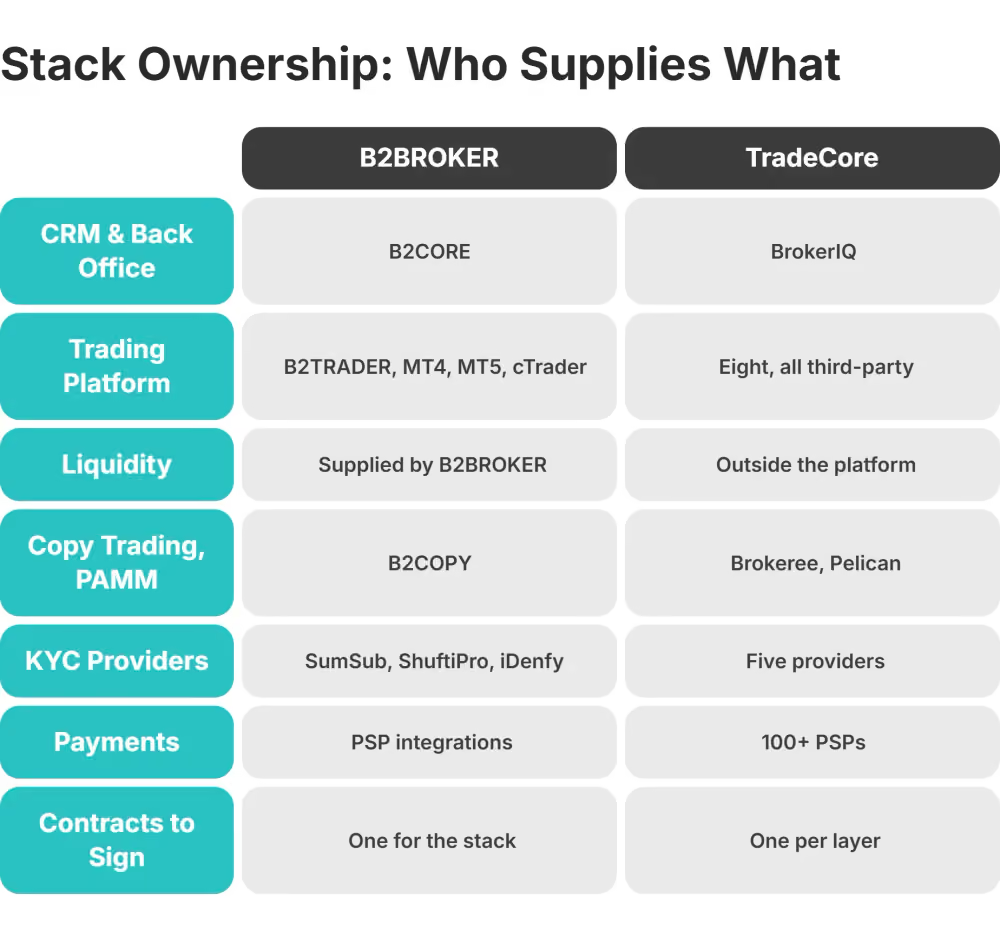
A broker that already runs its own platform and liquidity relationships can add BrokerIQ above them and keep those contracts untouched. A broker building or consolidating the whole operation can put more of the core stack under one commercial relationship.
Total Cost of Ownership: One Vendor for the Stack vs One per Layer
The license price is one line in a three-year cost model.
Model all three years and put every line in it:
- implementation and integration work, including middleware between systems
- internal engineering and vendor-management time once connectors are live
- upgrades, support, and compliance testing across the term
- the migration or exit cost at the end
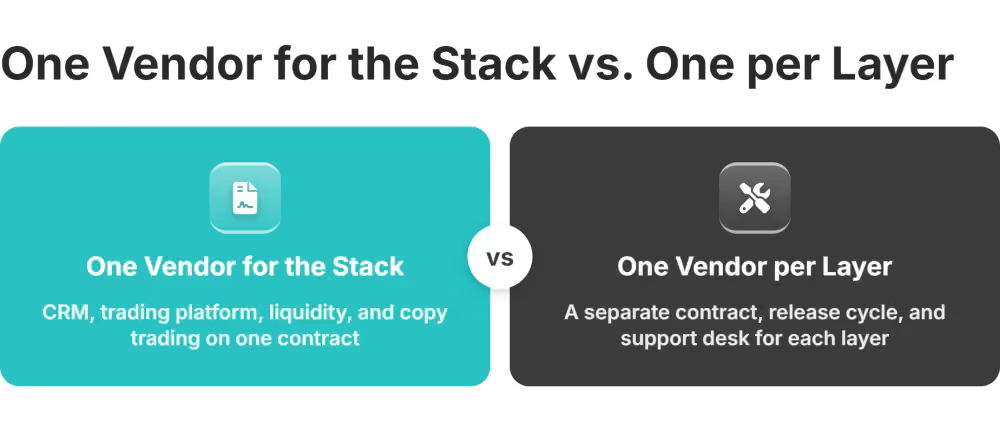
The seams between vendors are where those cost lines turn into daily work. Manual intervention and poor system integration already account for 44% of reconciliation mistakes . When the CRM, the platform, and the liquidity come from different vendors, name the party that fixes a cross-system break in the contracts, before the first incident finds it for you.
A ten-point framework for evaluating a forex CRM turns this into a checklist you can run against any vendor pair, with every assumption written down and any price you cannot verify marked as unknown.
Regulatory and Compliance Depth as a Selection Criterion
Compliance depth goes past KYC/AML onboarding checks. A supervisor also asks who can reach client data, which vendors sit behind the platform, and what happens to records when a system fails.
Ask which risk management controls come embedded and which need an external provider. Built-in, auditable ones cut the evidence-gathering work a regulated broker repeats at every review.
ESMA Cloud Outsourcing Expectations
For cloud-hosted brokerage systems, base vendor due diligence on the ESMA cloud outsourcing guidelines , which cover data protection, audit rights, concentration risk, and a documented, tested exit plan.
Turn those expectations into RFP questions before you shortlist:
- who the subcontractors are and where client data resides
- what audit evidence the vendor produces and how it reports incidents
- whether data is portable and the exit procedure has been tested in practice
Concentration risk cuts both ways here. Consolidating the core stack shortens the audit list and the escalation path, and it also leaves your operation leaning on one relationship it cannot unwind quickly.
Continuous KYC and CDD Automation
KYC and customer due diligence continue after the first verification, because client risk keeps changing while the account is live.
Evaluate how each platform runs that monitoring, including case management, rescreening, and the record each decision leaves. The triggers below must fire automatically, since a missed one becomes a finding at the next audit:
- sanctions-list changes and document expiry
- unusual account activity and beneficial-ownership updates
- jurisdiction changes and scheduled periodic risk reviews
Ecosystem Integration and Platform Velocity
Integration counts matter less than how quickly a decision becomes a live change, which depends on how much of the work is configuration.
Inside a turnkey stack , the CRM is where those changes get made. Adding a payment provider is a back-office task: you create the deposit method in B2CORE, enter the provider's API keys, and clients see the new option in their cabinet. Deposits land against the client records your finance team already reconciles, with no CSV pulled from a provider portal to match by hand.
Adding a liquidity provider follows the same path. The feed reaches B2TRADER, the fills return to B2CORE as trades on the client's account, and B2COPY layers copy trading with PAMM and MAM structures on top of those same accounts.
Outside its own products, B2CORE connects the tools your teams already run. The v21 release added Salesforce, SendGrid, and Zendesk, so leads, campaign email, and support tickets all read from one client record. As vendors put AI behind those workflows, check the claims against the WEF's governance principles for AI in financial services before the automation reaches client data.
Switching Considerations for Brokers Changing Systems
Migration risk comes from operational dependencies. You can put the record copy on a schedule, but deciding which system owns a client's KYC evidence after cutover has to happen before anything moves.
Build the move around a checklist:
- data ownership, field mappings, and the KYC evidence attached to each client record
- account links, balances, and IB hierarchies that must survive the move intact
- existing integrations, parallel testing, staff training, and a rollback path
Define acceptance criteria before cutover: reconcile the totals, verify that permissions map to the same roles, and confirm that payments run without a pause. One named party owns every incident through the post-launch period.
Choosing the Right Infrastructure Partner for Your Brokerage's Next Stage
Choose by how much of the stack you want one company to own, and by the next stage your brokerage is entering.
The platform you pick now decides how much engineering each new asset class costs you later, and how quickly you can produce control evidence when a regulator asks. In the B2CORE vs BrokerIQ decision, test both against the asset classes you plan to add and the providers you plan to work with.
Run the same scoped technical review with both vendors, and ask each who answers when an incident crosses from the CRM into the trading platform. B2BROKER answers for that whole path itself, having built this infrastructure since 2014, helped launch more than 500 brokers, and served more than 1,000 corporate clients on it.
If you are weighing one vendor against several, start by pricing the layers you would be sourcing yourself.
Frequently Asked Questions about B2CORE and BrokerIQ
What is the main difference between B2CORE and BrokerIQ?
Both are full broker CRMs. B2CORE comes from a vendor that also supplies the trading platform, the liquidity, and the copy trading, while BrokerIQ integrates those layers from third parties.
Which brokers should choose B2CORE over BrokerIQ?
B2CORE fits brokers building or consolidating a whole operation, who want one commercial relationship across the trading stack. A broker with settled platform and liquidity relationships can keep them and add a CRM above.
How do B2CORE and BrokerIQ compare on integrations?
Both connect widely to outside services, and the documented lists are comparable: trading platforms, KYC providers, payment gateways, and business tools on either side. The difference is that B2BROKER also builds a trading platform, liquidity, and copy trading of its own.
How should brokers compare B2CORE and BrokerIQ costs?
Compare three-year total cost of ownership, counting implementation, integrations, maintenance, and every vendor each model requires.
What should brokers assess before choosing B2CORE or BrokerIQ?
Map both platforms against your required workflows, from continuous KYC and account provisioning to IB commissions and exit planning, then validate migration controls and support levels with each vendor against the same requirements.
Recommended articles
Subscribe to our newsletter