Crypto Market Making: The Types, Models, and Strategies

Institutional demand is reshaping today's digital asset markets. BlackRock reported significant increases in inflows to its crypto funds, a scale of activity that requires continuous liquidity and reliable execution.
As capital enters the market at this pace, exchanges and brokers depend on professional market makers to keep order books deep and trading conditions stable. These firms quote live buy and sell prices and support fair price discovery in a high-volatility environment.
This guide explains how crypto market making works, the models behind different strategies, and how institutions evaluate liquidity partners.
Key Takeaways
- Crypto market makers provide continuous buy and sell quotes, ensuring liquidity and reducing volatility for exchanges and traders.
- Institutional players rely on market makers to execute large orders with minimal slippage and predictable spreads.
- CEX market making focuses on order book depth, while DEX strategies revolve around AMM pools and yield optimization.
- Advanced market making requires low-latency infrastructure, automated hedging algorithms, and multi-venue connectivity to manage risk 24/7.
What Is Crypto Market Making and Why Does It Matter?
Crypto market making is the practice of continuously quoting both bid and ask prices so that other participants can buy or sell at any moment without distorting the price. A market maker stands ready with capital to absorb and redirect order flow.
In practical terms, this means the firm keeps limit orders in the book on both sides of the market and refreshes them as conditions change. It updates prices when volatility rises, when order flow becomes one-sided, or when inventory drifts away from target levels.
Why Market Making Matters for Professional Markets
For exchanges, a professional market maker is a structural requirement. Stable two-sided quotes improve depth near the mid price, which reduces slippage for takers, supports higher turnover, and makes the venue more attractive for new listings and institutional flow.
Brokers and trading platforms benefit in a similar way. When an underlying venue or dedicated market maker provides reliable liquidity, client orders fill closer to displayed prices, and spread metrics look consistent over time. This supports tighter routing policies and more predictable risk profiles.
Institutional traders and funds rely on market makers to handle large tickets without revealing intent. A good market maker can route and hedge exposure across multiple venues, smoothing the impact of large orders.
Market Making vs Liquidity Providing
MM and LP are often mixed together because both aim to make trading more efficient. However, liquidity provision works differently. Let’s review.
Liquidity providers work by supplying pools and venues where a certain asset or multiple assets are highly available. Centralised bridges connect brokers with investment banks and financial corporations. On the other hand, decentralised liquidity involves DeFi pools and yield farms connecting exchanges and providing access to currency pairs.
Market making entails actively buying and selling one or multiple assets by taking one side of the trade. This process increases pending trades in order books and makes transactions faster with minimum price changes.
Scale Your Market Making Infrastructure
Access our aggregated liquidity and advanced order routing to keep your spreads tight and your execution reliable.
Who Benefits from Crypto Market Makers?
Crypto market makers strengthen the digital asset ecosystem. Their activity influences every participant that depends on predictable market behavior and reliable access to liquidity.
Exchanges
Exchanges rely on market makers to maintain active order books and smooth price discovery. When quotes refresh quickly and depth stays consistent, venues attract more trading flow and reduce the risk of erratic price moves during high activity periods or new listings.
Market makers help exchanges by:
- Increasing visible liquidity near the mid price
- Supporting continuous execution even during volatile sessions
- Improving the overall quality of the order book
Brokers and Trading Platforms
Brokers benefit from stable spreads and consistent execution quality. Client orders fill closer to quoted prices, and slippage metrics become more predictable, which improves routing policies and enhances the user experience on trading platforms.
A strong market maker allows brokers to support higher volumes, manage exposure with more precision, and maintain performance across multiple asset classes or liquidity venues.
Institutional Traders and Funds
Large traders depend on market makers to handle size without revealing intent. A professional market maker can work multi-venue flows, manage inventory, and hedge exposure to contain impact costs. This gives institutions confidence that execution aligns with benchmarks and internal risk parameters.
Token Issuers and Listing Projects
Token teams sometimes rely on crypto market makers during and after exchange listings. Continuous quoting helps support orderly trading, reduce excessive volatility, and encourage participation from early investors. Healthy price formation strengthens credibility and long-term engagement within the project’s market.
How Does Crypto Market Making Work?
In crypto, market makers connect to multiple venues and hedge exposure so that clients see stable prices and consistent execution throughout the trading day.
Technology and Liquidity Management
Professional market makers rely on low-latency infrastructure, co-located servers, and optimized connectivity to major exchanges and OTC desks. Their systems ingest order book data, trades, and funding information, then recalculate fair value and target quotes many times per second.
Behind this sits a stack that usually includes an OMS, smart order routing, risk engines, and inventory management. These components decide where to place or cancel orders, what size to show, and when to hedge on another venue. As a result, the client’s liquidity stays stable even when conditions change quickly.
Launch your own Liquidity Business – Turnkey Solution
Ready-to-Go Setup with Technology, Licenses & Connections
Access to Deep Multi-Asset PoP Liquidity Pools
Built-In Risk Management and Reporting Systems
Bid-Ask Spread Optimization
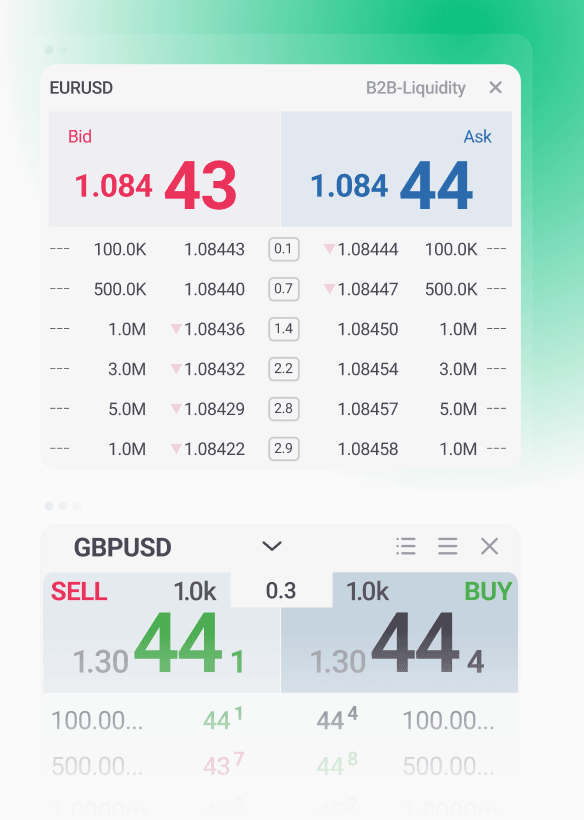
Spread settings are a core control. The market maker adjusts the distance between bid and ask based on volatility, current depth, and the direction of recent order flow. Wider spreads protect against sudden moves. Tighter spreads improve competitiveness and fill rates.
Key inputs include:
- Short-term volatility and recent trading ranges
- Imbalances between buy and sell interest
- Current inventory versus target levels
The firm updates these parameters intraday so that quotes remain attractive without taking on unplanned risk.
Automated Market Making Bots
Most modern operations run on automated strategies rather than manual clicks. Bots update quotes and trigger hedges according to predefined models. They can support approaches such as grid style quoting, statistical arbitrage, or simple mean reversion around a reference price.
Automation delivers consistent behavior and 24/7 coverage. Human teams focus on model design, risk limits, and oversight, while the bots execute the day-to-day mechanics of providing liquidity at scale.
The Need for Market Makers in Cryptocurrency Exchanges
For any crypto exchange, liquidity is a core product feature. Order types, UX, and marketing matter less if clients cannot enter and exit positions at reasonable sizes and prices.
From a business perspective, market makers are also partners in growth. Their presence supports listing pipelines, institutional onboarding, and market-making programs that reward stable quoting behavior. Over time, this can lift overall turnover and make the venue more attractive for professional traders and liquidity routing from brokers.
- Improving liquidity: Market makers add buy and sell interest, which keeps order books active.
- Reducing volatility: By absorbing short-term imbalances in order flow, they limit sharp swings and provide a more stable trading environment.
- Better price discovery: Consistent quoting supports tighter spreads and quicker execution. It also helps the market converge toward a fair price, especially during news-driven movements.
- Income generation: Market makers earn revenue from spreads and incentives tied to activity thresholds. This creates a sustainable way to support liquidity without relying on temporary subsidies.
- Attracting more users: A liquid market draws active traders, institutional desks, and token issuers. As participation increases, the exchange improves its reputation and strengthens its position in the broader ecosystem.
- Supporting new listings: Newly listed assets often lack natural liquidity. Market makers help stabilize early trading, which prevents disorderly pricing and encourages organic participation from early investors.
Types of Market Makers
Crypto markets rely on different categories of market makers that operate with distinct mandates and capital structures. Understanding who sits on the other side of your flow helps you judge liquidity quality.
Institutional Market Makers (IMMs)
Institutional market makers are highly capitalized trading firms or banks that run multi-venue strategies. They connect to major exchanges, using advanced pricing models and low-latency infrastructure to stream quotes at scale.
These firms often support the most liquid pairs, provide block liquidity for institutions, and commit to service level targets on spreads and quote continuity. IMMs are usually the primary source of resilient, high-quality liquidity.
Brokerage Companies
Some brokerages run internal market-making to support their own client flow. They quote prices to retail and professional traders and manage exposure through hedging with upstream liquidity providers or on external venues.
When executed well, this model improves control over execution quality and allows brokers to tailor pricing and routing policies to their business objectives.
Dealing Centers
Dealing centers operate in more closed or semi-closed environments. They often internalize client trades, match opposing orders, and only send residual exposure to external markets. In this setup, the dealing desk effectively acts as the market maker for its clients.
This structure concentrates risk management and execution decisions inside the firm, so governance, transparency, and monitoring become critical for maintaining fair trading conditions.
Investment Funds
Certain hedge funds and proprietary trading firms add market-making as an additional revenue stream. They use quantitative strategies and proprietary capital to quote selected pairs, capture spreads, and monetize their infrastructure and research capabilities.
Private Investors
Skilled individual traders and small proprietary teams can run niche market-making strategies on specific pairs or venues. They usually rely on automated tools and operate on a limited scale, but still add incremental liquidity in focused segments of the market.
Crypto Market Making Models
Business models of crypto market makers depend on venue structure, technology stack, and commercial agreements. Вelow we look at three key dimensions that define how market making is organized in crypto markets.
Centralised vs Decentralised
On centralized exchanges, market makers quote directly into an order book. They send and cancel limit orders through APIs, monitor depth and trades, and adjust prices in response to incoming flow. Their objective is to keep spreads competitive while maintaining controlled inventory exposure.
In this environment, the market maker decides how much size to show, how far from the mid price to quote, and when to hedge on another venue or derivative market. Execution is discrete. Each order has an explicit price and quantity, and matching follows exchange rules.
In decentralized finance, liquidity often comes from liquidity pools rather than traditional order books. Automated market maker (AMM), special smart contract protocols, hold token pairs and set prices according to certain formulas as liquidity moves in or out. Market makers can seed or manage these pools, but price adjustment follows the smart contract logic.
Centralized models focus on quote placement and response speed. Decentralized models focus on pool composition, fee levels, and exposure to impermanent loss or protocol risk.
Manual vs Algorithmic
Manual market making uses trader judgment to steer quoting and hedging decisions. It fits slower markets where human oversight adds value and where trading conditions allow for deliberate adjustments. The approach depends on experience and constant attention.
Algorithmic market making automates most of this work. Models read market data, calculate fair value, determine where to quote, and adjust exposure throughout the day. Once configured, these systems operate continuously and handle fluctuations with consistency that manual workflows cannot match.
Human teams oversee the process, refine parameters, and review outcomes. The system handles execution.
Designated vs Principal
Designated market makers support an asset under a formal agreement. The exchange or issuer defines obligations such as minimum quote size or maximum spreads. In return, the market maker receives incentives that align performance with the venue’s objectives.
Principal market makers operate independently. They choose the markets they support, deploy their own capital, and follow internal models rather than external commitments. Their focus is commercial viability and the ability to maintain liquidity on terms they control.
Designated roles provide structure and measurable obligations. Principal models offer flexibility and innovation but require more careful evaluation of behavior, resilience, and balance sheet strength.
How to Choose a Crypto Market Maker
Selecting a market maker is a strategic decision. The partner you choose will shape how clients experience execution and how resilient your venue or brokerage feels during stress.
1. Assess Liquidity Depth
Start with what you actually see in the market. Review average quote sizes near the mid price, typical spreads during active and quiet periods, and how often quotes remain actionable. Ask for hard data.
A serious market maker can show venue-specific reports with uptime targets, quote refresh behavior, and maximum spread bands under different conditions. You should also ask how they behave during high volatility and whether they reduce size or pull back fully when risk rises.
Confirm their capital base and how many markets they support today. If possible, test them alongside another provider using a neutral aggregation layer. This helps you benchmark depth, stability, and real execution quality instead of relying on a single data source.
2. Check Risk Management Tools
Look at how the firm manages its own exposure. They should monitor positions in real time, run automated hedging where appropriate, and perform stress tests against extreme but plausible scenarios. These practices protect both their balance sheet and your order flow.
Margin and funding terms also matter. Clarify whether they work on a pre-funded basis or extend credit. Ask how they handle collateral and what rules govern any rehypothecation of your assets. All of this should be documented and easy to understand.
Connect to Any Liquidity Venue
Use B2CONNECT to aggregate, route, and manage liquidity from major exchanges and market makers through a single API.
3. Evaluate Technology Capabilities
A market maker is a technology partner as much as a liquidity provider. Ask how their systems handle load, how they monitor stability, and what happens when an exchange API fails or latency spikes.
Clarify which protocols they support, how they version their APIs, and how often they deploy changes. Request documentation on failover procedures and disaster recovery. A serious firm has playbooks for outages, throttling, and unexpected behavior on connected venues.
Solutions like B2BROKER’s liquidity and B2TRADER execution engine help you test multiple makers in parallel through a single integration.
Power your Brokerage with Next-Gen Multi-Asset & Multi-Market Trading
Advanced Engine Processing 3,000 Requests Per Second
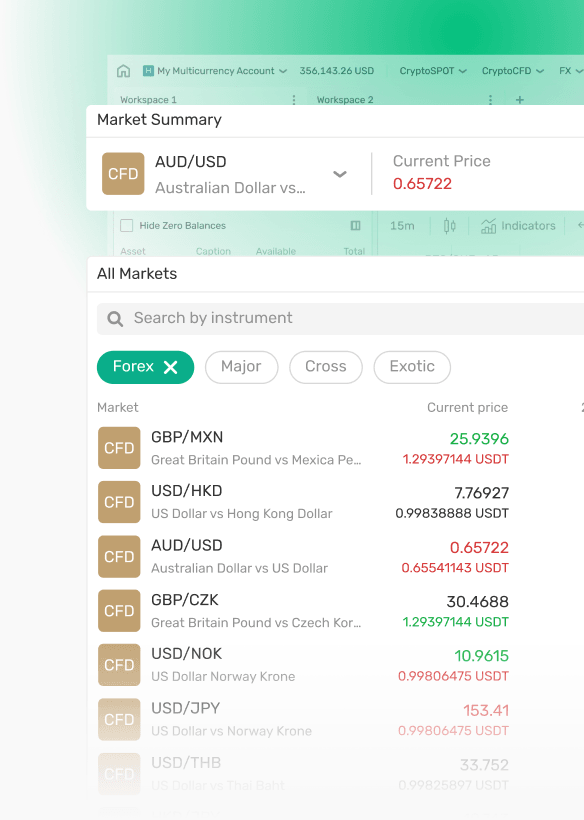
Supports FX, Crypto Spot, CFDs, Perpetual Futures, and More in One Platform
Scalable Architecture Built for High-Volume Trading
4. Verify Regulatory Credentials
Regulatory alignment is a signal of how the firm thinks about risk, client obligations, and long-term relationships. Confirm licensing status in relevant jurisdictions and review any public enforcement actions or sanctions.
Ask for evidence of audits, SOC reports, or equivalent third-party reviews. Clarify how the firm handles information barriers, especially if it trades on a principal basis. You should know who can see your flow, how it is stored, and what restrictions apply to its use.
Insurance coverage also matters. Understand which risks are covered, which venues are in scope, and how claims would work in practice if an incident occurred.
5. Compare Pricing and Transparency
Finally, look at how you will pay for the service and what you receive in return. Transparent pricing structures are easier to manage than opaque blends of fees, spreads, and rebates. Ask for clear schedules and concrete service level commitments.
Reliable providers usually have a visible operating history, their own technology, and teams that understand both trading and engineering. If you want flexibility, consider architectures that allow multiple market makers behind one aggregation layer so you can adjust routing without rebuilding your stack.
The Top Crypto Market Maker Strategies
Three strategies dominate markets today: spread trading, arbitrage, and DeFi liquidity provision.
Spread Trading
Spread trading sits at the heart of most market-making operations. The firm posts both bid and ask prices around a reference level and earns the difference when trades hit either side.
Pricing engines update quotes as volatility, depth, and recent trades change. When activity spikes, spreads often widen to reflect higher risk and faster price moves. When conditions calm, spreads can narrow again to attract more participation and improve turnover.
Arbitrage
Arbitrage strategies focus on price differences between venues or related assets. A market maker might buy a coin on one exchange and sell it on another that trades at a premium. The profit is the gap between the two prices after fees and funding costs.
These opportunities rarely last long, so execution speed and routing logic matter. Automated systems scan order books, funding data, and derivative markets to identify actionable spreads and trigger trades only when the net return exceeds costs and risk thresholds.
DeFi Liquidity
In DeFi, market makers often act as liquidity providers to AMM pools rather than posting orders on an order book. They deposit token pairs into smart contracts that set prices based on a formula and collect a share of trading fees in return.
DeFi liquidity provision extends crypto market making into on-chain environments and connects centralized venues with protocol-based flows. For institutions, it opens a path to support on-chain markets while leveraging the same risk frameworks and governance used in traditional liquidity programs.
Moving Forward with Institutional-Grade Solutions
Crypto venues scale only when their infrastructure maintains stability under real market pressure. Growth slows when internal systems struggle to keep up with increased activity. These issues often appear as soon as new assets are listed or larger clients begin routing flow.
B2BROKER helps exchanges and brokers overcome these constraints with infrastructure built for institutional workloads. The company brings more than 10 years of experience, 10 regulatory licenses, and a network of 500+ financial clients.
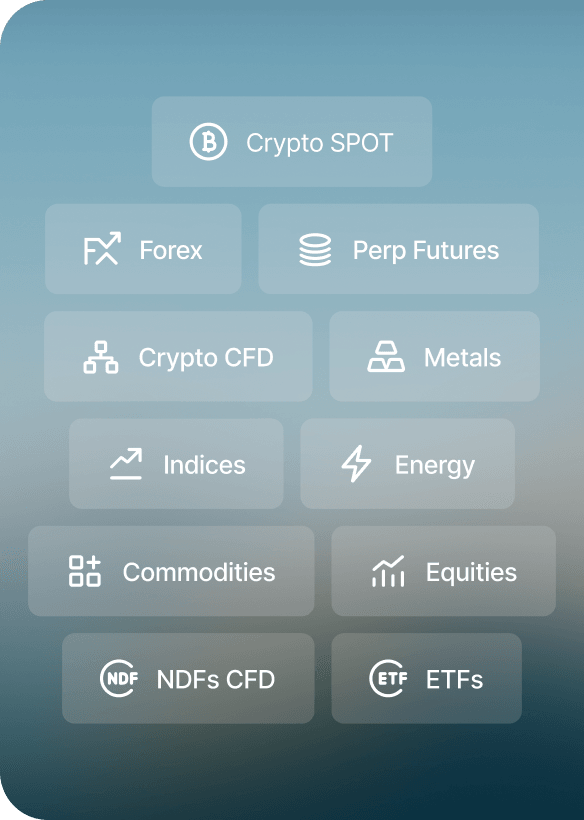
Deep, Reliable Liquidity Across 10 Major Asset Classes
FX, Crypto, Commodities, Indices & More from One Single Margin Account
Tight Spreads and Ultra-Low Latency Execution
Seamless API Integration with Your Trading Platform
Our infrastructure covers the full cycle of institutional trading:
- Liquidity aggregation that connects venues to deep, stable pools across spot, CFDs, and other instruments.
- Trading platforms and matching engines designed for predictable routing, clean fills, and reliable throughput.
- CRM and back-office system that gives operators complete visibility into accounts, reporting, and risk workflows.
- Wallet infrastructure that secures client funds and enables fast internal transfers and settlement.
You can deploy a single module or build a fully integrated stack. In both cases, the goal is the same: reduce operational friction and give your team tools that support growth without adding unnecessary complexity.
If you are preparing to improve your liquidity setup or launch a new trading venue, B2BROKER can help you design and implement an institutional-grade roadmap.
Build Your Liquidity with B2BROKER
Get the complete stack: aggregation, matching engine, and risk management tools to launch your crypto business.
Frequently Asked Questions About Crypto Market Makers
- How do market makers make money?
Most professional firms rely on $1–10 million in working capital, depending on trading pairs and venue requirements. Smaller operations can begin with lower amounts but will be limited in the number of markets they can support.
- Is automated market making legal in all jurisdictions?
Automated market making is permitted in most major markets but must comply with local rules governing licensing, reporting, and market-manipulation safeguards.
- How to become a crypto market maker?
You need to understand local digital asset regulations, secure sufficient capital, build or adopt automated trading tools, and connect to exchanges and compliant liquidity sources, including DeFi pools.
- Can market makers provide liquidity for multiple asset classes beyond cryptocurrencies?
Yes. Many firms now support forex, commodities, and tokenized securities through unified liquidity platforms, enabling exchanges and brokers to diversify product offerings while maintaining consistent execution quality.
Recommended articles