How Liquidity as a Service Works in Crypto Trading

Liquidity is one of the most critical components of crypto trading, and it can be quite complex for new brokers and traditional trading platforms expanding into cryptocurrencies.
Crypto liquidity providers are critical for brokers, exchanges, and multi-asset trading platforms to access reliable execution, stable pricing, and operational scalability with ease.
Liquidity as a service (LaaS) is an infrastructure model that allows crypto businesses to access aggregated liquidity through a single technical and commercial integration. Instead of sourcing prices across multiple venues, maintaining individual relationships, and building execution modules, firms rely on specialized providers for aggregation, routing, and settlement.
In this article, we will explain how the LaaS model works in crypto markets, why it matters for digital asset trading, and how brokers can use it to improve execution quality and risk management.
Key Takeaways
- Liquidity as a service allows crypto businesses to access aggregated liquidity without building or maintaining direct vendor relationships.
- The model shifts liquidity management from a capital-intensive challenge to an infrastructure and provider-selection decision.
- Aggregation, routing logic, and governance play a critical role in execution quality within LaaS setups.
- LaaS models support scalability by enabling growth in volume and asset coverage without infrastructure changes.
Have a Question About Your Brokerage Setup?
Our team is here to guide you — whether you're starting out or expanding.
What Liquidity as a Service Means in Crypto Markets
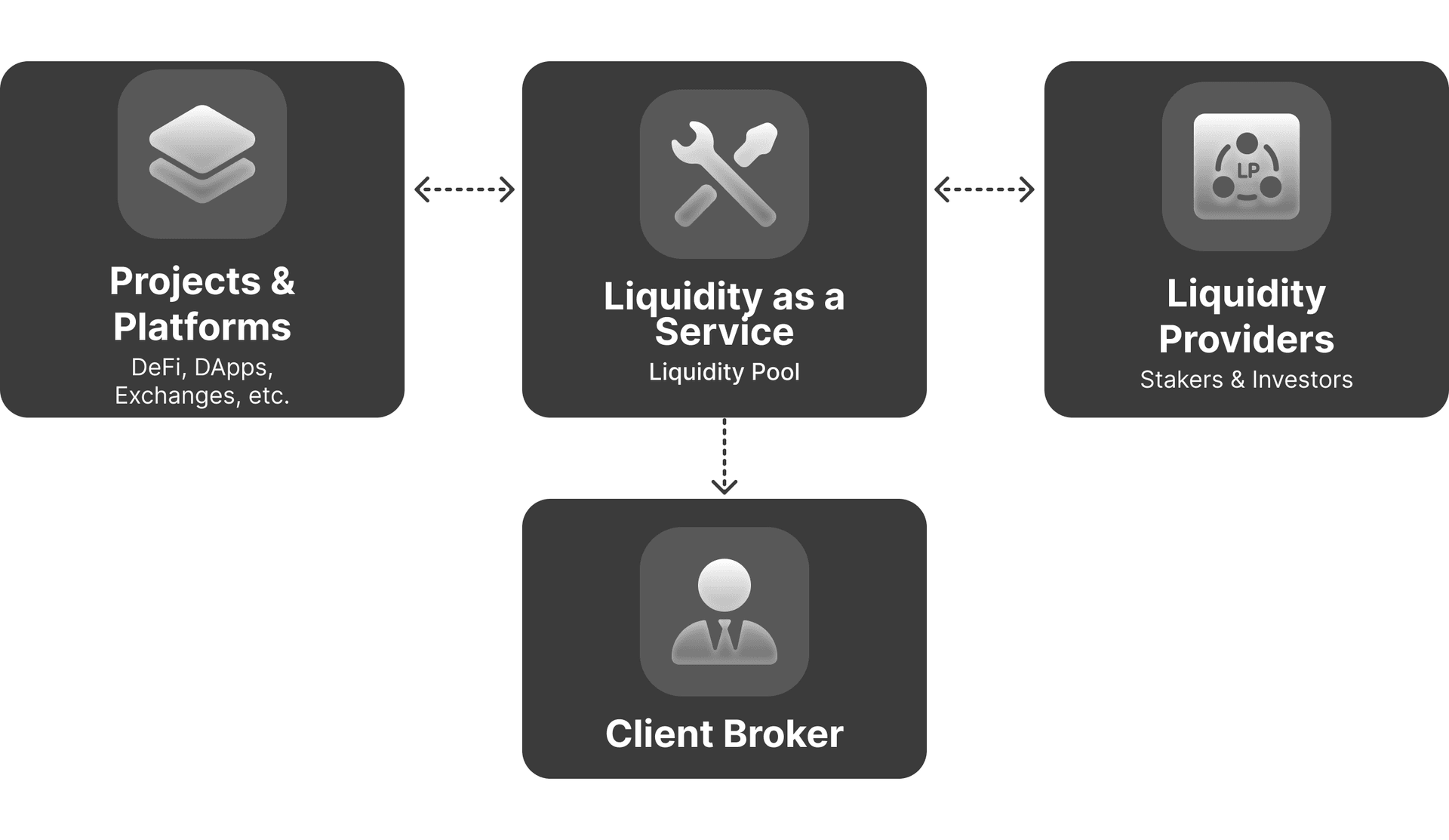
Liquidity as a service refers to a third-party model where liquidity from multiple trading venues is aggregated, standardized, and delivered to brokers and exchanges through a single integration. This centralization replaces siloed connections with exchanges, market makers, trading venues, and other liquidity sources, giving clients a one-stop solution for order routing and execution.
This concept shifts liquidity management away from being a capital-intensive and relationship-based activity to an infrastructure decision. As such, firms no longer need ot negotiate and maintain dozens of liquidity agreements, manage specific APIs, or constantly rebalance exposure across fragmented financial markets.
In other words, the liquidity-as-a-service layer works similarly to outsourcing, where aggregation, routing, and execution logic are managed by a specialized provider. In exchange, brokers gain access to consistent pricing and execution behavior using a much simpler liquidity stack.
Why Liquidity as a Service Matters for Crypto Brokers and Exchanges
Crypto trading operates across hundreds of centralized and decentralized exchanges, blockchains, OTC desks, DeFi projects, and proprietary market makers, and most of them run 24/7 without centralized market opening or closing hours. Therefore, liquidity and counterparty availability become scattered, making volatility spikes more impactful and causing liquidity to disappear erratically.
For brokers and exchanges, managing this environment internally requires constant monitoring, active routing logic, and deep operational expertise.
Additionally, platforms face a dilemma when deciding the range of liquidity connections; connecting with multiple venues improves execution quality but increases complexity and operational risk, while relying on a few providers is simpler but exposes platforms to outages and wider spreads.
Therefore, liquidity as a service addresses these challenges by centralizing liquidity management, where aggregation smooths price discrepancies, routing logic adapts to market conditions, and execution quality improves without keeping dozens of integrations.
How Liquidity as a Service Works in Practice
From a practical perspective, liquidity as a service connects multiple LPs into a single execution solution that feeds pricing and execution to a client’s trading platform.
It works by sourcing quotes from multiple providers, normalizing them into a standardized format, aggregating prices into a unified order book, and deploying executable positions to brokers and exchanges via stable APIs.
As such, when a client submits an order, it is routed according to an algorithm that determines the optimal execution path based on price, depth, and fill probability. The goal is not just to find tight spreads, but to ensure predictable processing outcomes across various market conditions.
Liquidity Sources and Venue Coverage
Providers of liquidity as a service aggregate quotes from a broad range of venues, including centralized exchanges, professional market makers, OTC desks, and internal liquidity pools, and pool them into a single layer.
This eliminates the need to treat each of these providers as standalone choices and combines them into a single ecosystem that can be easily deployed for market participants.
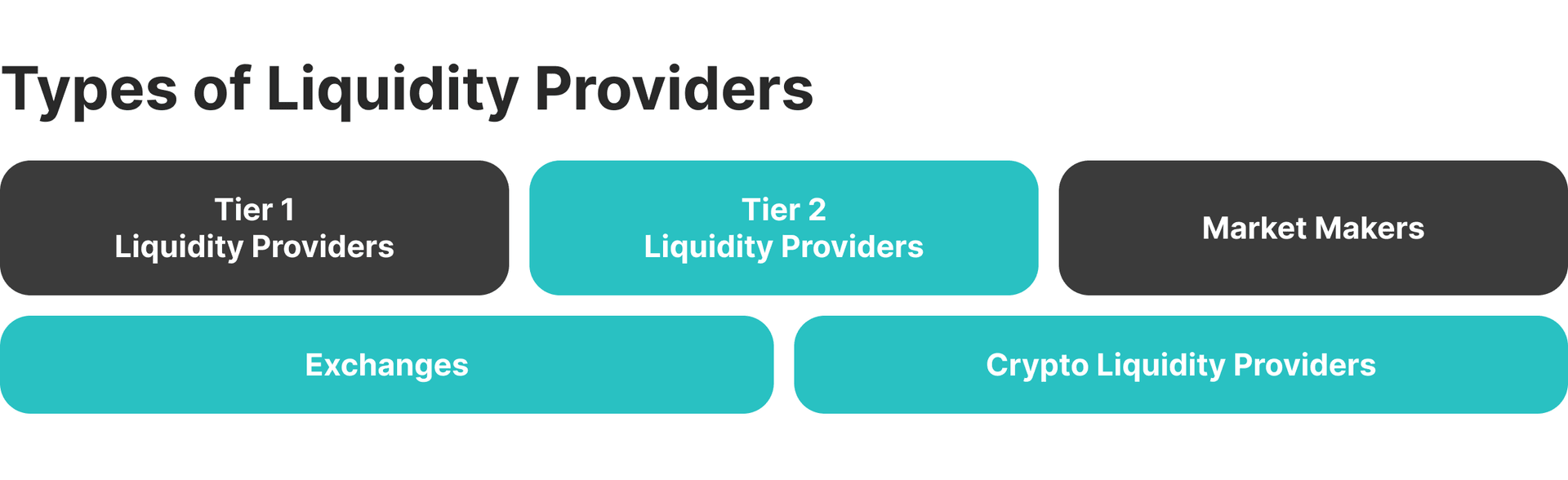
Banks, prime brokers, tier-1 investment firms, and automated market makers play roles in this ecosystem. The wider the coverage, the better the trading conditions for the end user, reducing the dependency on any single sources and improving execution resilience during outages or volatility spikes.
Aggregation and Smart Order Routing
Aggregation engines consolidate quotes and depth from all connected venues into a unified market view that allows brokers to offer competitive pricing while maintaining awareness of available liquidity across sources.
Then, smart order routing comes into play, evaluating each trading request and determining where and how to execute orders, factoring multiple parameters, such as market depth, price availability, filling probability, and execution outcome.
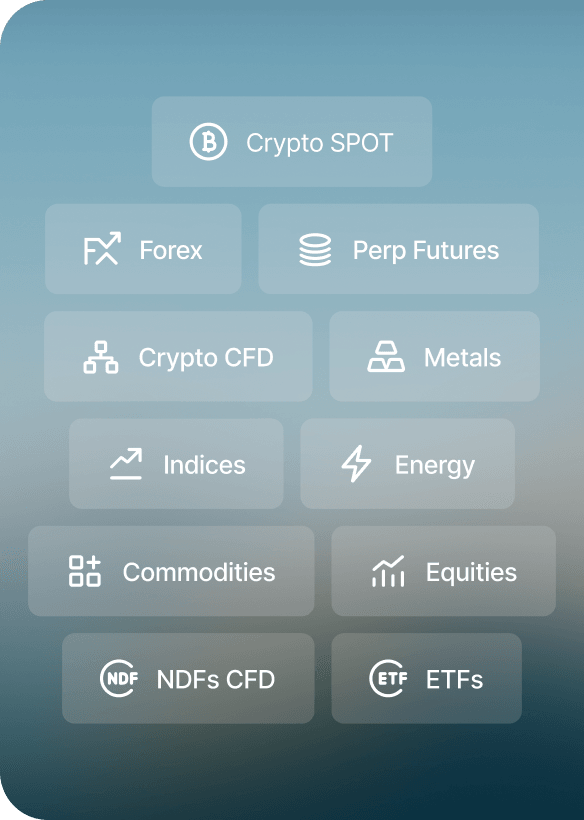
Deep, Reliable Liquidity Across 10 Major Asset Classes
FX, Crypto, Commodities, Indices & More from One Single Margin Account
Tight Spreads and Ultra-Low Latency Execution
Seamless API Integration with Your Trading Platform
Connectivity and API Delivery
Liquidity is delivered to client platforms through standardized connectivity interfaces, such as FIX, REST, or WebSocket APIs. Each architecture focuses on stability, consistency, and seamless integration with existing trading engines rather than latency claims.
Therefore, brokers need to ensure reliable connectivity to get accurate price updates, order confirmations, and execution reports that sync seamlessly across systems.
Liquidity Pools, Market Makers, and Hybrid Liquidity Models
Liquidity as a service combines multiple operational systems, rather than a single model. It blends traditional order-book routing with market maker and algorithmic liquidity to maintain execution consistency across various market conditions.
Market makers and automated market makers are complementary components that support the workings of LaaS models
- MM provides continuous pricing and depth, helping stabilize spreads when natural order-book liquidity becomes thinner.
- AMM supplies quotes for specific assets or conditions, while centralized order books provide transparent price discovery.
Prime-of-Prime Models Within Liquidity as a Service
Prime-of-prime (PoP) models play a significant role in institutional liquidity by making it more accessible to a broader range of market participants. PoPs act as an intermediary access point, offering deep liquidity provision, credit relationships, and netting capabilities for firms that cannot establish tier-1 liquidity connections due to their size, business stage, or expertise.
For example, new FinTechs or growing crypto businesses can use PoP access to gain institutional-grade liquidity without the capital, balance-sheet, or relationship requirements of direct prime brokers.
Within liquidity-as-a-service structures, prime-of-prime models help consolidate execution, manage exposure, and optimize pricing consistency.
Get Prime-of-Prime Liquidity
Access institutional-grade liquidity and offer ultra-tight spreads, low slippage, and built-in integrations
Liquidity as a Service Compared to Building Liquidity In-House
Internal liquidity structure works opposite to utilizing LaaS financial services. One relies on complex platform capabilities, while the other sources order processing to specialized firms. Let’s compare both models.
Building liquidity in-house requires significant capital, robust technical resources, and ongoing maintenance. Additionally, financial institutions must have a reliable team of specialists to secure liquidity agreements, manage venue-specific integrations, monitor execution quality, and adjust to regulatory change.
Liquidity as a service, however, simplifies this structure by outsourcing aggregation and execution arrangements. It uses well-established systems to route orders, aggregate prices, and finalize settlements. This build can be deployed faster, is more cost-efficient, and highly flexible.
The trade-off here is governance and control. In-house liquidity offers full control, while LaaS offers efficiency, resilience, and scalability.
What Liquidity as a Service Does Not Eliminate
Liquidity as a service simplifies access to liquidity, but it does not remove all execution risks or operational responsibilities that arise from natural market movements and requirements.
Brokers still need to deal with volatility, market stress, and execution decisions that affect the trader’s experience. Additionally, outsourced execution can cause over-dependence on external providers, causing a liquidity crisis and potentially leading to the collapse of a given crypto market.
Provider Dependency and Governance
Outsourcing liquidity services depends on the provider’s infrastructure, governance, and risk appetite, giving brokers less control over execution rules and processes.
Therefore, firms must ensure top transparency, performance monitoring, and clear service expectations before utilizing liquidity as a service. External providers’ performance must be continuously evaluated for execution quality, pricing behavior, and exposure to avoid over-reliance on a single source.
Regulatory and Compliance Considerations
Licensing, KYC/AML standards, auditability, and jurisdictional coverage are also critical when relying on a LaaS provider. Regulated brokers must still go through compliance obligations. KYC/AML compliance, audit trails, and licensing extend throughout the liquidity chain, requiring brokers to abide by applicable liquidity laws.
Market Stress, Outages, and Volatility
Extreme volatility, exchange outages, and sudden liquidity withdrawals affect all market participants, whether they internalize or externalize liquidity. LaaS providers mitigate these risks through diversified venue coverage, dynamic routing, and contingency logic, but execution trade-offs still exist.
Brokers must integrate built-in tracking tools to monitor market activity and price movements, enabling them to set realistic expectations, especially during periods of market stress.
Integrating Liquidity as a Service Into a Brokerage or Exchange
Integration typically begins with assessing internal readiness, including trading engine compatibility, risk controls, and execution logic alignment. Market liquidity behavior must be consistent with the platform’s order types, margin rules, and client expectations.
Once live, brokers must maintain ongoing monitoring to ensure execution quality, pricing stability, and system performance remain aligned with business objectives. Liquidity as a service is not a one-time setup but an ongoing operational relationship.
How Crypto Businesses Scale Using Liquidity as a Service
Liquidity as a service supports growth by enabling platforms to increase trading activity, asset coverage, and venue exposure without rebuilding their execution infrastructure.
Early-stage platforms gain immediate access to professional liquidity, while established firms can expand into crypto assets or new regions without restructuring their liquidity stack.
The key benefit here is continuity and scalability for all operators, and not just deploying an infrastructure as fast as possible. This way, brokers will have competitive offerings and a longevity-focused business strategy.
Tips for Choosing a Liquidity as a Service Provider
Crypto businesses must evaluate providers based on several factors, including liquidity coverage, execution transparency, governance controls, and operational support.
The LaaS solution must empower the trading platform to compete with leading firms and support brokers with institutional execution and competitive pricing—ultimately, supporting evolving requirements without forcing major structural changes as the business grows.
Building Scalable Crypto Trading Infrastructure With Liquidity as a Service
Operating in dynamic crypto markets entails stability and competitiveness, but competing requires resilient infrastructure, transparent execution, and scalable integrations that enable brokers to compete from day one.
B2BROKER provides crypto liquidity as part of a broader ecosystem that includes aggregation, connectivity, and operational support. With prime-of-prime liquidity models and broker-oriented infrastructure planning, trading platforms can grow and scale much more easily and compete more effectively across market cycles.
Get Liquidity-as-a-Service
Learn how B2BROKER’s infrastructure and liquidity solutions support your trading platform’s growth
Frequently Asked Questions about Liquidity as a Service
- What problem does liquidity as a service solve for crypto brokers and exchanges?
Liquidity as a service solves the challenge of sourcing and managing deep, reliable liquidity across highly fragmented cryptocurrency markets. By centralizing aggregation, routing, and execution through a single provider, it reduces operational complexity while improving execution consistency across venues.
- How is liquidity as a service different from using one exchange or market maker?
Using a single exchange or market maker concentrates execution, pricing, and outage risk in one venue. Liquidity as a service distributes order flow across multiple sources, improving resilience during volatility and reducing the impact of individual venue disruptions.
- Does liquidity as a service remove the need for internal risk management?
Liquidity as a service simplifies access to liquidity, but it does not replace internal risk management responsibilities. Brokers and exchanges still need controls for exposure monitoring, execution oversight, and client risk, especially during volatile market conditions.
- Is liquidity as a service suitable for both startups and large crypto platforms?
Liquidity as a service is suitable for early-stage businesses that need fast, reliable access to liquidity without heavy infrastructure investment. It also supports larger platforms that want to scale trading volume, asset coverage, or venues without rebuilding their liquidity stack.
- What should crypto businesses evaluate when choosing a liquidity as a service provider?
Crypto exchanges and fintechs should evaluate liquidity coverage, execution transparency, governance controls, and regulatory alignment. It is also important to assess whether the provider can support growth and changing requirements without forcing major structural changes later.
Recommended articles



Recent news