Slippage in Trading: What It Is, Why It Happens, and When to Expect It


Slippage is a universal phenomenon in financial markets that affects every participant, from retail scalpers to institutional funds. It reflects the gap between a desired price and the price actually achieved once an order reaches the market. Rather than a platform failure, it is an unavoidable outcome of market structure and liquidity depth.
This gap directly impacts your client’s retention and operational risk. In this guide, we explore the mechanics behind these discrepancies. and focus on practical ways to manage execution quality, protect business margins, and maintain trader trust.
Key Takeaways
- Slippage is an execution cost caused by market mechanics, not a platform error.
- Volatility, liquidity, order size, and timing are the primary drivers of slippage.
- Slippage risk increases predictably during specific market conditions and events.
- Different asset classes experience slippage in structurally different ways.
- Understanding when slippage occurs is the first step toward managing execution quality.
Have a Question About Your Brokerage Setup?
Our team is here to guide you — whether you're starting out or expanding.
What Is Slippage in Trading?
Slippage measures the variance between a requested quote and the actual execution price. It impacts market orders and stops during both volatile spikes and quiet sessions.
This execution gap arises because displayed quotes represent the last traded price rather than a guaranteed contract for volume. By the time an order reaches the matching engine, that specific liquidity often vanishes. The system immediately executes the trade at the next best available price.
Execution outcomes fall into three practical categories:
- Negative slippage, where execution occurs at a worse price because available liquidity shifts before the order fills.
- Positive slippage, where execution improves because the market moves favorably while the order processes.
- Zero slippage, where execution matches the expected price exactly, which usually requires stable liquidity and minimal competition for the same price level.
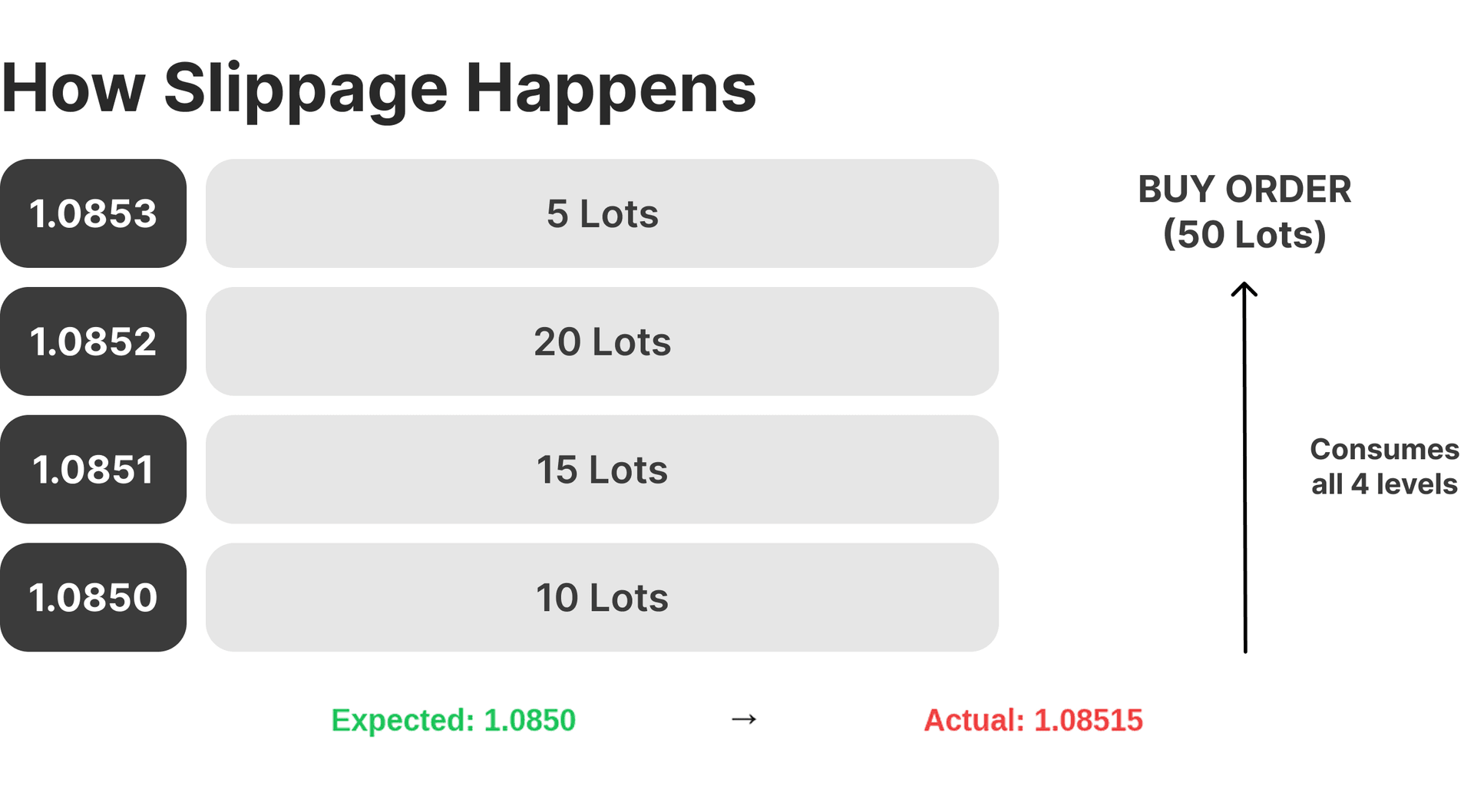
Consider a market buy order for 50 lots placed into a thin order book. The best price level holds only 10 lots. To fulfill the request, the matching engine automatically consumes the remaining 40 lots from the next three higher price levels. The final execution creates a weighted average price noticeably more expensive than the single "top-of-book" quote initially displayed.
Stop Losing Volume to Thin Order Books
Access deep institutional liquidity pools that absorb large tickets instantly without slippage, keeping your clients happy and trading.
Why Slippage Happens in Financial Markets
Slippage follows recognizable patterns. It tends to appear during the same market moments, across different assets and venues. Brokers who recognize these patterns adjust execution expectations instead of treating each occurrence as an anomaly.
This section examines the core market dynamics that drive slippage in modern electronic trading.
Market Volatility and Post-Event Repricing
High volatility compresses the time between a displayed quote and execution. During sharp price moves, the market can trade through multiple levels before an order reaches the book. When that happens, the intended price no longer exists by the time execution begins.
This behavior appears most clearly around macroeconomic releases, earnings announcements, and sudden risk events. Facing rapid price changes, liquidity providers widen spreads or pull quotes to manage their own risk exposure. Orders then fill at the next available price point, often settling significantly away from the initial click.
Liquidity Constraints and Order Book Depth
Liquidity depth determines how much volume can be traded before prices move. Thin order books contain fewer contracts at each level, so large orders consume available liquidity quickly. The remaining size then executes at progressively worse prices.
Low liquidity conditions occur predictably. Off-hours sessions, less-traded financial instruments, and periods of market stress all reduce available depth. In these environments, even modest order sizes can experience slippage because there is insufficient interest to absorb demand at stable prices.
Execution Timing and Latency Effects
Physical distance creates unavoidable delays between a trader’s terminal and the exchange server. Even a 50-millisecond lag allows price discovery to move against an incoming trade while orders sit in matching queues behind earlier requests.
Beyond physical distance, complex routing logic adds another layer of processing time. Smart routers scanning multiple venues for the best price take microseconds to calculate paths. These processing intervals accumulate, leaving orders exposed to micro-price shifts during active trading windows.
Order Size Relative to Available Liquidity
Large institutional orders frequently exhaust the liquidity available at the best bid or offer. When a trade size exceeds the top-of-book volume, the matching engine executes the remainder against deeper, more expensive limit orders. This process is known as "walking the book."
Consequently, the effective fill price deviates significantly from the initial quote. For high-volume traders, the average price across all filled levels serves as the true cost metric rather than the attractive but insufficient headline rate displayed on the screen.
Crowded Order Flow and One-Sided Markets
Slippage spikes when market participants simultaneously rush for the same exit or entry. This concentration often occurs around obvious technical levels like support zones or breakout points where stop-loss orders cluster.
Sudden sentiment shifts create imbalances where buyers overwhelmingly outnumber sellers. In these one-sided markets, liquidity providers cannot replenish offers fast enough to match the incoming surge. Even in deeply liquid pairs, such unidirectional pressure forces price jumps to find equilibrium, resulting in execution variance.
Breakdown of Price Continuity in Fast Markets
In fast markets, prices rarely move one tick at a time. Liquidity withdraws or reprices abruptly, creating gaps between levels. Orders entering during these gaps fill at the next available price, which produces slippage even without visible volatility on charts.
When Slippage Is Most Likely to Occur
Slippage follows predictable patterns rather than occurring as random market noise. It correlates directly with specific market states where liquidity is either too thin to absorb volume or pricing moves too fast for matching engines.
Certain moments consistently produce weaker execution:
- Major Economic Releases: Scheduled events like US CPI or Non-Farm Payrolls force rapid repricing. Liquidity often pulls back seconds before the data hits, leaving order books exposed exactly when volatility accelerates.
- Market Opens and Closes: The first minutes of major sessions concentrate overnight orders, hedging flows, and portfolio adjustments. Depth rebuilds unevenly, so early trades often clear through multiple price levels.
- Low-Liquidity Sessions: Periods like the daily rollover between the US close and Asian open naturally reduce institutional participation. With fewer counterparties quoting, even moderate orders can experience slippage.
- Sudden Volatility: Unscheduled news or geopolitical shocks also shift sentiment instantly. Automated quoting systems reprice or withdraw liquidity faster than discretionary orders can adapt.
- Weekend Gaps: Positions carried through weekends absorb information released while markets are closed. Monday reopens frequently occur at levels far from Friday’s close, producing unavoidable slippage.
Recognizing these patterns changes execution behavior. Traders scale size, shift order types, or delay entries during known risk windows. Brokers use the same timing signals to adjust risk limits and execution controls in line with actual market depth.
How Slippage Differs Across Asset Classes
Market structure fundamentally dictates how execution variance occurs. Since liquidity pools and matching engines operate differently depending on the instrument, traders cannot expect uniform outcomes. Managing execution quality requires understanding the specific mechanics driving each asset class.
Slippage in Forex Markets
Forex operates as an over-the-counter network rather than a single exchange. Prices form across banks, electronic communication networks (ECNs), and non-bank market makers. Execution quality depends on which providers quote at that moment and how orders route through this fragmented structure.
Major currency pairs such as EUR/USD or USD/JPY usually show high liquidity during active sessions, which limits slippage for standard trade sizes. Exotics and minor pairs behave differently. Lower participation and wider gaps between quotes mean even moderate orders can experience slippage, especially during session transitions or the Sunday market open.
Slippage in Cryptocurrency Markets
Digital assets trade continuously across a highly fragmented landscape of centralized (CEXs) and decentralized venues (DEXs). Liquidity for the exact same token often differs drastically between exchanges. A large sell order on a smaller venue can crash the local price without immediately affecting the global average.
Furthermore, retail-dominated order flow creates unique volatility profiles. Without standard market hours to concentrate volume, "thin" periods occur randomly. This unpredictability makes execution variance prevalent even in top-tier assets like Bitcoin, particularly during off-peak weekend hours when institutional market makers reduce activity.
Slippage in Equity and Futures Markets
Unlike forex or crypto, equities and futures rely on centralized exchanges with unified order books. Slippage here concentrates heavily around specific structural events rather than random liquidity lapses.
The opening and closing auctions aggregate massive volume, often resulting in fill prices far from the previous close. Outside these core trading hours, pre-market and post-market sessions suffer from drastically reduced participation. Executing during these extended hours frequently forces traders to accept wider spreads and significant price deviation due to sparse order books.
Measuring Slippage and Its Real Cost
Slippage needs to be measured because untracked execution gaps distort results. When brokers and traders ignore slippage, they overstate performance, misjudge risk, and draw incorrect conclusions about what actually works in live markets.
You can calculate slippage with simple price differences applied to traded size:
- For buy orders: Slippage = (Actual Fill Price - Expected Price) × Position Size
- For sell orders: Slippage = (Expected Price - Actual Fill Price) × Position Size
Consider a trader buying 100,000 EUR/USD (1 lot) targeting 1.0850. If volatility forces a fill at 1.0853, the 3-pip deviation creates an immediate $30 cost. While individual amounts appear negligible, they compound rapidly across active portfolios.
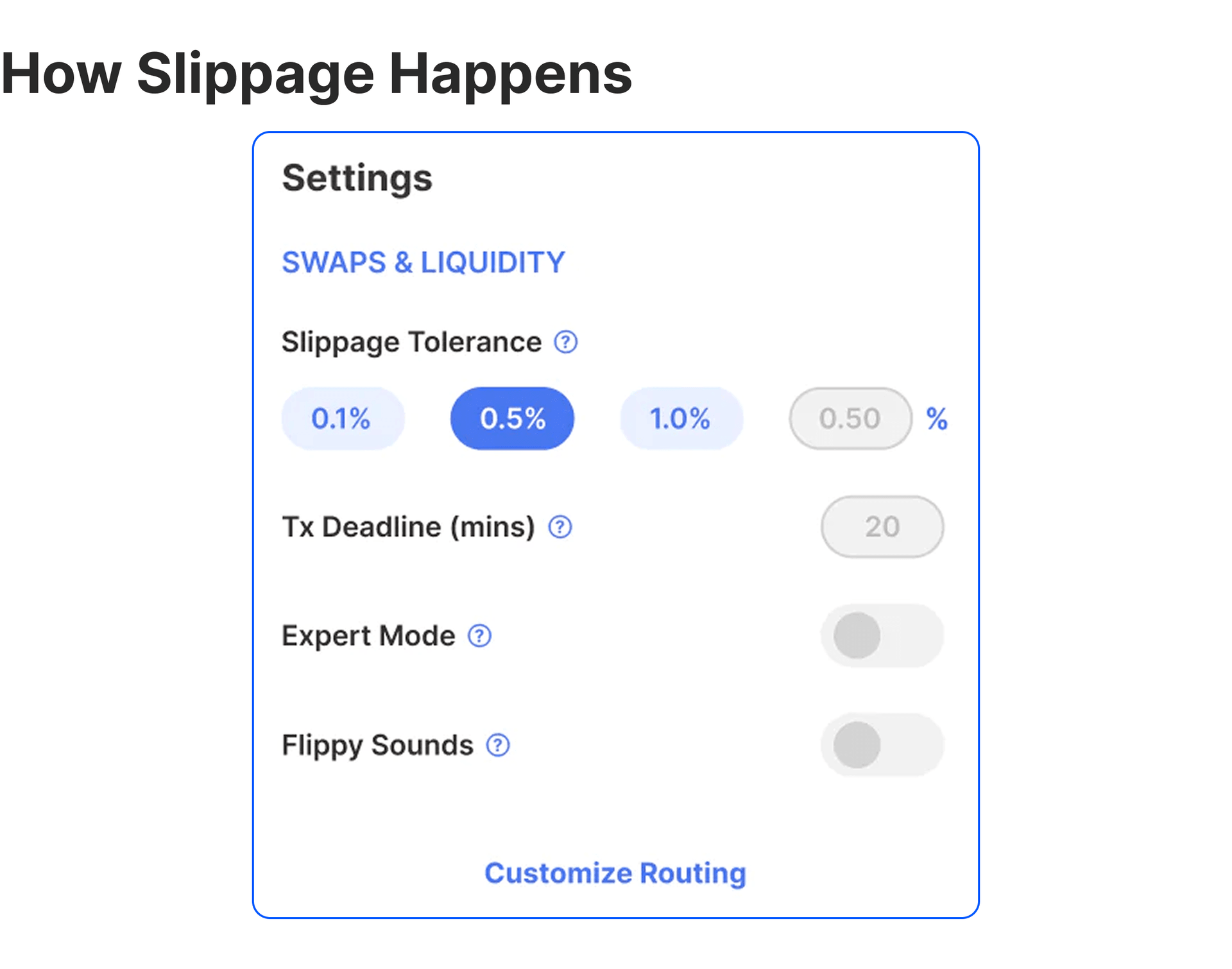
Traders mitigate this by using the "Slippage Tolerance Level" or "Maximum Deviation" field in the order window of platforms like MetaTrader or Binance. This setting instructs the system to reject any fill exceeding a specific threshold, balancing price protection against the risk of getting no fill at all.
Practical Ways Traders Reduce Slippage Exposure
It is impossible to eliminate slippage completely, but it is possible to control its magnitude. Traders can reduce exposure during predictable volatility and limit financial damage by aligning execution behavior with current liquidity conditions.
Using Order Types Strategically
Order type choice defines exposure to price movement. A market order executes immediately at the best available prices, which works well when depth is stable. In fast or thin conditions, the same order can fill across multiple levels, increasing slippage.
Limit and stop-limit orders introduce price control. A trader specifies the worst-acceptable price, which caps slippage but increases the chance of no fill. Many slippage problems arise when traders rely on market orders during volatile periods where price continuity cannot be assumed. Choosing the order type based on urgency, not habit, reduces unnecessary execution cost.
Timing Trades Around Liquidity Peaks
Slippage aligns closely with participation. When more counterparties trade simultaneously, order books replenish faster after each fill. This often happens around benchmark fixings in FX, index rebalancing windows, or during periods when large funds roll positions. In these moments, markets absorb size with less price displacement.
Quoted spreads alone do not tell the full story. A narrow bid/ask spread with low depth can still produce slippage. Traders benefit from asking a simple question before entering: Who else is active right now, and can the market absorb my order size?
Managing Trade Size and Execution Pace
Larger orders increase slippage because they consume more available liquidity. Executing the full size at once forces the market to adjust the market price immediately. Breaking the trade into smaller pieces gives the market time to absorb volume.
Time-Weighted Average Price (TWAP) spreads an order evenly over a set period. Volume-Weighted Average Price (VWAP) adjusts execution speed based on actual market activity. Both approaches align order flow with liquidity, which benefits institutional desks and larger retail positions alike.
Considering the Institutional Perspective on Slippage Management
Managing slippage at an institutional scale requires infrastructure capable of absorbing heavy volume without disrupting the market. Professional brokers move beyond basic order types, utilizing advanced aggregation technology and data analysis to minimize execution friction for their clients.
Prime of Prime Liquidity Aggregation
Reliance on a single liquidity source exposes a trading business to depth failure during volatility. Prime of Prime (PoP) aggregation mitigates this risk by streaming quotes from multiple Tier-1 banks and ECNs simultaneously. This consolidated depth absorbs large tickets that would otherwise crash a single provider’s book.
Smart Order Routing (SOR) technology actively scans these venues to identify the better price at the millisecond of execution. Accessing deep institutional pools, like those provided by B2BROKER, means large tickets execute against a massive consolidated book. which significantly dampens the price impact of every trade.
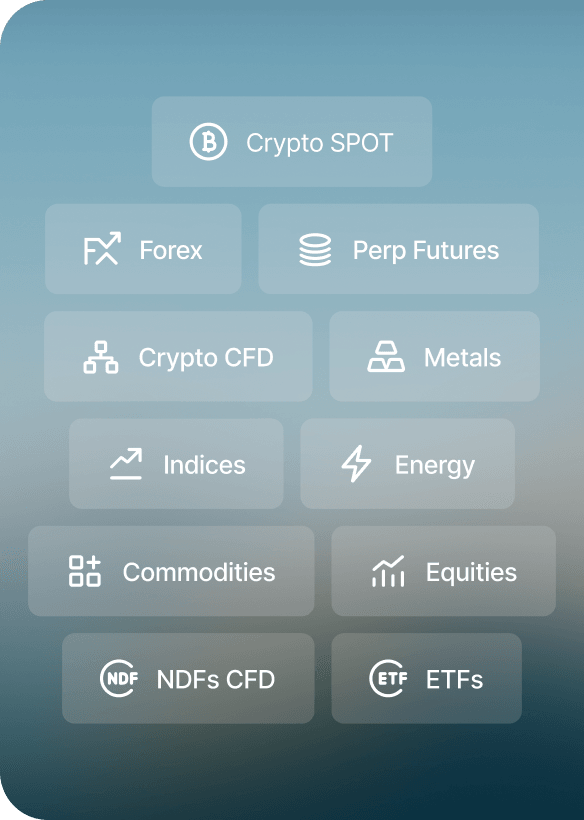
Deep, Reliable Liquidity Across 10 Major Asset Classes
FX, Crypto, Commodities, Indices & More from One Single Margin Account
Tight Spreads and Ultra-Low Latency Execution
Seamless API Integration with Your Trading Platform
Pre-Trade Analytics and TCA
Effective management requires rigorous measurement through Transaction Cost Analysis (TCA). This process benchmarks actual fill prices against the market midpoint at the moment of arrival to quantify exact slippage costs. Without this data, a broker cannot distinguish between normal market variance and poor provider performance.
Modern trading platforms integrate pre-trade analytics to estimate likely market impact before an order enters the queue. Reviewing these metrics helps brokerages identify underperforming liquidity venues and optimize routing logic.
Building Trust Through Execution Transparency
Slippage remains an unavoidable reality of electronic markets. However, treating it as a transparent metric rather than a hidden cost builds long-term client confidence.
To maintain that confidence, modern brokerage operations require robust infrastructure to navigate liquidity fragmentation effectively. Since 2014, B2BROKER has empowered 1000+ corporate clients by delivering institutional-grade liquidity coupled with advanced execution technology.
We help businesses scale by providing the connectivity needed to stabilize pricing during stress events. Our ecosystem provides deep, aggregated pools and the precise STP logic needed to maintain consistent quality. Equipping your business with these tools transforms volatility from an operational risk into a manageable market feature.
Scale Your Brokerage With Institutional Power
From Tier-1 liquidity aggregation to advanced execution engines, get the complete infrastructure stack trusted by 1000+ corporate clients.
Frequently Asked Questions about Slippage in Trading
- Is slippage always a sign of poor execution?
No. Slippage is often the result of market conditions such as volatility or limited liquidity rather than execution quality. Consistent slippage during liquid market conditions, however, may indicate structural execution issues.
- Can slippage ever work in a trader’s favor?
Yes. Positive slippage occurs when prices move favorably between order placement and execution. While less common, fair execution environments pass positive slippage through to traders.
- Why does slippage increase during news events?
News events rapidly change market expectations, causing prices to move faster than orders can be matched. Liquidity providers widen pricing or pull quotes temporarily, increasing execution uncertainty.
- How is slippage different from spreads?
Spreads are known, upfront transaction costs, while slippage is a variable execution outcome caused by price movement. Both affect total trading cost, but slippage is less predictable.
- Can slippage be completely eliminated?
No. Slippage can be reduced through better timing, order selection, and execution infrastructure, but it cannot be fully eliminated in dynamic markets.
Recommended articles



Recent news