Key Benefits of a Multi-Asset Trading Platform for Brokers

Brokerages operating on single-asset models face increasing pressure from margin compression and rising acquisition costs. Traders want seamless access to equities, cryptocurrencies, forex, and ETFs within a single interface. Sticking to a limited suite of financial instruments risks losing valuable volume to more versatile competitors.
Thus, adopting a multi-asset trading platform transforms a brokerage from a niche provider into a comprehensive ecosystem. This guide explains why brokers move in this direction, what business advantages it creates, and how to evaluate the right path forward.
Key Takeaways
- Multi-asset trading platforms help brokers reduce revenue concentration by capturing trading activity across multiple financial markets instead of relying on a single asset class.
- Unified infrastructure simplifies operations by consolidating onboarding, reporting, and risk management into one platform, lowering complexity as brokerages scale.
- Cross-asset margining and centralized risk controls improve capital efficiency while giving brokers clearer visibility into portfolio-level exposure.
- The greatest gains from multi-asset platforms come from thoughtful implementation and provider selection, not from asset count alone.
Discover the Tools That Power 500+ Brokerages
Explore our complete ecosystem — from liquidity to CRM to trading infrastructure.
Why Brokers Actively Search for Multi-Asset Trading Platforms
Brokers operating in a single market model face significant exposure to shifting market trends and cycles. When volatility dries up in one sector, transaction volumes plummet, dragging down monthly revenue. Adopting a multi-asset class framework insulates the business from these localized downturns.
Client demand pushes in the same direction. Many traders want one account that supports portfolio diversification and practical hedging across instruments.
From a brokerage perspective, businesses that separate their stacks experience duplicated onboarding flows and parallel reporting in their processes. Multi-asset platforms consolidate core workflows, which reduces integration and speeds up product rollout.
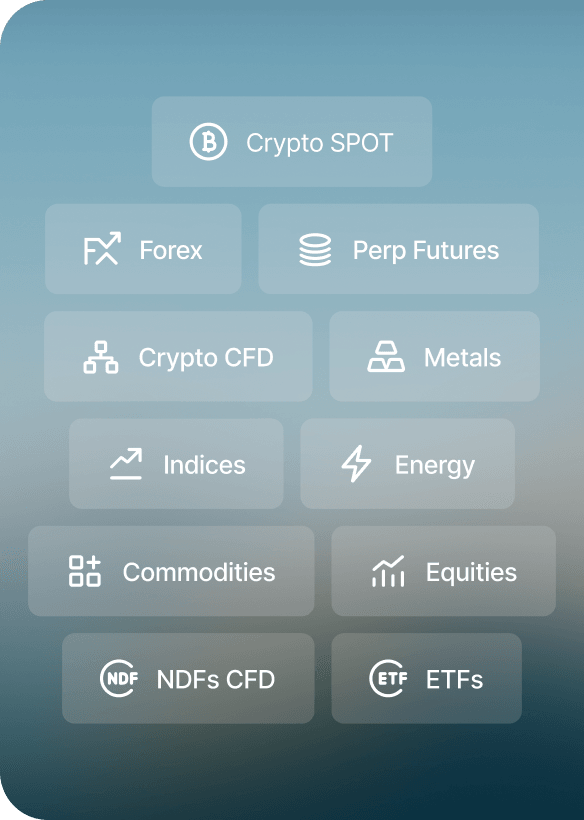
Deep, Reliable Liquidity Across 10 Major Asset Classes
FX, Crypto, Commodities, Indices & More from One Single Margin Account
Tight Spreads and Ultra-Low Latency Execution
Seamless API Integration with Your Trading Platform
Revenue Diversification as a Growth Lever
Multi-asset coverage increases average revenue per user (ARPU) by expanding the range of assets existing clients can trade, including spot and derivatives. A brokerage captures order flow across different market conditions and trading hours, improving the return on acquisition spend and reducing reliance on one product cycle.
Each asset class pays the broker differently. FX and crypto revenue comes from spread capture and funding, including overnight swaps. Equities revenue often comes from ticket commissions and margin financing tied to leveraged positions. Some models add securities lending income where the firm supports it.
Key revenue levers brokers monitor include:
- Spread capture tied to liquidity quality and routing outcomes
- Funding and swap charges tied to holding time
- Ticket commissions tied to turnover
- Margin financing tied to outstanding balances
Build Your Strategic Growth Roadmap
Consult with our specialists to align your infrastructure with market demands and identify the most efficient path for expansion.
Increased Client Lifetime Value Through Multi-Asset Access
Multi-asset access keeps the client base active when interest rotates between markets. A trader who pauses equity activity can shift into FX or commodities inside the same account, allowing for fluid portfolio management and diverse trading strategies. That continuity reduces “quiet months” that often precede churn.
The impact on Lifetime Value (LTV) is measurable. Cerulli’s 2024 research reports that 82% of affluent investors prefer a single financial provider, which supports the business case for consolidated multi-asset access within a single brokerage relationship.
Operational Efficiency Gains From Unified Infrastructure
Separate execution stacks for forex, CFDs, and digital assets multiply integration points. Each venue or liquidity provider brings its own API. Teams maintain bridges that map symbols, accounts, and order events into a shared format, then retest routing after every vendor change.
Consolidating these functions helps streamline operations with data, freeing engineering resources for strategic development.
Operational wins typically show up in several places:
- One KYC profile mapped to all products
- One ledger with consistent end-of-day reporting
- One reconciliation workflow with fewer handoffs
- One support surface for account and trade issues
Back-office workflows benefit immediately from data centralization. Compliance staff reviews a single KYC profile that governs all trading activity. Finance teams reconcile one ledger at the end of the day instead of cross-referencing reports from three different providers.
Besides that, scaling a fragmented stack requires adding headcount to manage the administrative load. A unified platform decouples growth from operational expense, turning backend infrastructure into a fixed-cost asset that supports institutional volume without requiring a linear increase in support staff.
FINRA transaction reporting rules require last sale reports within 10 seconds of execution. Consolidated Audit Trail rules mark reports late when firms miss the 8:00 a.m. ET deadline on the next trading day. A unified event model keeps one reporting pipeline, not one per asset stack.
Risk and Margin Advantages That Support Scale
Cross-asset margining maximizes the utility of client capital. In a siloed model, a trader might face a margin call on a crypto position while holding excess liquidity in their equity account. A unified system calculates exposure at the portfolio level, allowing unrealized gains in one sector to collateralize trades in another instantly.
Fragmented infrastructure creates dangerous latency between execution and risk calculation. Risk officers monitoring isolated ledgers cannot see the total Net Open Position until end-of-day reconciliation. A consolidated architecture aggregates exposure in real-time:
- Portfolio-level limits are tied to concentration and stress loss, enforced before exposure grows.
- Real-time margin alerts are routed into a single case workflow for risk and operations.
Sophisticated risk logic also functions as a primary acquisition tool for institutional flow. Professional traders prioritize venues that offer portfolio netting to offset margin requirements.
Regulators continue to push capital-efficiency programs like customer cross-margining in core markets, which keeps portfolio risk controls on the executive roadmap.
Strategic Advantages Beyond Revenue and Cost
Unified architecture speeds launches. Teams add new instruments through feed mapping and risk-rule configuration, then validate routing in UAT. That pace matters when crypto trades 24/7 and FX runs 24/5.
As well, geographic expansion into the global market becomes simpler when the platform supports jurisdiction-specific reporting and permissioning in the same operating model. Leadership can adjust the product mix when demand shifts, then scale it without rebuilding core components.
Long-term growth depends on a core stack that absorbs new venues and regulatory updates.
The future of trading is here: the multi-asset brokerage. Learn why today's top traders demand access to all markets from one platform and how to build it.
01.07.25
Essential Capabilities Brokers Should Expect From a Multi-Asset Platform
A multi-asset label means little without consistent operating outcomes. Strong platforms show predictable trade execution, accurate market data, and unified reporting on a single platform. Operational resilience depends on specific architectural standards:
- Uniform Execution Standards
One execution stack produces comparable fill behavior across markets, with stable routing outcomes and a consistent audit trail. Weak platforms show uneven rejection patterns and inconsistent timestamps that complicate best-execution reviews.
- Portfolio-Level Margining
Portfolio exposure appears in one risk view with traceable margin logic across products. Complex setups spread risk across systems, increasing manual oversight and delaying critical decision-making.
- Consolidated Ledger
Client profiles, balances, and trade records sit in one operational view that supports fast reconciliation and clean reporting. Fragmented stacks create breaks that teams resolve through manual data stitching.
- Institutional Extensibility
Mature connectivity relies on documented APIs and standard protocols such as FIX, with predictable versioning and support. Patchwork integrations rely on bespoke connectors that slow change and increase outage risk.
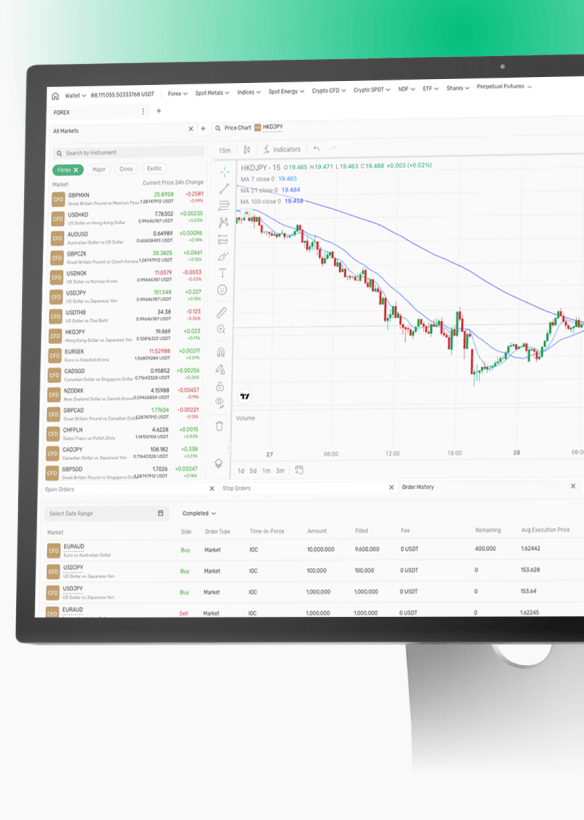
Power your Brokerage with Next-Gen Multi-Asset & Multi-Market Trading
Advanced Engine Processing 3,000 Requests Per Second
Supports FX, Crypto Spot, CFDs, Perpetual Futures, and More in One Platform
Scalable Architecture Built for High-Volume Trading
Common Reasons Multi-Asset Initiatives Fail
Many firms rush into expansion without fortifying their operational base. This negligence converts potential growth into a structural liability.
Prioritizing Symbol Count Over Execution Quality
Marketing a vast symbol library backfires when execution falters. If a brokerage offers 2,000 crypto pairs but cannot honor quotes during a breakout, clients inevitably migrate to venues with reliable depth.
Underestimating Integration Complexity
New asset classes add APIs, event models, and reporting pipelines. Projects stall when teams bolt on bridges without a shared order lifecycle and unified client permissions.
Fragmented Liquidity Management
Disjoint liquidity provider setups split routing logic and margin policy across systems. Risk teams lose a consolidated exposure view, and operations spend more time reconciling cash and positions.
Rushed Rollout Without Governance
Unclear owners for margin rules, symbol onboarding, and incident response lead to slow fixes. Phased releases with defined sign-offs reduce production risk.
Ultimate Multi-Market Trading Platform
Deploy B2TRADER to aggregate liquidity and execution across 10+ asset classes within a high-performance architecture built for professional scale.
A Practical Roadmap for Adopting a Multi-Asset Platform
A multi-asset rollout works best when leadership treats it as an operating change rather than a platform swap. Start with a short decision sequence that links growth goals to regulatory scope and phased delivery.
- Define the growth objective: Set the primary target metric, then choose multiple asset classes that match your client demand and revenue model.
- Lock the regulatory perimeter early: Confirm where you will operate and what you must report. Map those obligations to platform outputs and supervision workflows.
- Validate platform fit with controlled testing: Run a limited pilot and measure execution and risk behavior through KPIs such as rejection rate and margin breaks.
- Roll out in phases with clear gates: Launch one asset class, stabilize support and reporting, then expand based on predefined performance thresholds.
How to Evaluate Multi-Asset Liquidity and Technology Providers
Long-term profitability depends on the structural integrity of connectivity and a technology partner's uptime record. Evaluating these core metrics eliminates the risk of catastrophic outages during peak volatility, which often bankrupt less resilient firms.
High execution performance relies on the depth of the multi-asset liquidity within the order book. Partners must demonstrate consistent fill rates across different asset classes and asset types. Verified execution reports provide the specific data needed to audit a provider’s ability to maintain tight spreads.
Platform stability during black-swan events remains the definitive test for any system. Scaling to thousands of concurrent users requires a load-balanced architecture.
Transparent pricing structures prevent unpredictable operational expenditure as trading volumes increase. Credible providers maintain a clear regulatory footprint across major jurisdictions. Examining a developer’s roadmap reveals whether the technology will adapt to future legal requirements without requiring a full platform migration.
When a Multi-Asset Platform Is the Right Strategic Move
Multi-asset adoption makes sense when revenue depends on one market cycle and clients already ask for additional instruments. It also fits when operations teams spend time maintaining parallel stacks and manual reconciliations.
Pause expansion if the firm lacks risk headroom, clear regulatory coverage, or a reliable reporting pipeline. Weak client master data, inconsistent margin rules, or frequent post-trade breaks signal readiness gaps that leadership should close before migration.
Driving Sustainable Growth With a Multi-Asset Platform
Multi-asset platforms support sustainable growth when they centralize execution and risk across markets. Your brokerage can reduce revenue dependence on one asset cycle and run a single control layer for margin and exposure. This consolidation converts technology from a cost center into a growth engine.
We at B2BROKER support this operating model with infrastructure that covers both trading and operations:
- Multi-asset liquidity spanning 10 asset classes and 1,500+ instruments under a single account model.
- B2CORE back-office & CRM featuring integrated compliance workflows and built-in wallet functionality.
- B2TRADER multi-market trading platform offering ultra-low latency for high-frequency execution.
B2BROKER delivers comprehensive turnkey and white-label solutions based on 12 years of market experience. The firm currently holds 10 regulatory licenses. Our ecosystem supports 1,000 corporate clients globally, providing a complete technical framework for your professional brokerage operations.
Future-Proof Your Brokerage Infrastructure Today
Combine B2TRADER with our institutional liquidity and back-office technology to launch a comprehensive multi-asset ecosystem for your clients.
Frequently Asked Questions about Multi-Asset Trading Platforms
- What business problems does a multi-asset trading platform solve for brokers?
It reduces revenue concentration by spreading client activity across multiple markets, thereby smoothing volume swings tied to a single asset class. It also consolidates onboarding, reporting, and risk into one operating stack, cutting integration and reconciliation workload.
- How long does it take to adopt a multi-asset trading platform?
Most brokerages plan a phased rollout over several months, since licensing scope, reporting setup, and controlled testing drive the timeline. Launch timing depends on how many asset classes and venues go live in the first phase.
- How does a multi-asset trading platform impact operating costs?
A unified stack replaces duplicate vendor contracts and reduces maintenance on bridges between systems. Centralized data and a single ledger typically lower the time spent on daily close and exception handling.
- What should brokers prioritize when selecting a multi-asset platform provider?
Execution evidence matters more than instrument count, so providers should show audited fill behavior, routing transparency, and stable uptime history. Pricing clarity and regulatory readiness also matter, since hidden costs and weak reporting become operational risk at scale.
Recommended articles