Convergence of CRM, Trading, and Liquidity: Creating Unified Financial Solutions

Financial institutions today face rapid market expansion, rising regulatory pressure, and increasingly complex client demands. As legacy systems struggle to keep pace, the convergence of CRM, trading, and liquidity has become essential.
The growth and conformity of fintech infrastructures now define competitive advantage, enabling brokers to streamline operations, reduce friction, and deliver cohesive financial experiences. These pressures dictate a significant shift towards centralization over fragmentation, as financial firms focus on effectiveness and efficiency.
In this report, we will walk through key financial market changes, how we, at B2BROKER, responded to these demands through our state-of-the-art infrastructure, and what the future holds for us and the entire industry.
Market Landscape & Structural Challenges
The financial market is undergoing a period of accelerated transformation, driven by an explosion in the number of participants and an increasing complexity of product models.
The sheer scale of this evolution is striking; the global online-trading-platform market reached around $10.9 billion in 2024 and is expected to exceed $14 billion by 2027, even with moderate growth. As such, the traditional approach to financial technology struggles to keep pace with client and infrastructure demands.
Financial companies face a pressing need to connect their core systems, from CRM and trading to risk and compliance, into a unified infrastructure. Without this integration, data remains isolated, processes slow down, and client experiences become inconsistent.
Get All-in-One Back Office
Gain control over business performance, platforms, clients, payments, and more in one dashboard
The fragmentation also introduces additional layers of complexity, as employees must navigate multiple platforms, duplicate inputs, and reconcile conflicting records. This not only increases operational risk but also erodes the overall user experience, leaving both clients and staff frustrated by inefficiencies and a lack of transparency.
Over time, the absence of seamless connectivity undermines trust and makes it harder for firms to deliver the streamlined digital journeys that modern customers expect.
This urgent need for convergence is a direct response to rising multi-asset demand and intense institutional pressure for greater efficiency and transparency.
This is especially clear in the following numbers:
- OTC FX: Global daily turnover reached $9.6 trillion in April 2025.
- Crypto OTC: Total spot volumes increased by 138% YoY, while the number of trades grew by 94% YoY over the first nine months of 2025.
- CEX Spot Trading: Centralized exchanges processed about $1.8 trillion in spot volume in October 2025.
- DEX Spot Trading: Decentralized exchanges recorded $593 billion in volume during October 2025.
- Perpetual Futures: The perps market traded $10.17 trillion in aggregate volume across centralized and decentralized venues in H1 2025.
Taken together, these figures clearly highlight the scale of global capital flows that investors and crypto developers must be ready to encounter.
Access Institutional-Grade Liquidity
Explore the best multi-asset liquidity and offer competitive prices, tight spreads, and ultra-low slippage
From Fragmentation to Centralization: How Did Fintech Grow?
Historically, financial businesses have been built around disconnected modules. A common setup involves a separate client-facing portal, an external CRM solution, a third-party trading platform, and a completely independent KYC system.
This fragmented approach, while seemingly cost-effective at first, creates significant hurdles. Each new module or system represents a potential point of failure and friction, hindering the creation of a seamless client journey. At every stage of interaction, the risk of client drop-off rises when user journeys are fractured, and interfaces lack consistency.
A persistent trend raises concern: the more standalone solutions involved in a business process, the higher the cost of integration, acquisition, retention, updates, and maintenance. Businesses become dependent on a complex web of custom-built connections that are difficult to scale and carry a high risk of failure.
Furthermore, when CRM, trading, and reporting tools operate separately, companies lose the ability to gain a unified, 360-degree view of the client and businesses. This fragmentation weakens the accuracy of critical business decisions related to product offerings and risk management.
Without real-time data synchronization, it becomes nearly impossible to implement effective automation and leverage the full potential of predictive analysis and management.
All-In-One CRM & Back Office for Brokers and Exchanges
Fully Customisable Trader’s Room with Modular Features
Built-In IB Module, KYC, Payment Integrations, and Reporting Tools
Intuitive Interface that Boosts Client Engagement
Simultaneously, the financial industry faces higher regulatory scrutiny. Regulatory bodies demand built-in mechanisms for KYC/AML (Anti-Money Laundering), robust data protection protocols, comprehensive user activity logging, and compliance with standards, such as ISO and SOC-2.
In our work, we’ve found that the absence of natively integrated tools for these purposes significantly raises operational costs and the risk of severe regulatory penalties. Therefore, a unified platform simplifies compliance by embedding these functions at the infrastructural core.
To remain competitive, financial companies require a high degree of flexibility. They need to be able to easily configure trading parameters, manage Introducing Broker (IB) models, customize interfaces, set dynamic risk limits, and define user roles with precision.
While many off-the-shelf solutions offer some of these features, they often fall short of the required customization. Conversely, custom-built systems can be prohibitively costly for a commercial product. This is where a truly unified solution, developed by a strong team with a vision for an integrated ecosystem, offers the best of both worlds.
While the traditional separation of CRM, trading, and liquidity systems is still prevalent, the market is clearly moving toward unified architectures that enable speed, transparency, and control.
Today’s reality demands a technology stack where data, logic, and the client interface operate in perfect sync. Without this fundamental alignment, organizational efficiency is significantly compromised, and companies risk being outmaneuvered by more agile, technologically advanced competitors.
The convergence of these once-separate functions is not a trend; it is the essential next step in the evolution of financial services, and one we are proud to be leading.
Architectural Response: How B2BROKER Infrastructure Is Built
In a fragmented and complex financial landscape, B2BROKER’s infrastructure represents a fundamental transformation from the traditional, siloed approach. Our architecture is a deliberately unified ecosystem designed to address core industry challenges—not just by providing advanced tools, but by ensuring those tools work together seamlessly.
This architectural philosophy is rooted in five core principles: versatility, scalability, flexibility, API-first design, and a proactive readiness for regulatory compliance.
Our integrated approach is best illustrated by B2BROKER’s unified suite, combining trading platforms, CRM systems, and liquidity solutions into a cohesive whole. Historically, a financial firm might have a separate CRM for client management, a third-party platform for trading, and a different provider for liquidity feeds.
However, B2BROKER’s model, exemplified by products like B2CORE and B2TRADER, breaks down these barriers, where data from client onboarding in the CRM flows directly to the trading platform, and trades executed on the platform are immediately reflected in a unified ledger.
This concentration streamlines the client journey and eliminates the friction that often leads to client drop-off. It also creates a single, 360-degree view of the client, which is essential for informed decision-making and robust risk management.
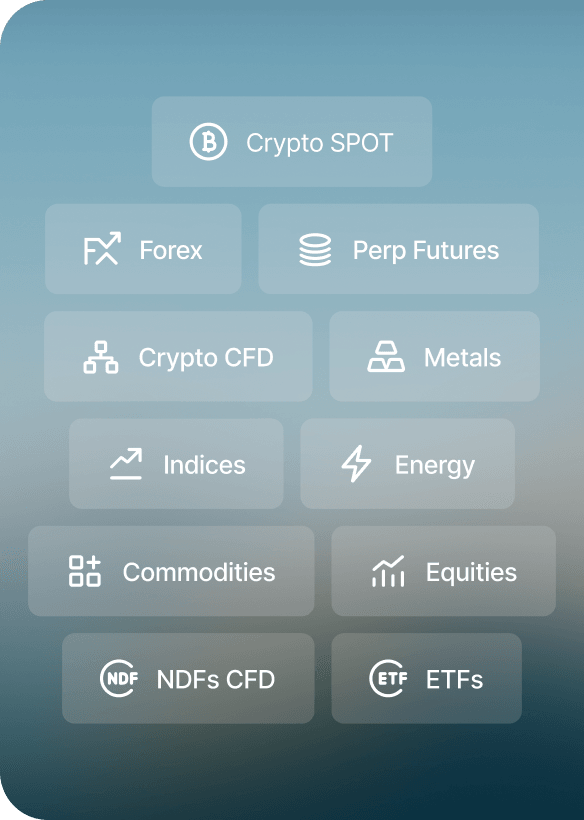
Deep, Reliable Liquidity Across 10 Major Asset Classes
FX, Crypto, Commodities, Indices & More from One Single Margin Account
Tight Spreads and Ultra-Low Latency Execution
Seamless API Integration with Your Trading Platform
A Comprehensive Infrastructure That Grows and Scales Easily
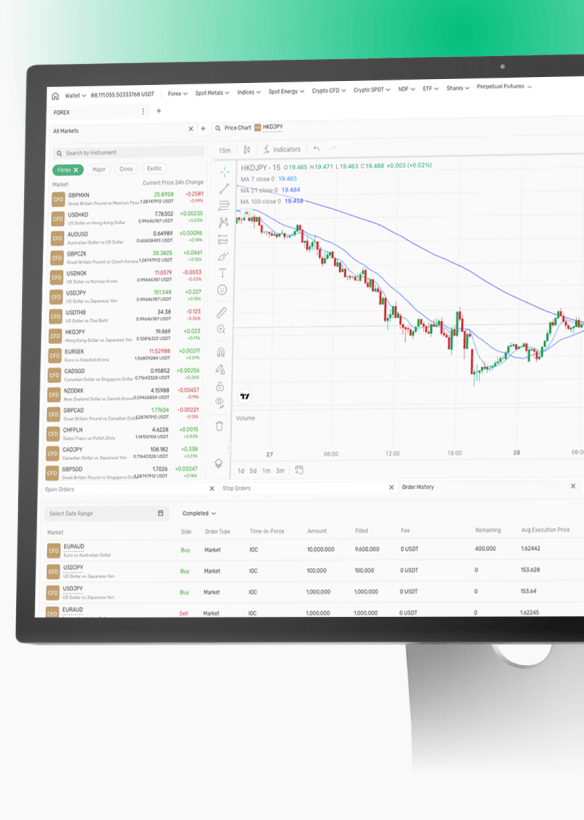
At the heart of this ecosystem is B2TRADER, a high-performance trading system engineered to interact with today’s evolving, multi-asset markets. B2TRADER is not merely a platform for executing trades; it is a central nervous system designed for high-speed trade execution and comprehensive support for a vast range of asset classes.
With the ability to handle up to 3,000 requests per second, it is capable of dealing with even the most chaotic and volatile market conditions, so traders can always enjoy a reliable trading environment.
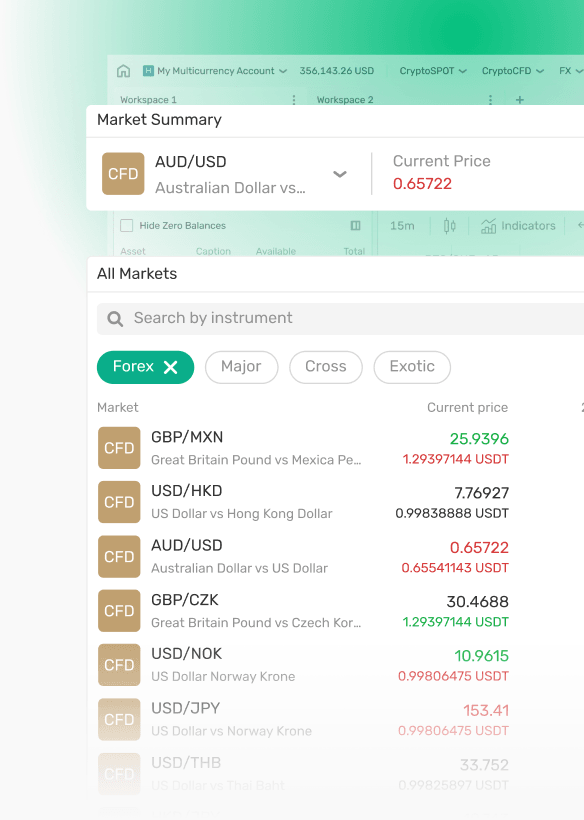
This platform’s multi-market capability supports the integration of distinct markets, such as FX, crypto spot, CFDs, and perpetual futures, enabling brokers to provide a diverse offering from a single, unified backend.
At its core is a smart order routing system with A/B/C execution that automatically directs orders to the best available markets, ensuring optimal execution. This is paired with the simultaneous support of multiple Liquidity Providers, which enables brokers to source and aggregate liquidity from various streams, reducing dependency and enhancing price competitiveness.
The Dynamic leverage feature allows for real-time adjustments to leverage, empowering us to manage risk dynamically. A cornerstone of this architecture is the Unified Multi Asset Account (UMAA), which enables a trader to use all their holdings — whether fiat, crypto, or other asset classes — as a single pool of margin.
This eliminates the need for traders to manage separate accounts for each asset type and ensures a seamless trading experience from one account, a key advantage in a market that demands versatility.
Power your Brokerage with Next-Gen Multi-Asset & Multi-Market Trading
Advanced Engine Processing 3,000 Requests Per Second
Supports FX, Crypto Spot, CFDs, Perpetual Futures, and More in One Platform
Scalable Architecture Built for High-Volume Trading
As a result, B2BROKER's API-first architecture ensures a high degree of flexibility and readiness for regulatory compliance. The extensive API documentation supports the seamless integration with external systems, while a comprehensive suite of native features addresses the most pressing regulatory needs.
The scale of interaction speaks for itself, as our infrastructure processes millions of API requests daily, reflecting the depth of client integration and the maturity of our ecosystem.
Our centralized back-office hub, B2CORE, integrates KYC/AML modules, automated fraud detection, and detailed transaction histories. This proactive approach to compliance, including the ability to manage user access and set granular risk limits, significantly reduces operational costs associated with manual compliance workflows, allowing companies to focus on growth under any market conditions.
Technical Implementation and Metrics
The first, and arguably most critical, measure of performance is speed because in a fast-paced world of financial markets, every millisecond counts.
B2TRADER delivers high-performance execution across all supported markets, achieving average order processing times of under 10 milliseconds in more than 95 % of cases. This exceptional speed is a direct result of our distributed architecture and optimized data flow, which minimizes latency and ensures execution precision, providing a reliable foundation for brokers and their end-users.
Equally important are the operational metrics that reflect client onboarding speed and retention. On average, new clients go live within just ten working days — a benchmark that underscores the maturity of our turnkey architecture. Meanwhile, the churn rate remains exceptionally low, highlighting long-term platform stickiness and sustained satisfaction across our ecosystem.
This is best illustrated by the fact that 100% of B2BROKER’s clients utilize the Smart Order Routing and A/B/C execution models. This metric proves that the system's advanced features, designed to improve execution quality and risk management, are not optional add-ons but foundational to how the platform is used.
Furthermore, the versatility of the platform is confirmed by a 63% utilization rate of multi-asset functionality and an excellent ~100% adoption of multi-asset liquidity pools. These numbers show that clients are actively leveraging the platform's ability to trade across diverse markets and source liquidity from a wide array of sources.
Start Multi-Asset, Multi-Market Brokerage
Explore the power of our white-label, multi-asset trading platform and customize your own brokerage
Our ecosystem is not a closed one; it is designed to be a hub for an expansive financial network. B2BROKER is connected to over 20 liquidity providers and supports an average of 50 or more integrations with external systems, including payment service providers, other trading platforms, and various third-party services.
The platform’s API-first approach makes this level of interoperability possible, and the high number of integrations validates its flexibility. This technical connectivity directly translates into business value, reducing integration costs and accelerating time-to-market for new services.
Infrastructure That Derives into Results
The business impact is most compelling when looking at client adoption and growth. The system's ability to serve a large user base is shown through its usage statistics for KYC, onboarding, and IB programs, which see up to 500,000 unique users per month and over 100,000 KYC verifications processed every 30 days.
This high volume, combined with a remarkable YoY client base growth of 124%, demonstrates strong market demand and a high level of end-user engagement. A key driver of this success is the seamless user experience, with over 70% of users accessing the system via mobile devices, highlighting the platform's adaptability to modern trading habits.
Ultimately, the strongest evidence is client choice. Approximately 27% of B2BROKER’s clients chose the platform specifically because of its ecosystem integration and cross-product functionality.
The presented statistic serves as a powerful validation of our strategy, proving that other firms are actively seeking and valuing unified, cohesive solutions over fragmented ones.
This choice is driven by the clear business benefits: reduced integration costs, faster time-to-market, greater resilience during market volatility, and increased client retention.
In a market where customer relationship management (CRM) is a significant driver of value (with an estimated payback of $4–5 for every dollar spent), B2BROKER's unified approach provides a holistic solution that not only meets current needs but is poised to capitalize on a CRM market projected to exceed $262 billion by 2032.
Case-Based Observations and Product Learnings
Moving from quantifiable performance metrics to qualitative insights, B2BROKER endeavors to explore and repeatedly stress-test how the integrated ecosystem operates in real-world client settings.
By analyzing behavioral patterns, generalized use cases, and the unique challenges faced by different client segments, we can validate the architectural philosophy through the lens of lived experience. These case-based observations highlight key takeaways that directly inform and shape the product's evolution.
The 2025 marketing metrics reveal a clear and compelling pattern in client adoption. 63% of clients choose to implement the full bundle: B2CORE, B2TRADER, and Liquidity Turnkey from the very beginning because the priority is a "fast broker launch" and a unified operational backbone.
Start your Forex Brokerage in Weeks, not Months
All Technology, Liquidity & Payment Integrations Included
White-Label cTrader/B2TRADER with Full Back Office Support
Compliance-Ready Setup with Ongoing Technical Support
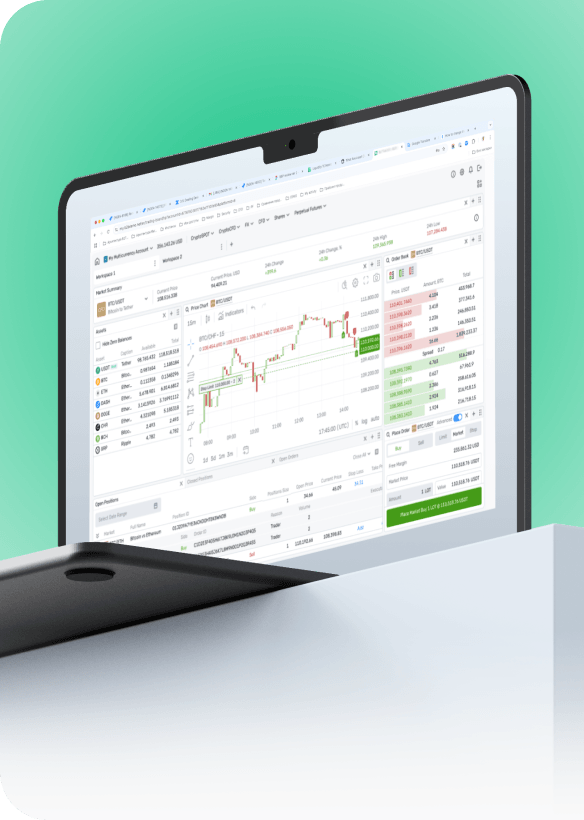
Such a seamless end-to-end solution reduces the complexity, cost, and time-to-market associated with stitching together disparate systems. It allows brokers to focus on business development and client acquisition, knowing that the core technology stack is robust, integrated, and ready to scale.
B2TRADER’s solution isn't just about offering diverse assets; we strive to provide the operational tools to manage the most precious asset of every company from a single, unified account. This centralized approach simplifies risk management, streamlines back-office operations, and provides end users with a more convenient, capital-efficient experience.
A notable trend among the 30% of established clients is the growing demand for proprietary, highly customized platforms. These larger entities, with existing infrastructure and specialized needs, often seek to differentiate themselves and gain a competitive edge.
B2BROKER has adapted its architecture to meet this demand, imposing a direct challenge to the "off-the-shelf" model, and shifting the roadmap to a more modular, API-first approach that supports custom scenarios like a "white-label solution."
The core products, while powerful as a bundle, are now designed to be flexible building blocks that integrate into a client's own ecosystem.
Case Study
Let’s consider the following example of a new client—"Client A"—integrating the full B2CORE + B2TRADER + Liquidity bundle.
Phase 1: Fast brokerage launch
The B2CORE CRM handles all client-facing operations, including onboarding, KYC, and payment processing, and is pre-integrated with the B2TRADER and the Liquidity gateway. This setup eliminates weeks or months of development time and allows Client A to go live with a fully functional, multi-asset & multi-market trading platform.
Phase 2: Operational synergy
Once operational, Client A experiences immediate benefits. The automated flow from B2CORE to B2TRADER ensures that a client can begin trading immediately after verification and depositing funds. This reduces friction and improves engagement. It also simplifies risk management and capital allocation across multiple asset classes, allowing Client A to offer a wide range of trading instruments without complex back-office reconciliation.
Phase 3: Scaling and evolution
As Client A's business grows and they need to add a new payment service provider or an alternative trading platform, the API-first design of B2CORE makes integration simple rather than a full-scale rebuild. This adaptability is key for a client base with an average lifetime of over one year, particularly for a product released only 1.5 years ago. The client’s success and their continued use of the platform directly inform the next phase of the B2BROKER product roadmap.
Key Takeaways and Product Learnings
The experience of serving a client base with a 70/30 split between emerging and established firms has provided invaluable insights.
The startups’ demand for speed-to-market has validated the turnkey bundle, but the specific needs of established firms have driven a shift toward greater modularity and API flexibility. The consistent 100% adoption of smart order routing across the client base has confirmed the need for advanced, automated execution tools, prompting a continuous focus on optimizing these core functions.
Ultimately, these observations have reinforced that success is not about providing a one-size-fits-all solution, but about offering a flexible ecosystem that serves clients at every stage of their growth — from a "fast broker launch" to a fully customized "white-label exchange."
Looking Forward: The Future of Platforms and Infrastructure
As the financial technology sector matures, the focus shifts from simply adding more features to eliminating friction and creating truly seamless, end-to-end user experiences.
Looking ahead, the future of trading and CRM infrastructure will be defined by its ability to integrate emerging technologies, navigate regulatory complexities, and cater to an increasingly sophisticated institutional client base. For platforms like B2BROKER, this requires a fundamental shift in development strategy, moving from a product-centric approach to a holistic, scenario-based one.
The key trend we are tracking is a growing demand for unified ecosystems that can operate as a single, vertically integrated platform — something that we keep articulating as our top priority.
In this newly shaping landscape, market competition is won by providing the least friction. This is B2BROKER's long-term vision: to establish an integrated suite of B2CORE, B2TRADER, and Liquidity as the new standard for brokers and custom infrastructure providers.
Our development strategy is evolving to reflect this, moving from building isolated features to creating fully managed, scenario-based workflows that address specific client needs, from a fast broker launch to a complete white-label exchange.
Artificial Intelligence (AI) will no longer remain a mere marketing buzzword; instead, it is expected to evolve into a foundational element of modern infrastructure.
In our earlier roadmap, we envisioned AI as an ecosystem optimizer, with practical applications that will reshape how financial platforms operate. That plan included AI‑driven analytics for improved customer segmentation, interoperability across system components, and more intelligent, personalized user experiences.
We also outlined AI’s role in automating tech support and enabling behavioral risk analyses, helping financial entities become more proactive and efficient.
It is important to clarify, however, that these initiatives were part of our original vision and have not yet been formally announced as current company projects. Rather, they represent key trends we are closely monitoring as the industry moves forward.
Among these trends are the use of AI in algorithmic trading, risk scoring, chatbots, and cost reduction; the shift from multi‑platform setups to unified ecosystems; and the growing demand for flexible architectures tailored to custom front ends.
Our strategic focus today is on adapting to these emerging requirements: regulatory pressure, increased institutional participation, and the drive for less friction rather than more features.
We are moving from isolated functions toward fully managed, scenario‑based workflows, with the long‑term vision of delivering a vertically integrated platform as the new standard for brokers and infrastructure providers.
To lead in this converging market, our development roadmap is focused on 2 core pillars:
- Enhanced User Scenarios: We will expand our cross-market and platform support and develop intuitive user interfaces optimized for real-time decision-making. The future front end must be flexible enough to accommodate custom designs while maintaining a seamless, responsive experience across all devices.
- End-to-End Solutions: The market is increasingly demanding holistic solutions. We are preparing to provide fully managed ecosystems that handle everything from client onboarding to liquidity provision, allowing financial entities to focus on their core business. This vertically integrated model offers a complete solution that is ready to scale and adapt to future demands.
As the industry reaches a critical inflection point, the convergence of CRM, trading, and liquidity no longer represents a strategic goal but acts as an operational push.
Institutions adopting B2BROKER’s integrated suite are well-equipped to navigate current complexities and capitalize on future market convergence, transitioning from a reactive position to a proactive one in a rapidly evolving financial landscape.
Have a Question About Your Brokerage Setup?
Our team is here to guide you — whether you're starting out or expanding.