How to Launch a Multi-Asset Brokerage in 2026

Launching a multi-asset brokerage right now means stepping into a heavily regulated, hyper-competitive arena where the old rules simply do not apply anymore. Retail and institutional traders have lost their patience for juggling five different apps to manage their portfolios. Today, they expect to trade forex, equities, crypto, and derivatives from one unified interface. But building the infrastructure to actually support that seamless experience is a massive headache. You are dealing with fragmented liquidity, contradicting compliance laws, and legacy platforms that stubbornly refuse to talk to each other.
This guide strips away the high-level theory. Instead, it gives you the exact sequence for tackling licensing, building an API-first technology stack, and securing prime-of-prime liquidity without burning your entire runway before you even see your first client.
Key Takeaways
- A multi-asset brokerage unites forex, equities, crypto, and derivatives under one roof, which drastically increases your operational complexity and forces you to make coordinated licensing decisions before you write a single line of code.
- You must sequence your regulatory planning early across jurisdictions. Mapping out asset-specific permissions and upcoming reporting obligations like IRS Form 1099-DA is the only way to ensure you do not hit a brick wall right before launch.
- Your core stack, which includes your trading platform, bridge, CRM, and risk systems, must integrate through open APIs. It is the only reliable way to avoid manual reconciliation nightmares and escape vendor lock-in.
- Prime-of-prime liquidity access allows new brokerages to offer tight spreads and reliable order execution across different asset classes from day one, entirely bypassing the need for a massive balance sheet.
- Rolling out in phases from a strict business plan to a highly controlled soft launch keeps your operational risk low and provides a realistic path to scale up sustainably.
Discover the Tools That Power 500+ Brokerages
Explore our complete ecosystem — from liquidity to CRM to trading infrastructure.
What Is a Multi-Asset Brokerage?
A multi-asset brokerage is a financial firm that lets clients trade totally different financial instruments from one unified account. Think about the friction of the past: forcing users to wire fiat to crypto exchanges for Bitcoin, then moving funds to a separate stock broker just to buy some Apple shares. A multi-asset setup completely eliminates that by consolidating purchasing power.
This business model is lightyears away from running a single-asset shop. A standalone forex brokerage only manages one set of liquidity venues and a very narrow slice of regulatory compliance. But when you expand across multiple asset classes, your cross-asset risk management gets complicated fast. You suddenly need entirely different execution paths for indices, ETFs, and digital assets. To avoid the staggering capital requirements of opening direct accounts with dozens of individual exchanges and Tier 1 banks, these multi-asset brokers usually rely on prime-of-prime relationships. This setup aggregates pricing and dramatically simplifies the counterparty risk.
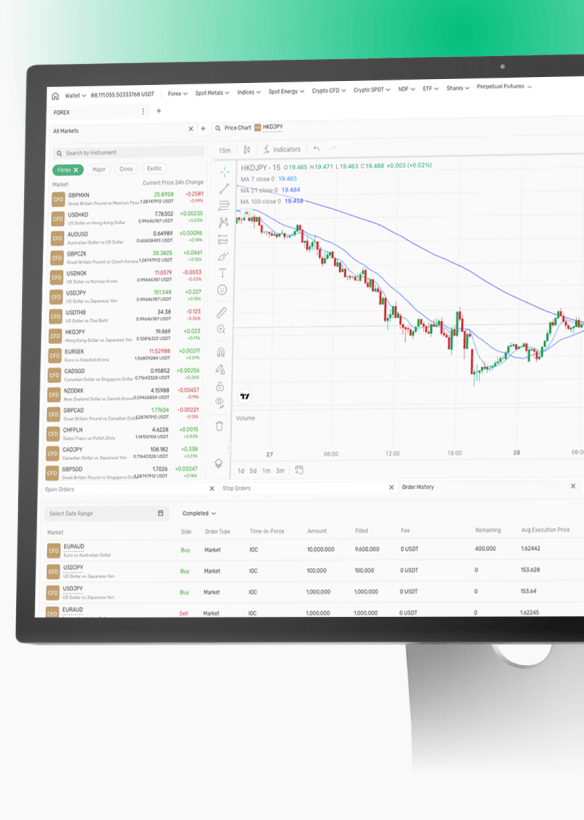
Power your Brokerage with Next-Gen Multi-Asset & Multi-Market Trading
Advanced Engine Processing 3,000 Requests Per Second
Supports FX, Crypto Spot, CFDs, Perpetual Futures, and More in One Platform
Scalable Architecture Built for High-Volume Trading
Why Brokers Are Pivoting to Multi-Asset Models
Traders simply do not want to switch platforms to hedge a stock portfolio with forex or to allocate a percentage of their capital to digital assets. They demand total market access in one place, wrapped in a user-friendly interface. As global regulators start rolling out clearer oversight for digital assets, like the Markets in Crypto-Assets framework recently covered by Reuters, expanding a traditional firm to include cryptocurrencies has become a highly practical business move rather than a regulatory gamble.
Running a multi-asset model also gives the brokerage firm some serious structural advantages. You gain revenue diversification across completely different fee structures and trading volumes. If forex volatility drops, your equities or crypto volume can easily pick up the slack.
You also see much higher client retention because traders do not outgrow your platform as their trading strategies mature. It gives you a massive competitive edge in an otherwise saturated financial services market, opening the door to cross-sell and monetize the entire lifecycle of a trader through multi-product engagement.
Regulatory and Licensing Foundations to Know
Licensing is the absolute first phase of your rollout. Making a mistake here creates the longest and most expensive delays you will ever face. Offering various asset classes brings compounding complexity to the table. Every new asset category introduces distinct permissions, baseline capital requirements, and highly specific reporting obligations. You need a sequenced approach that locks down your jurisdiction, aligns your asset permissions, and gets your back office ready for strict regulatory compliance.
Choose Your Primary Jurisdiction
Your legal base completely dictates your operational limits. You have to align your jurisdiction with your target client base and your primary asset focus. A crypto-forward firm faces vastly different hurdles than a traditional securities-led firm. Tightening crypto regimes globally affect everything from authorization scope to local staffing requirements and approval timelines. Securing specialized legal counsel is your next immediate step. If you are starting from scratch, reading about how to become a forex broker can help clarify the baseline regulatory requirements before you start piling on other asset classes.
- The UK FCA gives you institutional credibility and access to sophisticated European markets, but you will deal with high capital requirements and stringent compliance audits.
- Cyprus CySEC offers passporting rights across the European Union and acts as an established financial industry hub, though you face expanding AML obligations and strict leverage limits.
- Offshore options like the Seychelles FSA offer much faster setup times and lower initial capital barriers, but you are restricted from marketing in Tier 1 regions and will definitely face banking and payment gateways friction.
- The US SEC and CFTC provide access to the deepest capital markets globally, but you are looking at extremely complex multi-agency oversight and massive capital needs.
Map Asset-Specific Permits
One single license rarely covers all financial instruments. You have to map out your permissions before you sign contracts with any technology provider, because your platform's scope depends entirely on what you are legally allowed to offer. Understanding the legal and structural difference between a crypto broker vs exchange is a perfect example of how specific product offerings dictate the exact license you need to apply for.
- Forex and CFDs usually require authorization from a local derivatives or securities authority.
- Equities demand direct exchange membership or a specific broker-dealer license.
- Crypto requires specialized digital asset permissions, often involving separate custody and wallets audits depending on the region you operate in.
- Derivatives necessitate futures or options exchange registrations.
Always use legal counsel with specific multi-asset structuring experience to prevent dangerous gaps in your permissions.
Align Capital and Reporting Rules
Regulatory reporting must be hardwired into your architecture from day one. You simply cannot retrofit compliance. Global reporting standards are tightening at the exact same time, affecting how you capture client data and execute trades.
For US-exposed digital asset brokers, the IRS Form 1099-DA rules mean gross proceeds reporting for 2025 trades begins in 2026, with basis reporting following closely behind. The Wall Street Journal regularly covers how tax agencies are aggressively closing reporting loopholes, meaning your backend needs to be flawless.
Global exchanges and multi-asset firms facing enhanced crypto authorization will need a much deeper integration of blockchain analytics and source-of-wealth tools. Meanwhile, EU and UK regulated entities dealing with strengthened AML and know your customer rules are being forced into automated ongoing monitoring rather than just doing basic point-of-sale identity checks.
Core Technology Stack for a Multi-Asset Trading Platform
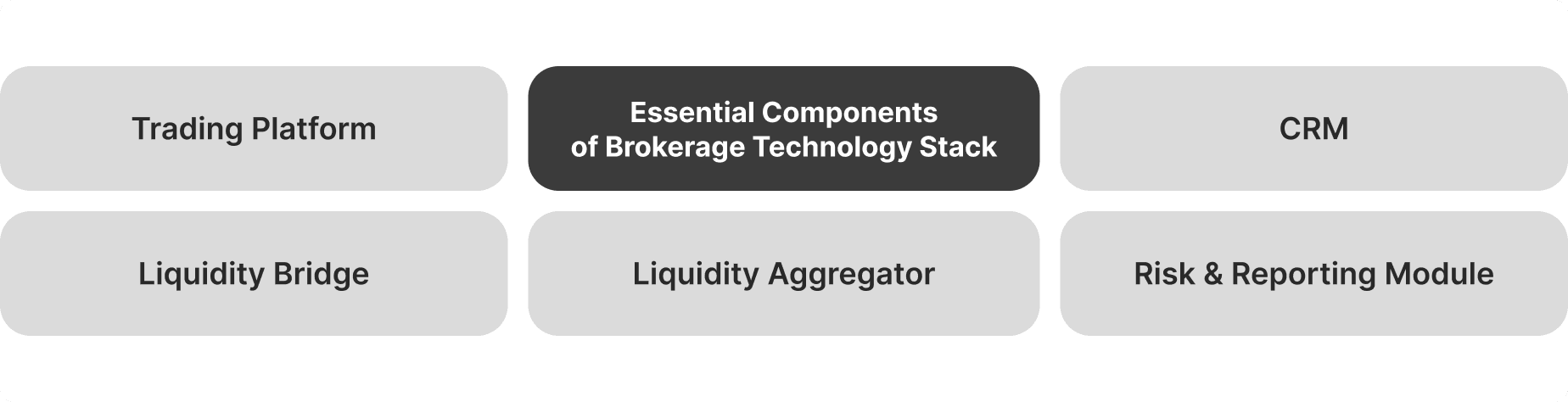
Licensing gives you the legal right to operate, but your technology stack determines your reliability, your scalability, and your unit economics. You absolutely must adopt an API-first architecture. This is the only way to prevent data silos across your trading engine, CRM, payment systems, risk modules, and reporting tools.
Trading Platform, Bridge, and Aggregation
The platform is your client-facing interface. The bridge is the execution connection linking that platform to the market. Aggregation consolidates pricing from various sources to give you the best possible price.
Your client-facing platform needs advanced order types, real-time market data feeds, bulletproof security measures, and native mobile access. Behind the scenes, your operational priorities must focus on low latency, automatic failover, accurate symbol mapping across different asset classes, and perfectly clean trade reconciliation. MetaTrader 5 remains a dominant choice for handling this multi-asset coverage, often serving as the foundational institutional trading platform for new brokerage launches, though cTrader is also a strong contender.
Smart order routing is a massive differentiator here, allowing your system to instantly evaluate multiple venues and execute at the absolute best price. When you evaluate vendors, demand specific answers regarding uptime SLAs and financial penalties for outages, native asset-class coverage without messy workarounds, the quality of their API documentation, and their routing controls.
CRM and Client Onboarding
Your CRM is the engine for lead capture, KYC and AML checks, account provisioning, funding, and lifecycle automation. Multi-asset accounts introduce heavy complexity. You have to decide between unified margin accounts or separated wallets, run product suitability checks, and deliver product-specific risk disclosures automatically based on what the client is trying to trade.
While multi-factor authentication, database encryption, and routine security audits protect the client, the CRM itself must prioritize compliance automation. Look for open APIs for linking third-party identity verification, configurable workflows to handle different regulatory jurisdictions, and clear permissioning for your internal customer support and retention teams. If you are struggling to map this out, researching the best brokerage technology solutions can help you identify white-label software that integrates these elements seamlessly.
All-In-One CRM & Back Office for Brokers and Exchanges
Fully Customisable Trader’s Room with Modular Features
Built-In IB Module, KYC, Payment Integrations, and Reporting Tools
Intuitive Interface that Boosts Client Engagement
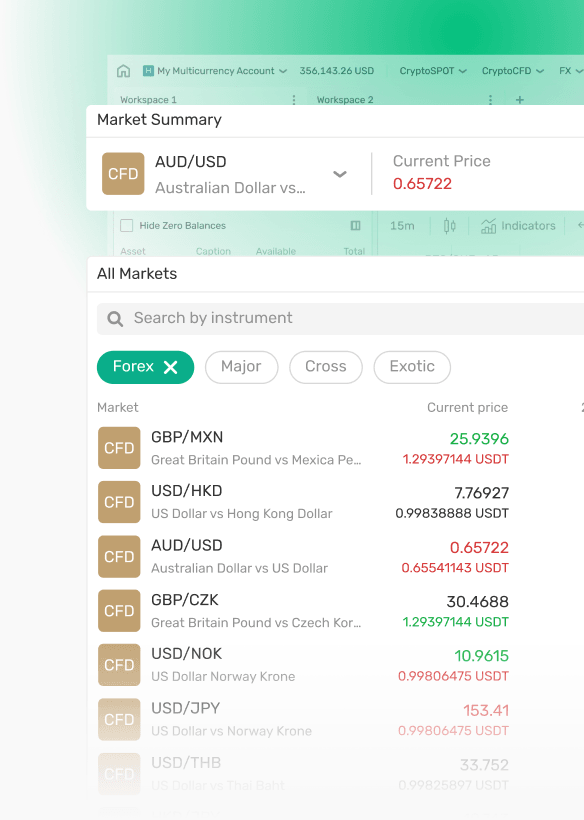
Risk and Reporting Module
The risk and reporting module handles real-time exposure monitoring, margining, stop-loss limits, and regulatory reporting across all your offered asset classes. Cross-asset portfolios carry unique correlation and volatility risks that require live dashboards and instant alerts. If the equities market suddenly drops, you need to know immediately how that impacts a client's available margin for their open forex positions.
This module also directly supports your compliance obligations, ensuring you have the data structure ready for continuous AML monitoring. You need to prioritize multi-asset margin models that cover diverse instruments, customizable report templates for different regulators, a long-term data retention architecture, and clean exportability to external audit software.
Securing Deep Multi-Asset Liquidity
Liquidity is the absolute foundation of your spreads, your execution quality, and ultimately, the trust of your clients. You cannot offer hundreds of financial instruments if your order book is empty and trades are slipping.
A prime-of-prime liquidity provider aggregates feeds from major Tier 1 banks and non-bank market makers, then delivers that deep pool directly to your brokerage business. This means you do not have to negotiate individual credit lines with a dozen different banks. You need to finalize these relationships early so you can actively test execution before going live. When vetting providers for deep liquidity pools, evaluate them strictly against:
- Asset coverage mapping perfectly to your target list of stocks, bonds, ETFs, commodities, and crypto.
- Spread competitiveness during both quiet Asian sessions and the highly volatile New York open.
- Execution quality including real slippage metrics and order rejection rates.
- Credit terms, margin requirements, and overall settlement efficiency.
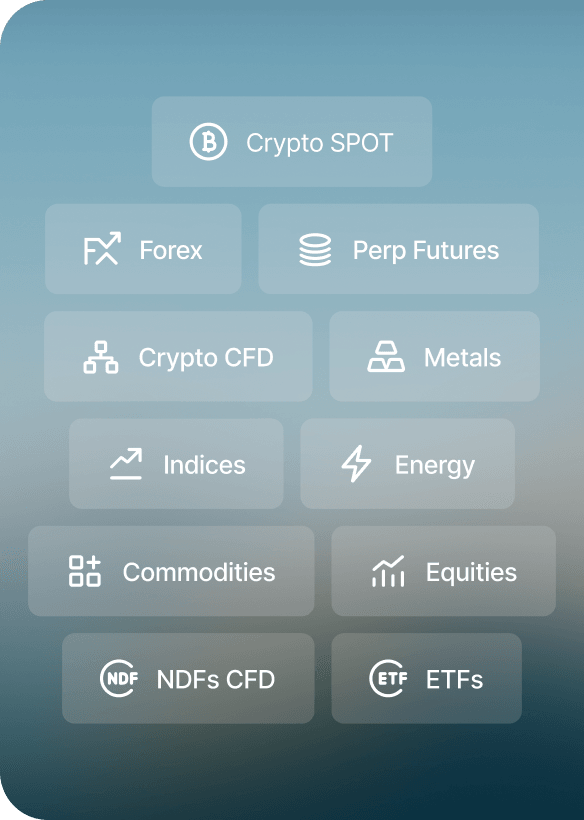
Deep, Reliable Liquidity Across 10 Major Asset Classes
FX, Crypto, Commodities, Indices & More from One Single Margin Account
Tight Spreads and Ultra-Low Latency Execution
Seamless API Integration with Your Trading Platform
Step-by-Step Launch Roadmap
This execution timeline turns your regulatory, technology, and liquidity decisions into a coordinated go-live plan. Skipping or rushing these steps almost guarantees operational failure and severe capital drain before a single trade is ever executed. Financial outlets like Bloomberg Markets frequently highlight how mismanaged infrastructure rollouts are the number one killer of new institutional trading ventures.
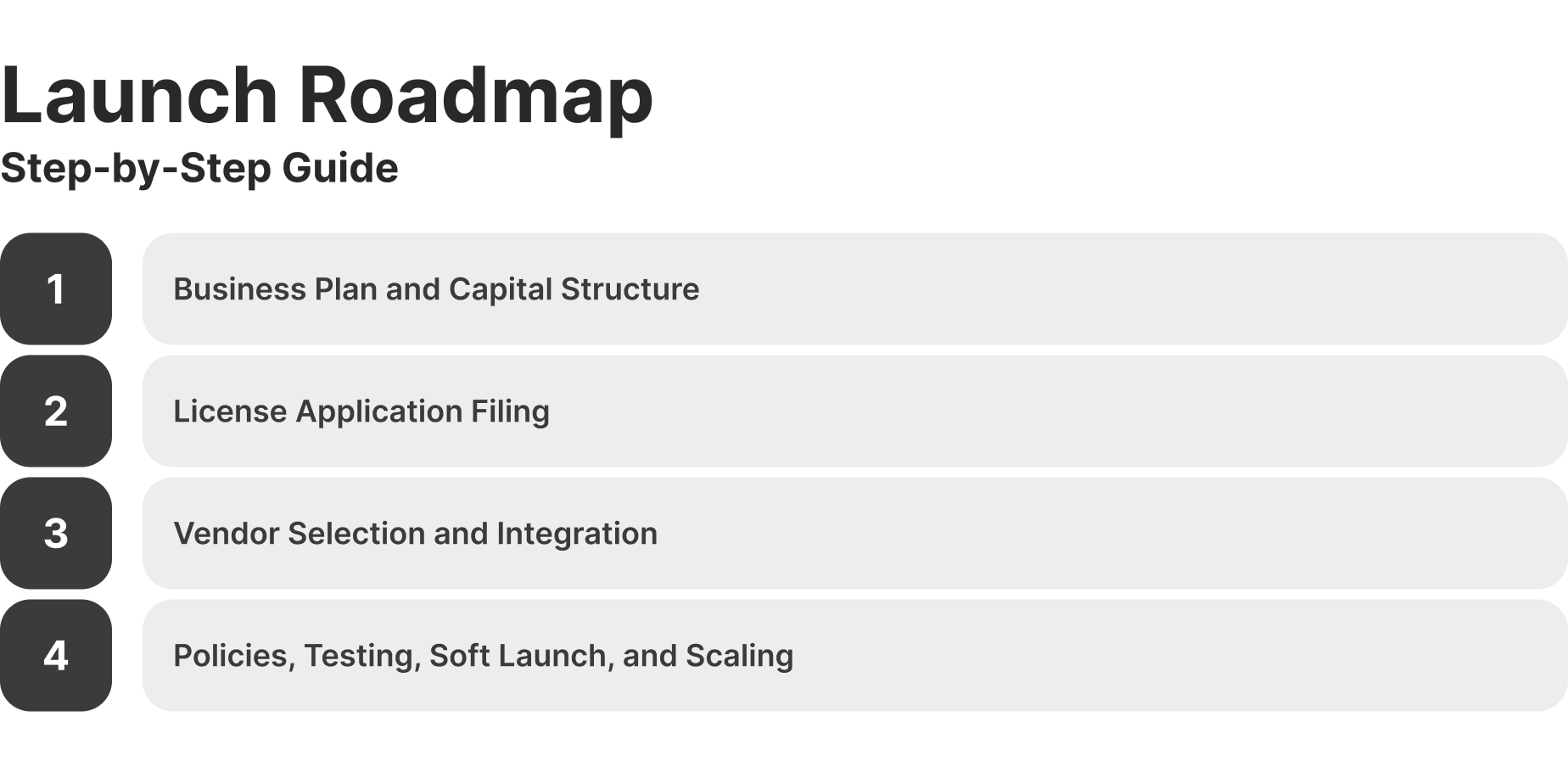
1. Business Plan and Capital Structure
Your business plan must define your target markets, the specific asset classes you will offer, your ideal client segments, your revenue streams, and a realistic three-year profit and loss projection. Regulators heavily scrutinize this document to evaluate your governance, your approach to risk management, and your financial viability. Structure your capital around regulatory capital locked away to satisfy license requirements, operating runway to keep the lights on for 18 months, and technology costs for deployment and integration. Stress-test these numbers against delayed regulatory approvals and a slower-than-expected client acquisition phase driven by digital marketing, seo, and social media efforts.
2. License Application Filing
Your submission package requires your business plan, compliance policies, a documented AML program, governance frameworks, and concrete proof of capital. Expect realistic timelines because rushing regulators never works. Engage local counsel immediately and respond to information requests the exact same day to prevent the regulator from resetting the review clock. Be aware that applying for any crypto-related permissions will drastically increase scrutiny and extend your timeline.
3. Vendor Selection and Integration
Only run requests for proposals once your licensing path is clearly defined, ensuring your technology requirements actually match your legal permissions. Evaluate vendors strictly on open API standards rather than closed ecosystems, true multi-asset coverage natively built into the platform, comprehensive integration documentation for your developers, and pricing transparency without hidden volume fees. When contracting, secure modular agreements so you can swap out failing tech, demand clear service level agreements, and ensure you retain absolute data ownership.
4. Policies, Testing, Soft Launch, and Scaling
Your core policy set must include AML procedures, risk management frameworks, client categorization rules, complaints handling procedures, and strict data security protocols.
Testing is where you try to break the system on purpose. Run end-to-end scenarios covering onboarding and KYC paths, funding and withdrawals, trade execution triggering margin calls, and report generation. Include severe cybersecurity and penetration testing as part of your pre-launch readiness.
Finally, execute a soft launch. Validate the system with a limited cohort of friendly users. Track key metrics regarding latency and execution. Define the exact scaling triggers that signal you are ready for public marketing, at which point you can deploy your marketing strategy, tutorials, and webinars to build client relationships.
Accelerating Your Launch with B2BROKER
Success in 2026 depends entirely on sequencing your licensing, technology, and liquidity so each layer natively supports the next. Consolidating this critical infrastructure reduces your coordination overhead massively. Instead of managing ten different vendors to streamline your operations, gaining access to multi-asset liquidity, trading platforms, CRM systems, and back office modules under one umbrella simplifies everything.
You get multi-asset liquidity coverage across thousands of instruments, an open API architecture built for custom scaling, compliance-ready infrastructure handling complex reporting, and round-the-clock technical support for global operations.
Your next steps are to define your asset-class priorities, validate your available capital and runway, and schedule a technical consultation to map out the exact architecture your new firm needs to survive and thrive.
Have a Question About Your Brokerage Setup?
Our team is here to guide you — whether you're starting out or expanding.
Frequently Asked Questions about Multi-Asset Brokerage
- How much does it cost to start a multi-asset brokerage?
Initial costs typically range from $500,000 to $2 million, depending on your chosen jurisdiction, the specific asset classes offered, and the scope of your technology. The largest variables are the regulatory capital requirements, licensing and legal fees, compliance operations, and the depth of your liquidity and reporting infrastructure. Technology choices matter less for upfront cost than for long-term operating efficiency.
- What integrations should be prioritized first?
Start with your core trading infrastructure. This means the trading platform itself, the bridge or aggregation layer, and your connectivity to liquidity feeds. This lets you validate execution quality, reconciliation, and risk controls before doing anything else. Once trading operations are stable, prioritize your CRM and onboarding integrations, followed by reporting and compliance automation.
- How can a startup control vendor lock-in risk?
Choose vendors that offer open APIs, clear data ownership terms, and documented export paths so individual components can be swapped without tearing down the entire stack. Modular contracts, transparent pricing tiers, and defined exit or transition support clauses help reduce long-term dependency and preserve your flexibility.
- Which post-trade reports become mandatory in 2026?
In the US, digital-asset brokers must begin filing IRS Form 1099-DA in January 2026 for transactions executed in 2025, initially focusing on gross proceeds. Additional requirements including cost basis reporting and backup withholding will apply to transactions from tax year 2026 onward, making accurate data capture critical.
- How long does it take to launch a multi-asset brokerage?
A realistic timeline is 12 to 18 months from initial planning to soft launch. Licensing and regulatory approvals almost always dictate the critical path, while technology integration and rigorous testing add another 3 to 6 months depending on vendor complexity and your jurisdictional scope.
Recommended articles