How to Access Deep Liquidity Pools: A Broker's Guide

Tight headline spreads often obscure execution reality for a broker. Large orders instantly exhaust top-tier pricing, forcing high-volume clients into expensive slippage despite competitive quotes.
Deep liquidity pools serve as critical infrastructure that prevents this margin erosion. Sustained market depth absorbs institutional flows across multiple price levels, ensuring large trades clear without destabilizing asset prices.
This guide provides a practical framework for accessing these capital reserves. We examine the specific access models required to serve high-volume clients effectively. You will learn the integration steps and risk management protocols necessary to establish a scalable execution environment.
Key Takeaways
- Measure executable depth across price bands (e.g., ±5/±10/±20 bps) using representative trade sizes before onboarding any liquidity source.
- Require providers to deliver reproducible execution data under stress and translate those results into contractual SLAs for rejection rates and slippage.
- Use aggregated routing with internal netting to minimize external footprints and preserve available depth for large client orders.
- Run continuous, real-time monitoring tied to automated controls (dynamic limits and kill-switches) that react to sudden slippage or venue degradation.
Discover the Tools That Power 500+ Brokerages
Explore our complete ecosystem — from liquidity to CRM to trading infrastructure.
What Are Deep Liquidity Pools?
Deep liquidity pools are aggregated reserves of capital that allow brokers to execute larger orders without materially degrading the price.
Liquidity is often confused with daily trading volume or a tight top-of-book spread. In practice, what matters is depth across price levels: how much size can actually trade at successive prices before execution quality deteriorates. That depth is what determines whether institutional flow clears smoothly or turns into partial fills, widening average price and increasing slippage.
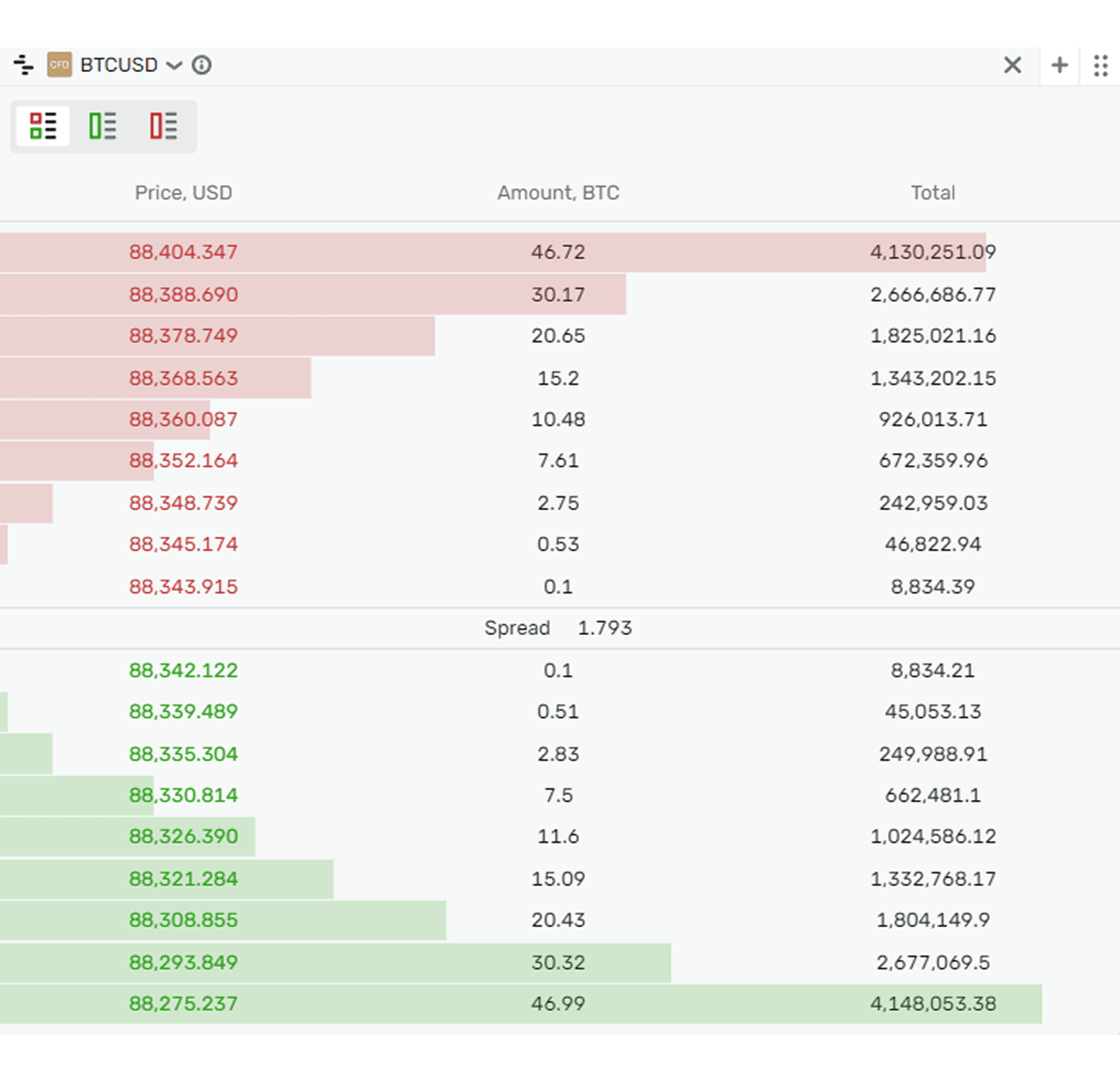
To evaluate depth, brokers typically focus on several core metrics:
- Market Depth: The available volume at multiple price levels (e.g., top-of-book, +5 bps, +10 bps), which acts as a buffer during aggressive order flow.
- Price impact and slippage: The financial cost incurred when a large order consumes the best price and eats into more expensive layers.
- Resiliency under stress: Whether depth remains available during volatility, news events, and fast markets, when shallow pools typically thin out.
Liquidity pools take different forms. Centralized exchanges and large brokerages provide depth through their order books. Aggregated environments combine multiple venues into a single execution layer. Decentralized protocols manage liquidity provision on-chain in the DeFi ecosystem, though confirmation time and trading fees influence how usable that depth becomes for larger orders.
Visible Depth vs Executable Depth
Displayed order book levels can overstate the liquidity you can actually trade. Some visible orders are fragile: they may be cancelled or repriced quickly when the market moves, or disappear during volatility.
Executable depth is the amount of volume that reliably trades at quoted levels when orders hit the market. Brokers measure executable depth by tracking specific metrics:
- Fill Ratio: Percentage of orders filled fully at the requested price.
- Markout: Price movement immediately after execution (to detect toxic flow or latency arbitrage).
- Decay: How quickly liquidity replenishes after a large trade.
This difference between what is shown and what is executable is often where execution costs truly come from.
Why Deep Liquidity Matters for Brokers
Brokers targeting professional clients quickly learn that the headline spread is not the full cost of trading. When market depth is thin, even a “competitive” top-of-book quote can translate into a materially worse average fill price for institutional-sized tickets. That hidden cost hits trader P&L, increases complaints, and erodes trust in your pricing.
Accessing deep pools, therefore, is a strict scalability requirement for modern brokers rather than a performance enhancement. Lacking sufficient market depth triggers several operational failures that directly impact the bottom line:
- Large ticket sizes become difficult to support.
- Execution quality deteriorates during news events or fast markets.
- Clients question pricing reliability after repeated slippage.
- Operations teams spend more time handling failed or disputed trades.
The key to the true utility of a liquidity source is stability. Shallow pools often look adequate during quiet sessions but evaporate exactly when volatility spikes. Reliable infrastructure maintains execution capacity regardless of the trading environment. This consistency prevents sudden surges in trade rejections that can damage a brokerage's reputation.
2026 ranking of top liquidity providers across forex, crypto, and CFD markets with a focus on technology, asset coverage, and execution.
23.05.25
Types of Liquidity Architectures Brokers Access
The quality of execution depends heavily on the method used to source and combine capital. Different liquidity sourcing models expose brokers to different forms of depth, latency, and operational risk. Select an architecture that aligns with your specific latency requirements and asset coverage strategy:
Centralized Order Book Liquidity
Centralized Limit Order Books (CLOB) serve as the foundation for global equity, futures, and the crypto market. A central matching engine stacks buy and sell orders into prioritized queues based on price and time. This market-making model enables high-frequency strategies to execute trades in microseconds.
Traders value this transparency because seeing exact volume at every price step aids decision-making. However, the model concentrates risk. Participating requires depositing funds directly with the venue, tying capital safety and performance execution to the operational stability of one specific operator.
Decentralized Liquidity Pools
Decentralized exchanges (DEXs) and protocols prioritize access and custody over speed. Smart contracts called Automated Market Makers (AMMs) hold capital in shared blockchain reserves, replacing the traditional matching engine with mathematical pricing algorithms. Using code-based logic supports continuous operation without a central intermediary managing the flow.
AMMs like Uniswap and Balancer offer significant benefits for average users: inclusivity and opportunities such as yield farming. However, they also introduce certain liquidity risks: on-chain fees can spike during congestion, and automated pricing can move quickly against large orders.
Institutional strategies that require instant fill confirmation often find this architecture too slow compared to centralized alternatives, limiting its use to specific digital asset pairings.
Aggregated and Prime-of-Prime Liquidity
Aggregation technology addresses market fragmentation by unifying distinct liquidity streams. Prime-of-Prime (PoP) brokers connect Tier-1 banks, non-bank market makers, and exchanges to create a deep "virtual" order book. Smart routing software scans these inputs instantly to lock in the best available price.
Connecting multiple sources mitigates reliance on any single venue, significantly improving resilience. Aggregating flow also boosts capital efficiency through netting. Internal systems offset opposing client positions first, meaning only the residual exposure requires external funding and execution.
Access 1000+ Instruments via Deep Liquidity
Bridge the gap between screen prices and actual fills with our Tier-1 liquidity streams and ultra-deep order books.
How Brokers Access Deep Liquidity Pools in Practice
This section outlines an operational roadmap for brokers and explains how to approach liquidity access. The goal is to help you evaluate decisions and not prescribe a single implementation.
Identify Target Asset Classes and Client Requirements
Start with your actual flow profile. High-frequency scalpers demand tight spreads to capture small movements efficiently. Conversely, institutional clients prioritize substantial market depth to fill large block orders without causing significant price impact.
Selecting liquidity based on headline volume alone can be a mistake. Liquidity provider choice should map to how clients trade (size distribution, time-of-day concentration, volatility sensitivity), not to theoretical market activity. Otherwise, you risk paying for capacity your audience never uses while still failing the segments that matter most.
Assess Liquidity Depth and Execution Quality
Once you have testing data, convert it into strict Service Level Agreements (SLAs). A practical approach is to test across size buckets and market regimes, then convert results into measurable performance expectations. Before signing, ask providers for data on:
- Depth at Levels: Volume available at ±5bps, ±10bps, and ±20bps from the mid-price.
- Rejection Rate: % of orders rejected during low market stability (e.g., NFP release).
- Average Price Slippage: Broken down by order size buckets (e.g., 1 lot vs. 50 lots).
- Failover Logic: What happens if the primary stream disconnects?
Focus on consistency over peak performance. Set clear thresholds for rejection rates during volatile windows. If a venue fails to meet these execution standards during stress tests, disqualify them immediately. Your business model cannot rely on partners who underperform when market opportunities are highest.
Integrate Liquidity via APIs and Trading Platforms
Integration creates the digital bridge between your matching engine and the market. Most institutional connections utilize the Financial Information Exchange (FIX) protocol for orders and execution reports, while market data and cryptocurrency connectivity may also rely on proprietary Application Programming Interfaces (APIs), WebSocket/REST feeds, or venue-specific gateways.
If you route orders through MetaTrader* or cTrader, ensure the execution layer can enforce consistent policies across all connected venues rather than behaving differently by instrument or LP.
Launch Your cTrader Brokerage Today
Deploy our B2TRADER or cTrader ecosystems fully integrated with deep liquidity pools for immediate market entry and growth.
The Importance of Risk Management When Accessing Deep Liquidity
Deep liquidity improves execution capacity, yet it does not remove risk. Key risk factors brokers must manage include:
- Slippage during liquidity shocks, when sudden order flow consumes multiple price levels before controls adjust.
- Concentration risk across venues or pools, where dependence on a small number of sources degrades execution if one source weakens.
- Volatility-driven depth evaporation, as resting interest withdraws rapidly during news or market stress.
Technical safeguards must include automatic "kill switches" that halt trading if slippage exceeds defined safety limits. Dynamic position limits should also adjust automatically based on current volatility levels.
Considering Deep Liquidity Across Multiple Asset Classes
Liquidity behavior varies widely across asset classes. Forex offers immense volume but disperses it across a vast interbank network. Crypto assets like Bitcoin and Ethereum operate 24/7 and trade at high volumes, yet altcoins often suffer from thinner order books and slower settlement confirmation. Indices and commodities follow rigid exchange hours, meaning executable depth vanishes completely the moment the underlying market closes.
Managing these differences requires normalizing disparate data streams into a single standard. A unified risk framework must track exposure across all markets simultaneously to prevent invisible leverage buildup.
When Aggregation Becomes Necessary
Relying on a single liquidity provider creates an inevitable bottleneck — as forex or crypto trading volumes grow, one venue eventually fails to supply sufficient depth to clear large orders efficiently.
Aggregation is the logical next step for scaling operations in this case. Combining multiple streams supports larger ticket sizes and expands geographic reach without forcing clients to manage multiple accounts.
Moreover, if a primary connection fails, smart routing logic instantly redirects the flow to an alternative path. Your brokerage continues operating smoothly even when specific exchanges or banks experience technical outages.
Operational Considerations for Maintaining Liquidity Access
Liquidity access degrades naturally without continuous attention. Market conditions shift constantly, meaning a setup that works today might fail to support next month's volatility. Your operations team should monitor execution quality metrics daily to detect when slippage rates begin to drift beyond acceptable limits.
Managing provider performance involves regular auditing of fill times and rejection rates. You also need to verify that connection costs align with the actual effective depth delivered. Plan for new asset listings and test capacity beforehand to ensure the existing infrastructure handles the increased data load without slowing down trade processing.
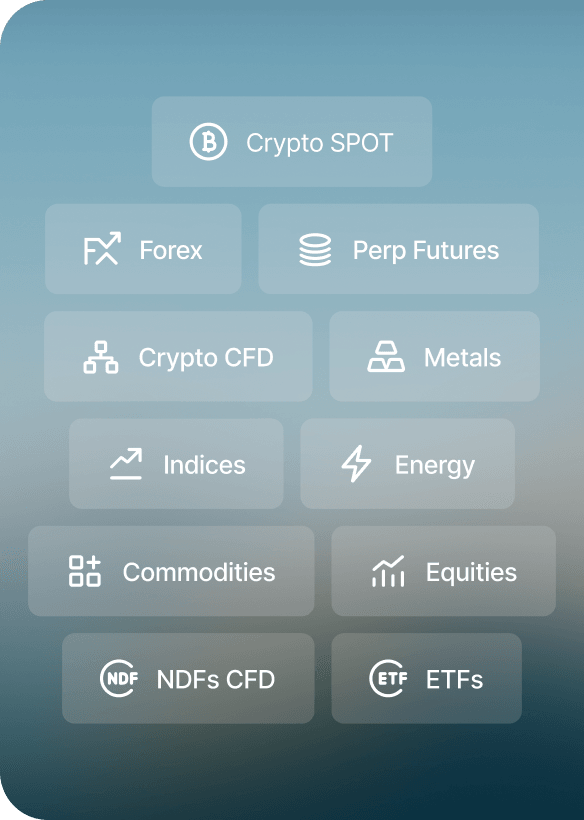
Deep, Reliable Liquidity Across 10 Major Asset Classes
FX, Crypto, Commodities, Indices & More from One Single Margin Account
Tight Spreads and Ultra-Low Latency Execution
Seamless API Integration with Your Trading Platform
Enabling Growth With Deep, Scalable Liquidity Access
Accessing deep liquidity transforms retail platforms into institutional venues, enabling large-scale execution without price disruption. However, sustainable success requires robust architecture and strict risk discipline rather than simple connectivity.
B2BROKER delivers this foundational ecosystem. We aggregate Tier-1 liquidity across 10 asset classes, integrated directly with advanced back-office and execution technology. We provide everything required to scale your operations confidently.
Since 2014, B2BROKER has empowered over 1,000 corporate clients with institutional-grade trading infrastructure. With 10 regulatory licenses and 10 global offices, our team of experts delivers the tools that allow businesses to compress launch timelines and scale revenue.
Scale Without the Growing Pains
Expand your brokerage across ten asset classes while maintaining institutional credibility and execution consistency with our scalable liquidity solutions.
Frequently Asked Questions about Deep Liquidity Pools
- How do brokers assess liquidity depth before adding a crypto asset to their platform?
Brokers assess market liquidity by examining how much executable volume exists across price levels for realistic trade sizes and by observing how execution behaves during active markets. Stable fill behavior and predictable slippage indicate usable depth.
- How do deep liquidity pools function for stablecoin and fiat-backed token trading?
Liquidity in stablecoins like USDT or USDC and fiat-backed markets tends to remain deeper because price movement risk stays limited. This environment supports higher turnover and consistent quoting, which suits large, fiat-denominated execution flows.
- Can brokers access deep liquidity pools while maintaining regulatory compliance?
Yes. Brokers access deep liquidity through regulated providers that support transparent execution, fund segregation, and auditable trade records aligned with jurisdictional requirements.