Buy-Side vs. Sell-Side Liquidity: Key Differences in Trading Markets

Large market participants cannot enter positions randomly, as they require substantial buy-side or sell-side liquidity to absorb their volume. These distinct areas act as magnets for price action, and identifying them transforms a chart into a clear map of institutional intent.
This guide defines the core differences between buy-side vs sell-side liquidity mechanics. We will analyze how to distinguish these zones from random market noise and cover institutional-grade solutions that enable brokers to deliver stable execution in volatile environments.
Key Takeaways
- Buy-side liquidity clusters buy stops above resistance, while sell-side pools collect sell stops below key support levels.
- Institutions target these high-volume zones to execute large block orders with minimal price displacement.
- Breaching buy-side levels triggers rapid short covering, whereas sell-side breaks often initiate cascading long liquidations.
- Aggregated liquidity infrastructure absorbs the volatility spikes caused by stop runs to prevent execution instability.
Discover the Tools That Power 500+ Brokerages
Explore our complete ecosystem — from liquidity to CRM to trading infrastructure.
Why Liquidity Matters in Trading Markets
Liquidity in financial markets refers to the general efficiency of the trading environment. Deep market liquidity is the foundation for stable trading, as it enables large transaction volumes to execute immediately with minimal price displacement. It represents the depth of the order book at any given moment.
For brokers, this depth translates directly into tighter spreads and lower slippage. A liquid environment absorbs market shocks, preventing the price gapping that often triggers trade disputes and toxic flow during news events.
Liquidity Zones
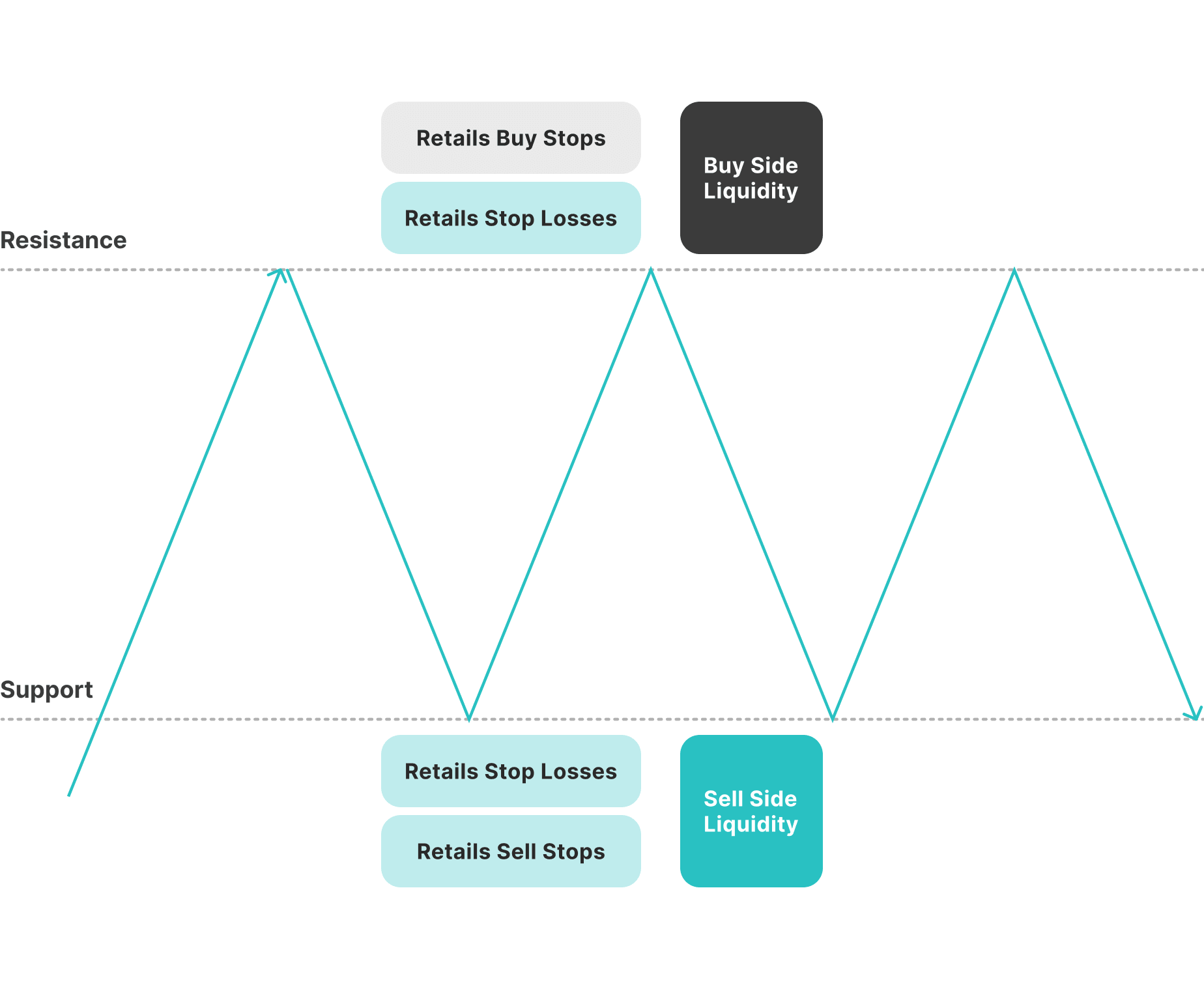
While general liquidity is about "depth," structural liquidity is about "location." The market generates specific zones where pending orders cluster based on trader psychology and risk management.
- Buy-side liquidity consists of buy stop orders positioned above previous highs.
- Sell-side liquidity represents sell stop orders resting below previous lows.
Price constantly moves toward these clusters to match incoming orders, because large institutional players (smart money) require substantial volume to execute large positions without excessive slippage.
Understanding how liquidity zones function allows market participants to solve specific execution challenges:
- Retail Traders: Identifying liquidity zones prevents "stop-hunts." Placing stops away from obvious clusters reduces premature exits.
- Institutions: Major funds target these zones to enter or exit large positions effectively, using the resting volume to hide their footprint.
- Brokers: Monitoring these dynamics allows for better risk management. Anticipating volatility around these zones helps desks manage B-Book exposure and maintain execution standards when price accelerates.
Key Differences Between Buy Side and Sell Side Liquidity
Market moves rarely exhibit perfect symmetry. Buy-side and sell-side liquidity pools trigger distinct mechanical responses when breached, affecting volatility profiles differently.
Triggering these zones creates two fundamentally different execution environments:
- Buy-Side Liquidity (Short Covering)
Breaching resistance forces short sellers to buy back positions immediately to limit losses, creating explosive, vertical momentum known as a "short squeeze." These moves tend to be sharp but short-lived, resolving quickly once the distressed short interest clears the market.
- Sell-Side Liquidity (Long Liquidation)
Breaking support triggers stop-loss selling from long positions. Unlike the rapid burst of a short squeeze, this often initiates a cascading effect where selling begets more selling. These downward trends can grind lower for extended periods as margin calls force further liquidation, adding supply to a falling market.
Execution strategies must account for these structural differences. A buy-side sweep requires rapid order processing to mitigate positive slippage during the spike. A sell-side cascade demands robust risk controls to prevent filling orders into a collapsing order book without sufficient depth.
How Buy Side and Sell Side Liquidity Interact Across Markets
Liquidity dynamics shift based on the underlying market structure. Institutional-grade execution requires adapting to the specific regulations and participant behaviors defining each asset class.
Forex and CFDs
The $9.6 trillion daily turnover in FX creates deep, continuous liquidity pools driven by Tier-1 interbank providers. This institutional dominance results in reliable price action where support and resistance levels tend to hold firm.
Brokers managing risk must monitor these zones carefully. A breach of a key institutional level can signal a sustained shift in order flow rather than a temporary sweep, requiring immediate hedging adjustments to protect the book.
Crypto Exchanges
Digital asset markets suffer from extreme fragmentation across hundreds of independent exchanges. Retail dominance concentrates liquidity heavily around psychological round numbers, creating dense but fragile order stacks. When these specific levels break, the lack of unified depth often triggers rapid, high-magnitude liquidation cascades that strain matching engine performance.
Equities and Derivatives
Equity liquidity formation aligns strictly with exchange schedules and options expiry dates. Market makers hedging gamma exposure create massive pending volume at key option strike prices. These structural flows pin the stock price to specific levels, forcing execution algorithms to seek volume primarily during the opening and closing auctions rather than intraday.
Stop Slippage With Deep Institutional Liquidity
Access Tier-1 liquidity pools designed to absorb market shocks, keeping your spreads tight and execution stable during high volatility.
How to Identify Liquidity Zones and Avoid Traps
This section outlines how to recognize buy-side and sell-side aggregation points to distinguish between genuine momentum and volatility traps.
Stop-Loss Clusters
Retail traders typically position stop-loss orders just beyond obvious resistance or support levels, creating dense pockets of untapped volume. Institutional algorithms target these coordinates to fill large tickets, creating a mechanical cascade of market orders.
The resulting chain reaction often accelerates the price through the level before the move stabilizes. Executing against these flows during the initial trigger usually leads to execution issues as the order book depth vanishes momentarily.
Swing Highs and Lows
Historical turning points act as magnets for pending volume long after the initial move concludes. Participants use previous swing highs and lows to define invalidation points, effectively turning these levels into reservoirs of liquidity.
Breaking a major peak confirms a shift in market structure while simultaneously providing the fuel for the next leg of the trend. Institutional desks monitor these old levels to gauge where large pockets of liquidity are likely resting.
Rapid Price Range Definition
Sudden, expansive moves create liquidity voids where little execution occurs inside the candle body. These "imbalances" function like a vacuum, eventually drawing price back to re-trade the range.
The market seeks efficiency by revisiting these thin areas to offer fair execution at prices skipped during the initial surge. Recognizing this mechanic prevents chasing an overextended move that is statistically likely to revert.
Managing Liquidity Sweeps
A liquidity sweep clears weak positioning to reset the order book, often resembling a breakout that quickly reverts. These events clear the board before the real move begins.
Treating these spikes as standard volatility rather than directional shifts prevents over-hedging during momentary displacements. Smart desks wait for the order book to replenish after the spike before confirming the new trend.
Strategies for Trading Buyside vs Sellside Liquidity
Effective liquidity trading relies on aligning execution logic with the current market context and timeframe.
Trend Continuation Entries
Smart money frequently triggers buy-side liquidity to generate momentum for an existing trend. A price sweep above a key high that maintains its value confirms buyer dominance. This action validates the breakout rather than trapping late entrants.
Effective execution targets the next liquidity zone while placing stops below the swept low. Immediate volume expansion following the break confirms that institutions are absorbing the selling pressure from triggered stops.
Countertrend Setups
Liquidity sweeps often mark the exhaustion point of a mature trend. A sell-side sweep that fails to generate further downside pressure suggests the order book lacks the volume to push prices lower. This failure signals a potential bottom.
Confirming a reversal requires filtering out falling knives. Momentum divergence or a volume climax helps distinguish genuine exhaustion from a temporary pause. Waiting for these signals prevents entering a market that is still cascading.
ICT-Inspired Buyside Liquidity
Inner Circle Trader (ICT) analyzes how institutions engineer volatility to fill large tickets. The strategy waits for algorithms to sweep a liquidity pool before entering in the opposite direction. This logic assumes the move existed solely to access depth.
Technical analysis identifies specific structures like Fair Value Gaps or Order Blocks. These patterns highlight where institutional algorithms are engaged, providing a high-probability entry zone once the initial liquidity grab concludes.
Advanced Liquidity Solutions for Brokers and Institutions
While a trader looks for a liquidity zone on a chart, the broker must ensure the underlying infrastructure can support that trade. Deep, multi-source liquidity is the specific variable that guarantees fill quality during the high-volatility events that traders target.
Institutional-grade liquidity relies on three core pillars:
- Aggregation: Combining streams from Tier-1 banks and ECNs creates a dense, unified order book. This depth absorbs large tickets without the slippage that typically occurs in single-source models.
- Smart Order Routing (SOR): Advanced algorithms scan execution venues in microseconds. The system directs orders to the liquidity provider offering the best price instantly, optimizing execution for the client.
- Risk Mitigation: Institutional setups require real-time monitoring of counterparty exposure. Automated limits prevent toxic flow from damaging provider relationships or exceeding credit lines.
Modern brokerages compete primarily on infrastructure performance. Offering tighter spreads and higher execution limits directly correlates with increased trading volume and client retention.
Building a Sustainable Liquidity Framework
Liquidity infrastructure is the foundation for scalable trading operations and requires careful attention to technology, compliance, and market coverage.
Risk Management and Compliance
Institutional frameworks embed risk controls directly into the execution engine. Real-time monitoring catches exposure breaches before they impact solvency. Automated pre-trade blocks activate immediately when clients hit margin limits.
Meeting reporting obligations under regimes like MiFID II or EMIR requires precision. Automated audit trails record every tick and transaction, protecting the business from expensive compliance failures.
Technology Integration
Direct connectivity eliminates the lag between order submission and final fill. Standardized FIX API protocols allow diverse trading platforms to talk to liquidity providers without friction.
Operational continuity requires automated failover systems. When a primary connection fails, the engine must switch to backup channels instantly to keep order flow moving.
Multi-Asset Coverage
Traders expect Forex, Crypto, and Equities in a single dashboard. Aggregating these assets through a unified bridge removes back-office complexity. Cross-asset netting within a single margin account frees up capital and simplifies the daily reconciliation process.
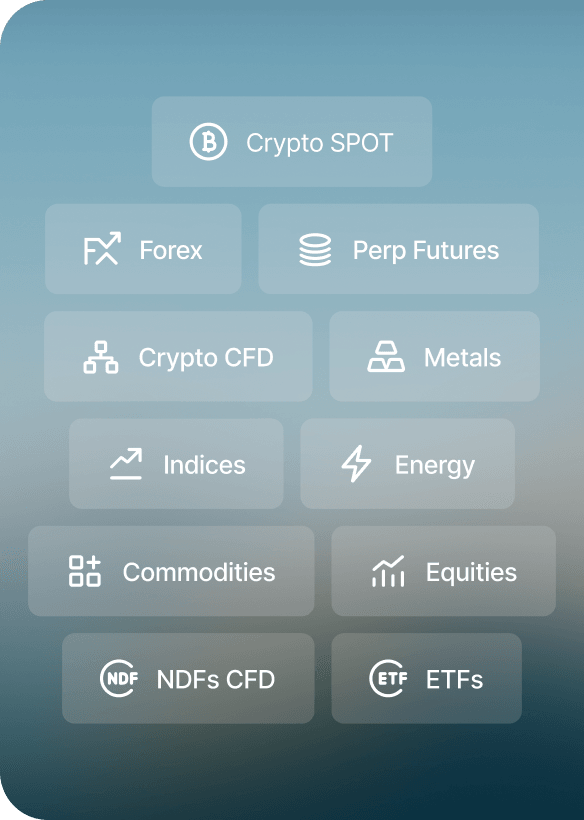
Deep, Reliable Liquidity Across 10 Major Asset Classes
FX, Crypto, Commodities, Indices & More from One Single Margin Account
Tight Spreads and Ultra-Low Latency Execution
Seamless API Integration with Your Trading Platform
Elevate Your Trading Business with Institutional-Grade Liquidity
Understanding liquidity mechanics provides the blueprint, but your infrastructure dictates the results. Many brokerages stall because retail-grade connections fail to capture the institutional flows described in this guide. Scaling your operation requires technology that processes high-velocity order blocks without latency.
B2BROKER transforms your capabilities through a comprehensive liquidity ecosystem. Backed by ten years of experience and 500 industry professionals, we deliver the Tier-1 banking architecture necessary to handle complex execution. You gain access to turnkey platforms and advanced risk management systems that stabilize operations during volatile market events.
Partnering with an established provider accelerates your launch timeline. Accessing our 24/7 technical assistance and regulatory tools immediately removes the burden of building internal support departments. We manage the continuous platform innovation, freeing your capital to focus entirely on client acquisition strategies.
Ready to Upgrade Your Execution Infrastructure?
Skip retail bottlenecks and integrate the same Tier-1 technology and liquidity used by the world’s largest financial institutions today.
Frequently Asked Questions about Buy Side and Sell Side Liquidity
- What is the difference between buy-side and sell-side liquidity?
Buy-side liquidity consists of pending buy stops resting above key resistance levels, while sell-side liquidity represents sell stops clustered below support. These zones mark specific areas where immediate volume is available for large market participants to execute orders.
- Why do institutional traders target liquidity zones?
Institutions target these clusters to execute large block orders without causing excessive slippage or signaling their intent to the broader market. Accessing these deep pockets of volume allows them to enter or exit sizable positions with minimal price displacement.
- How does liquidity behavior affect broker execution quality?
Deep liquidity absorbs volatility, allowing brokers to maintain tight spreads and fill orders without rejection during rapid price moves. Conversely, thin liquidity leads to price gapping and increased slippage, which erodes trader confidence.
- Does buy-side and sell-side liquidity matter outside forex markets?
Yes, these mechanics drive price action across crypto, equities, and derivatives just as they do in Forex. While the underlying market structure differs, the fundamental need for volume to match large orders remains constant across all asset classes.
- How do brokers use liquidity infrastructure to manage risk?
Brokers use aggregated liquidity pools to ensure they can hedge client positions instantly without market impact. Advanced infrastructure also includes real-time monitoring to detect exposure breaches and block toxic flow before it damages the brokerage's capital.
Recommended articles