How Does a Liquidity Distribution Network Work?

When getting prices and instruments for your brokerage firm, you need to connect with a liquidity distributor to effectively activate your platform.
A liquidity distribution network is an interconnected trading infrastructure that routes orders across multiple liquidity sources to aggregate pricing and depth into a single layer, delivering unified liquidity access instead of relying on a single counterparty.
This network becomes highly crucial for growing startups facing inconsistent spreads during volatility, limited depth for larger tickets, operational fragility if a provider disconnects, and increased complexity when adding new asset classes.
In this article, we will explain how liquidity distribution networks function at a system level, how they integrate with trading platforms, and which metrics you must consider when choosing liquidity providers in 2026.
Key Takeaways
- A liquidity distribution network aggregates pricing from multiple providers through smart order routing, enabling brokers to access tight bid-ask spreads and deep execution.
- Network architecture relies on aggregation engines, bridge connectors, and FIX API protocols.
- Brokers can add crypto liquidity pools alongside traditional Forex and CFD within the same network, expanding asset coverage without fragmenting infrastructure.
- Choosing a technology partner with turnkey infrastructure can accelerate launch timelines and reduce operational inefficiencies.
What Is a Liquidity Distribution Network?
A liquidity distribution network is a system that connects brokers to multiple liquidity providers through a centralized aggregation layer. Rather than receiving one bid/ask stream from a single vendor, the broker can access a consolidated feed of the best available prices across all connected sources.
Each liquidity provider (LP) streams executable quotes into the aggregation engine. Then, the aggregator normalizes those quotes’ formats, volumes, and symbols to construct a unified order book.
In this pool, the top-of-the-book bid and ask reflect the most competitive pricing available, while deeper levels show cumulative trading activity across providers.
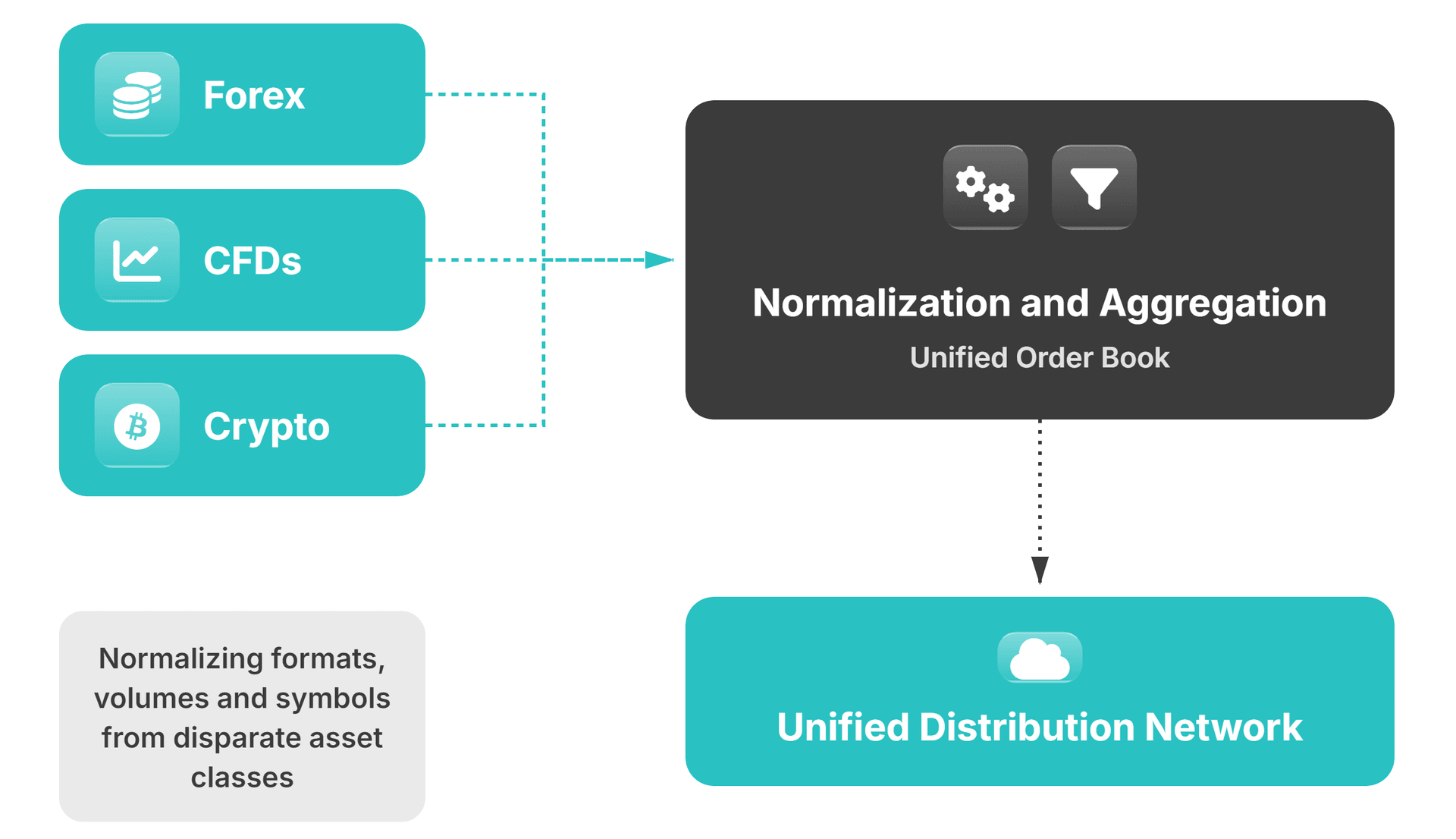
As such, the network acts as a routing infrastructure, receiving quotes upstream, applying risk logic, and delivering executable pricing to trading platforms, where distribution refers to how liquidity flows from providers to brokers and then to end-users.
The opposite of this system is the single-provider setup, where brokers rely on one LP's pricing and execution. If that LP faces connectivity issues or spreads widen during volatility, the broker’s execution quality will deteriorate.
Why Brokers Adopt Network-Based Liquidity
The shift toward network-based liquidity is driven by measurable business outcomes rather than technical curiosity. Brokers adopt this model to improve execution quality, expand asset coverage, and scale operations efficiently while reducing tech stack fragmentation.
Tighter Spreads and Reduced Slippage
When multiple LPs stream quotes into a shared aggregation layer, they effectively compete for order flow. This dynamic typically compresses spreads compared with single-source pricing, particularly during stable market conditions, empowering brokers to offer better trading conditions.
Moreover, slippage (the difference between the expected execution price and the actual fill price) also reduced when aggregated depth is available.
For example, if a client submits a larger order, the system accesses cumulative volume across multiple providers rather than relying on a single LP, creating better liquidity and improving fill rate.
These improvements translate directly into broker KPIs. Tighter spreads increase competitiveness in acquisition campaigns, reduced slippage improves client satisfaction, and more stable execution quality supports retention and reduces churn.
More importantly, institutional-grade aggregation technology is no longer exclusive to tier-1 banks. Modern liquidity networks allow mid-sized and growth-stage brokerages to deliver execution standards previously reserved for large financial institutions.
Deep, Reliable Liquidity Across 10 Major Asset Classes
FX, Crypto, Commodities, Indices & More from One Single Margin Account
Tight Spreads and Ultra-Low Latency Execution
Seamless API Integration with Your Trading Platform
Multi-Asset Access Including Crypto Liquidity Pools
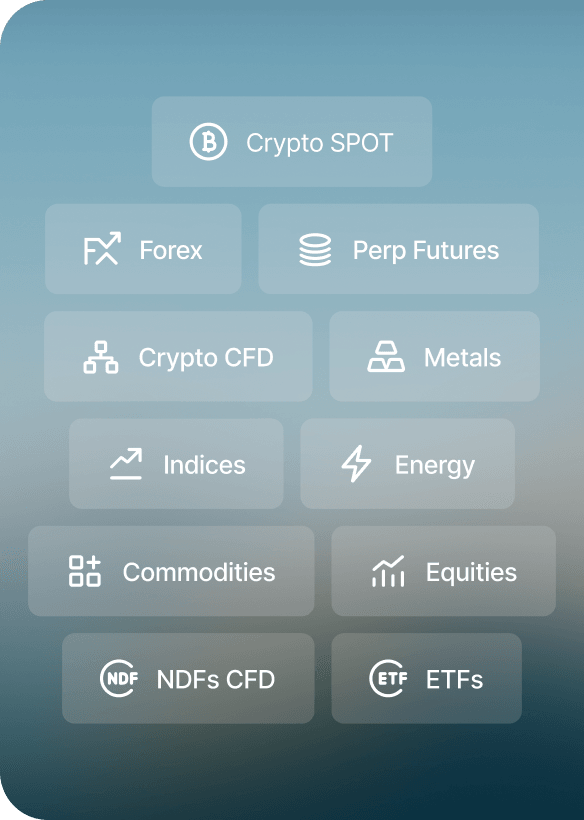
A well-designed liquidity distribution network delivers Forex, CFDs, indices, and crypto trading through a single pricing and execution layer. This way, instead of maintaining separate integrations for each asset class, you can connect once and access multiple financial markets.
Crypto liquidity pools are aggregated virtual-asset pricing streams sourced from centralized exchanges, institutional OTC desks, blockchain platforms, and decentralized exchanges (DEXs), where crypto market feeds are normalized and routed similarly to FX pricing.
This model simplifies broker operations by avoiding building parallel infrastructure stacks for digital assets. Multi-asset capability becomes a growth lever, enabling firms to broaden their offering without fragmenting risk management or execution architecture.
Core Architecture and Trade Flow
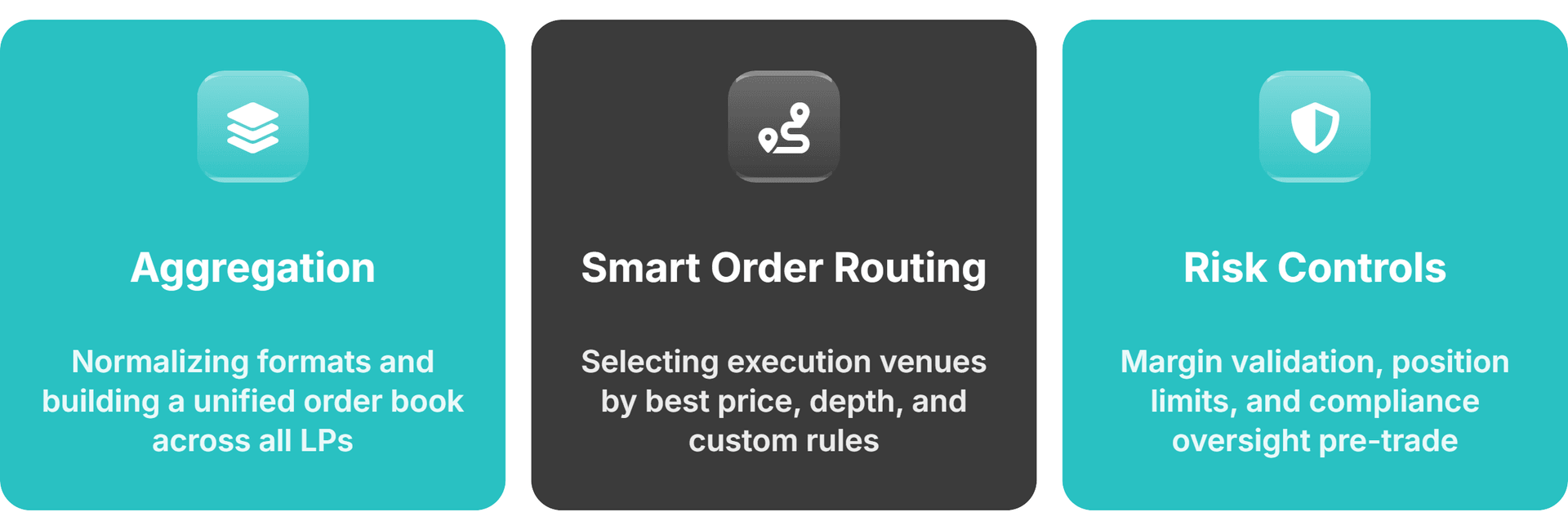
Understanding the architecture clarifies how liquidity moves from the provider quote to client execution. While implementations vary between platforms, most networks rely on several key components: aggregation, smart order routing, and embedded risk controls.
Aggregation
Aggregation is the process of collecting, standardizing, and consolidating quotes from multiple LPs into a single price stream. The engine ingests bid/ask updates in real time, aligns symbol formats, adjusts for lot sizes, and sorts prices based on competitiveness.
The result is a unified order book that offers the best available pricing across providers. This process repeats continuously, with engines recalculating top-of-book and depth levels as markets update, ensuring trading platforms always receive current executable pricing.
Smart Order Routing
Smart order routing (SOR) is the decision layer that determines where an order is executed, factoring in various parameters set by the trader or the broker. As such, when a client submits an order, the SOR evaluates available venues based on configured logic: best price, available depth, latency metrics, counterparty limits, or custom rules.
These advanced networks allow brokers to fine-tune routing by client tier, asset class, symbol, or risk profile, giving them more control over execution processes and incorporating intelligent automation in the execution path.
For example, an A-book flow may route to external LPs, while internalized flows follow a separate logic, ensuring execution aligns with the broker’s pricing and risk strategies.
Risk Controls
Before an order reaches external liquidity providers, pre-trade risk checks are performed to validate margin availability, position limits, leverage thresholds, and symbol restrictions. These limits stem from regulatory frameworks designed to protect brokers and market participants.
Embedded risk logic ensures that only compliant and adequately margined positions are transmitted and executed in the market, reducing rejection rates, protecting capital, and maintaining counterparty trust.
Compliance Controls
Liquidity distribution networks increasingly incorporate compliance features, such as audit logging, transaction traceability, and monitoring systems. Integrating compliance solutions supports regulatory reporting and best practices oversight, ensuring that brokers operate legally and compete effectively.
Many brokers treat compliance control as an optional add-on, which can lead to bottlenecks when regulatory requirements arise. In reality, these controls form part of the infrastructure backbone, supporting execution transparency and operational resilience.
Is Your Brokerage Tech Stack Ready?
Get compliance and liquidity consultation and plan your platform to compete in FX/crypto environments.
Integration Paths for MT4/MT5 and Custom Platforms
Today, many brokers operate MetaTrader environments or proprietary trading systems, and flexible integration with these platforms directly affects time-to-market and deployment.
One way to connect to a liquidity distribution network is through bridge connectors — middleware that links MT4 or MT5 servers to external market liquidity networks. These systems translate order messages, synchronize positions, and communicate execution confirmations between the trading platform and the aggregation engine.
FIX (Financial Information eXchange), the industry-standard protocol for real-time order messaging, can also be used for direct connectivity. FIX integration brings institutional-class architecture to custom trading platforms or high-frequency trading setups.
If you are looking to reduce friction and speed up your launch, turnkey solutions are ideal, offering pre-configured bridges, documentation, sandbox environments, and structured processes. They enable you to connect and deploy much faster, with built-in execution flows, margin calculations, and failover scenarios.
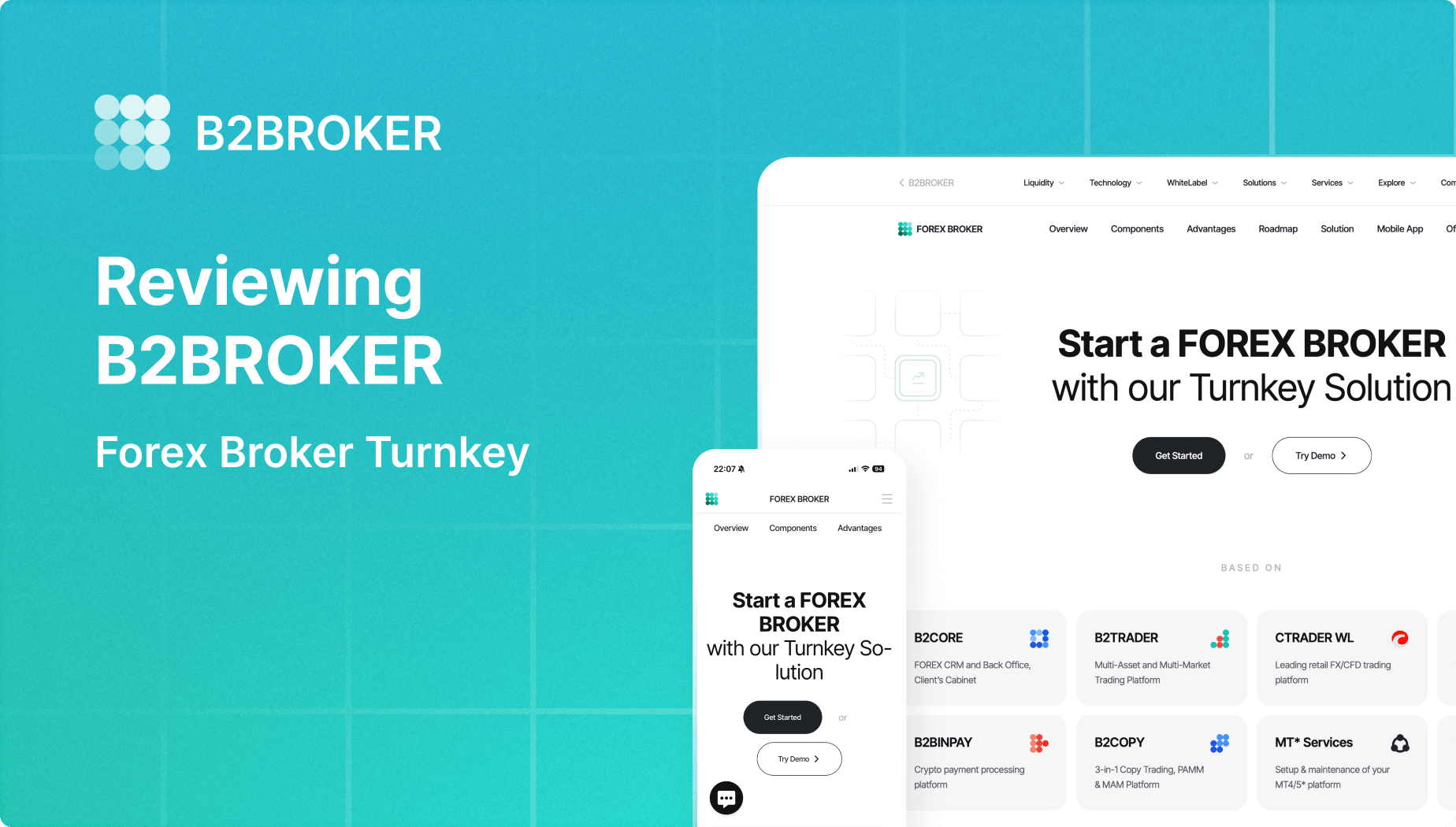
Build your FX business using B2BROKER’s Forex broker turnkey solutions to enter the market and compete more effectively. Here’s how you can start.
26.06.25
Managing Crypto Liquidity Pools Within the Network
Cryptocurrencies require additional operational considerations, including venue reliability, settlement flow, and jurisdictional requirements. However, when you integrate a liquidity distribution network, digital assets follow the same aggregation and routing logic as FX, equities, and other assets.
Most brokerage networks get crypto liquidity from classic venues, including centralized crypto exchanges and institutional OTC desks, which provide structured APIs, clearer settlements, and stronger compliance alignment.
Additionally, crypto brokers can get pricing from decentralized finance (DeFi) platforms, where liquidity comes from automated market makers (AMMs) rather than traditional order books.
The best way to plan your liquidity setup is by balancing centralized venues for stability and regulatory clarity and selectively adding a DeFi ecosystem to enhance depth.
Metrics That Define Network Performance
Selecting a liquidity distribution network should be a data-driven decision, one that will impact your execution models and, therefore, your financial bottom line.
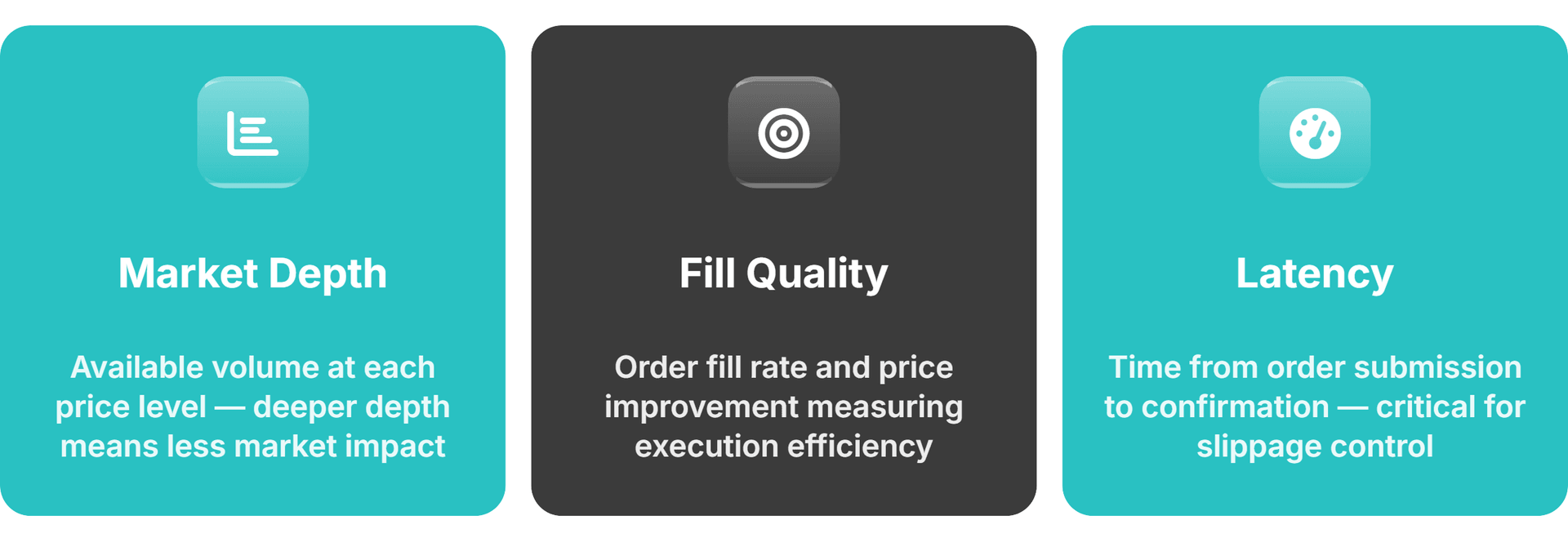
As such, you must measure key performance metrics: market depth, fill quality, and latency. Strong providers offer transparency through clear reporting, dashboards, and SLA documentation.
Market Depth
Market depth refers to the available trading volume at each price level in an order book, reflecting the market’s ability to absorb buy and sell orders.
Deeper market depth indicates higher liquidity, meaning larger orders can be executed with minimal price movement. For brokerage firms, strong market depth reduces market impact, supports tighter spreads, and ensures more stable pricing.
Fill Quality
Fill quality measures how efficiently client orders are executed. It is commonly assessed through fill rate, which reflects the percentage of orders executed at the requested price, and price improvement, where orders are filled at better prices than quoted.
High fill quality enhances client satisfaction, reduces trading costs, and strengthens a broker’s execution standards in competitive markets.
Latency
Latency is the time elapsed between order submission and execution confirmation. In electronic trading environments, low latency is critical for ensuring orders are filled at intended prices.
For brokers serving algorithmic or high-frequency clients, reduced latency helps control slippage, improve execution accuracy, and maintain competitiveness in fast-moving and time-sensitive markets.
Launch Your Brokerage Faster With B2BROKER
B2BROKER offers a comprehensive liquidity distribution ecosystem that combines multi-asset aggregation, MetaTrader integration, MT4/MT5 server setup, crypto liquidity access, and risk management in a unified framework.
This turnkey architecture simplifies your launch and enables you to fine-tune your liquidity approach and control your exposure more effectively and efficiently.
B2BROKER’s infrastructure extends to include CRM solutions (B2CORE), multi-asset, multi-market trading platforms (B2TRADER, cTrader, MT), wallet systems (B2BINPAY), and a powerful liquidity bridge (B2CONNECT).
Together, they represent the ideal environment for you to build your brokerage, configure your liquidity, control your risks, and scale more easily, while reducing the deployment timeframe from months to weeks!
Take the Next Step
Plan your liquidity strategy with us and get ready to compete with key industry players.
Frequently Asked Questions about Liquidity Distribution Networks
- How long does onboarding usually take?
Most brokers complete onboarding within two to four weeks, depending on platform complexity and regulatory requirements. Providers typically support the process with documentation, testing environments, and technical assistance through go-live.
- Can I keep existing bilateral LP lines?
Yes, many liquidity distribution networks support hybrid setups where you keep direct LP relationships alongside aggregated feeds. This adds redundancy and helps you compare execution quality across sources.
- Do I need extra licensing for crypto liquidity?
It depends on your jurisdiction and whether you offer spot crypto, derivatives, or CFDs referencing crypto. Confirm requirements with legal counsel and your liquidity provider before enabling digital assets.
- What is liquidity distribution?
Liquidity distribution is the routing of tradable pricing and executable liquidity from providers (banks, hedge funds, market-making firms) to brokers and end clients via aggregation and order-routing technology. The objective is to reach the best available price and sufficient depth across connected sources.
- Do liquidity pools make money?
Yes, liquidity providers and venues generally earn revenue through spreads, trading fees, or both. Brokers benefit from competitive execution, while their profitability depends on client flow, markups, and operating efficiency.
Recommended articles